Geoff Ayre, the developer of, amongst other things, Sub Commander, a splendid SSBN roguelike, and Infernal Ocean: Denmark Strait, the first 3D game Tally-Ho Corner ever covered, is working on a truly extraordinary project at present. Read today’s interview to understand why Battlespace Command is generating so much excitement in Grogland.
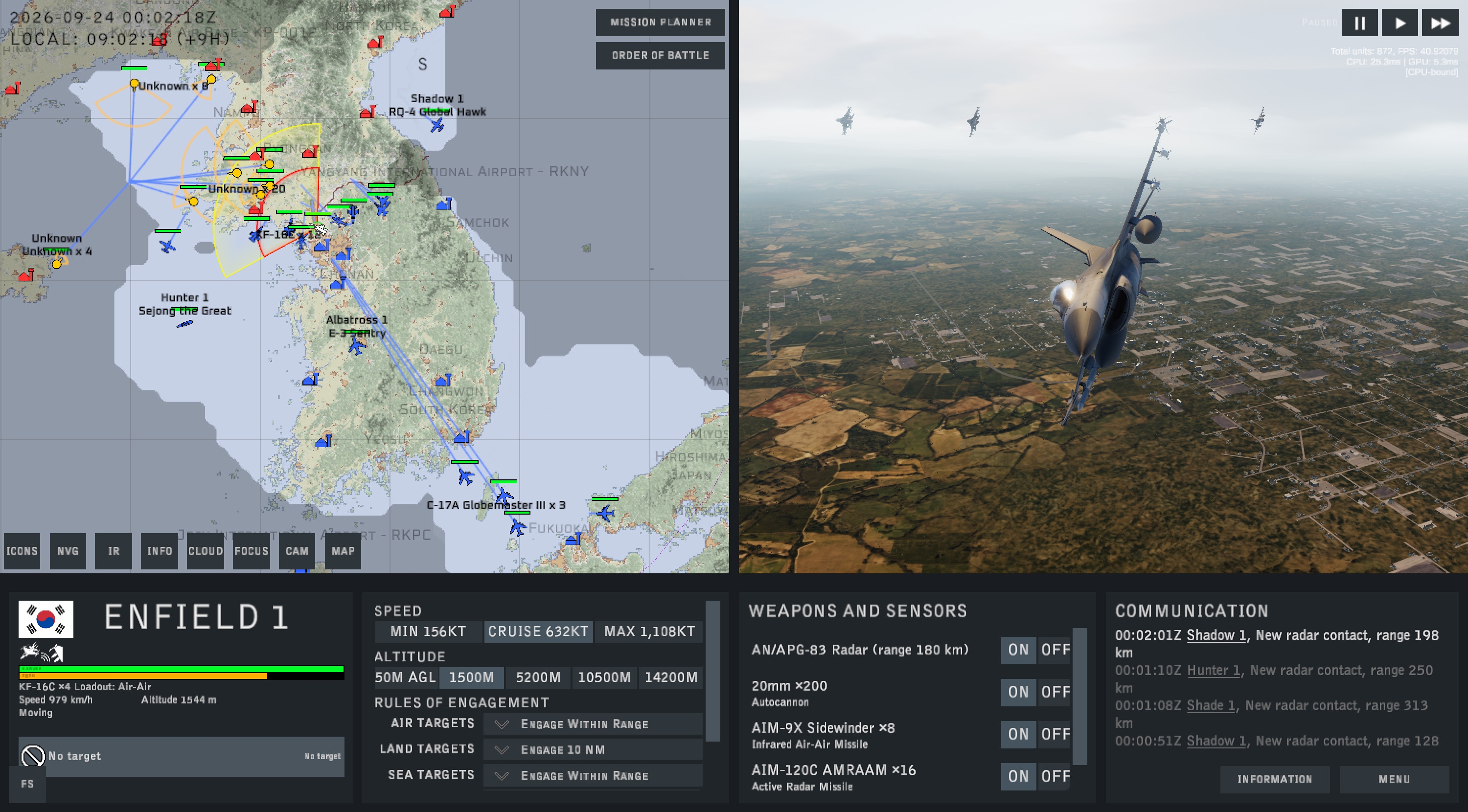
THC: “Full-spectrum combined arms warfare across land, air, and sea… Hundreds of units and weapon types, including infantry, tanks, drones, aircraft, warships, submarines, and missile systems”… Battlespace Command seems like a colossal undertaking for a solo dev. Is Wirraway Software still a one-man band?
Geoff: Yes, Wirraway Software is still just me – though working with Microprose has enabled me to significantly scale up my ambitions for the project. Their team has contributed an enormous amount to the content and level of polish in the game.
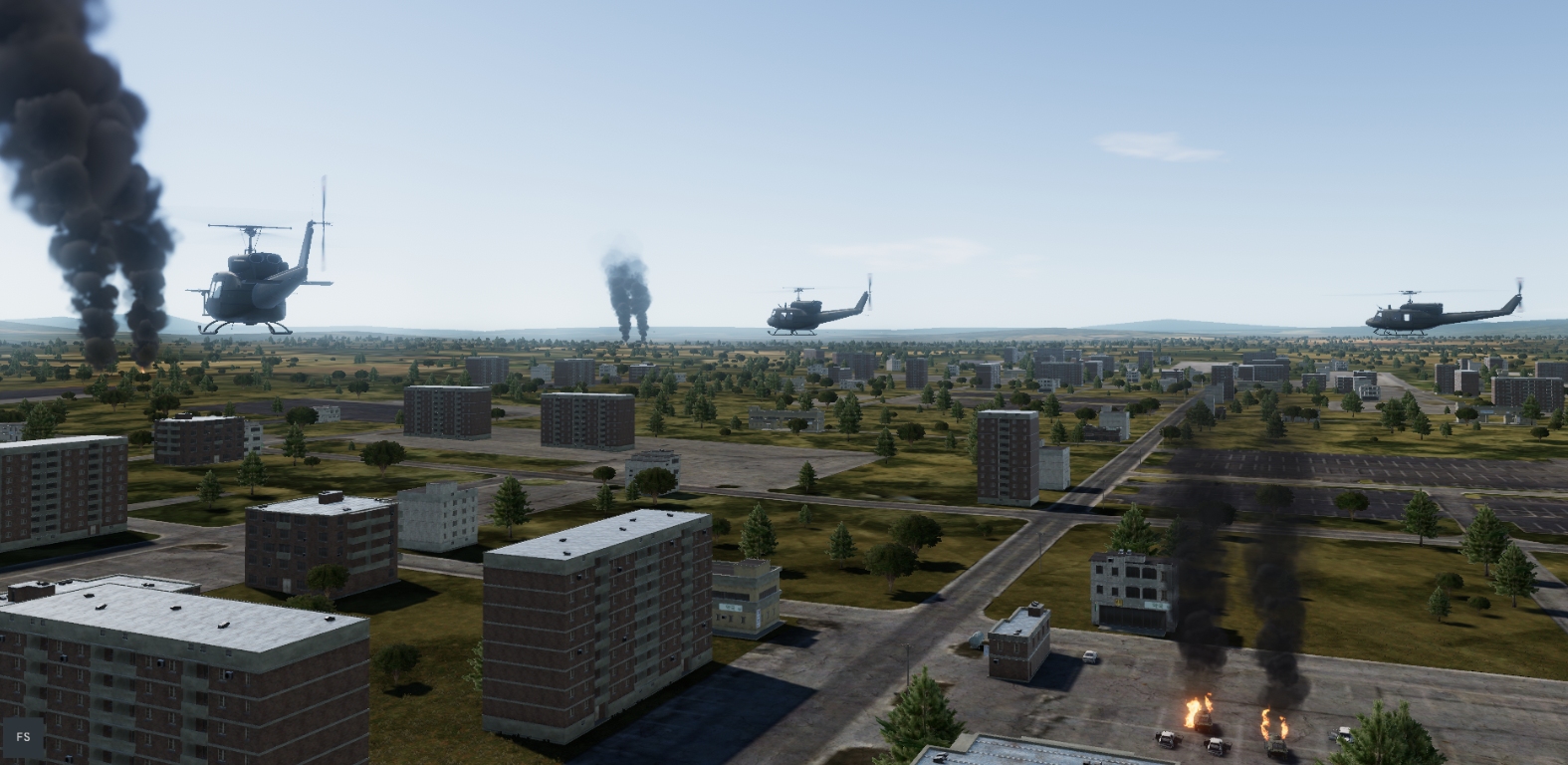
Battlespace Command is indeed a massive project, bringing together many years of work. Parts of what has become Battlespace Command were built in various prototypes and experiments as early as 2014. For example, the core sonar simulation code was originally written around 10 years ago as part of a planned 3D sequel to Sub Commander; much of the infantry and helicopter logic were designed for a Vietnam-era CSAR simulation I experimented with in around 2017; and part of the code handling weapon ballistics & firing solutions was originally written for Infernal Ocean (my Flare Path / Tally Ho Corner game jam entry!)
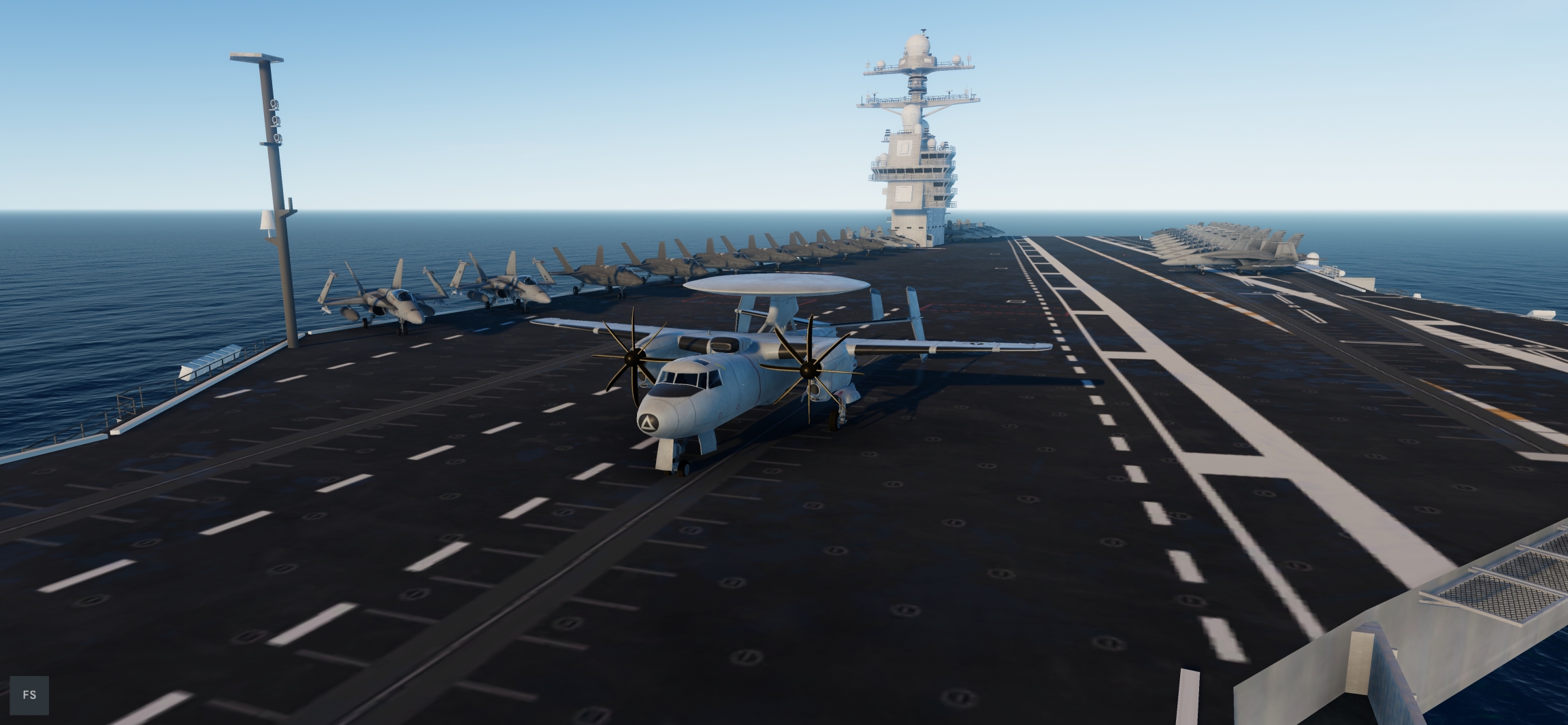
A couple of years ago, I began building upon these to create one cohesive simulation. This came with some major technical challenges – the scale of the maps being one of the largest. But this is a dream game for me, the culmination of years of work – it has been a pleasure to work on and is rewarding to see it all come together.
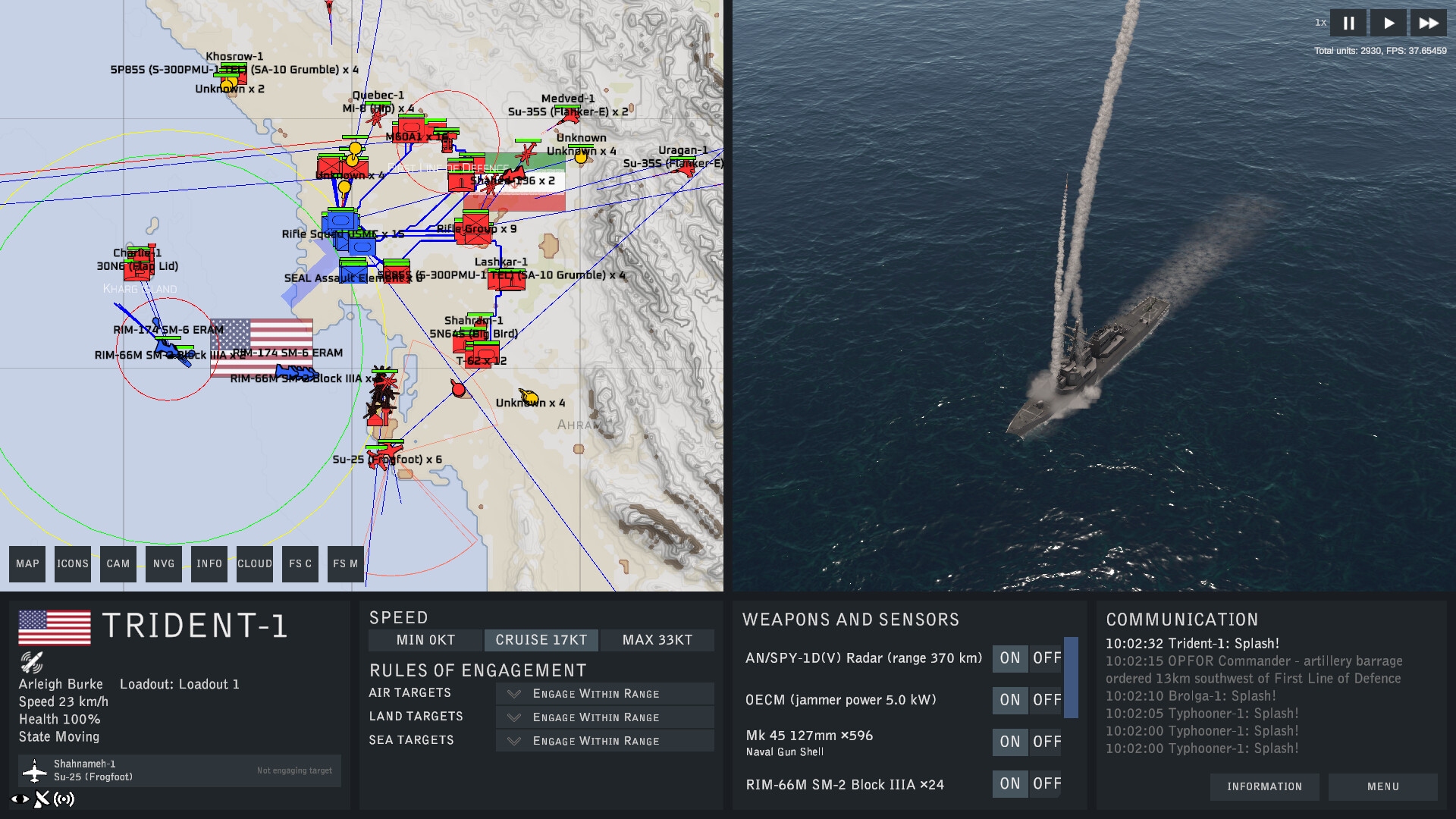
THC: On paper, BC sounds a bit like a 3D Command: Modern Operations or a less salty Sea Power. Which games would you compare it to?
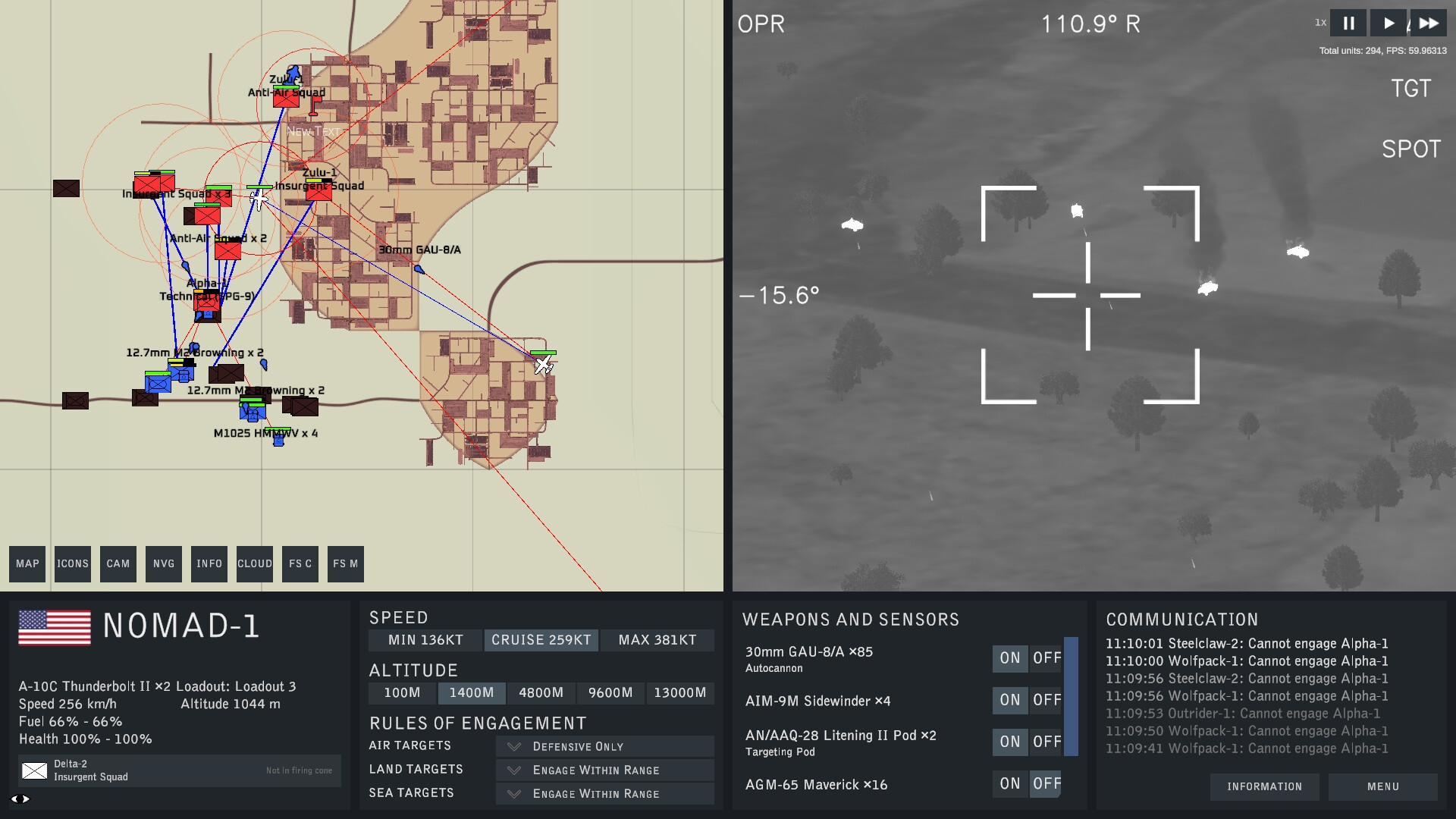
Geoff: I would say that Command: Modern Operations is one of the best points of comparison. The massive scale and rich, detailed simulation of mission planning, sensors, communication links, mission planning, and so on of C:MO and C:MANO always impressed me.
Sea Power is another good comparison, though Battlespace Command is a little less focused on control of individual units and more focused on large-scale force coordination.
Another less-direct comparison is the classic Steel Panthers Main Battle Tank. Despite being wildly different styles of games, something about the land combat feels reminiscent to me. As does the skirmish mode; picking any two modern nations from a lengthy list and generating a battle between them.
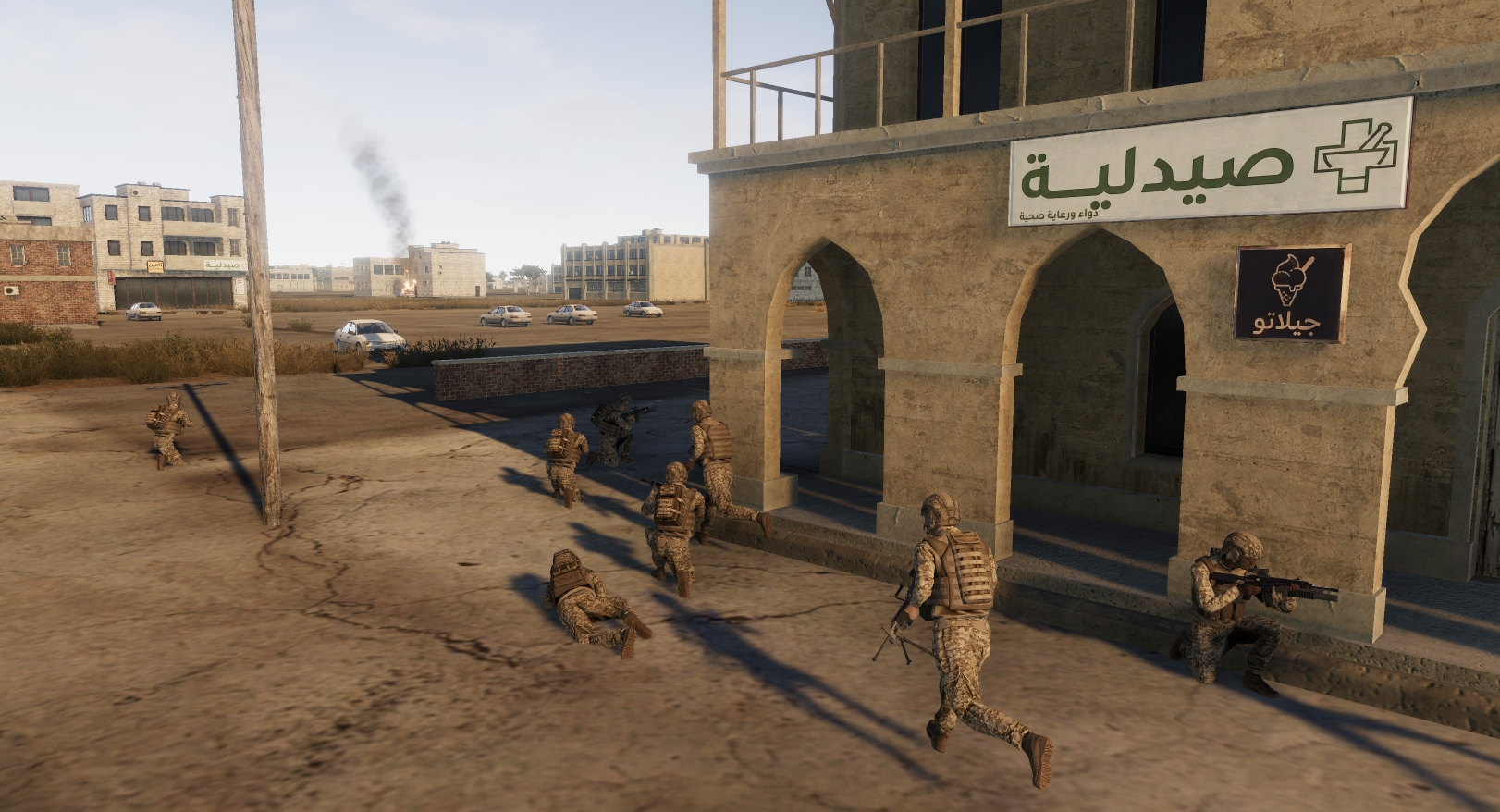
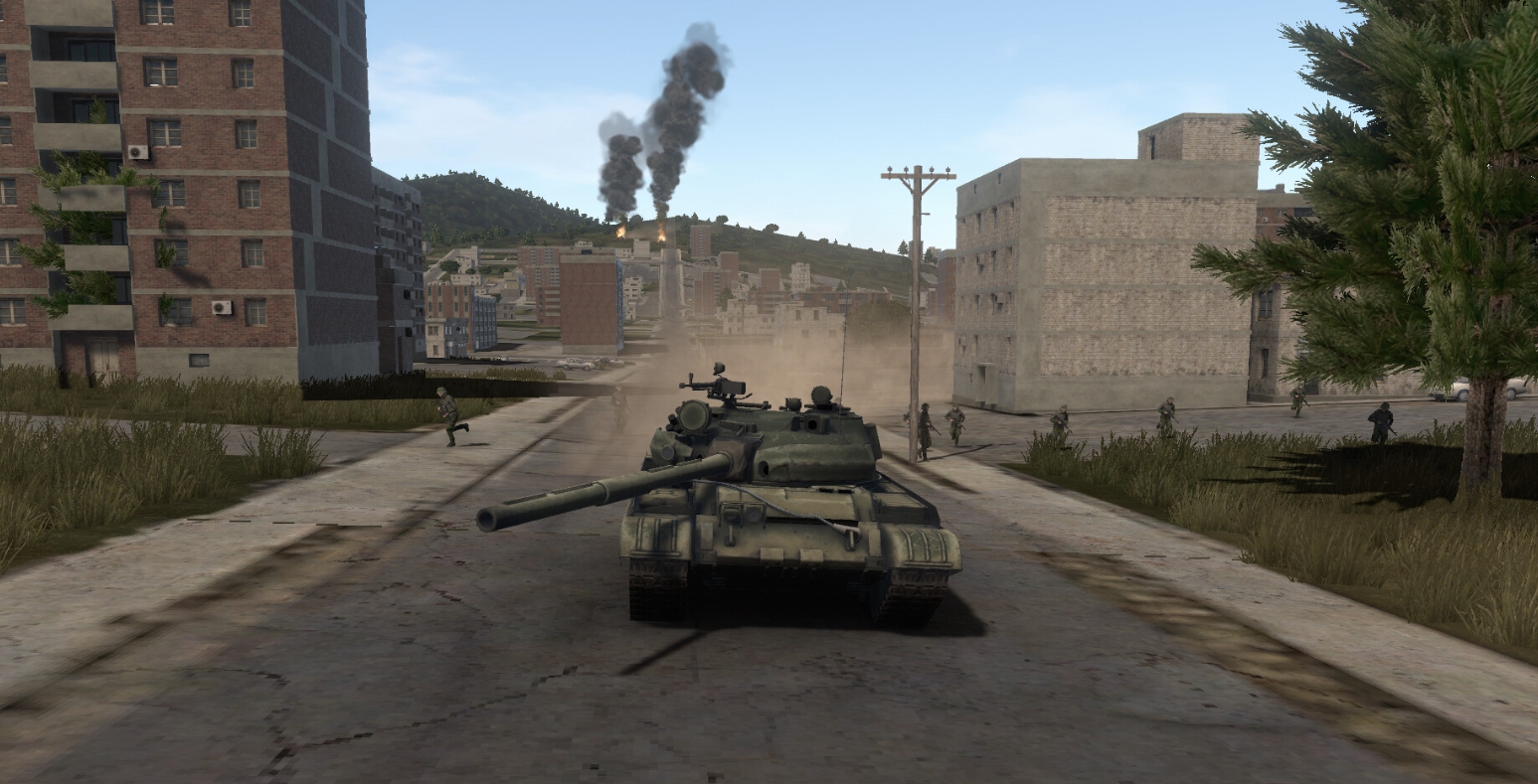
THC: I assume the “immersive battlefield views” won’t stretch to details such as troops entering/exiting buildings, and taking cover behind walls?*
* I posed my questions before the release of the last BC devlog.
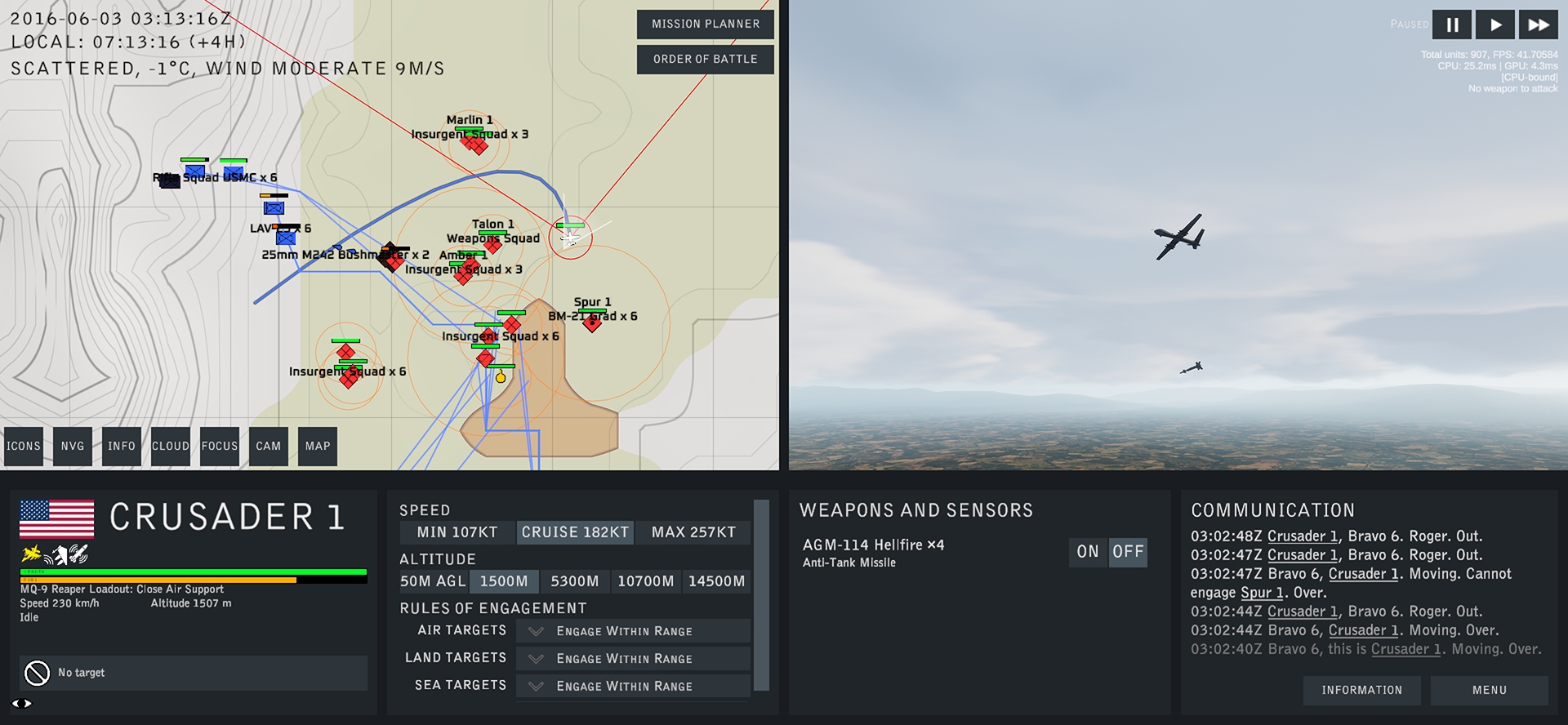
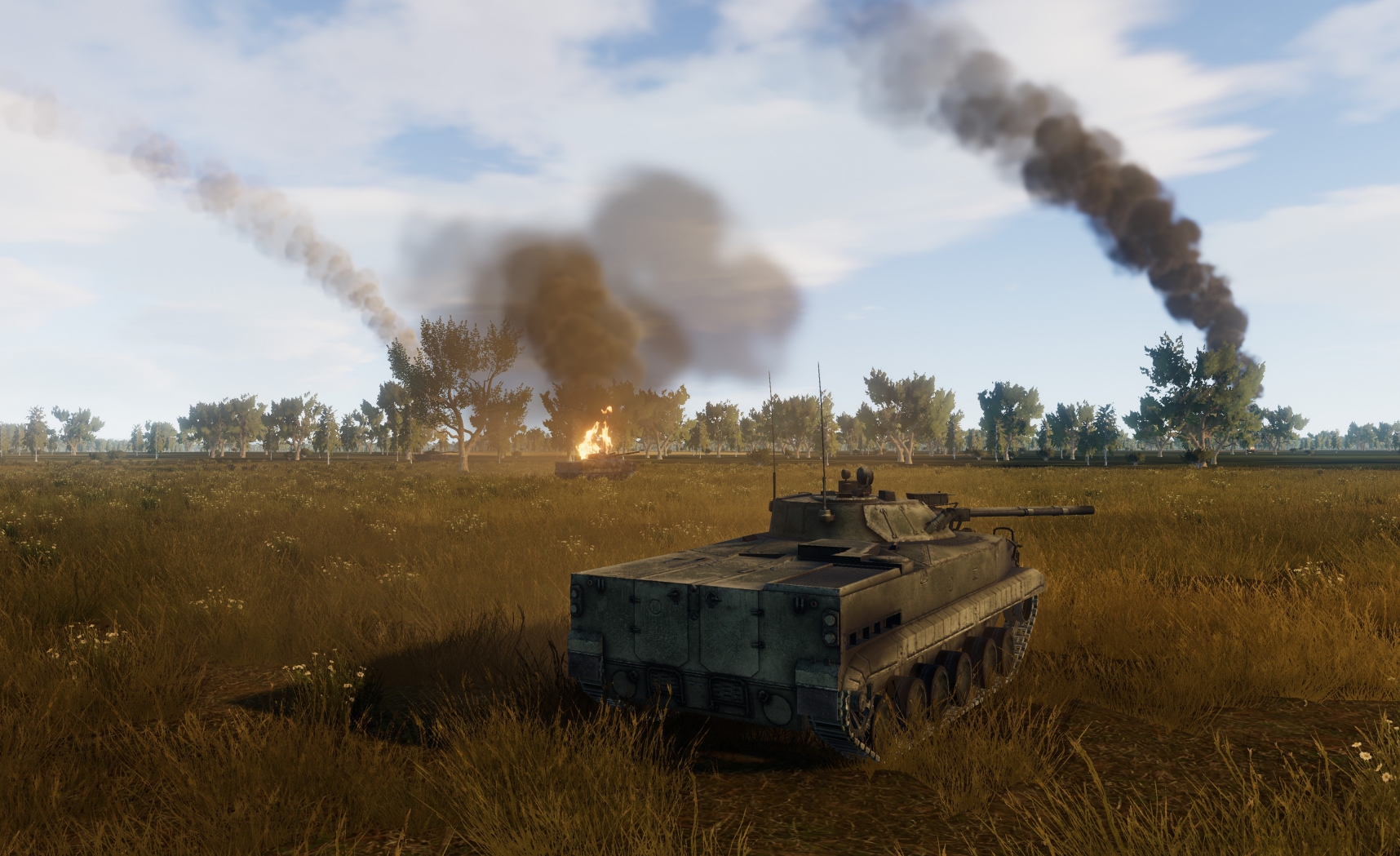
Geoff: There is a solid level of visual detail implemented already, and I would like to take it even further. Troops can enter buildings; they appear on the rooftop and balconies, and gain a significant boost to cover, concealment, and fields of fire. You will also see soldiers kneel behind parked cars, low walls, and building corners for cover as they move through urban terrain while under fire.
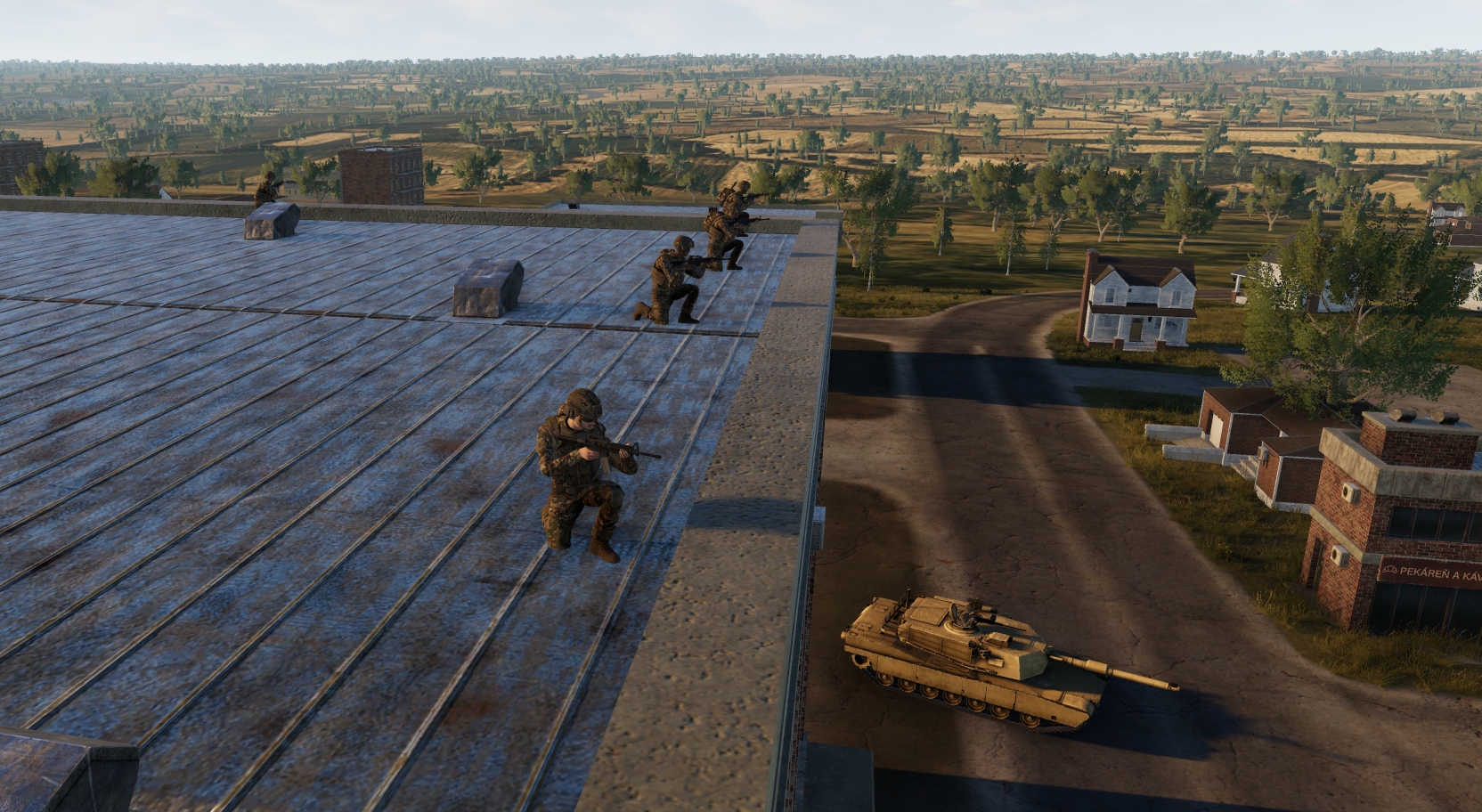
The underlying combat simulation is simpler, for performance reasons – it calculates a cover modifier based on “Infantry squad, 9 members, highly experienced, in contact, in urban terrain, not on a road” and uses that to evaluate vulnerability to incoming fire or shrapnel. It does not simulate the exact posture of each squad member and the bullet penetration of the wall the man is crouching behind.
THC: Are you confident you can produce an AI capable of operating the game’s numerous weapons and vehicles plausibly and effectively?
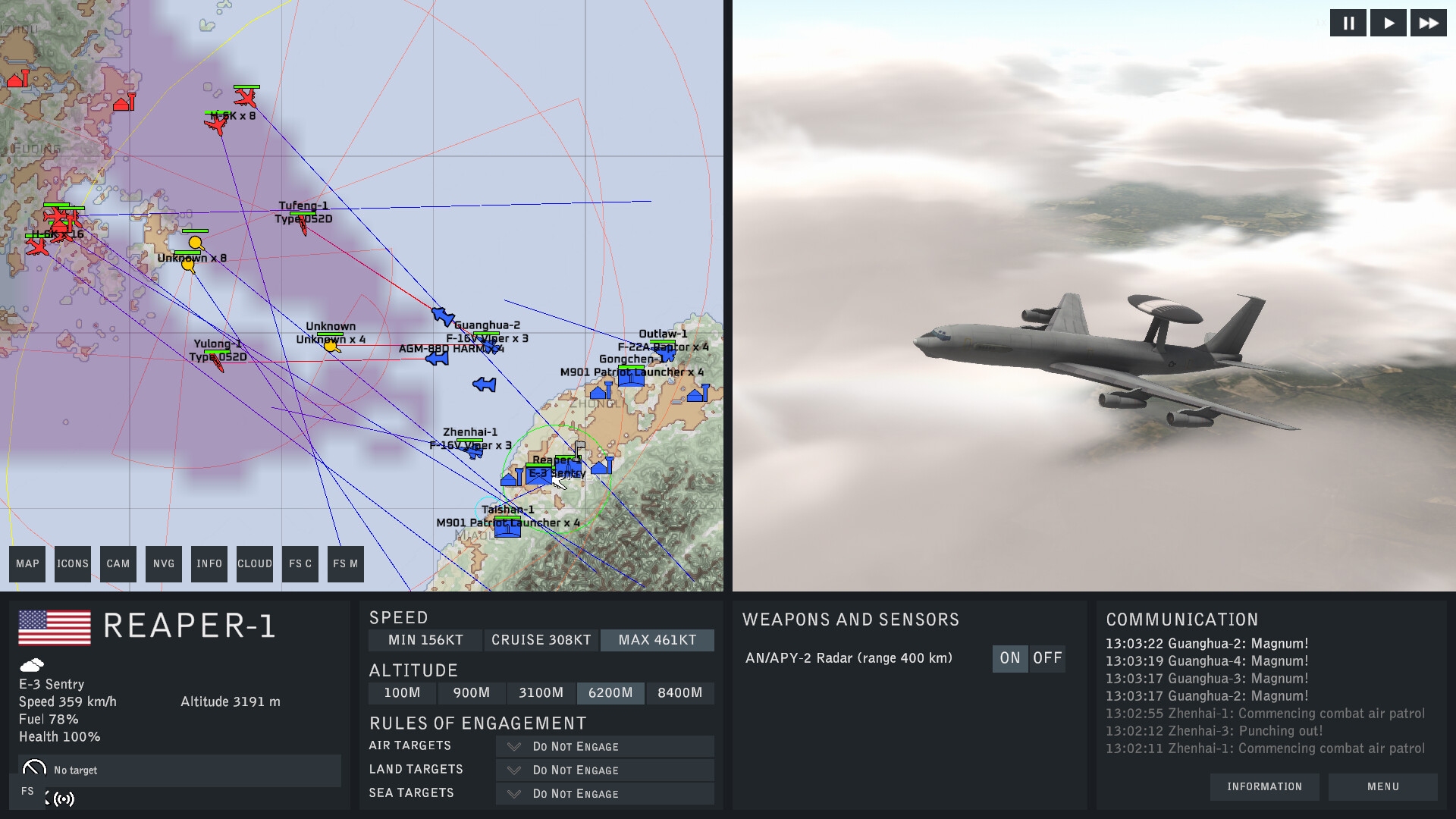
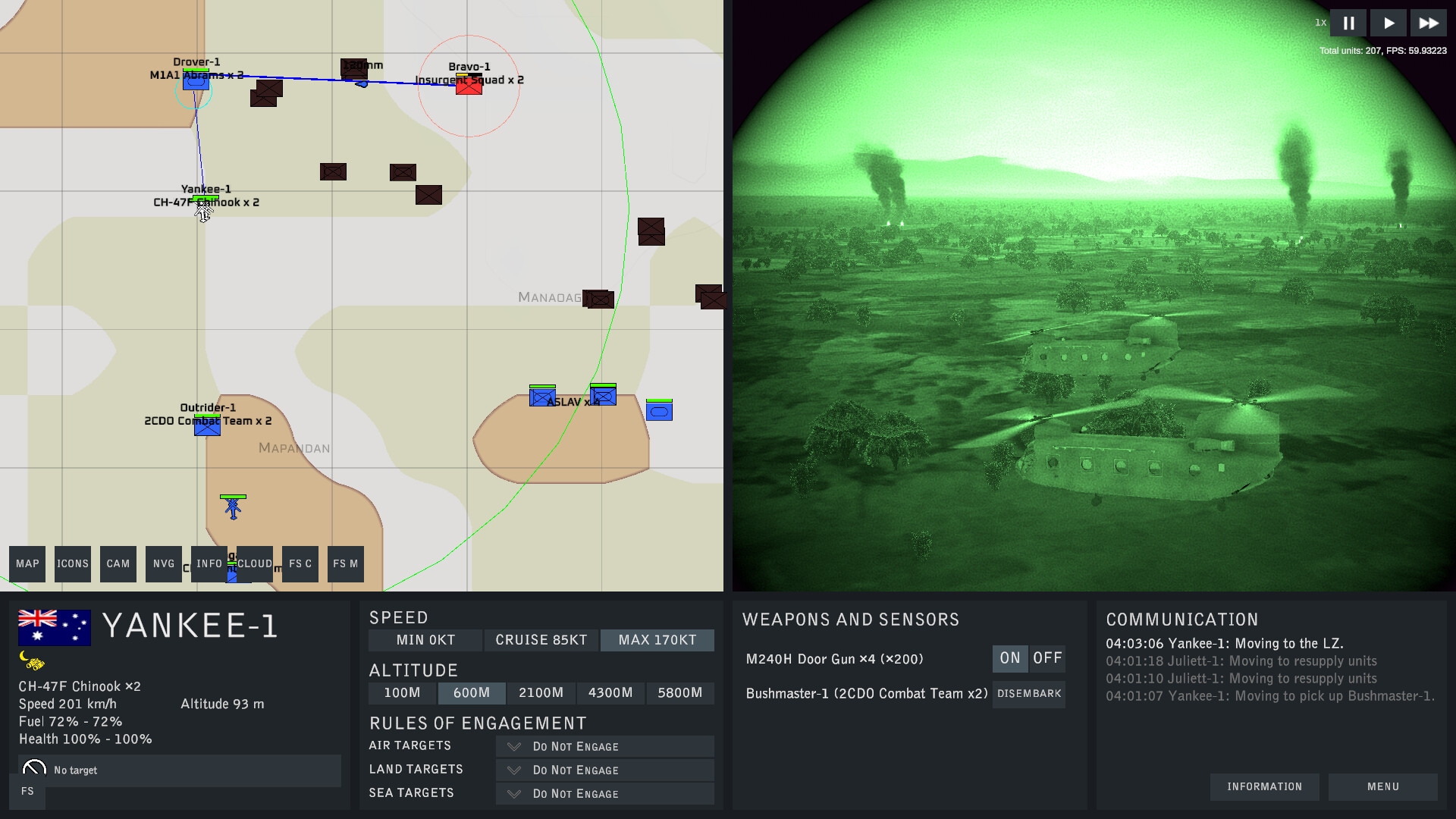
Geoff: Getting the AI right is crucial – there are two main ways that I am tackling this one. Firstly, the mechanisms that make it possible for a human player to coordinate forces across huge battlefields also simplify the AI design. A large part of the gameplay is centred on planning missions – rather than directly controlling individual squads or vehicles, the player can lay out a series of checkpoints, each with settings for rules of engagement, EMCON, movement speed, whether to use transport vehicles, whether to stop if enemy is encountered, whether to enter buildings, and so on. The player assigns units to these missions, then gives the order to start. The units will then execute the mission to the best of their ability and provide updates to the player as they progress through checkpoints.
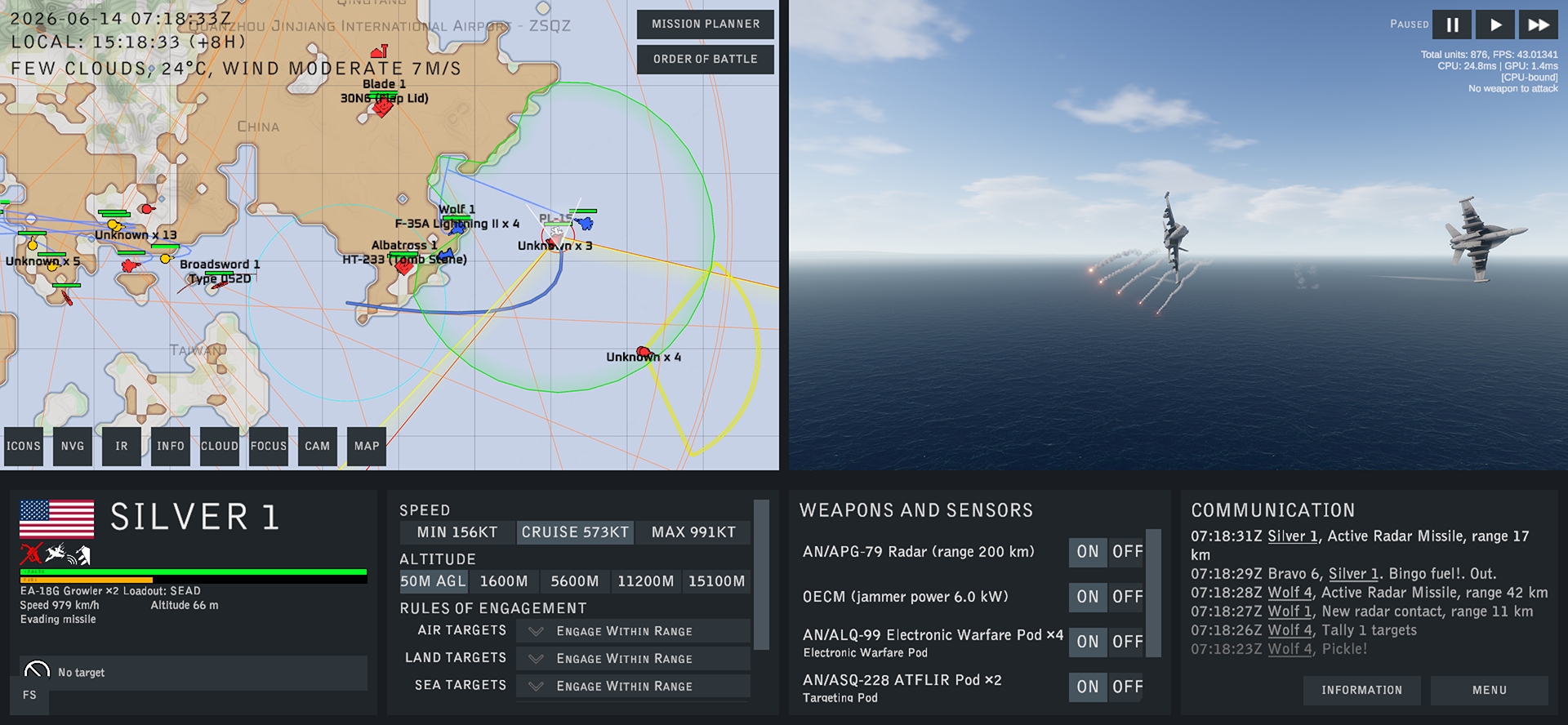
This system simplifies the strategic AI design, because the AI can use the mission planner too. The AI can focus on making decisions at a level of “what objectives should I focus on right now” and “where do I believe the enemy is”, and plan out missions accordingly – using the same system that the player is using. This simplifies the design problem and avoids the AI needing to navigate a messy mix of high-level strategy and local tactical movement considerations.
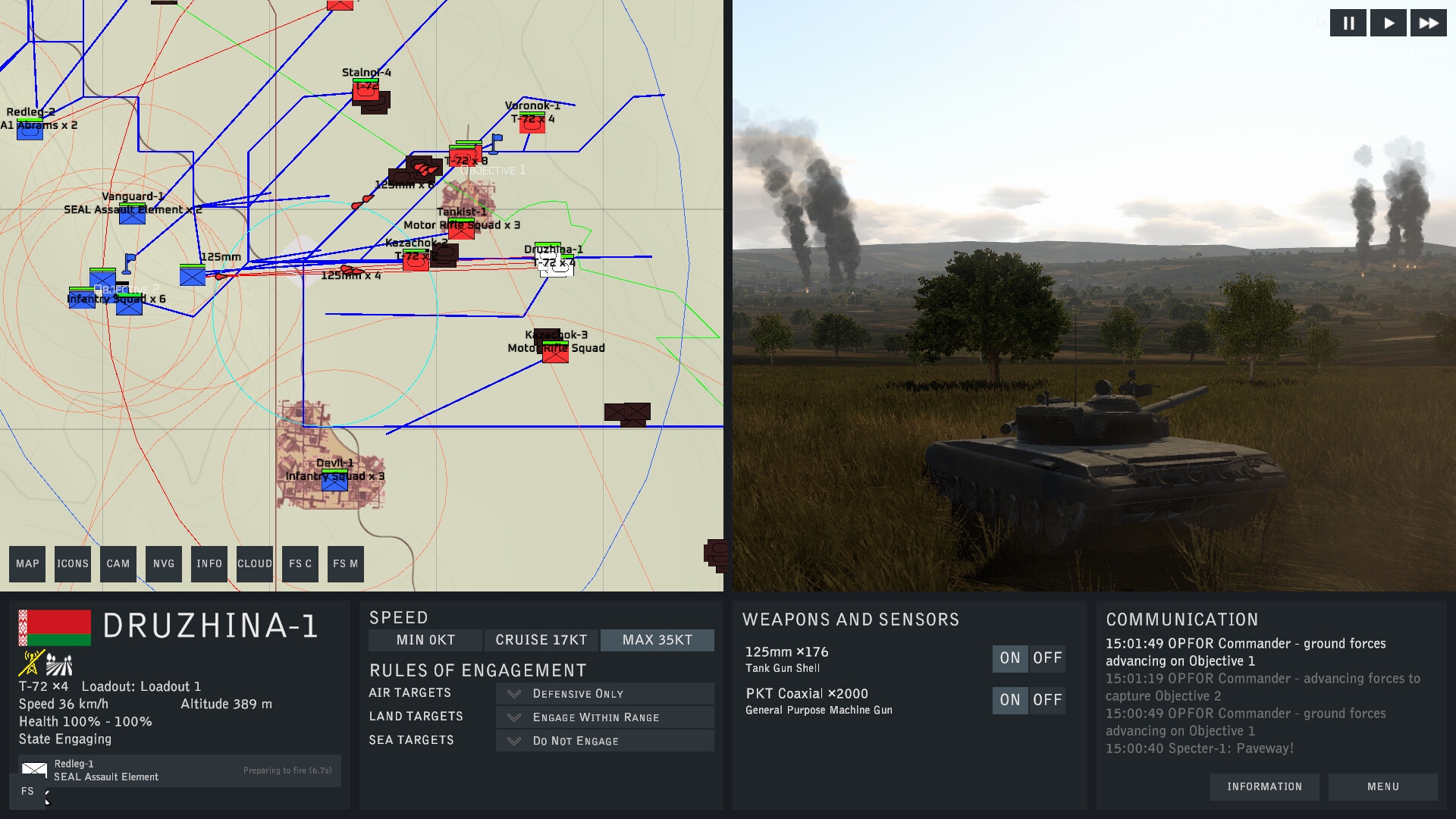
Secondly, the game is built to enable modding of the AI. The AI logic is written in Lua, using a fairly straightforward set of functions – so with some basic scripting knowledge it should be simple for the community to modify the default AI or create entirely new personalities. If someone wanted a custom AI to meet the unique needs of a mission they are creating, or wanted an AI that specifically models Chinese mechanized doctrine – it is fully possible to do so. The game will ship with a few solid, competent AI options, but I hope that in a short time players will have a range of other options available.
In general, mod support is a very high priority for Battlespace Command. Steam Workshop support is planned from the beginning, and modding the AI, unit database, weapon loadouts, maps, and even many of the core parameters of the simulation itself will be possible.
THC: Are BC scraps ever going to be complicated by factors like civilians, decoys, and friendly fire?
Geoff: Likely all of these, in some capacity. All three play a major role in shaping modern combat operations.
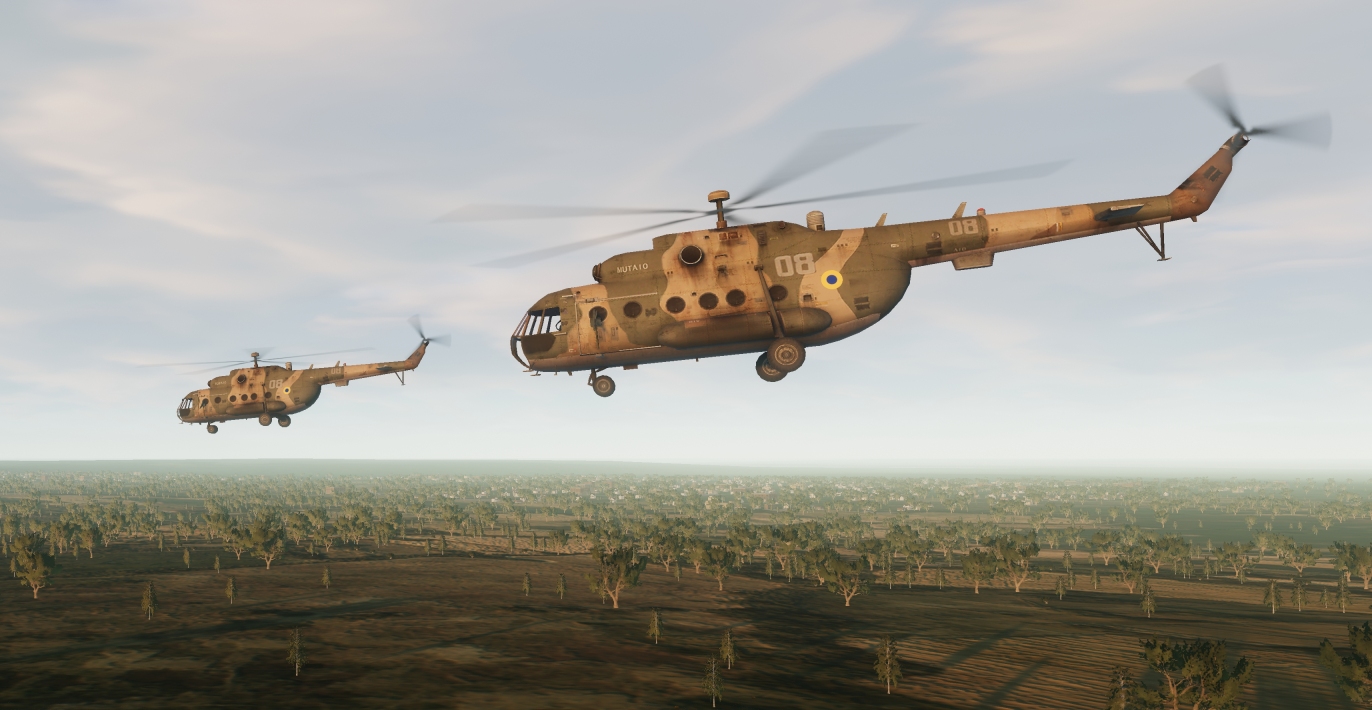
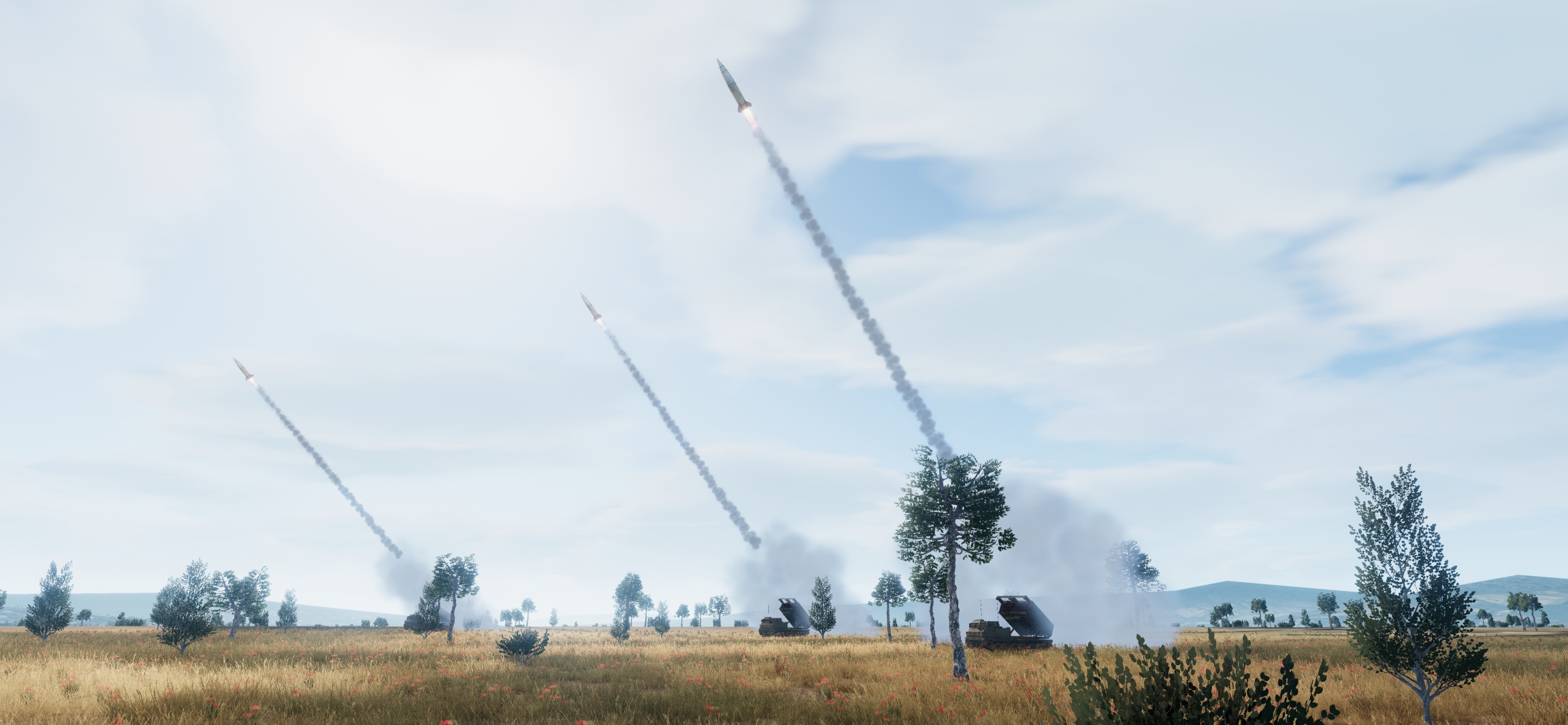
Friendly fire can be particularly hazardous with long-ranged artillery and missiles. The scale of the maps means that a Tomahawk missile barrage, for example, might take 30 minutes or more to reach its target. A poorly-timed helicopter insertion at the target could arrive while the missiles are still in flight. The Mission Planner in the game provides estimated timings for your planned missions to help coordinate this.
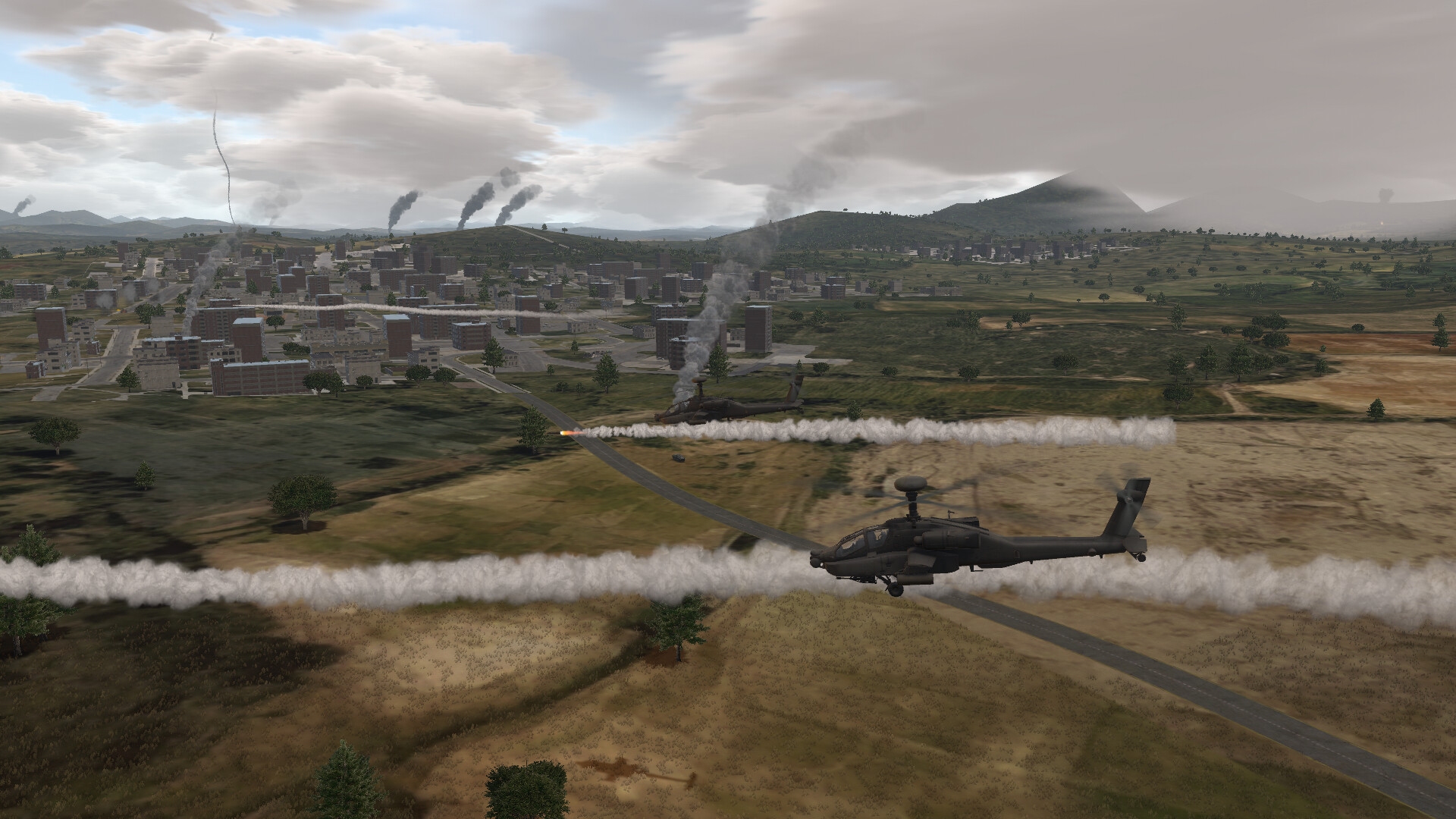
The issue of civilians is a complex one. On the one hand, this is a game focused on military operations; the gruesome impact of war on civilian lives is not something I am seeking to depict in detail. But civilians cannot just be omitted as their presence has a very significant impact on decision making. In a battlespace with no civilians, where every unit is a known combatant and where collateral damage has no cost, there is little reason to identify targets – you could just shoot-on-sight at anything that isn’t one of your own units, safe in the knowledge that it is a valid enemy target. There would be little need to capture an enemy-held town with your vulnerable infantry, as you could just sit back and flatten the whole thing with 2000lb bombs and not worry about the consequences. The presence of non-combatants introduces important and realistic stakes and constraints.
THC: Is obtaining all the weapons and sensor information you need, proving difficult?
Geoff: It has been a big task, but manageable. One tricky part here was that I wanted the simulation of sensors to be based on real physics, as far as is practical. This tends to yield more realistic results – for example, with a physics-based model for radar, concepts like stealth, jamming, and burn-through all emerge and work together naturally. But that requires a lot of non-public information to implement; a proper model for radar, for example, would incorporate transmit power, pulse repetition frequency, duty cycle, receiver noise figure, and so on.
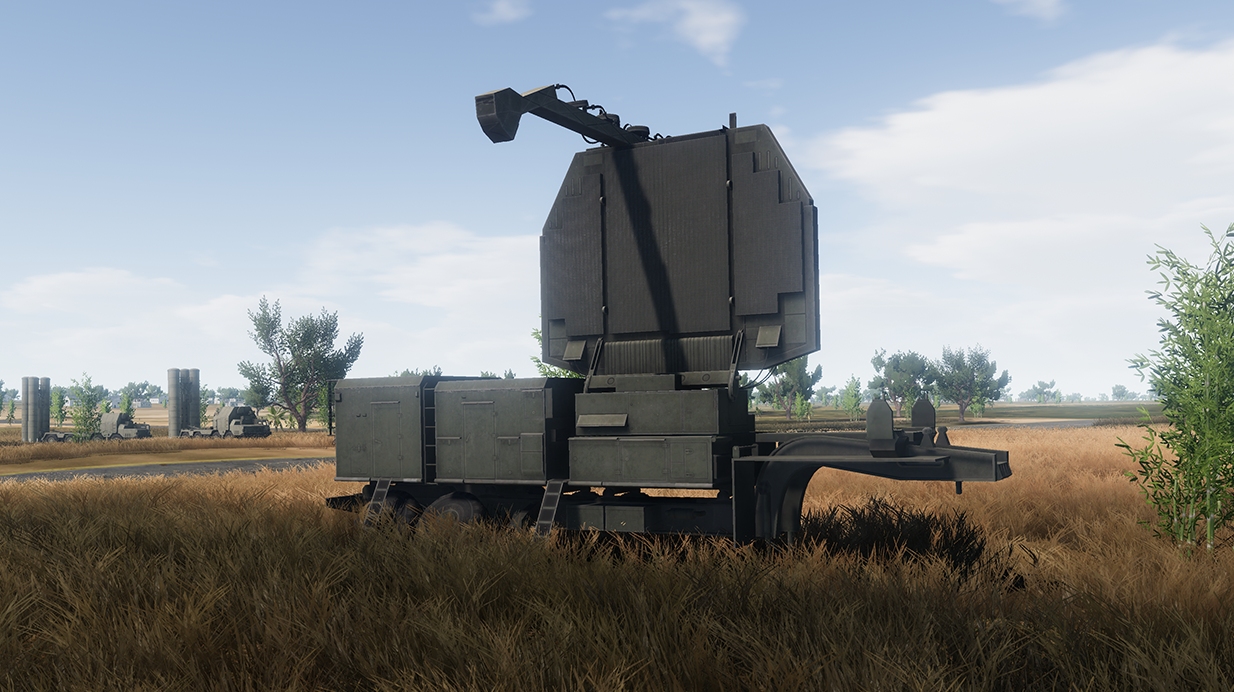
Where I landed was a system that takes simple public datapoints as inputs (maximum range, for example), reverse-engineers plausible values for the underlying parameters, and uses those values in a simplified version of the physical equations. This gives a plausible result without requiring a huge amount of difficult-to-obtain information about each specific sensor.
THC: Are lazy and WW2-accustomed wargamers likely to enjoy BC?
Geoff: Yes, I think they are. The modern setting does add a learning curve – how do I use drones effectively? How does a modern amphibious landing work? When does stealth matter, and when does it not? But I think that one of the most interesting parts of Battlespace Command is experimenting with this, and building an intuition of how the modern battlefield differs from the WW2-era that we are so familiar with.
THC: Are you developing with professional customers in mind as well as recreational ones?
Geoff: Yes – a professional version of the game is being developed in parallel with the consumer version.
THC: Where do you stand on the topic of AI coding assistants?
Geoff: I have mixed feelings about AI in software development. It can deliver good results, when used by a human who thoroughly understands how the code should work and can review the results. Working within a clear design and strong architecture, with a solid understanding of context, requirements, and constraints, an AI assistant can write excellent code very quickly. But it is easy to hand over far too much of the decision making to the AI, and end up with a dead-end result that works poorly and cannot be built upon in the future.
The rise of AI has also completely changed the experience of software development – mastering a language, becoming part of a community of developers, sharing techniques, and so on. It feels like that era is ending, which is a big loss. Getting started as an indie game developer today would be a very different experience.
One positive is that the proliferation of AI coding assistants will probably lower the barriers for game designers to build genuinely unique and innovative games that would never otherwise see the light of day.
THC: Name a game, either released or in development, that you feel deserves more attention.

Geoff: I have always enjoyed Firefight – it has been well covered here, but I don’t see it discussed elsewhere as often as I would expect. It is a fantastic game, and the fact that Sean continues to add major features and content ten years after its initial release is an inspiration.
THC: Thank you for your time.