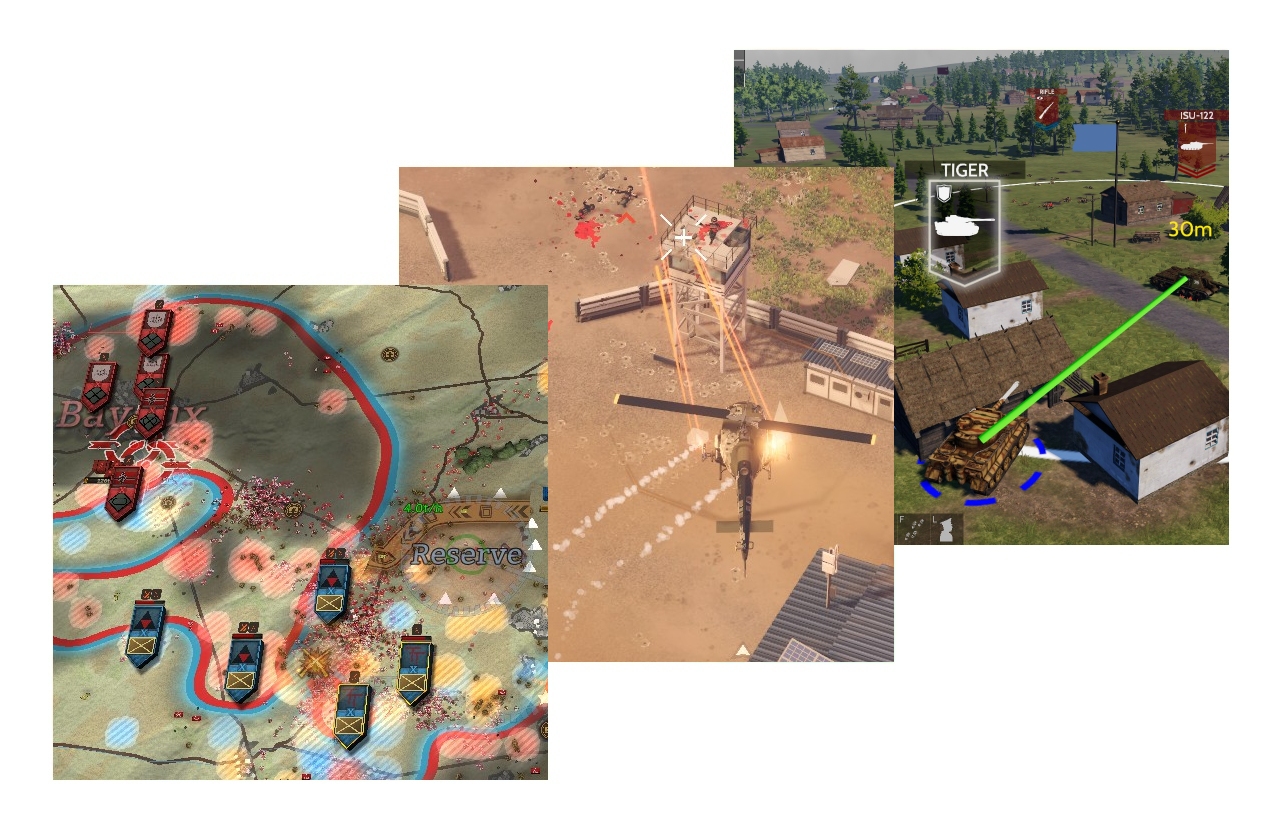
Want to turn a green lane into a brown lane, tow a Gulaschkanone across a snowy field, or roam the Western Desert trashing Axis airfields? Get a 4×4. Want quick introductions to games of interest to realism relishers and old fogies? Read a 3×3. Prior to penning one of these articles I’ll play three tempting titles for at least three hours each. While it would be cavalier to call the reports that result from such brief auditions ‘reviews’, it’s conceivable they might lead to more prolonged playtests, and prompt or prevent the odd purchase.
Battleplan
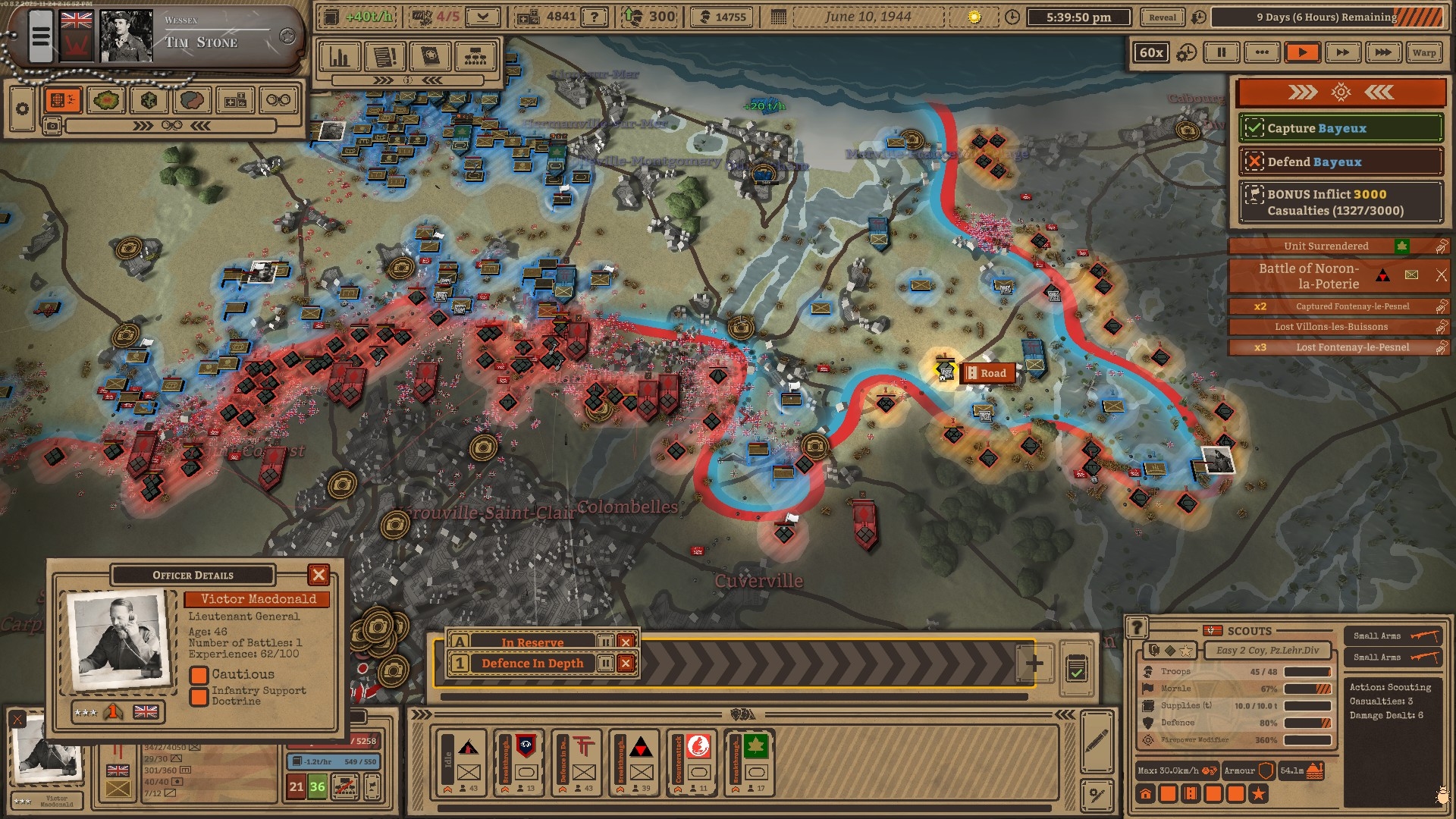
It’s a long time since the notebook I use to record play notes hosted an unironic, wholly positive ‘Astonishing!’. To find two on the same page of barely legible scribblings is unheard of. Or it was until I started playing the Battleplan preview build.
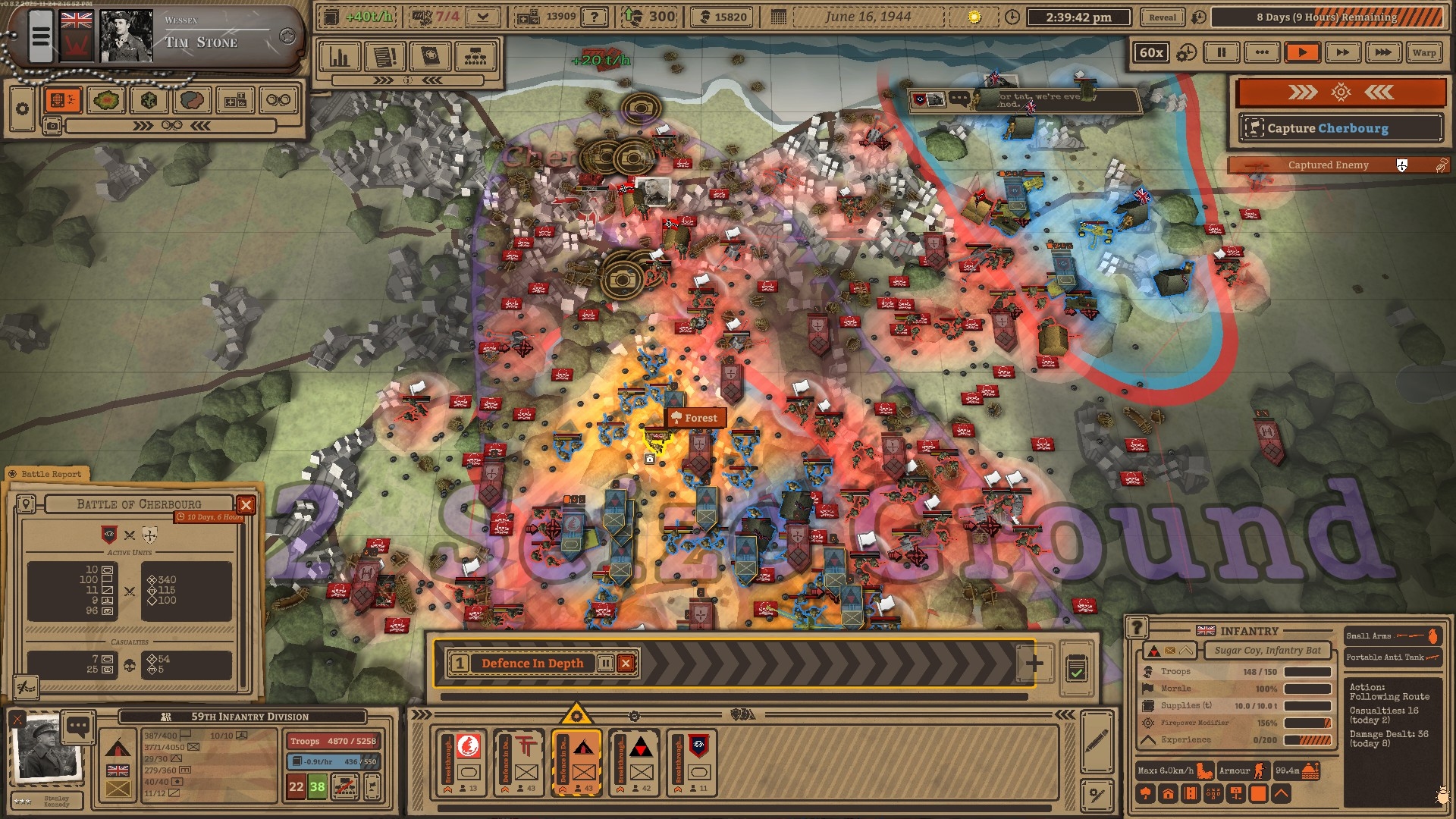
An upcoming turnless WW2 wargame from Foolish Mortals, the Canadian outfit that gave us the unusually foggy Radio General, Battleplan is breathtakingly ambitious and, initially, pretty overwhelming.
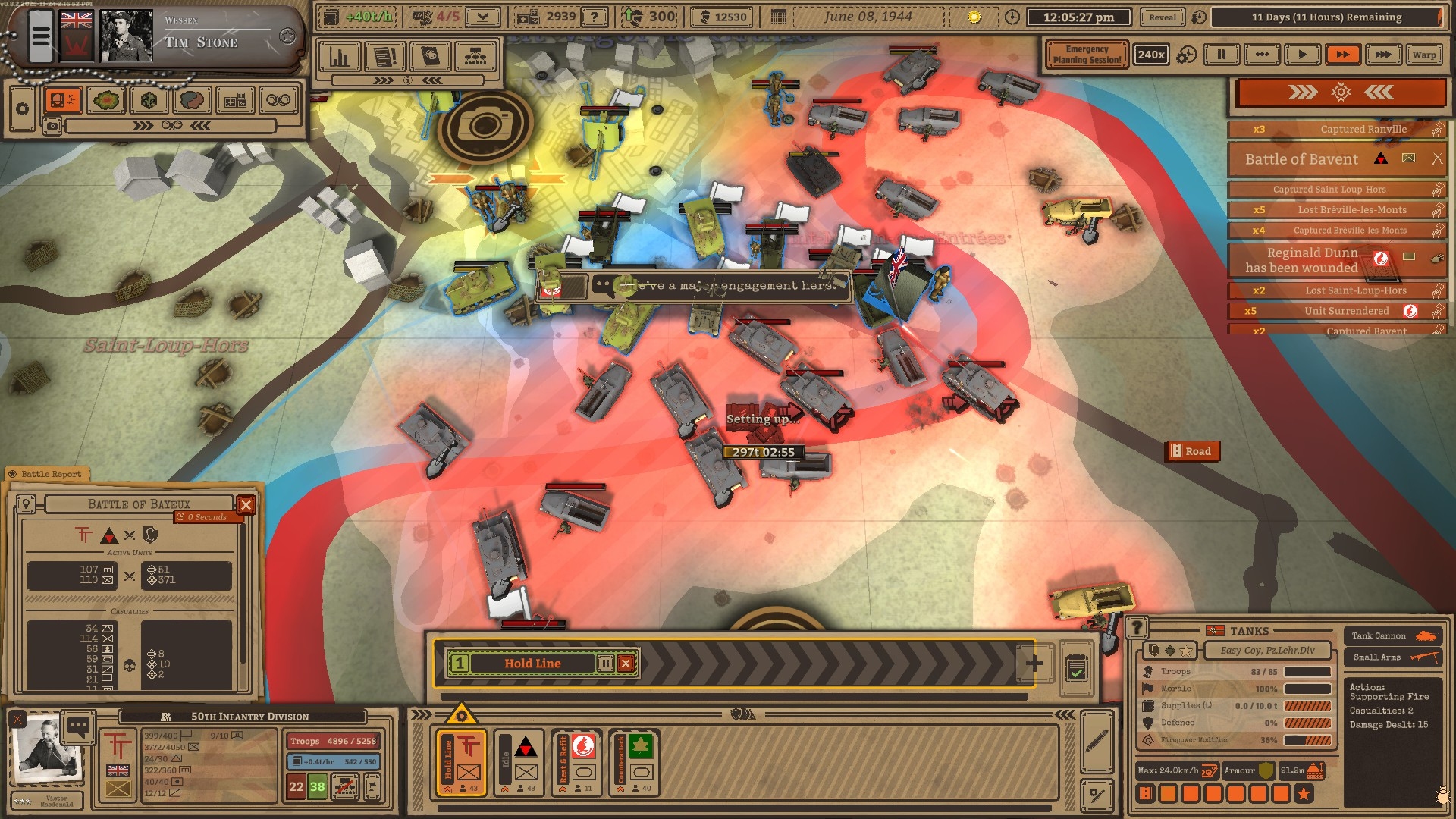
Despite a serviceable interactive tutorial, my first hour in its company wasn’t entirely happy. A tad confused by the unorthodox mechanics, and slightly repulsed by the mass of multicoloured blobs seething on my screen, I arrived on the Cotentin Peninsula (the first proper scenario recreates the US capture of Cherbourg) somewhat sceptical.
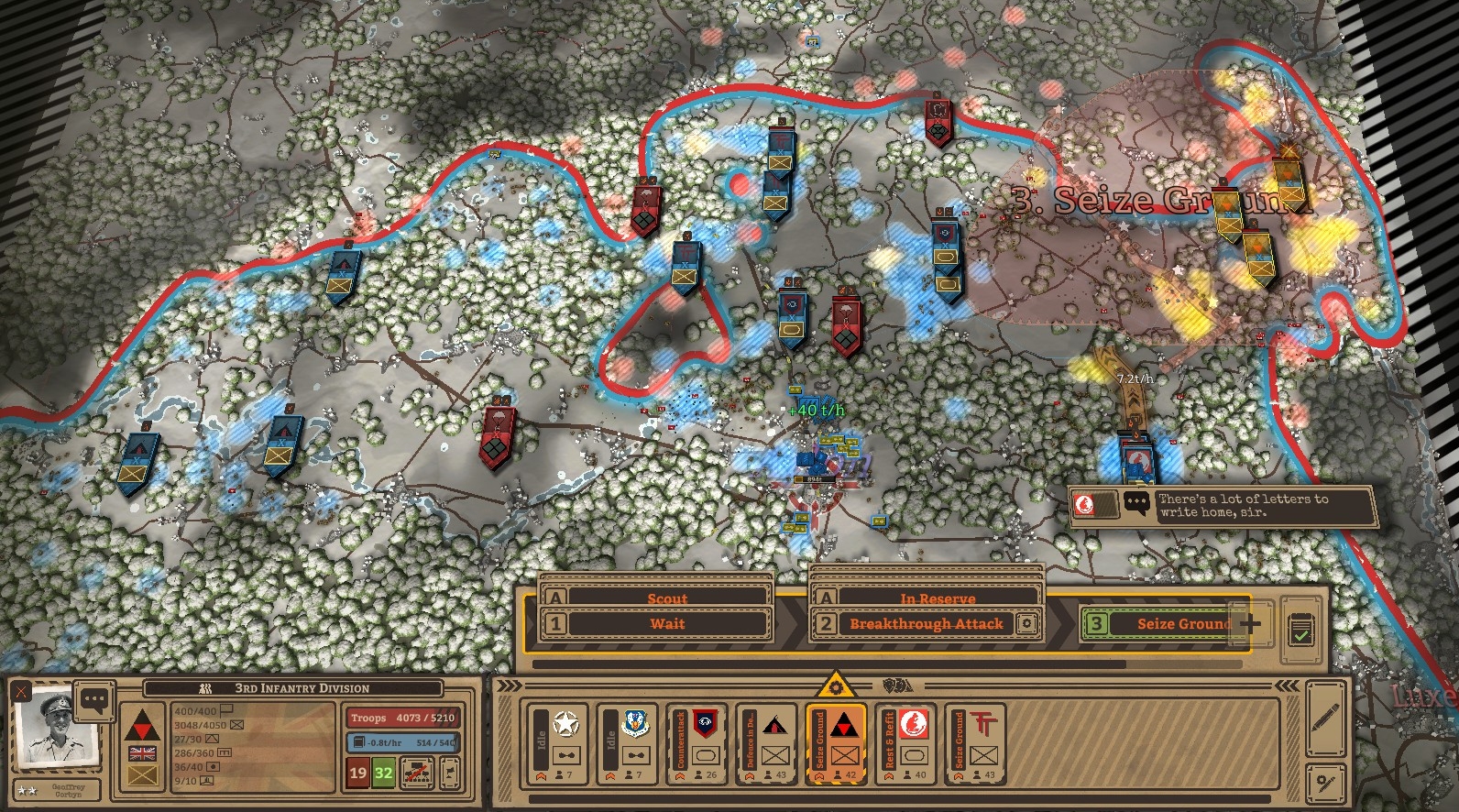
Four hours later, I’m happy to say, that scepticism has vanished. Having general-ed in Normandy and the Ardennes, grown accustomed to the game’s elegant order mechanics and numerous map filters, and observed a remarkable AI in action, I’m now a Battleplan believer.
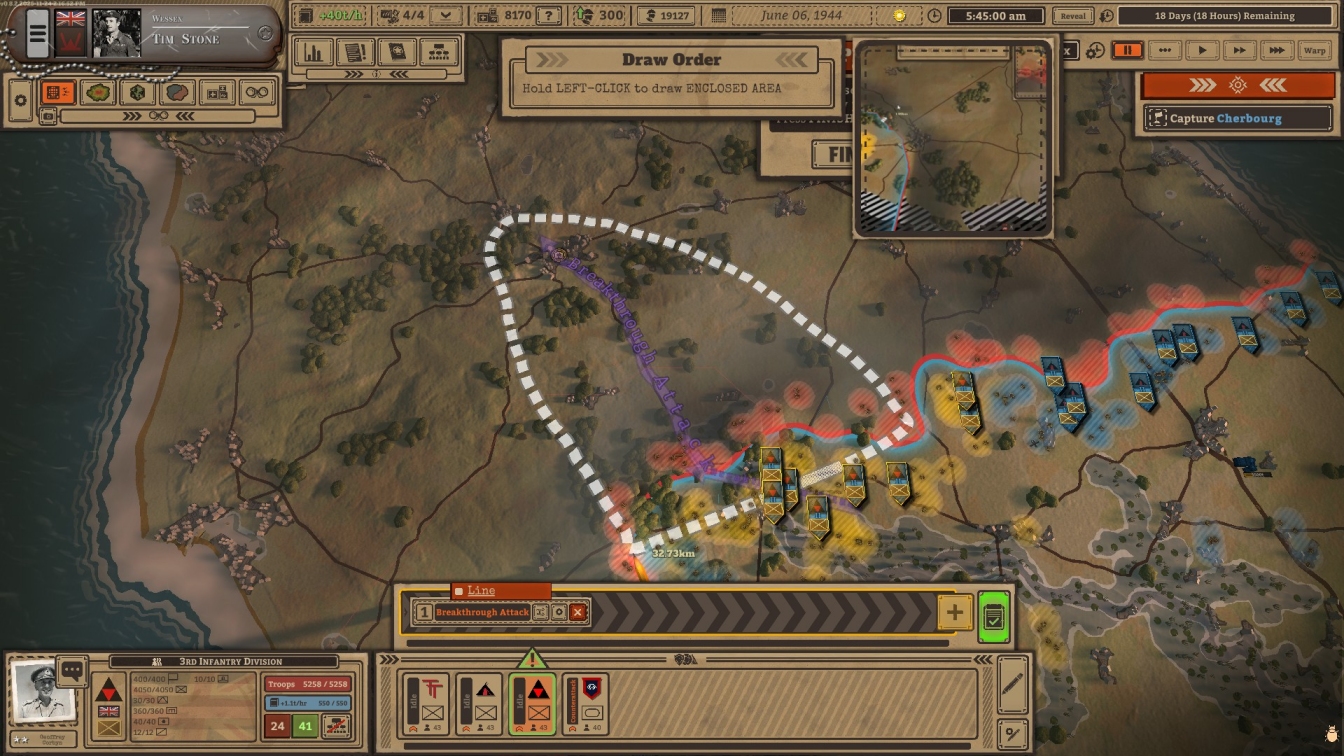
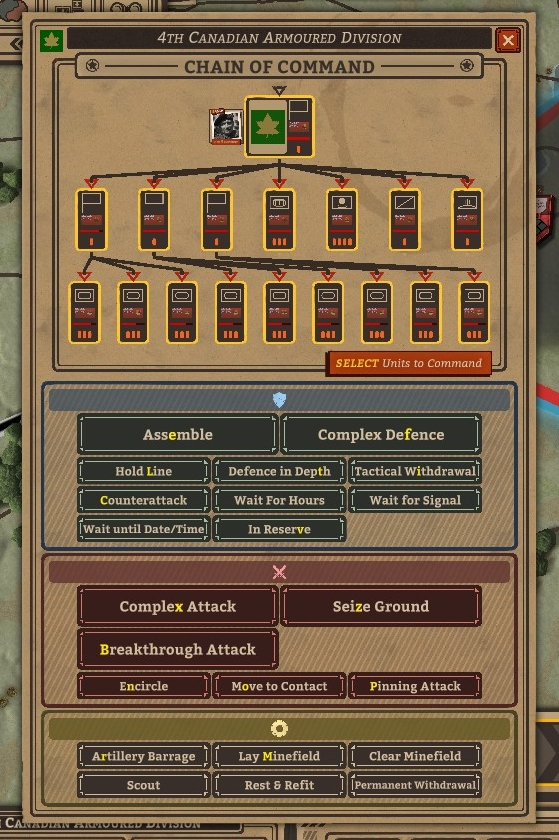
While this isn’t the first strategy game to dispense virtual pencils to player-commanders, the map-defacing writing utensils Foolish Mortals provide are far more powerful than anything we’ve seen before. For example, if I choose to, I can click one of my divisions, select ‘complex attack’, and draw a big misshapen circle around a tempting piece of enemy-held real estate.
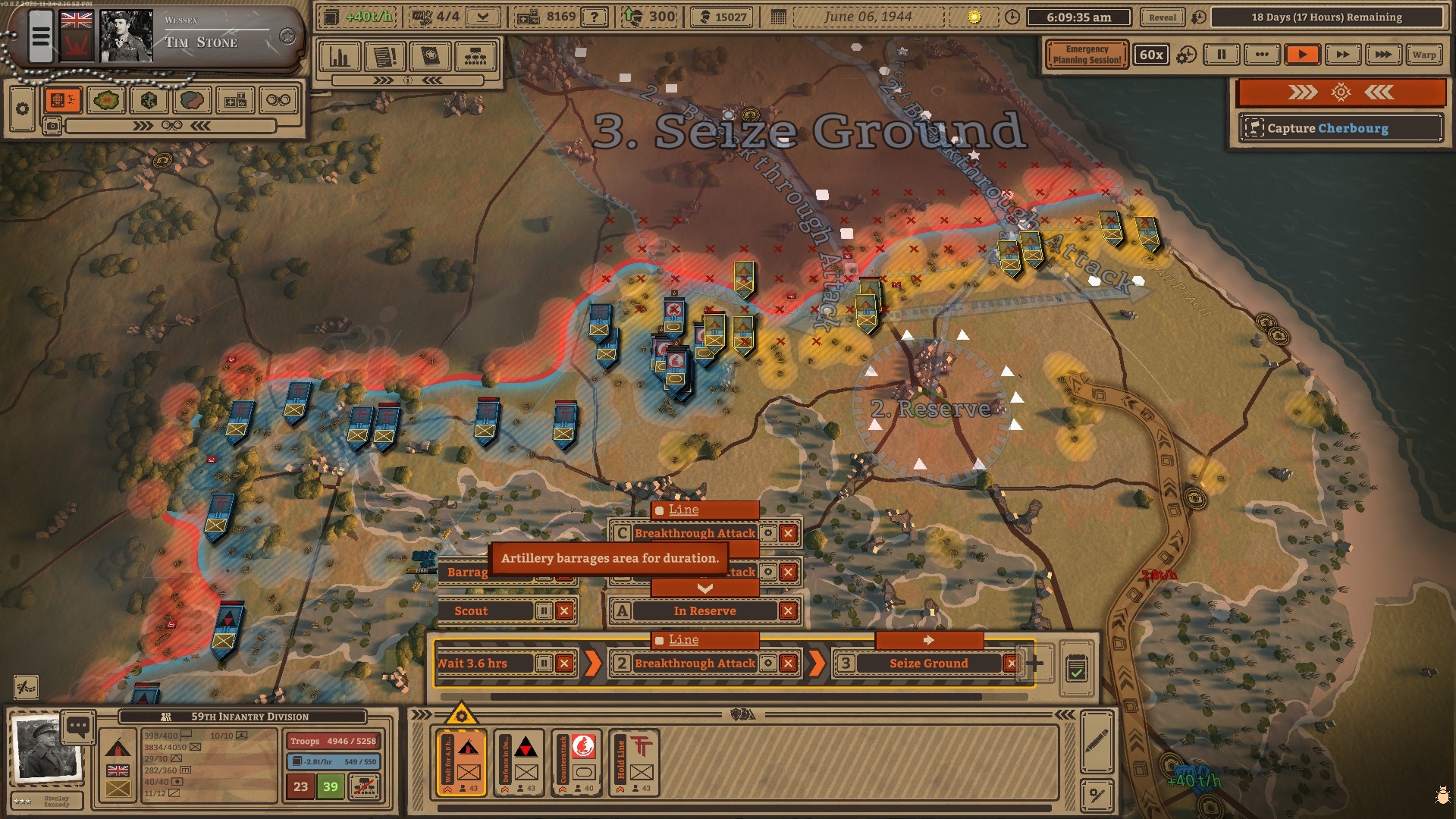
This action doesn’t simply send the division in question swanning towards the objective. It causes the division’s CO to devise and launch a sophisticated multi-phase plan. An assembly point will be selected, recon conducted, a reserve organised, and an artillery barrage prepared. If necessary, engineers will set about clearing mines on the relevant portion of front line. When the attack eventually launches, your silicon subordinate will concentrate his forces in particular spots in an attempt to achieve local breakthroughs. If those breakthroughs succeed he’ll then strive to mop up bypassed foes and consolidate gains.
If you wish to, you can tweak these elaborate schemes, or tackle things in a more piecemeal or hands-on manner. The range of order types is impressive, and all are explained by illuminating tooltips.
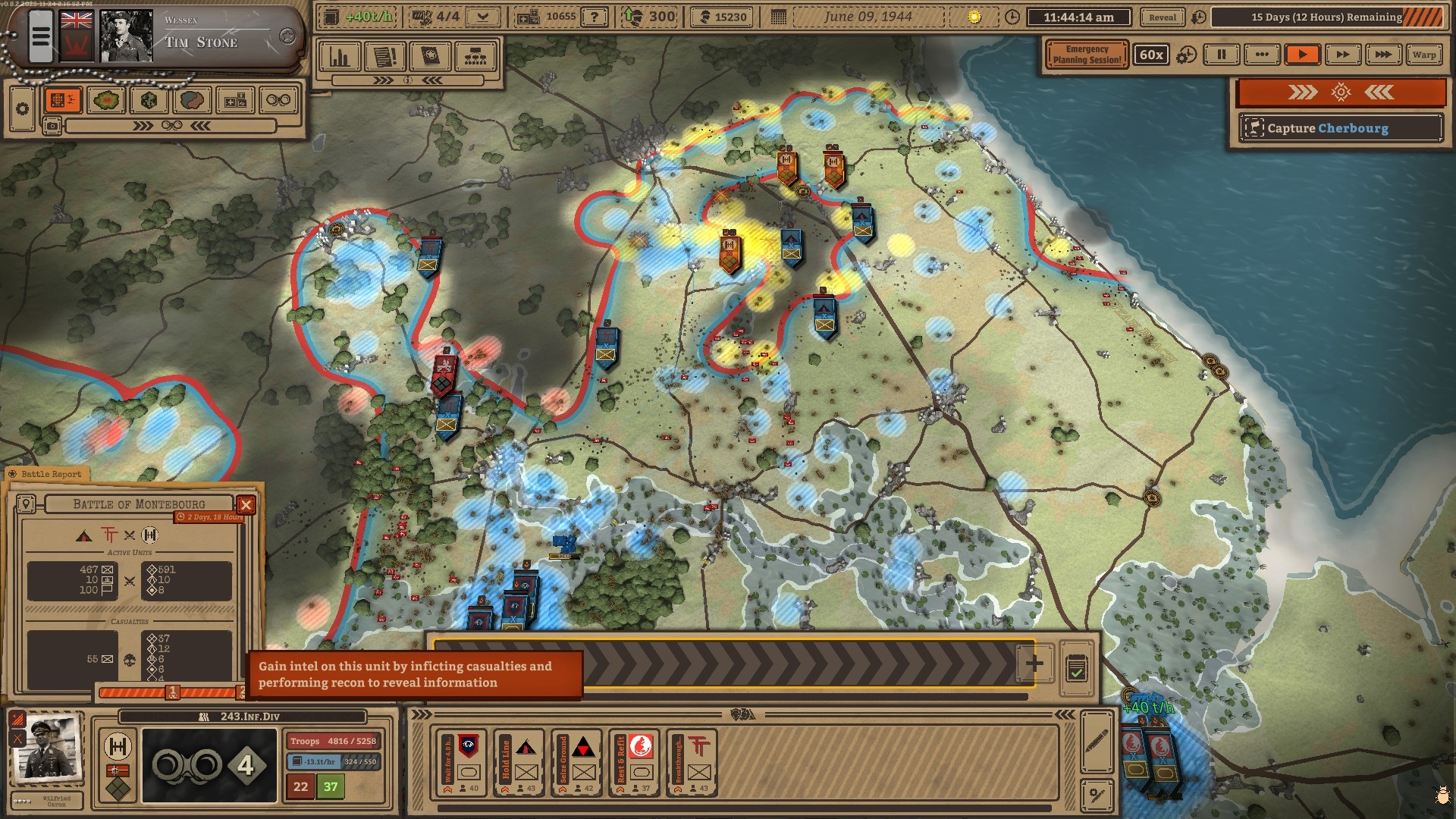
Obviously a delegation system like this is only as good as the AI that underpins it. Thus far, apart from one questionable choice of assembly point during an attack on Caen, I’ve not witnessed my underlings do anything daft. Quite the contrary in fact. When I’ve found myself in trouble, it’s almost always because I’ve asked too much of my men, neglected logistics*, failed to heed the regular sitreps from my divisional COs, or underestimated my opponent.
* I’ll talk more about the game’s natty approach to logistics, recon, order rationing, and commander personalities in a future article.
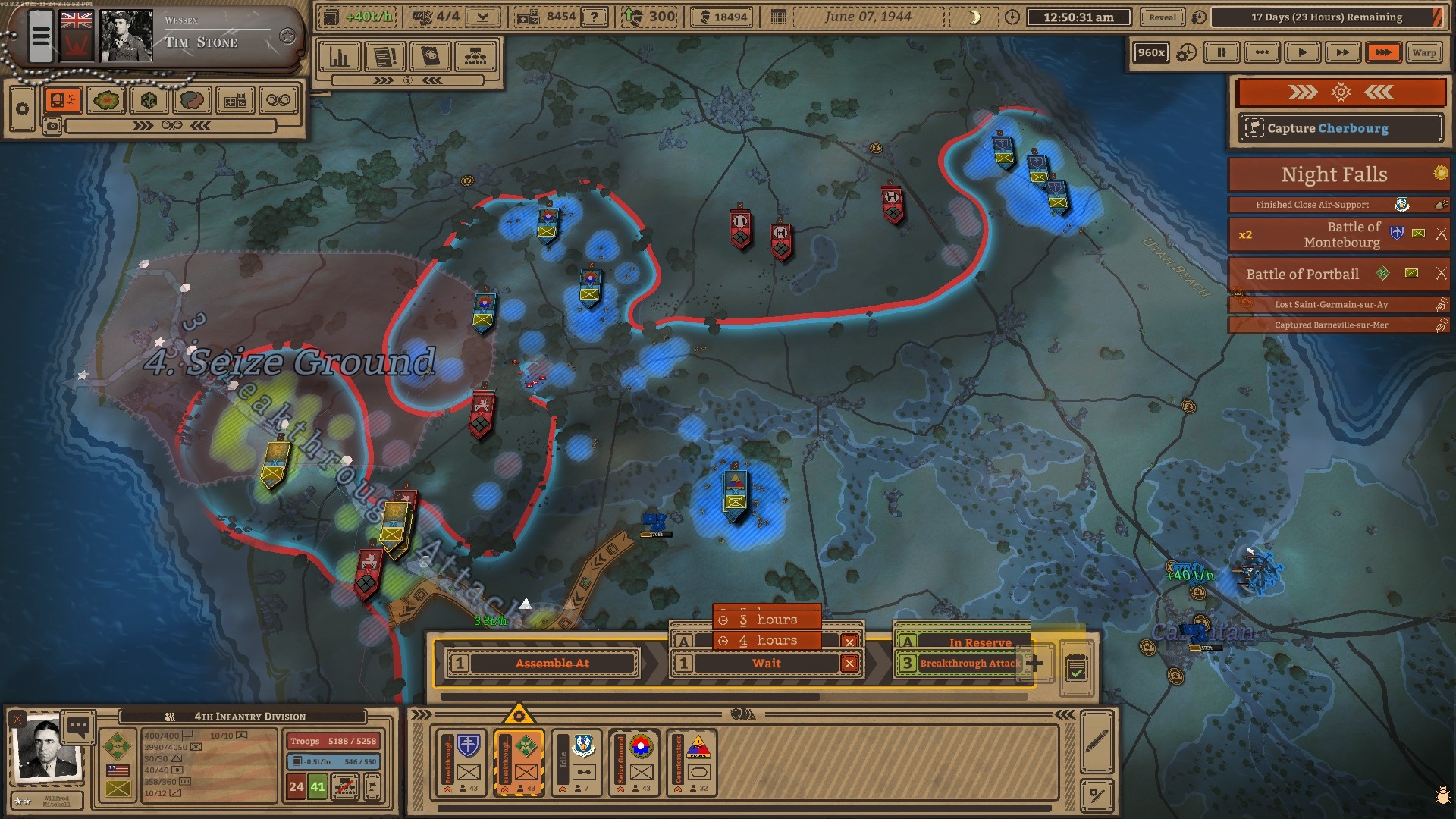
If the last few paragraphs haven’t brought to mind the Command Ops titles and their predecessors, I’ve done a poor job of explaining how Battleplan works and what it feels like to play. It’s hard to believe Foolish Mortals haven’t played Panther Games’ work, and analysed its weaknesses and strengths. Fans of battlefield delegation, fluid frontlines, and mesmerising martial mayhem, will, I predict, find much to enjoy in Battleplan.
* * *
Battlefield Commander WWII
Graviteam Tactics? Too complex. Combat Mission? Too different. Close Combat: The Bloody First? Too flawed. Close Combat fans like me have been searching for a true 3D replacement for Atomic’s classic pop wargames for decades, and nothing has quite passed muster. Early Access Battlefield Commander WWII throws its forage cap into the ring with a deft flick of the wrist. Does the flying head cosy land dead centre or get caught by the wind, drift out of the ring, and alight atop a croquembouche of steaming horse manure?
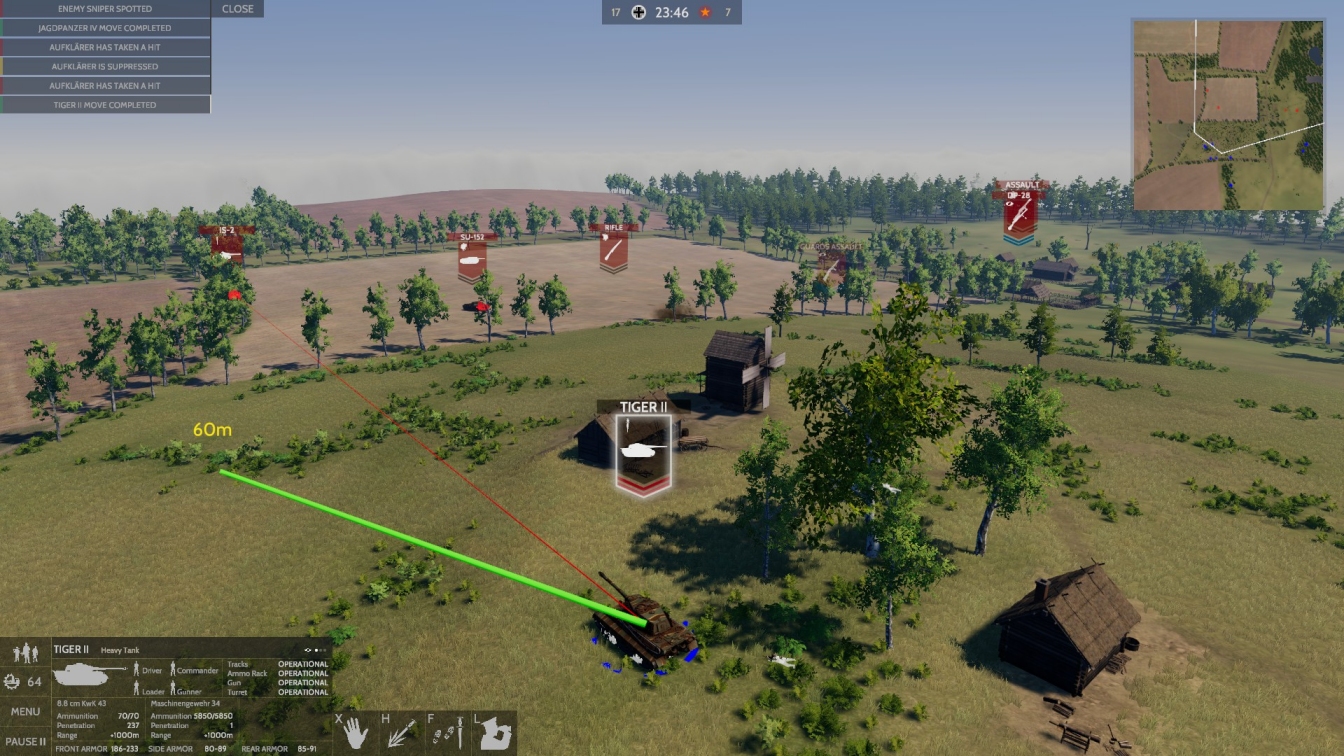
It’s complicated. The fact that a three-hour audition ended up lasting six hours suggests Sword of Steel is basically on the right track. I’m liking the tense battles, the simple controls, and the unusual approach to campaigning. I’m less keen on the relatively unsophisticated TacAI, the shortsighted tanks, and meagre map selection.
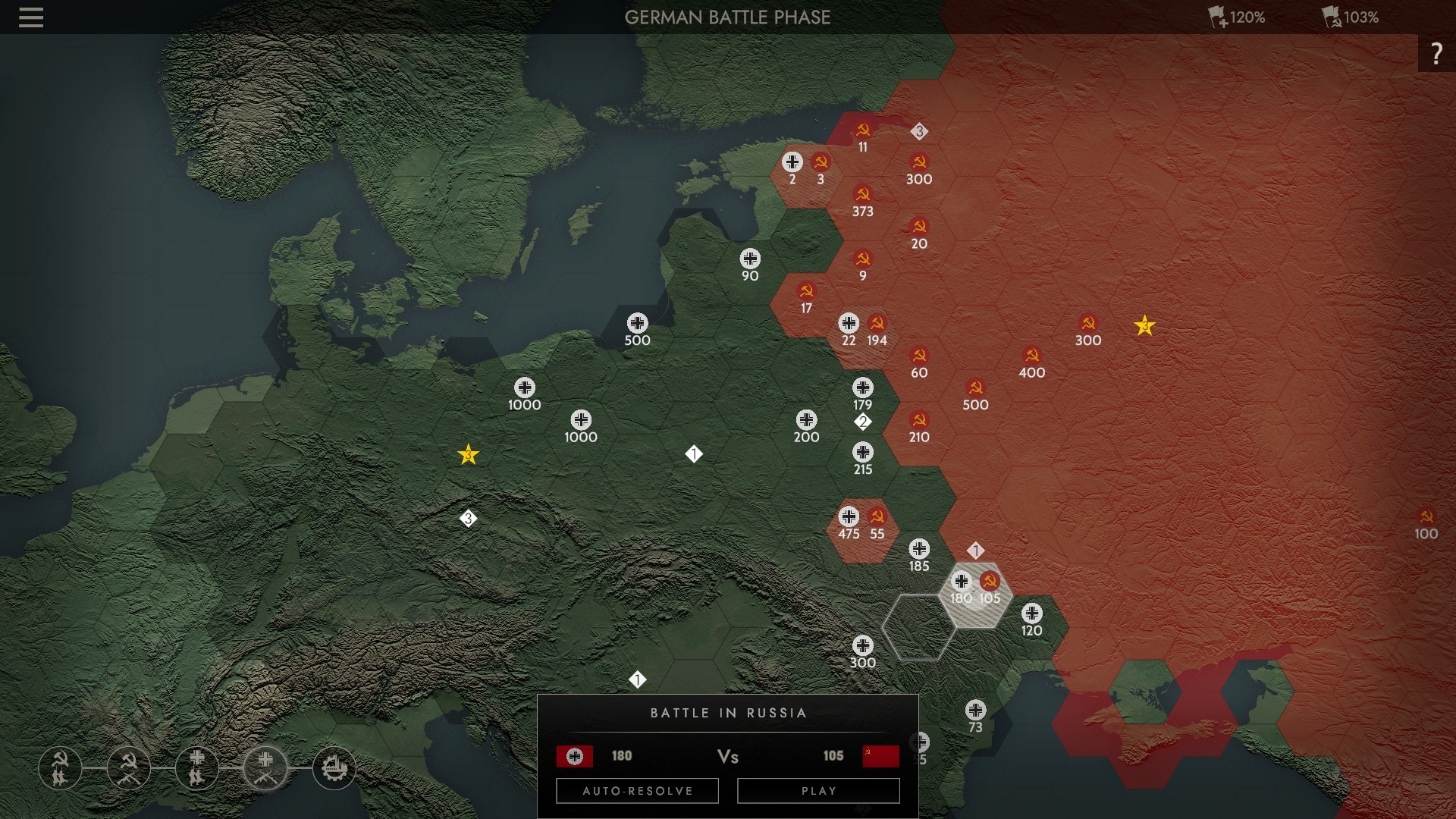
Playable as either late-war Germany or the late-war Soviet Union, campaigns in BCWW2 involve moving malleable armies around a hexed map of Eastern Europe. The only distinguishing feature of an army is its size. The bigger the force, the more requisition points you have at your disposal when a clash occurs.
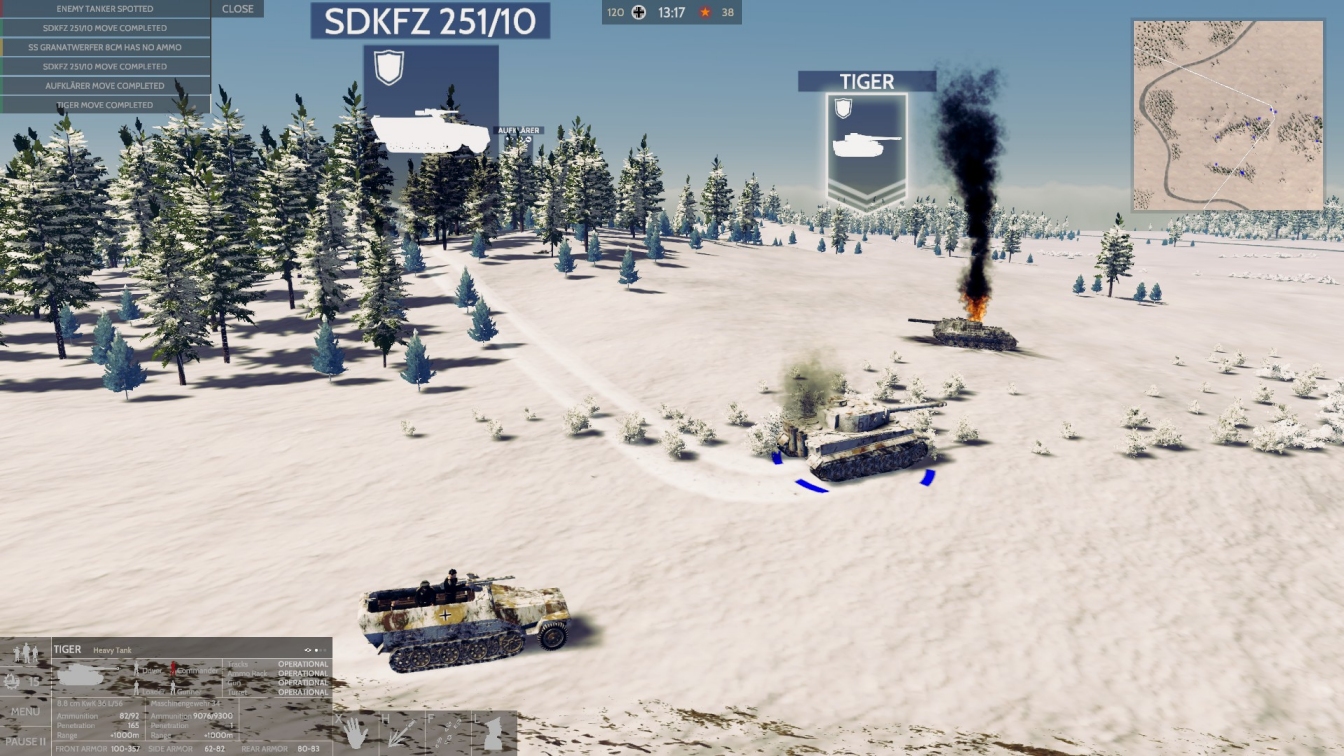
All campaign scraps can be auto-resolved. Assuming the armies involved are sufficiently large, you also get the option to switch to a 3D battlefield and settle things in real-time. Paired with a random map generator or bulging map folder, the campaign engine would be a truly splendid thing. Currently matched with a selection of just six venues, much of its potential remains unfulfilled.

Opt to play a campaign engagement in ‘battle’ rather than ‘flags’ mode and there’s no pressure to conquer a venue quickly. Hurting the enemy more than he hurts you before the time limit (15, 30, or 45 minutes) expires is the name of the game. ‘Flags’ fights are far more challenging because CPU-controlled foes don’t hang about when there are unclaimed VLs on a map, and owning all VLs commences an alarmingly short victory countdown.
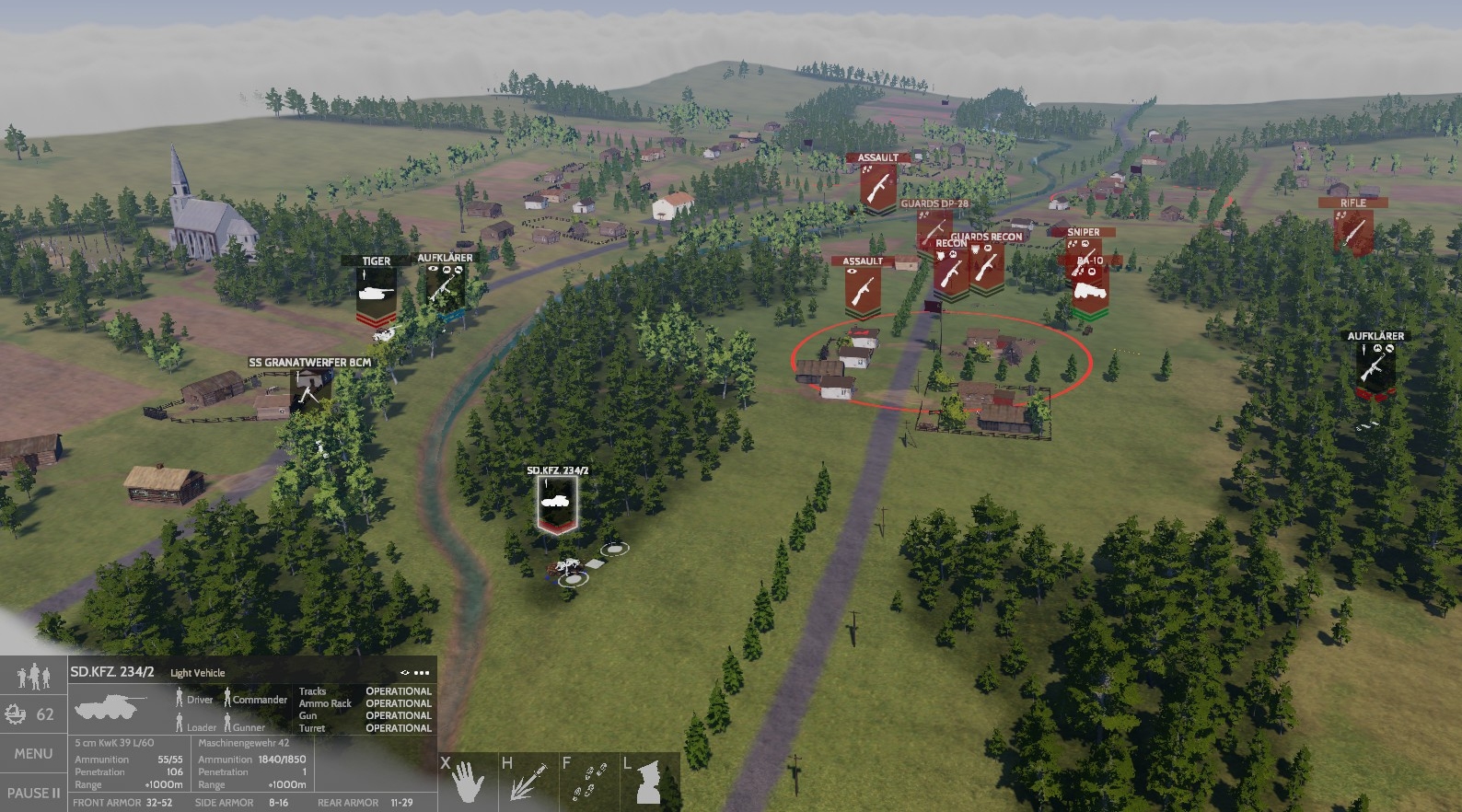
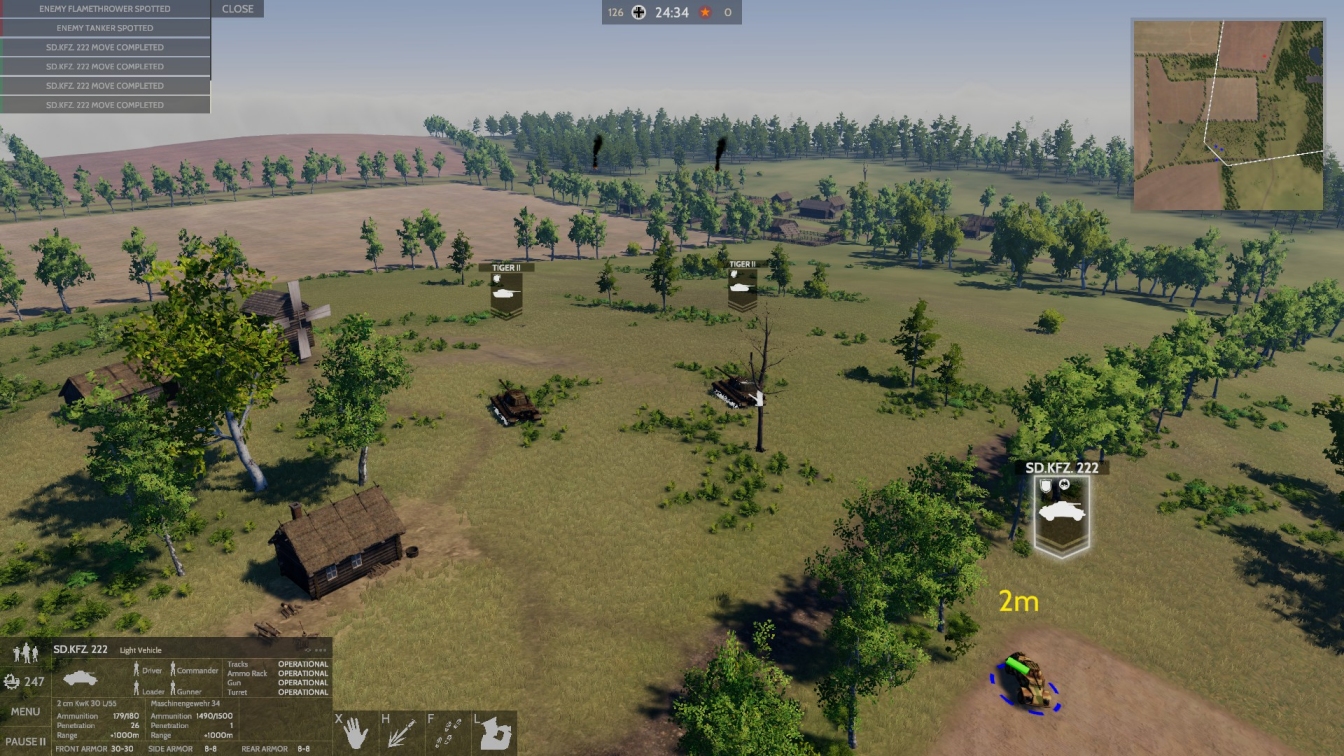
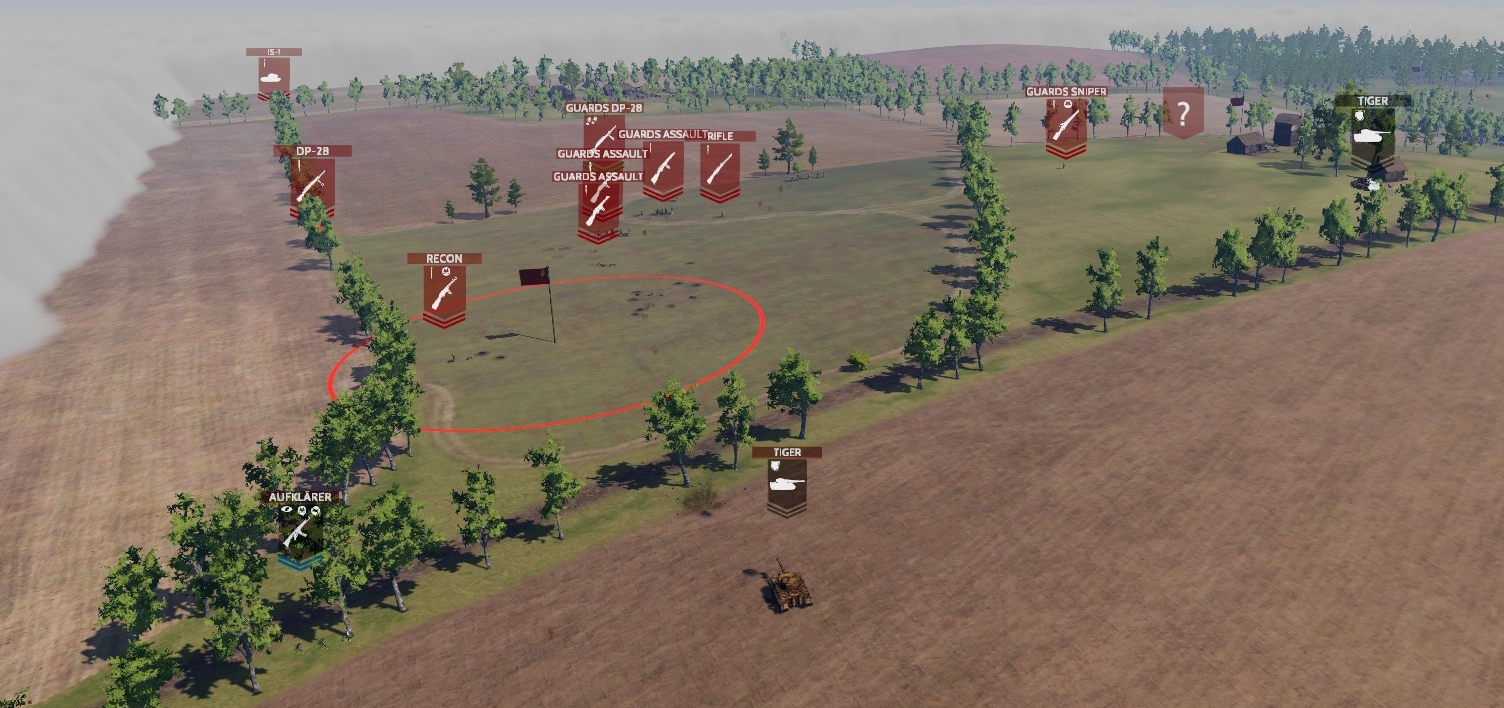
Combined arms tactics are really important in BCWW2. Perhaps too important. Because caterpillared heavyweights have the eyesight of elderly rhinos, if you don’t use them in concert with infantry or recon vehicles, you’re in for a lot of heartache. Here’s an illustration of the game’s stylised spotting in action:
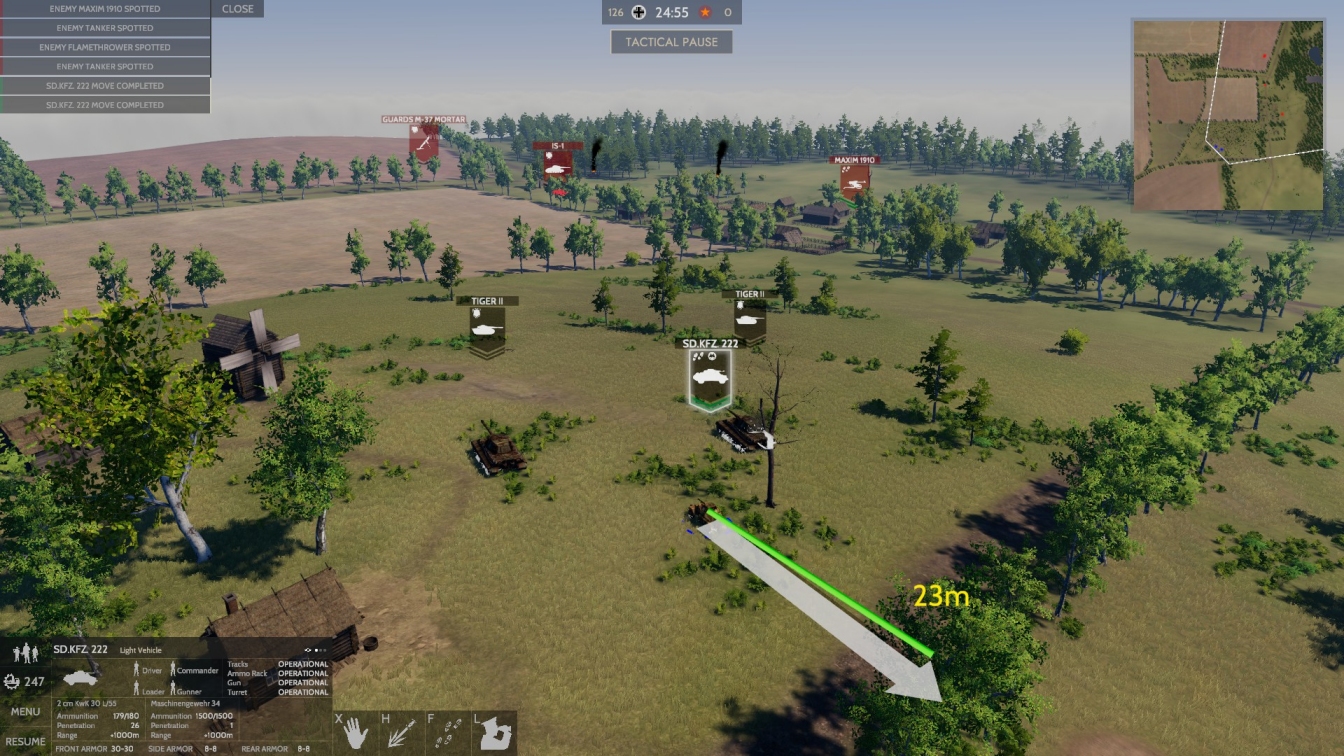
In company with a Leichter Panzerspähwagen my pair of King Tigers has no trouble spotting and targeting the enemy IS-1, mortar, and MG team ahead.
However, if my armoured car breaks LoS with these three foes by reversing, the two tanks quickly lose sight of the enemies.
Cheap Aufklärers plus the ability to turn individual soldiers into scouts in the field (infantry can be controlled as teams or individually) means there’s little excuse for losing tanks to unseen foes, but realism relishers may still struggle with the needless exaggerations.
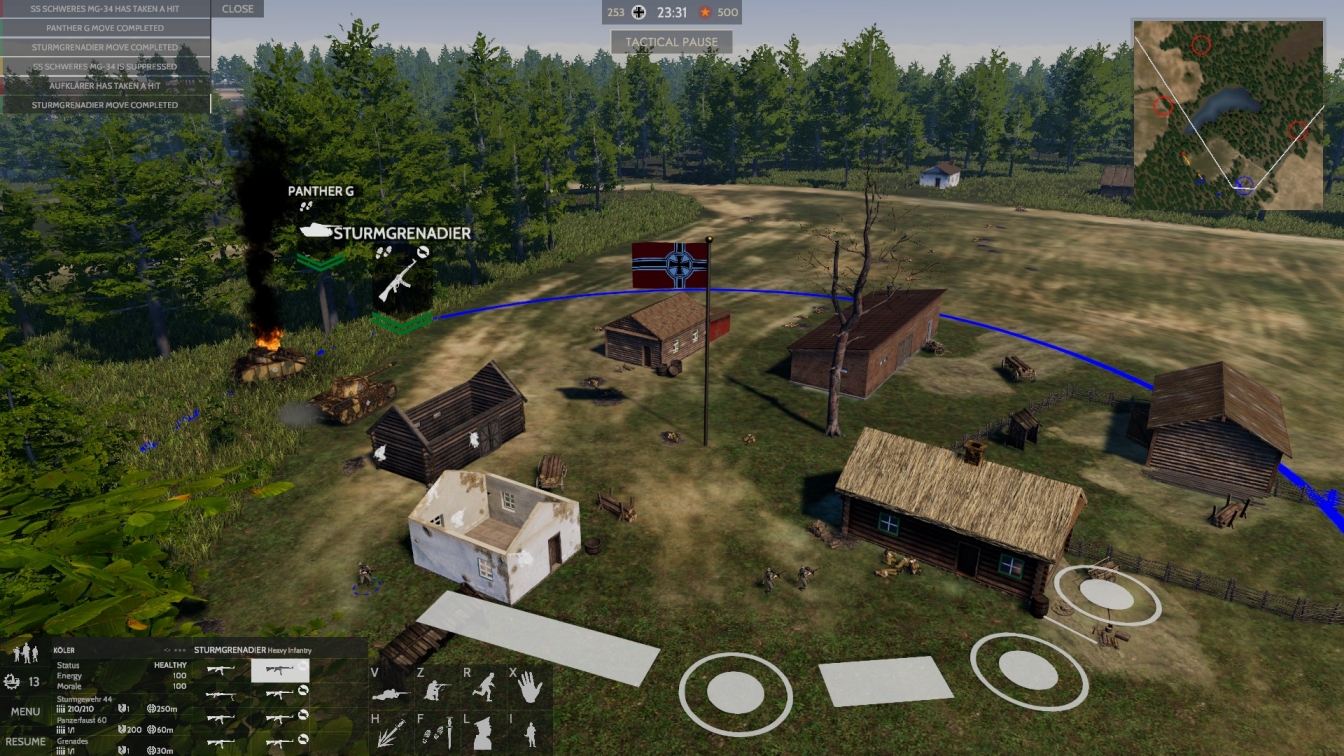
One of the joys of Close Combating was watching grunts automatically adjust their positions to take full advantage of cover such as walls, trees, and ditches. Sadly, you won’t see similar behaviour here, yet we do get the suicidal ‘crawls of death’ that CC fans endured for so long. If the “AI improvements” mentioned in the roadmap don’t encourage enemy infantry to dash, retreat, and seek out woods more often, I’ll be disappointed.
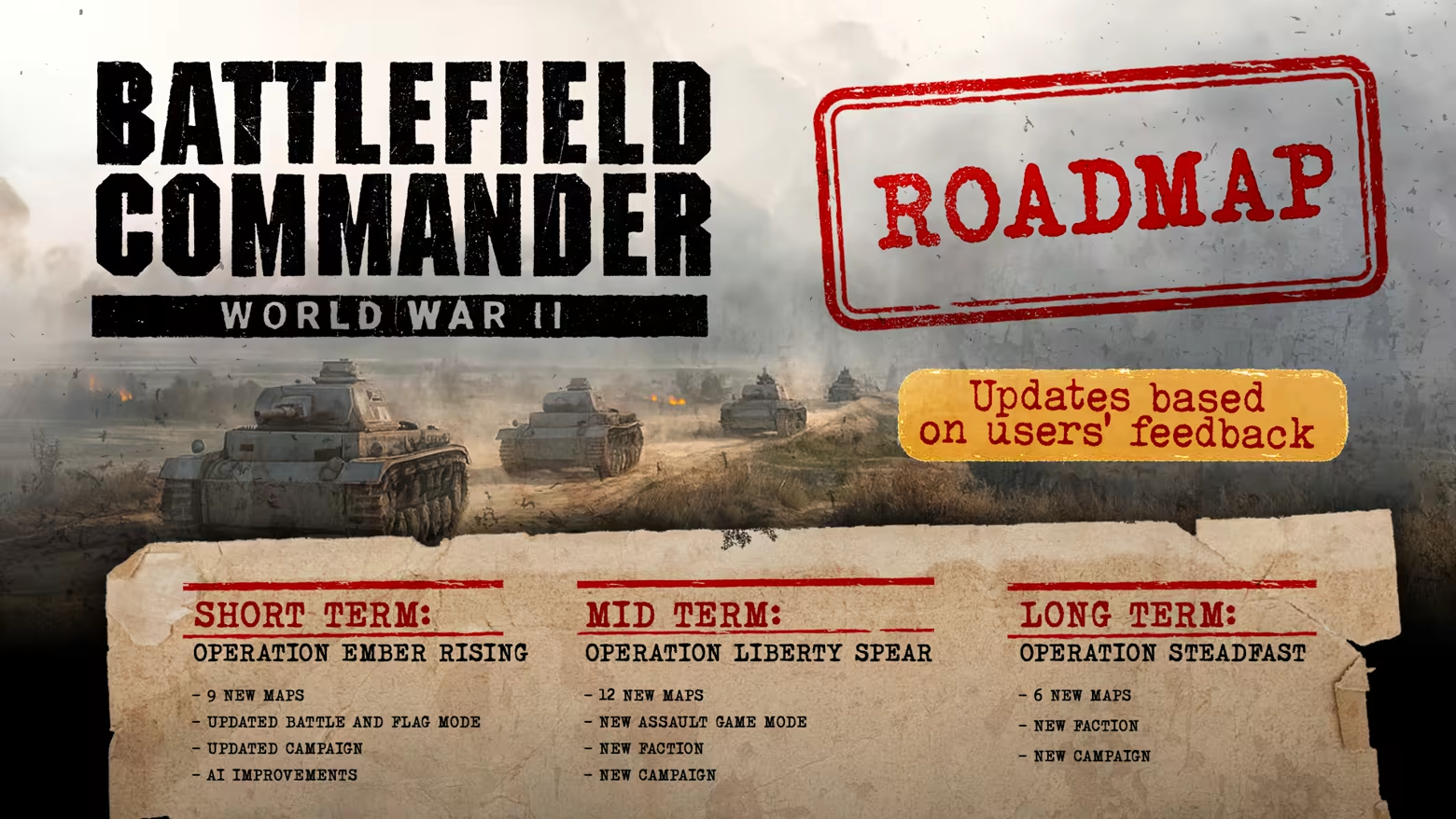
Already moreish, Battlefield Commander: WWII with sharper AI, more maps, and other promised features such as AT guns, off-map arty, and aircraft, is a pretty exciting prospect.
* * *
Cleared Hot
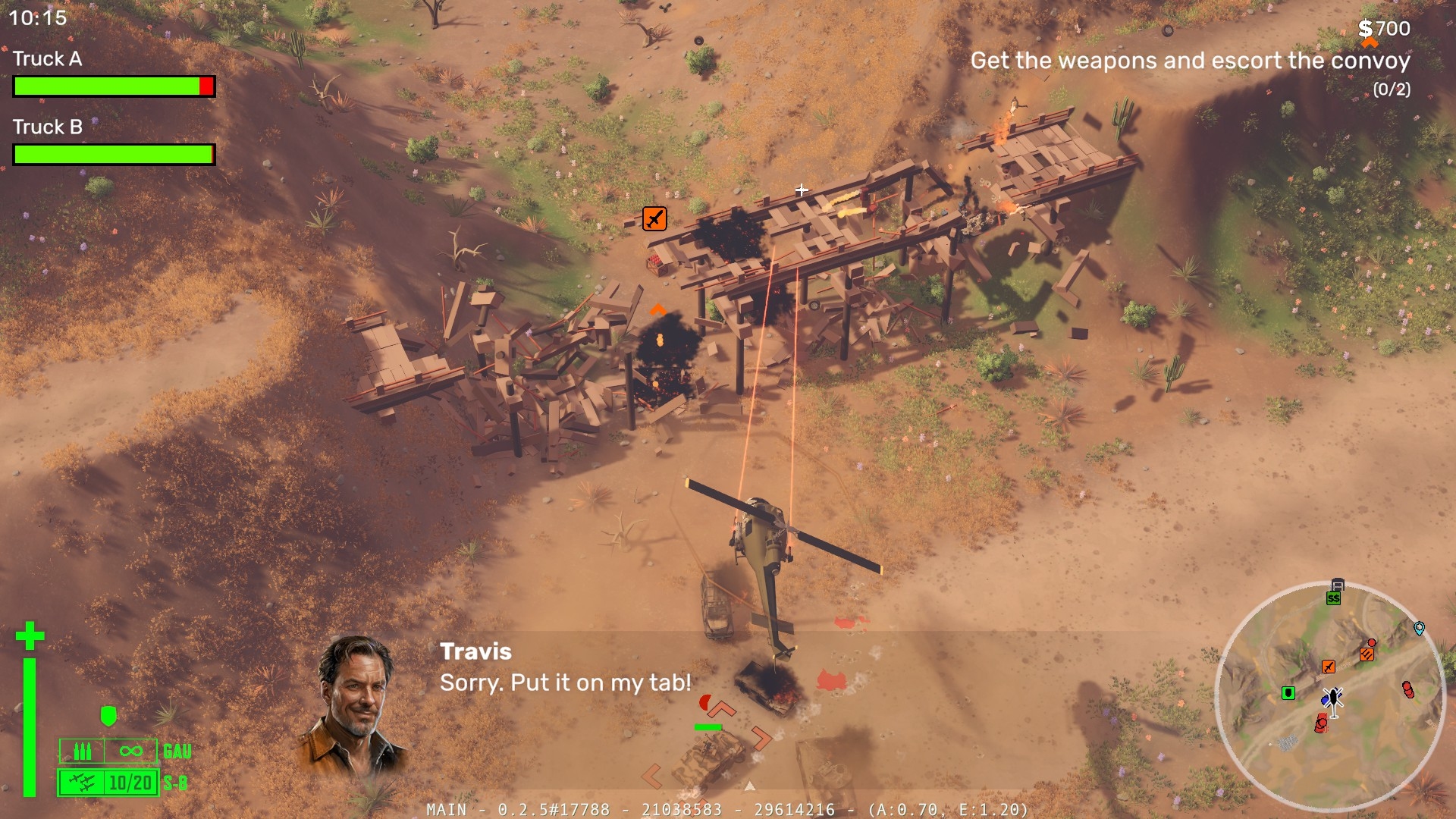
At the heart of this high intensity, low altitude smile generator is an, on the face of it, perverse design decision. If I was making a game about nap-of-the-earth helicopter gunshipping, there’s a strong possibility prominent topography such as hills, trees, and towers would wind up as potential hit point haemorrhagers. Chances are I wouldn’t let pilots off the skyhook by automatically lifting their whirlybirds over lofty obstacles.
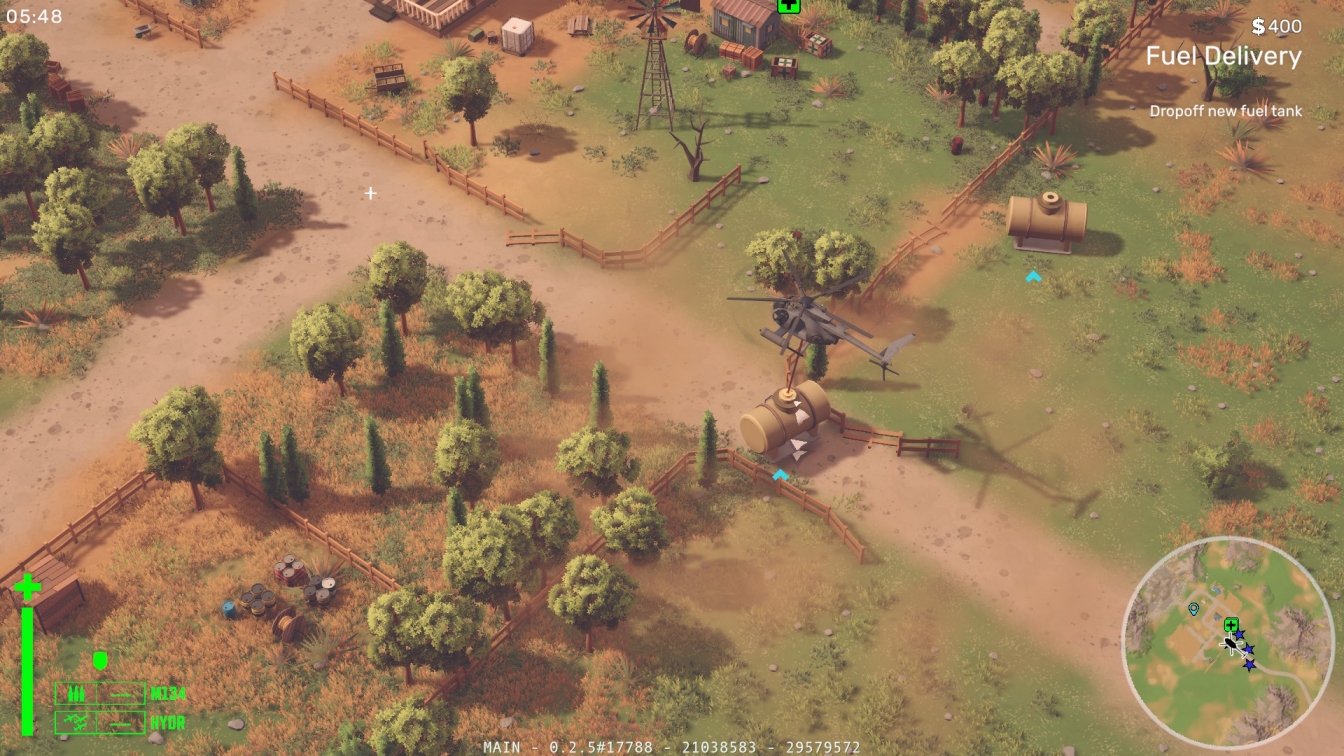
Would Cleared Hot have been a better game if terrain avoidance hadn’t been left in the hands of an infallible CPU? We’ll never know, but one thing is for sure, if Not Knowing Corporation had made scenery perilous, their creation wouldn’t have stirred happy memories of Desert Strike nearly so often. Mike Posehn’s 1992 chart-topper dealt with map protuberances less elegantly (back in the day you bounced off things like hills and electricity pylons) but, like Cleared Hot, didn’t complicate its target trashing and flak and missile evasion with potentially lethal CFITs.
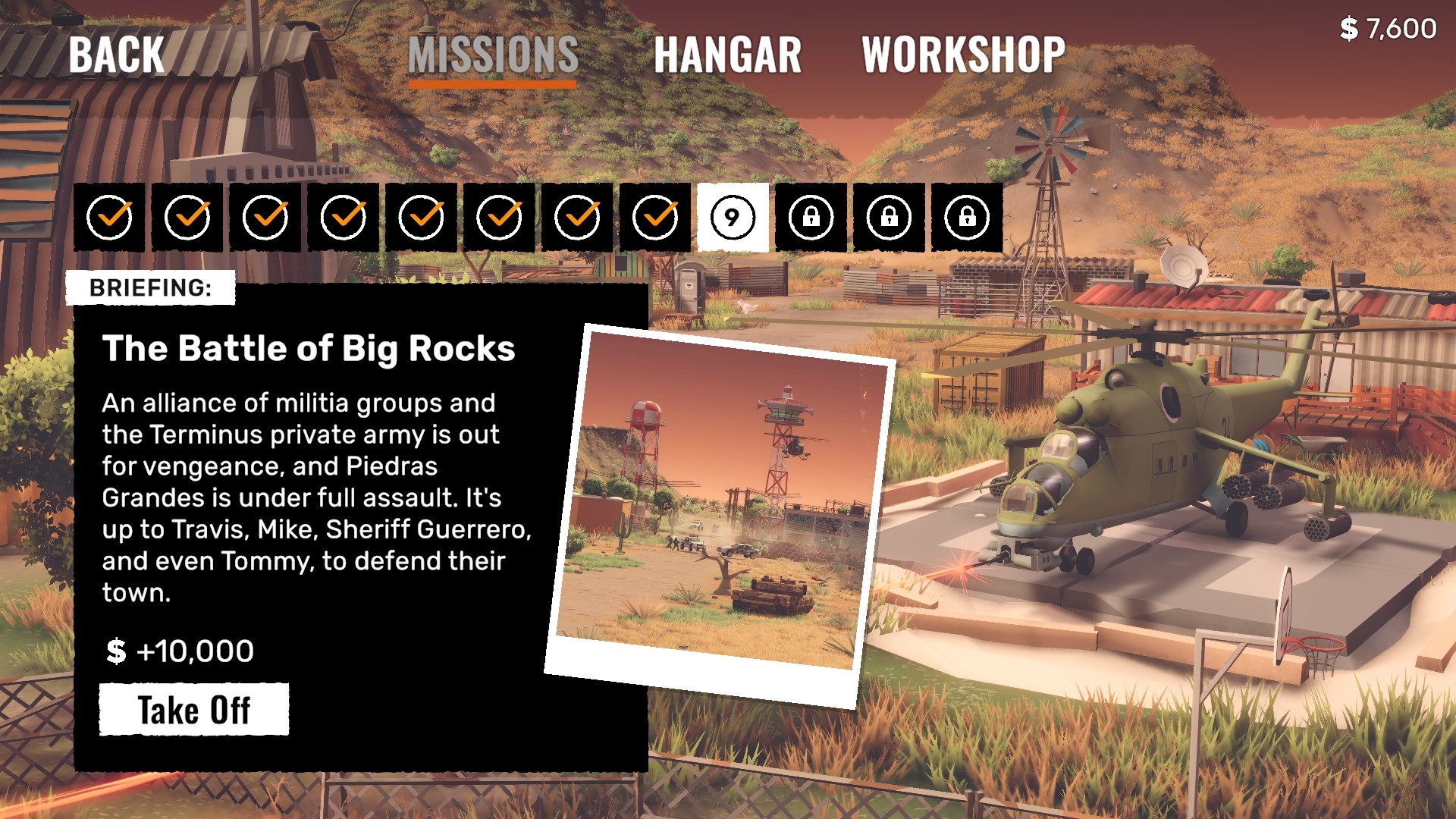
CH certainly doesn’t need prangs to guarantee challenge. About halfway through the audition I found myself slinking off to the options menu to reduce the difficulty from ‘normal’ to ‘easy’ in order to beat a particularly tough sortie. With the benefit of Mi-24sight the switch probably wasn’t necessary. Having seen the difference weapon upgrades and heli choices can make to difficulty, I think I could have progressed without swallowing my pride.

New machines and firepower don’t come cheap so it literally pays to replay completed campaign missions in order to build your bank balance. These revisits might have been onerous if wreaking havoc in CH wasn’t such fun. Because mission designs, destructible scenery, naturalistic physics, and a ludicrously capable winch conspire to make every clash unique, I can’t see myself tiring of the groundpounding before the twelve-chapter* campaign is over.
* currently
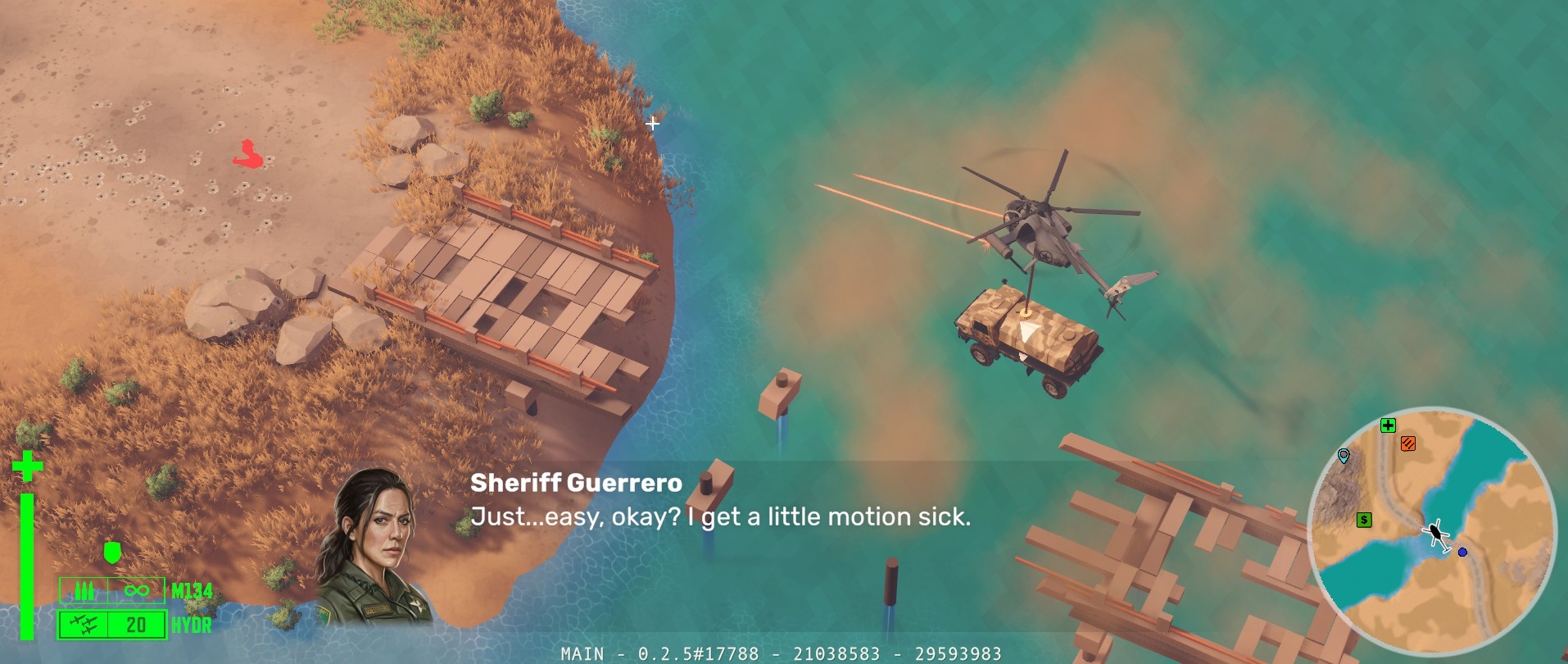
Mostly conveyed via radio chatter, the narrative in said campaign is leavened with lots of humour and, appropriately, feels like something concocted by someone raised on a diet of Airwolf and the A-Team.
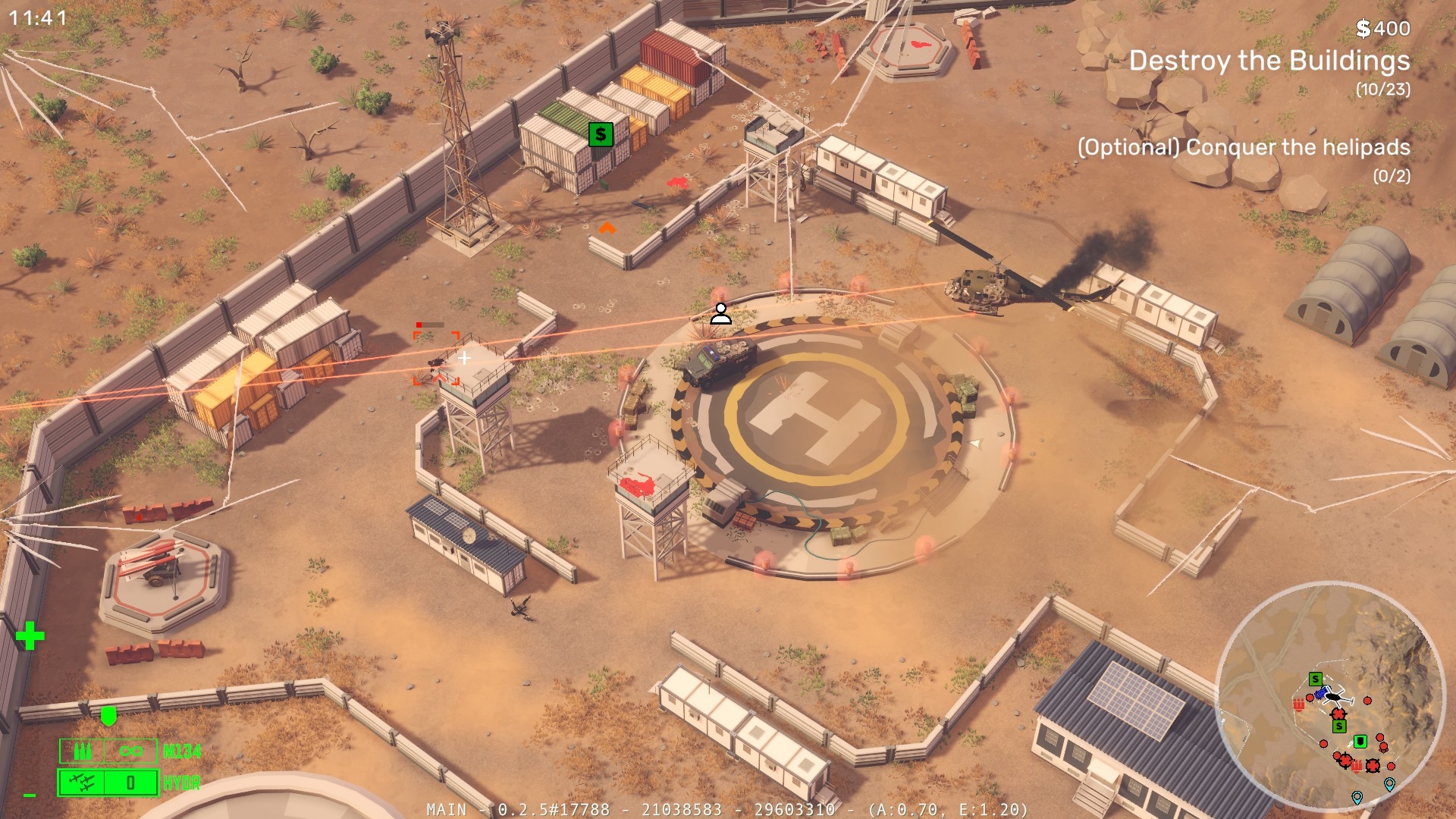
As my CH combat confidence has grown so has my inventiveness and cruelty playfulness. Lately, a number of ‘Canyon Boys’ have been treated to impromptu, one-way winch rides, or diced by whirling rotor blades, and I’ve taken to neutralising rooftop threats by collapsing the roof rather than targeting the threat directly.
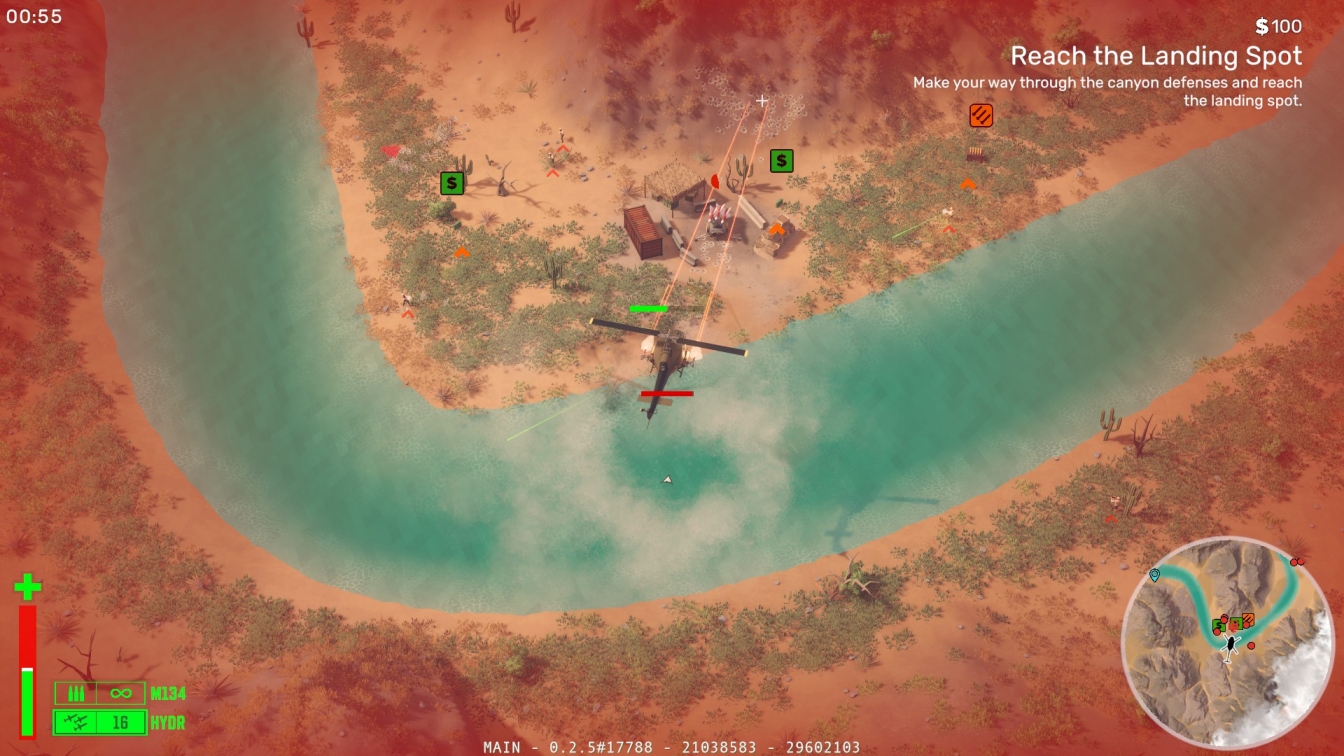
My only real complaint about this Early Access £13 shoot ’em up relates to control options. When the demo emerged in the summer, like other slumming heli simmers I grumbled about the lack of heading-related strafing. The devs listened, but bizarrely if you opt to play with Alligator Strike-style sideways movement you must put up with a fixed aimpoint that makes accurate targeting all but impossible. I got so frustrated with this, I quickly reverted to screen-related strafing with free aiming.
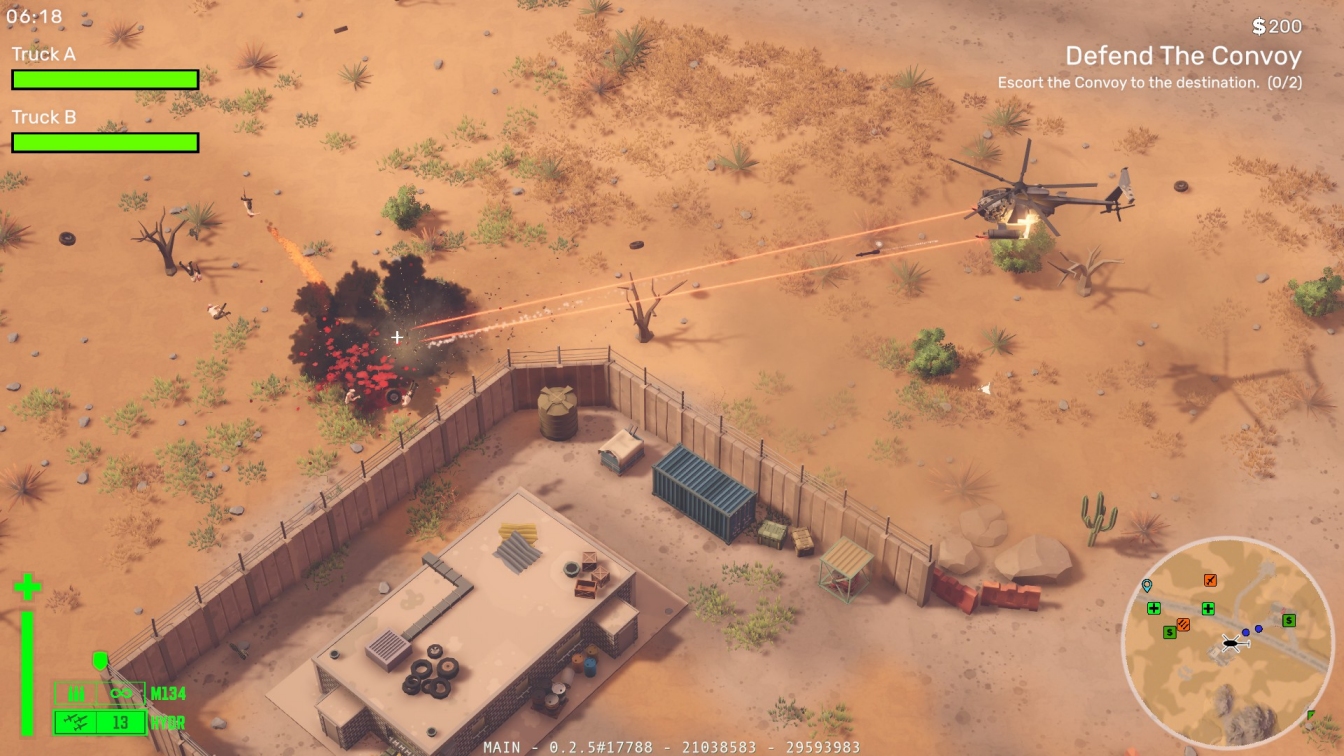
Apart from the questionable strafing implementation, I can only think of one good reason why a cash-strapped Desert/Jungle/Urban Strike fan might eschew Cleared Hot at present. That reason is Cobra Strike, an upcoming rival with an eyecatching trailer.
Astonishing, eh? I’m a sucker for a Command Ops-a-like, so that’s going to be a threat to the wallet.
Yep, Battleplan is on my Steam wishlist…I like Command Ops, so this is a no-brainer for me. Thanks for letting us know that the AI is stronger than most.
Thanks for the heads-up. Very happy to see such a capable command ops-like game, as co2 somehow seems eternally stuck re-writing its code. I’ve immediately wishlisted battleplan.