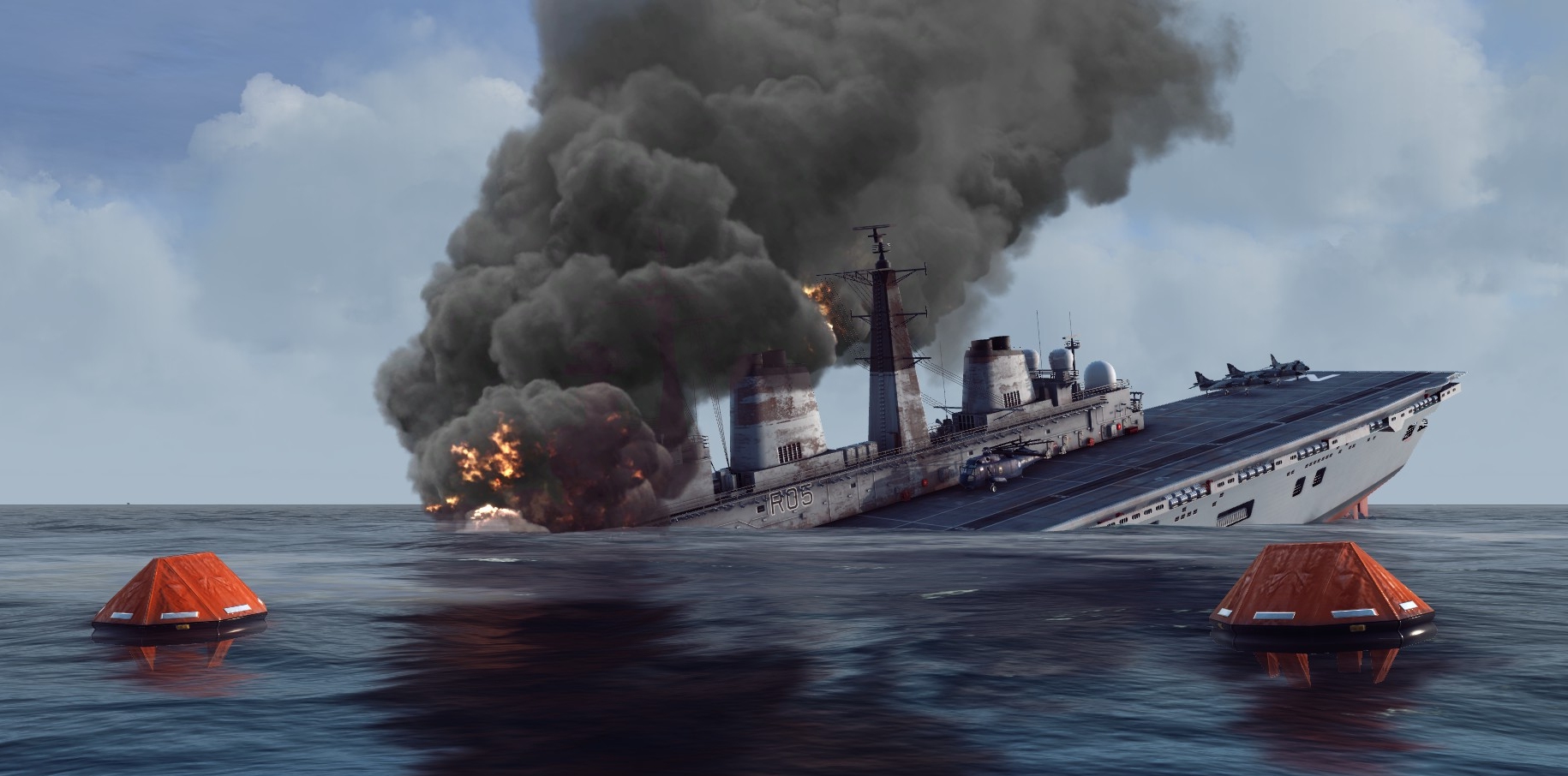
While I haven’t achieved much in Reality 1.00 this week, in Realities 419075625.02, 419073916.98, and 4190755341.26 I’ve properly kicked arse. HMS Invincible and the ARA General Belgrano have been sent to the bottom. Jerusalem and Basra have been snatched from the Ottomans. And I’ve constructed a crude but effective wooden footbridge across the Wilhelmina Canal in the Netherlands.
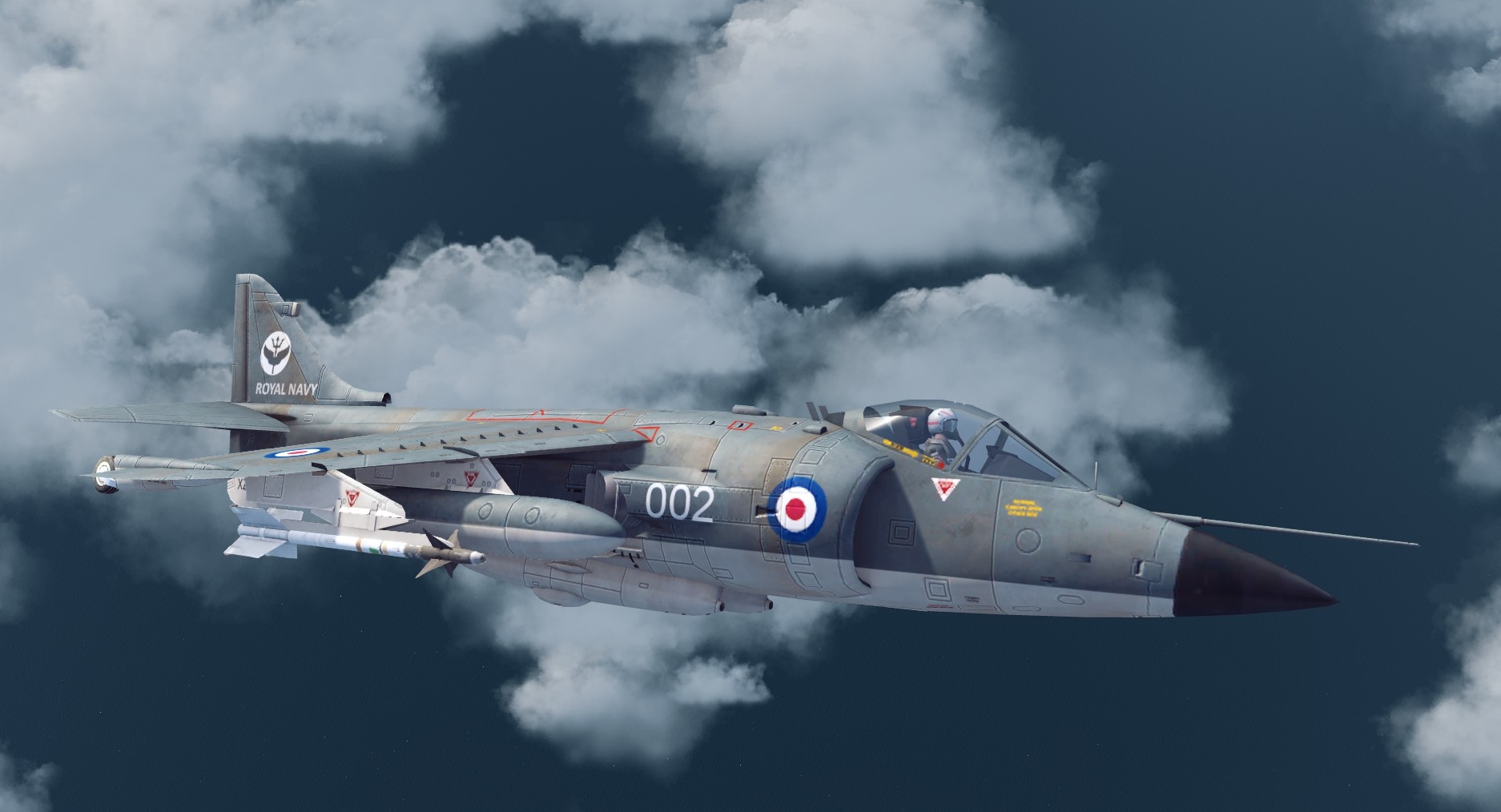
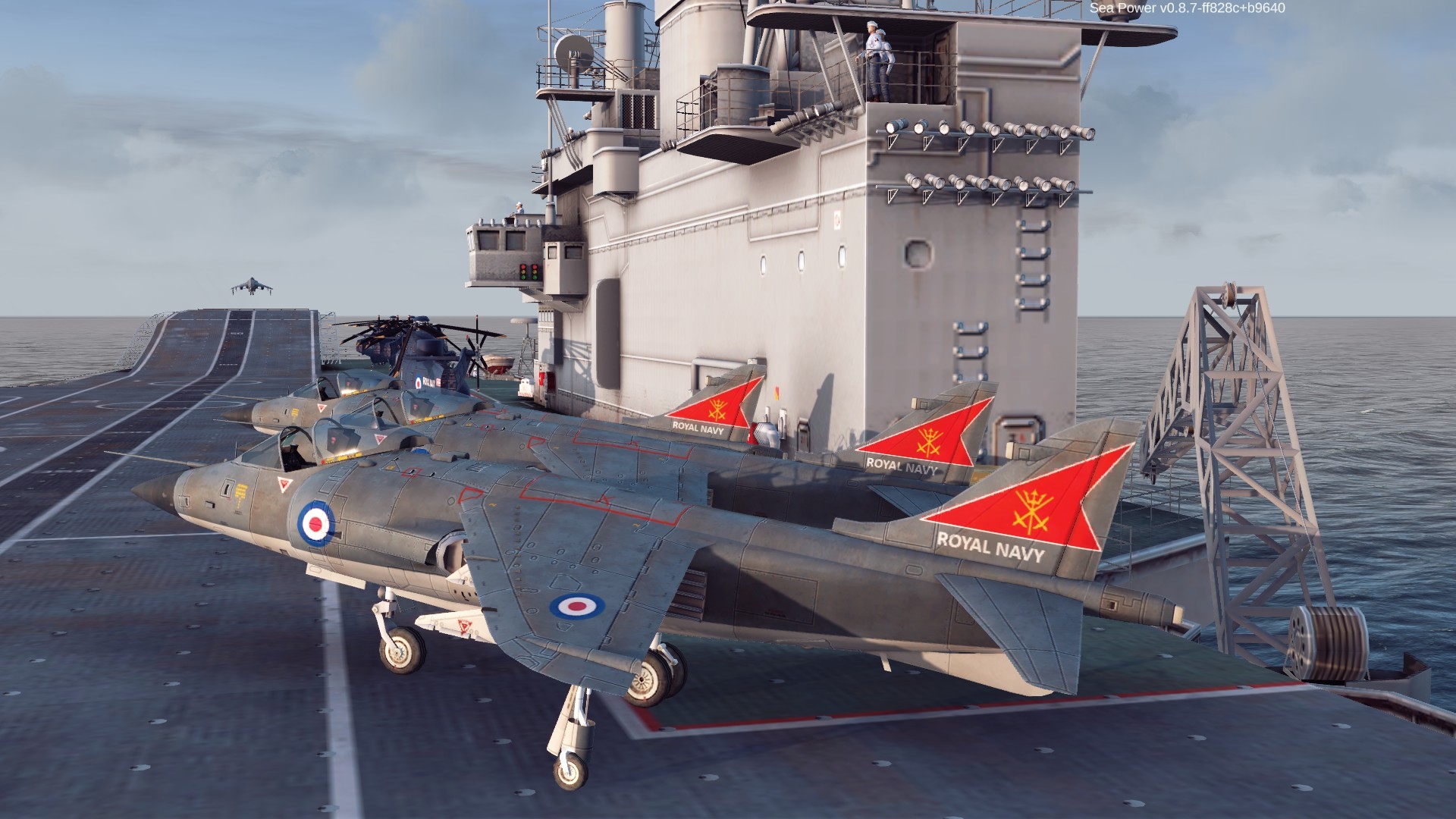
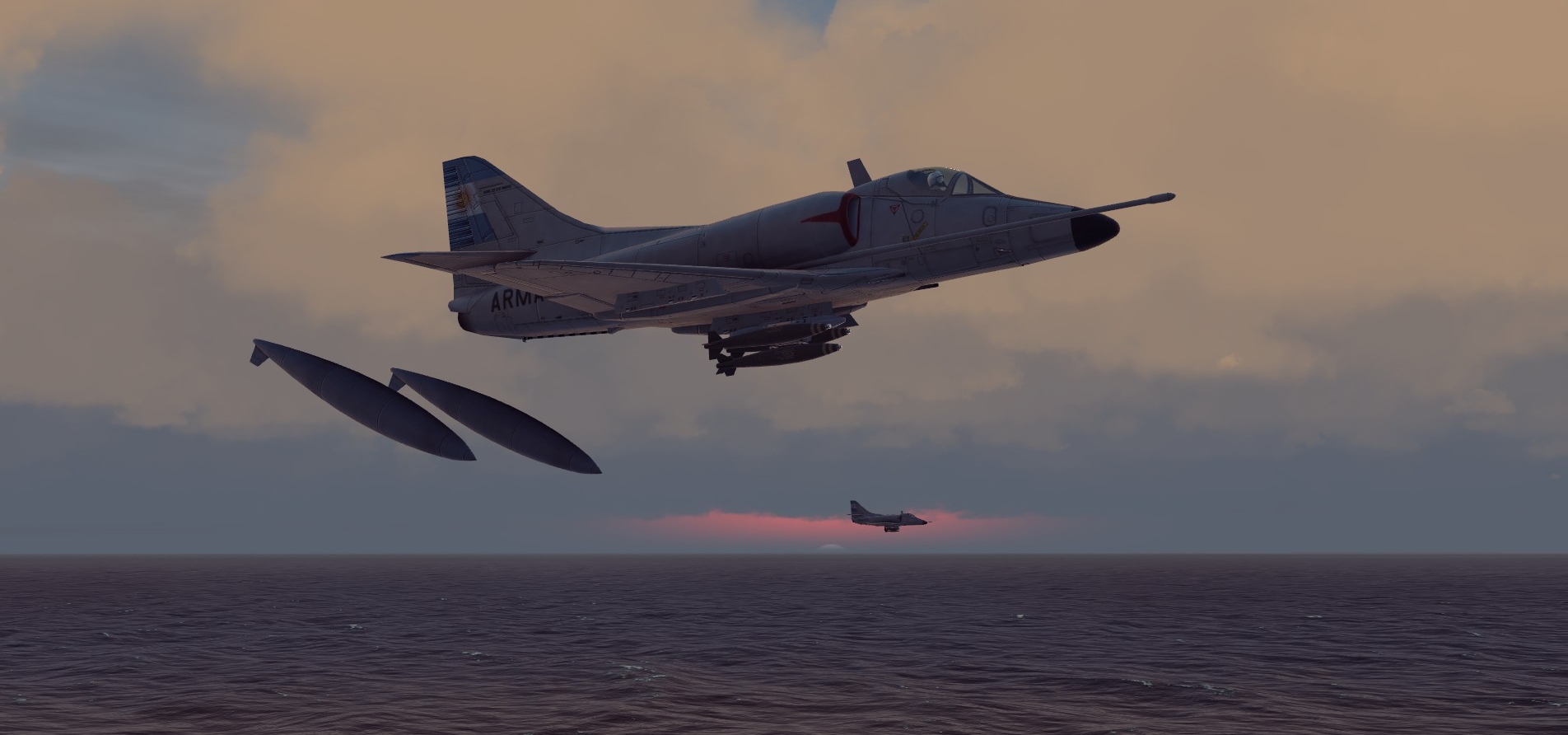
Sea Power: Naval Combat in the Missile Age is getting a free Anglo-Argentinian update on November 11. Predictably, the pair of campaigns due next Wednesday feature Junta/Thatcher-era units and centre a huddle of chilly South Atlantic islands known as The Falklands to their 3600 inhabitants.
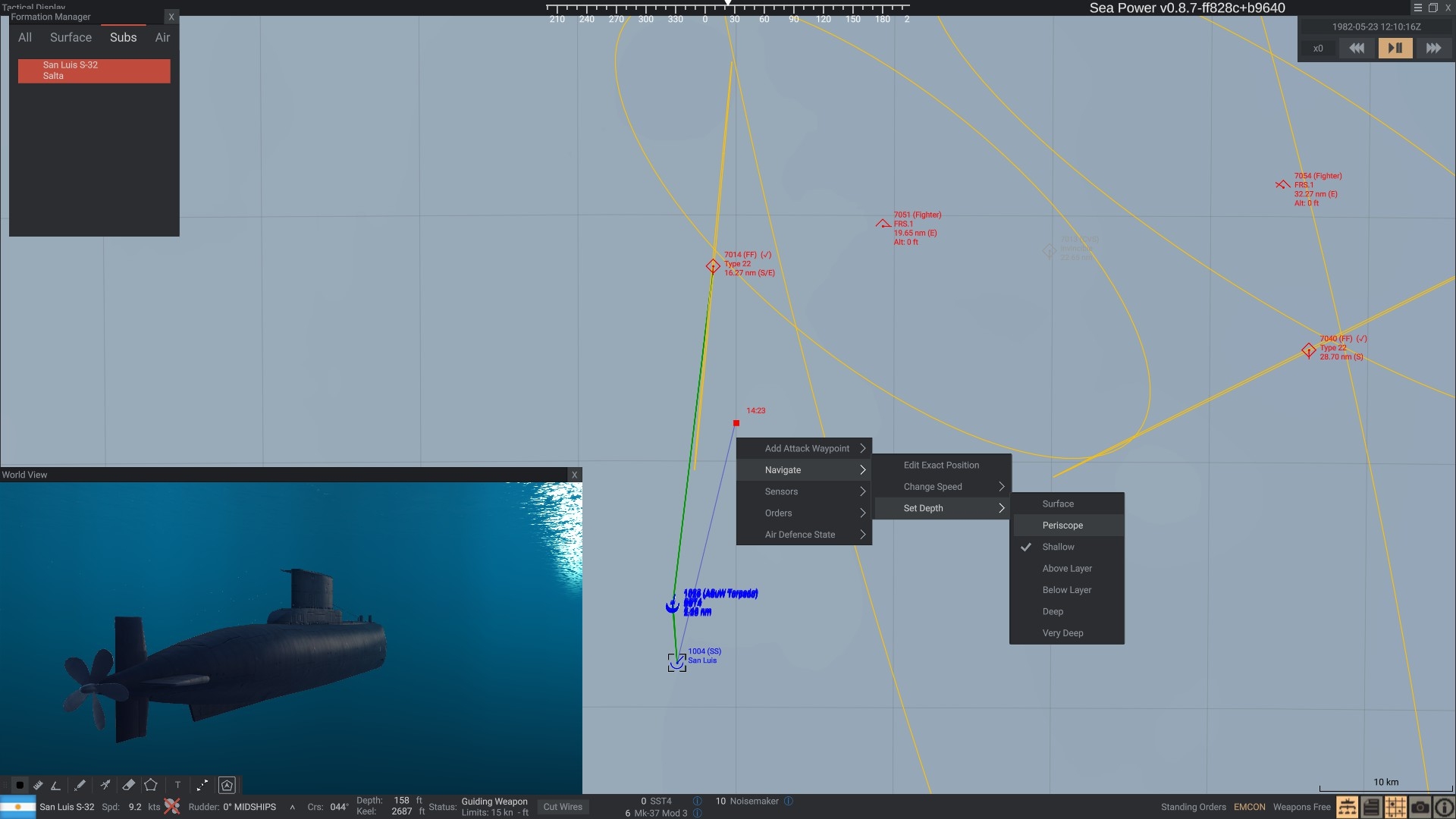
I was a little disappointed the preview build didn’t include any Falkland Sound action, but hunting the skedaddling Belgrano with HMS Conqueror, and tearing the heart out of the British taskforce with the help of the Veinticinco de Mayo and the San Luis proved agreeably diverting.
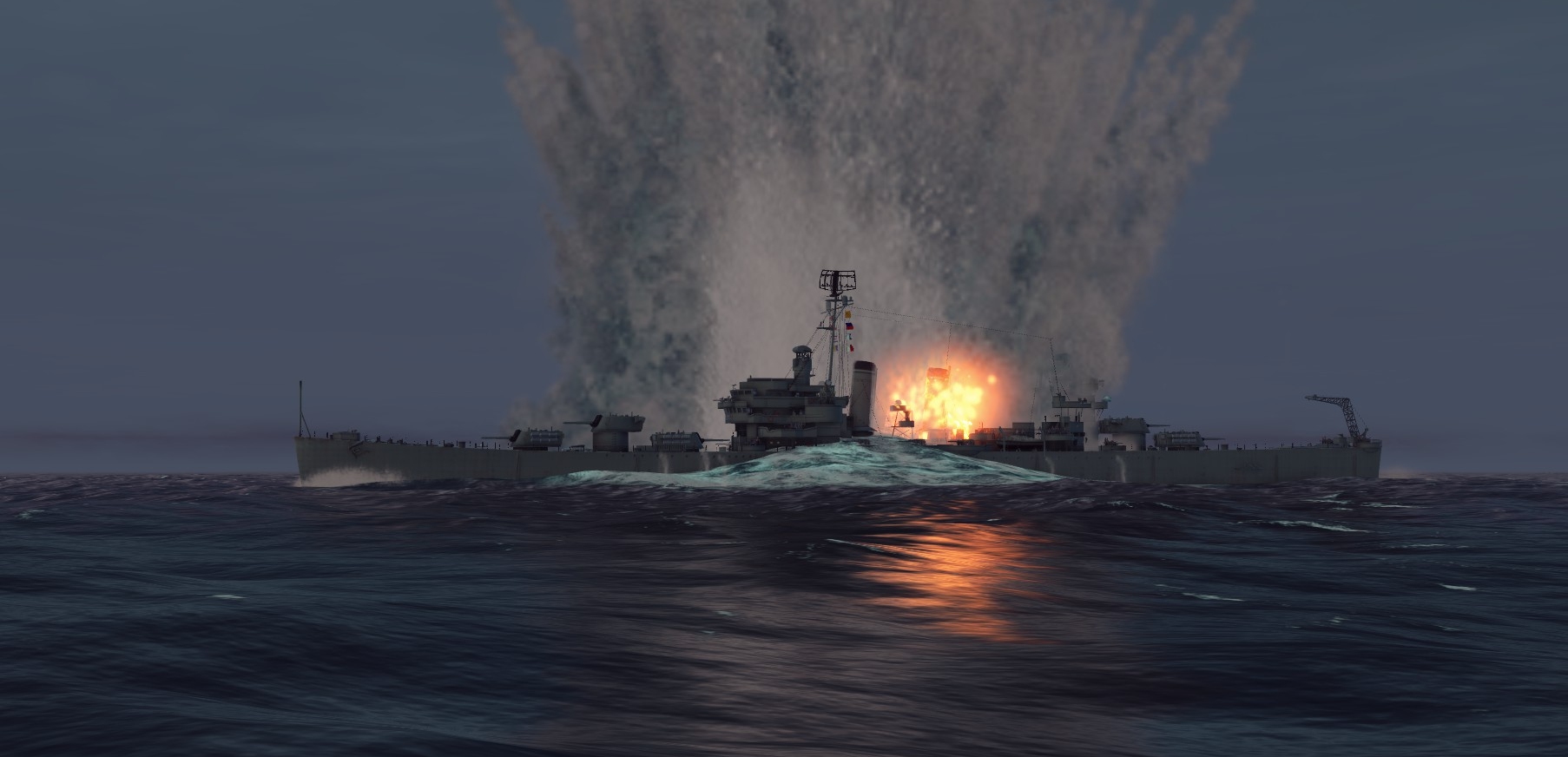
I’ve yet to summon sufficient courage to tackle the Operation Black Buck scenario. Having read accounts of this extraordinary long-range bombing op, I suspect my limited Sea Power skills would make frustration and failure almost inevitable.
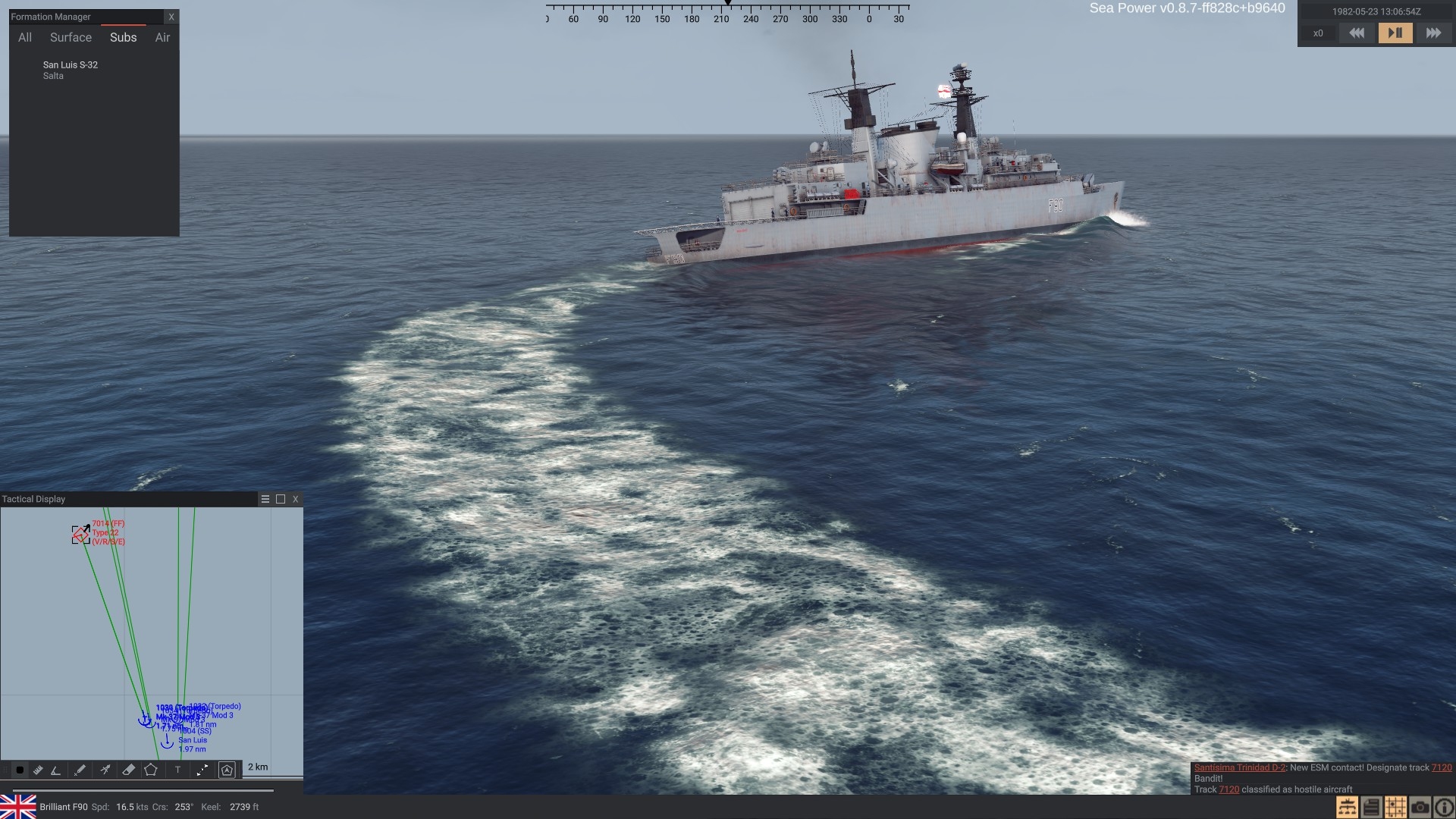
Although Triassic’s creation has gained a suite of solid tutorial missions since I first encountered it, its subject matter and realism still result in an opaqueness than many of the other serious wargames in my library don’t possess.
In other titles I can usually get by on instinct, and quickly grasp the reasons for my victories and defeats. In SP, because of the complicated interplay of the numerous weapons and sensors, I’m often not entirely sure why certain tactics succeed or fail.
Dissipating the sea-mist of slight bafflement would require long hours in Sea Power’s sunless CIC. Incorrigibly peripatetic and uncommonly fond of hedgerows, hills, and houses, in all honesty I’m not sure I’ll ever log those hours.
* * *
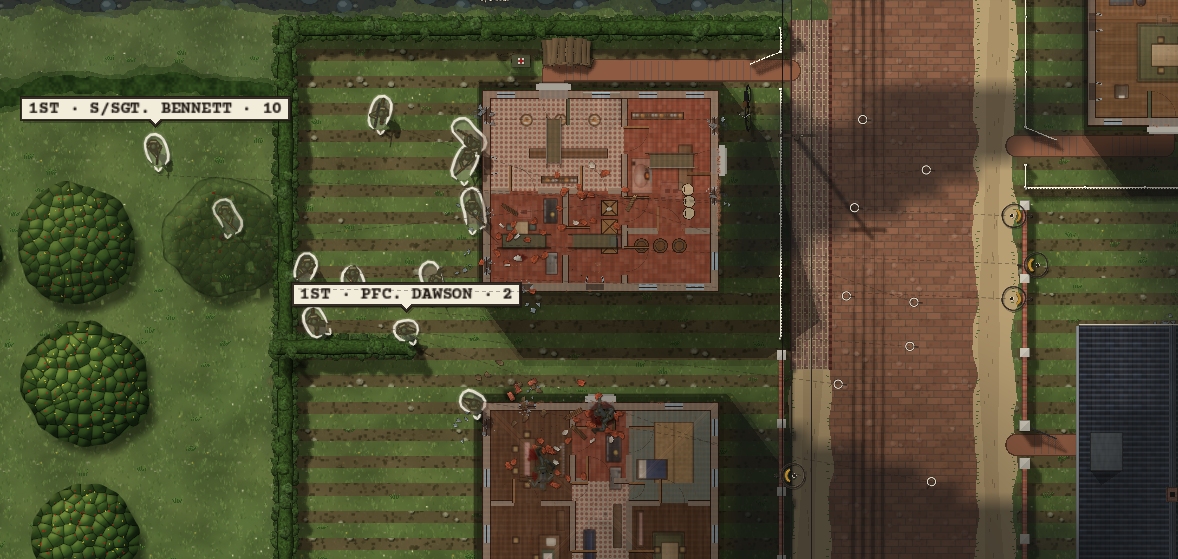
In the black and white world certain PC gaming websites inhabit, all games produced with extensive help from AI assistants are worthless slop… abominations that should be avoided at all costs. Any writer caught heaping praise on something like Son Bridge would be in for a struggle session at the very least.
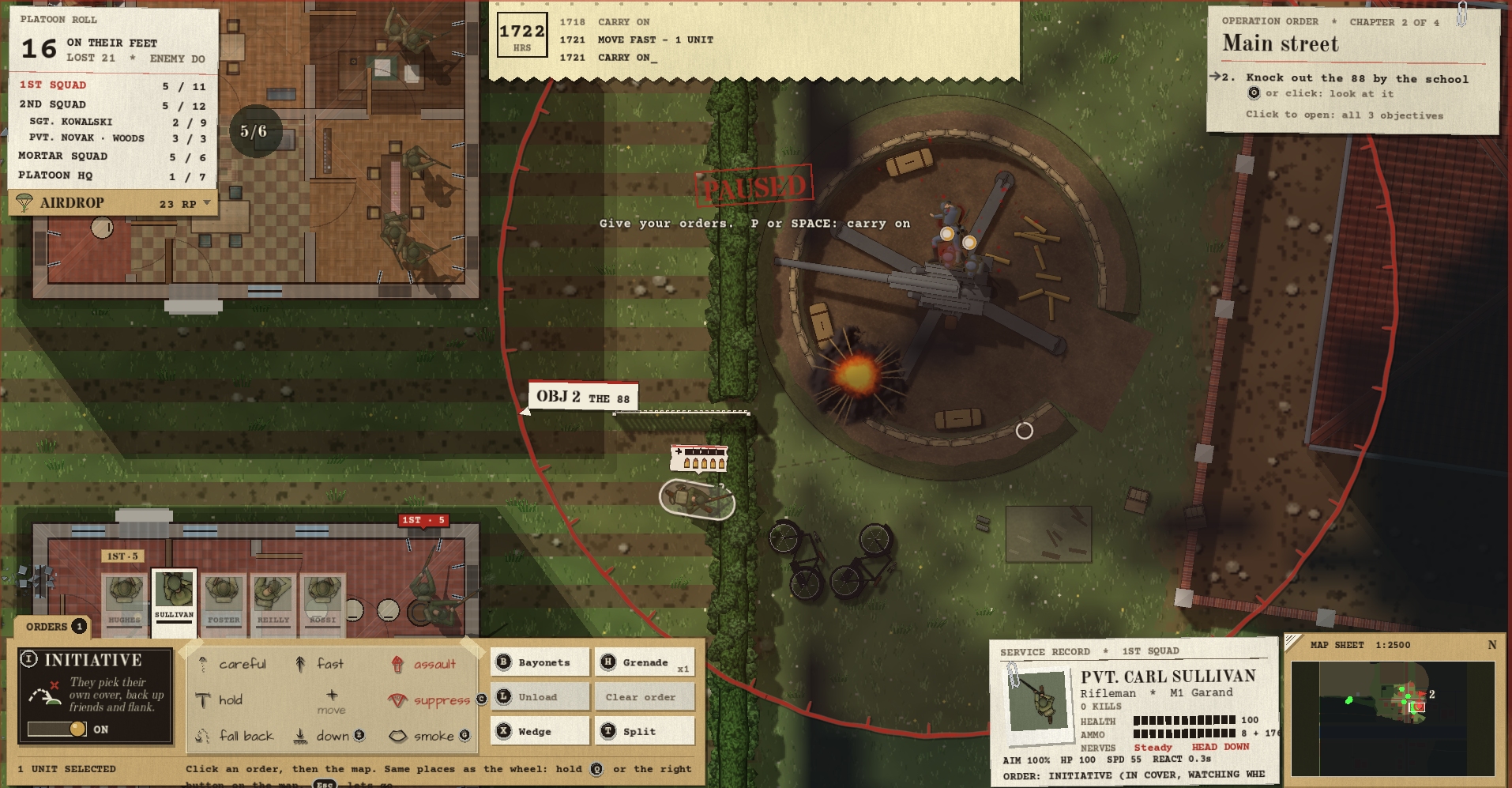
As Chaddy’s itch-hosted RTT prototype doesn’t currently feature AFVs, multi-storey buildings, or particularly long LoS lines, it’s a bit early to be branding it a potential Close Combat beater. However, after two riveting playthroughs of the Son-focused story sequence, I’m left with the feeling that a true CC successor is now very close thanks largely to AI.
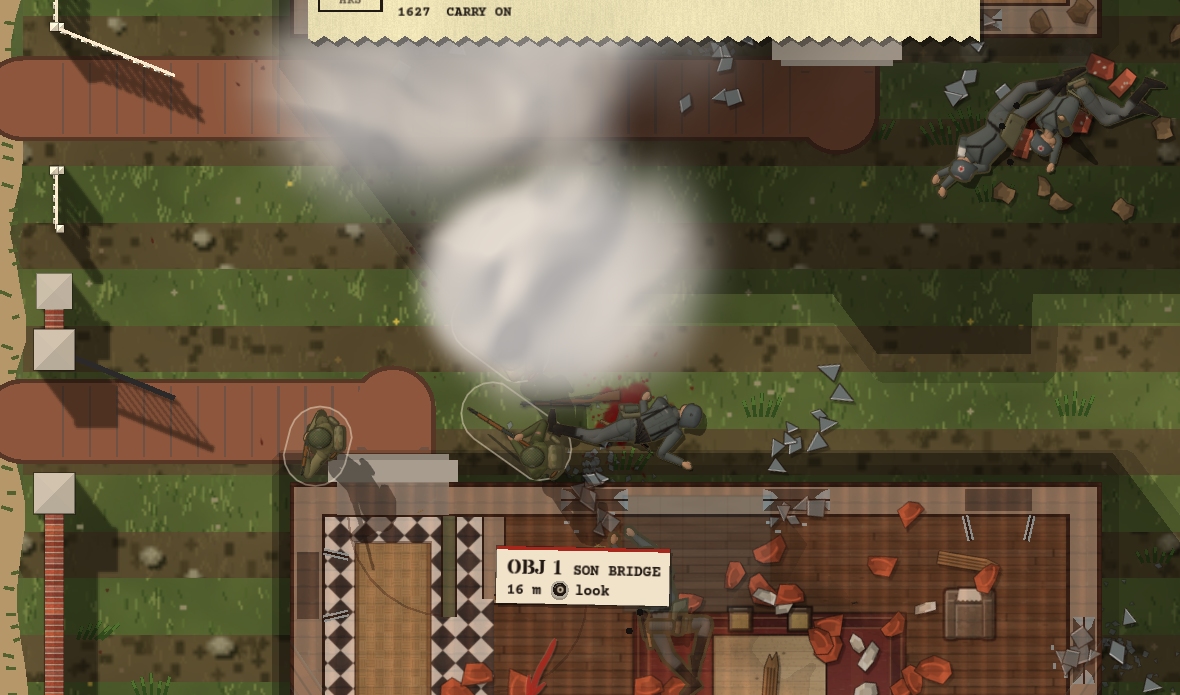
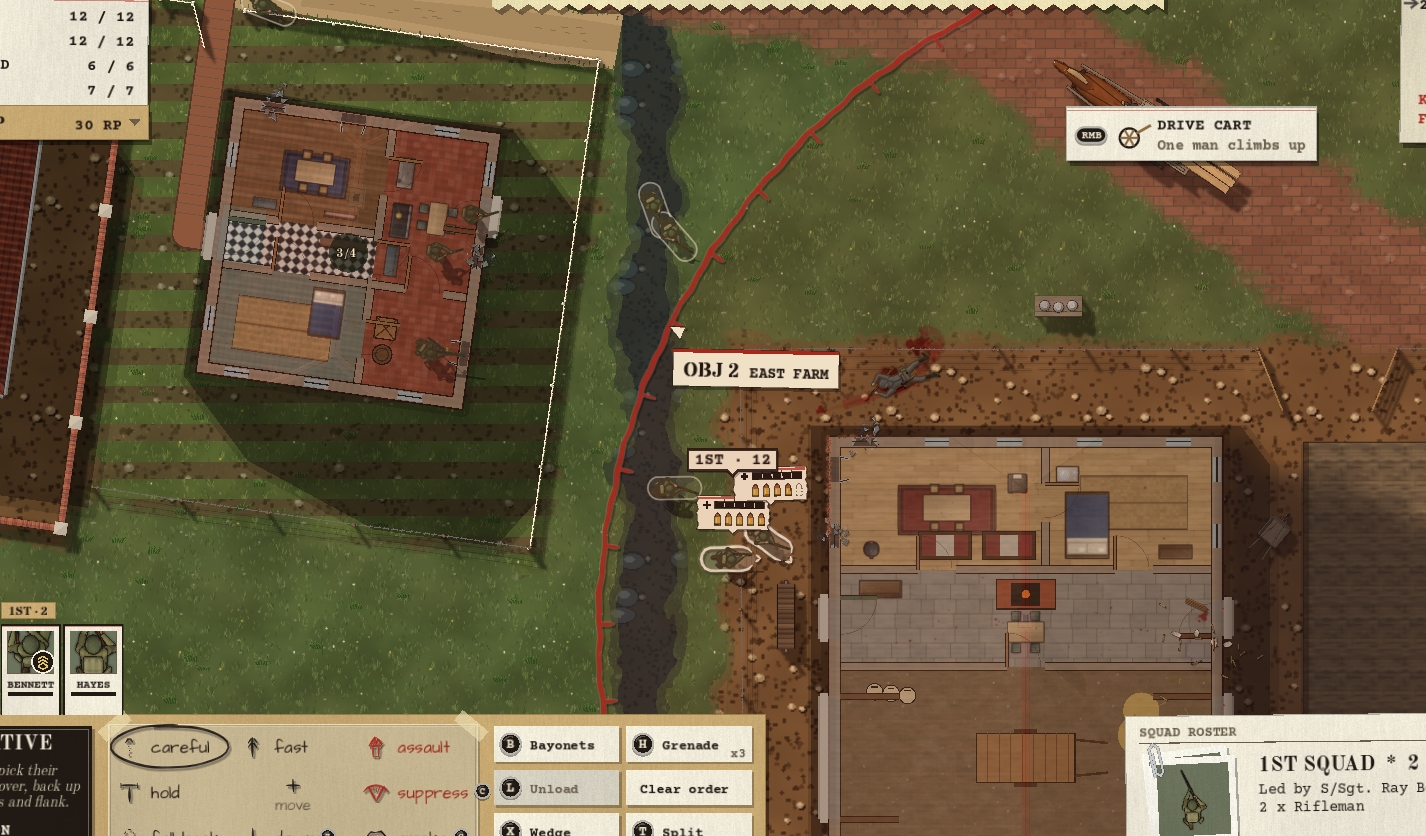
Those moments all CC players love… the ones when individual soldier go berserk, or pull off incredible feats during CQB? Son Bridge produces them in spades.
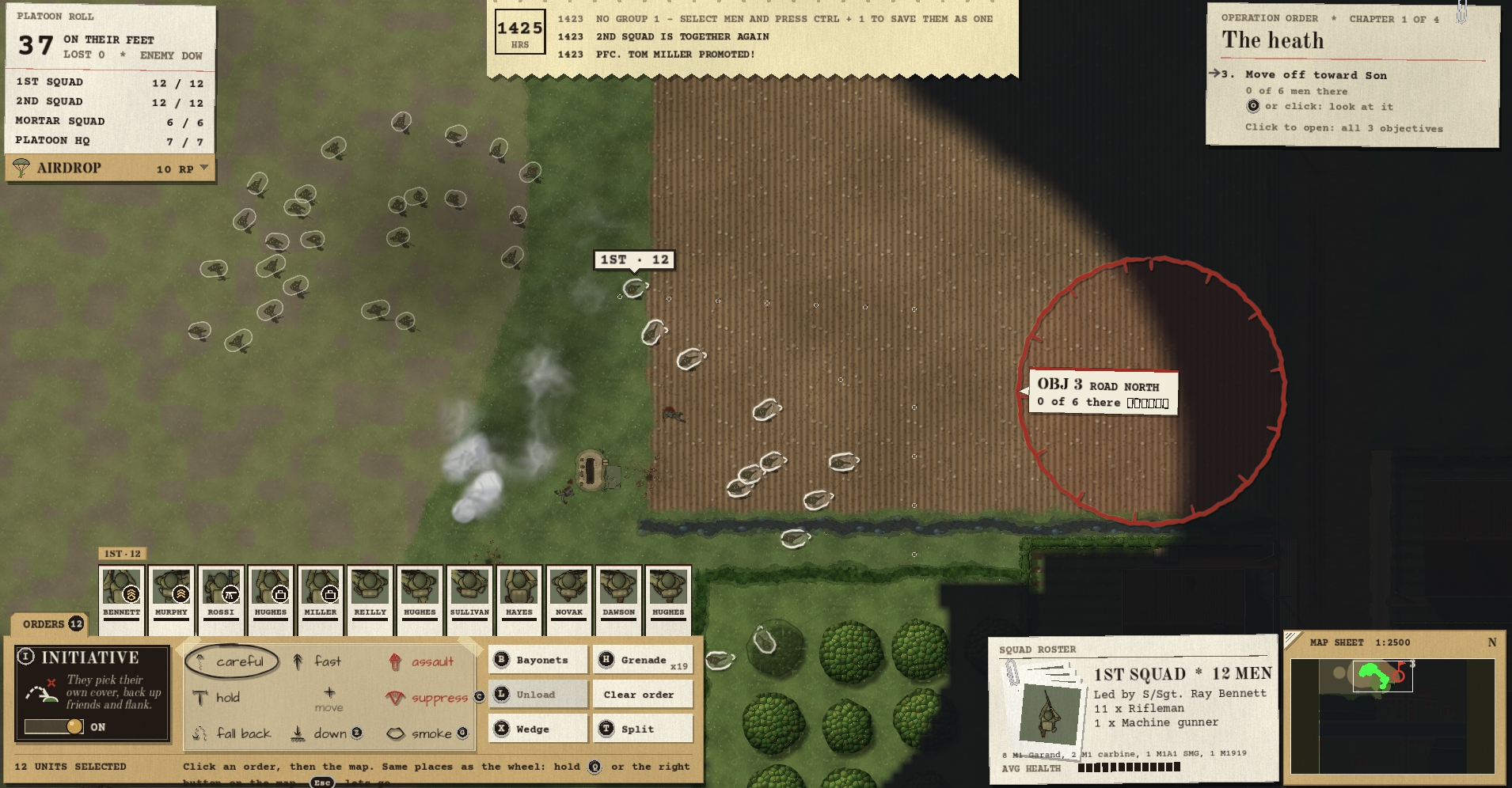
Because maps are covered in meaningful terrain, and soldiers aren’t fearless automatons… because suppression and flanking are every bit as effective as they should be, the action served up by this WW2 work-in-progress constantly brings to mind greats like 101: the Airborne Invasion of Normandy and CC.
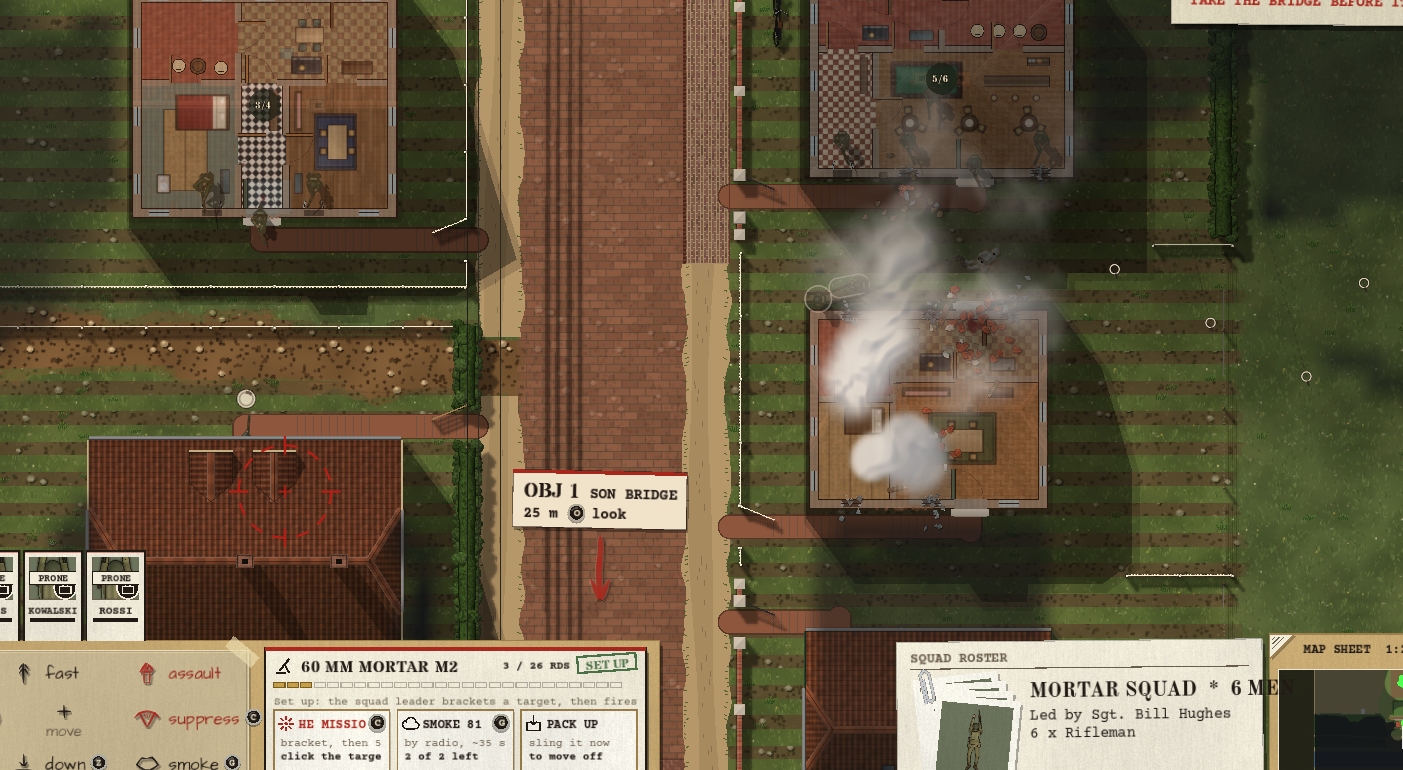
In order to get your splitable squads from the DZ to the bridge in reasonable condition you’ll need to scout diligently, manoeuvre thoughtfully, and make good use of mortar-lobbed smoke and HE.
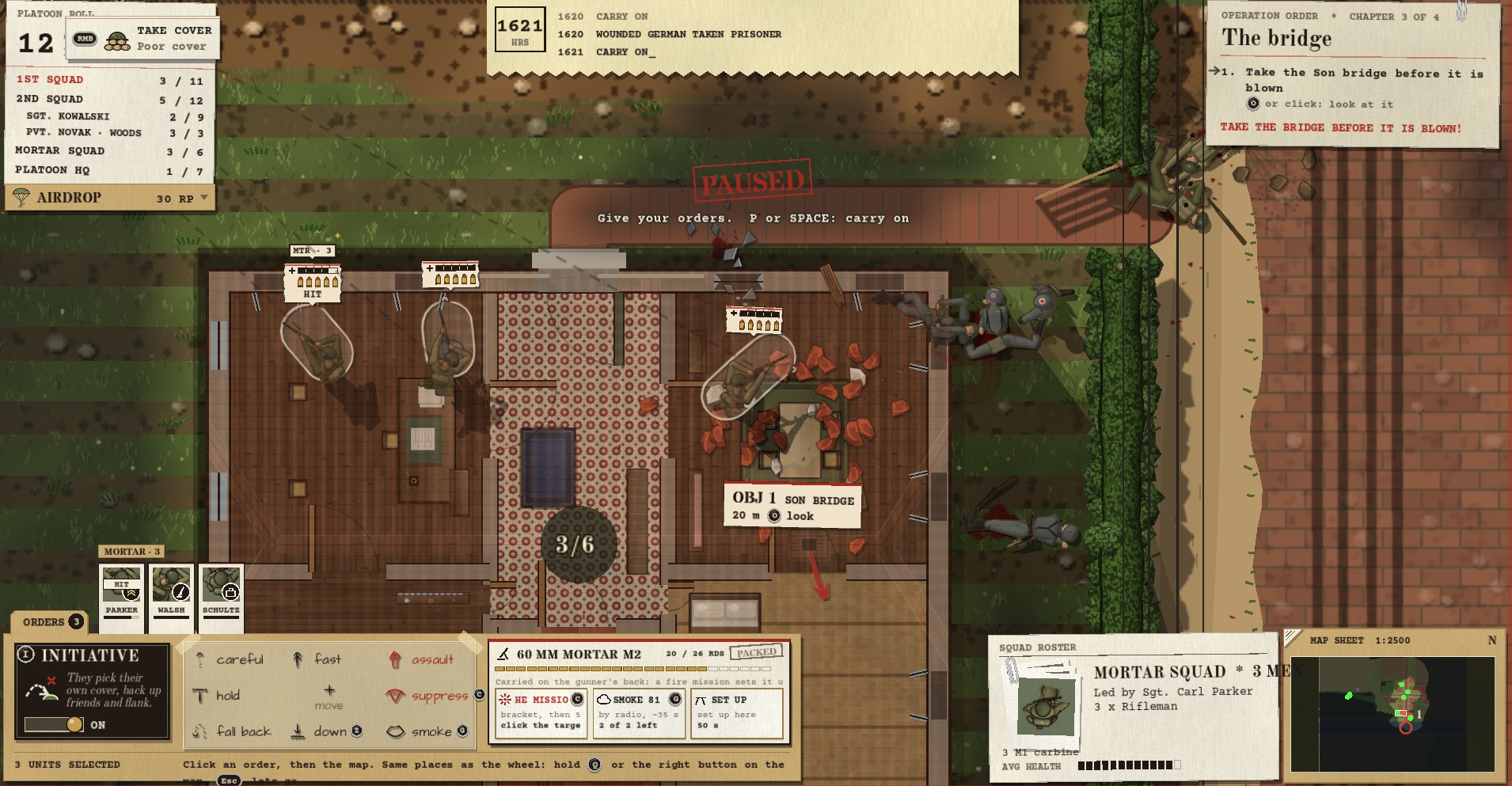
As bleed-out times are extremely short, a seriously wounded Screaming Eagle is usually a dead Screaming Eagle right now. Hopefully future builds will tweak wound lethality, meaning there’s more reason to drag casualties to safety and utilise medics.
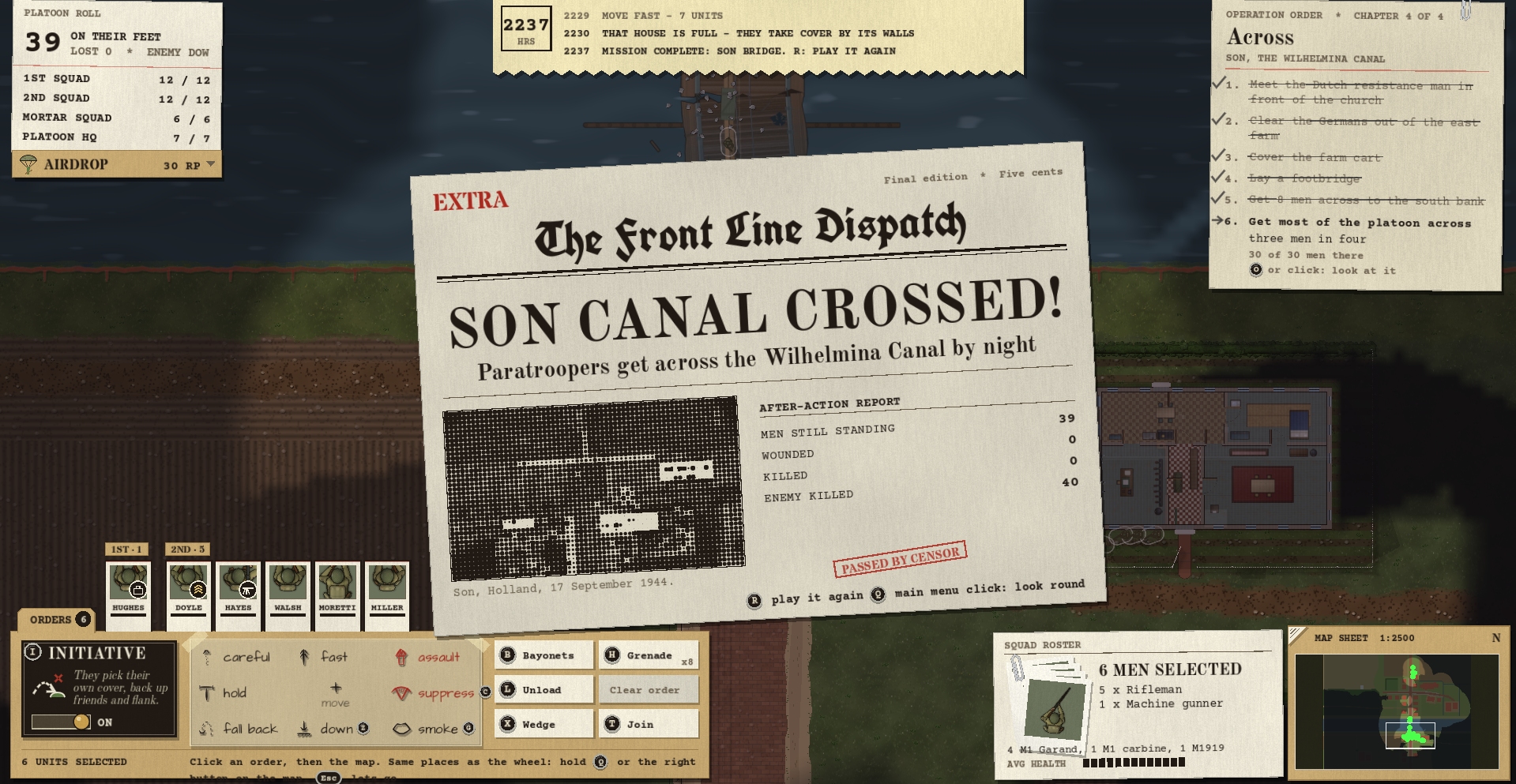
Even if Son Bridge goes nowhere, it’s surely a sign of things to come. Devs have been trying and failing to come up with a next-gen Close Combat for over twenty years. Now AI is on the scene I’d be amazed if a worthy top-down successor to Atomic’s classic series was more than a year away.
* * *
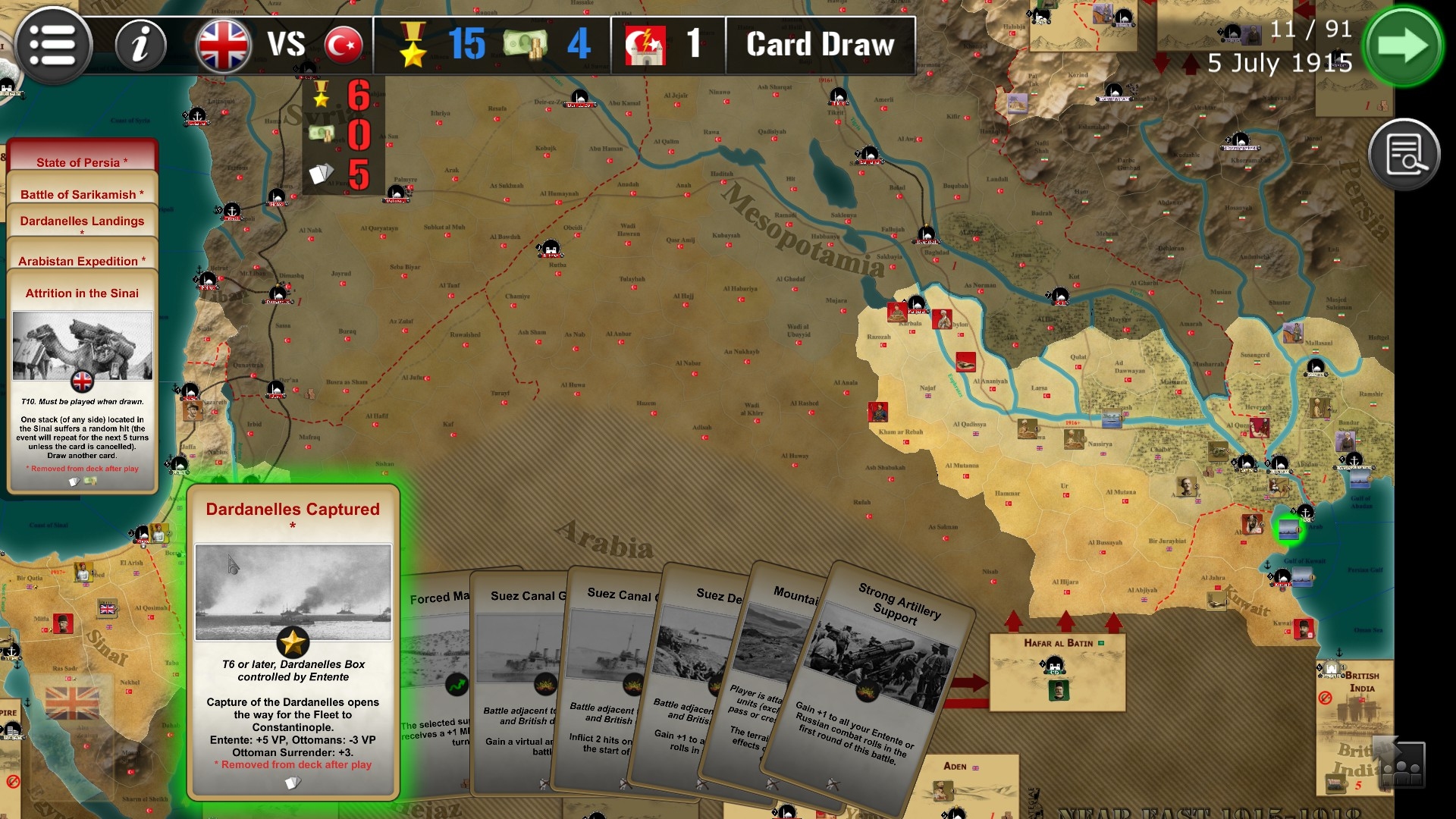
Can Wars Across The World’s famously flawed AI cope with a theatre as complicated and inhospitable as the 1915-1918 Near East? Based on my early experiences with the title’s latest add-on, possibly not.
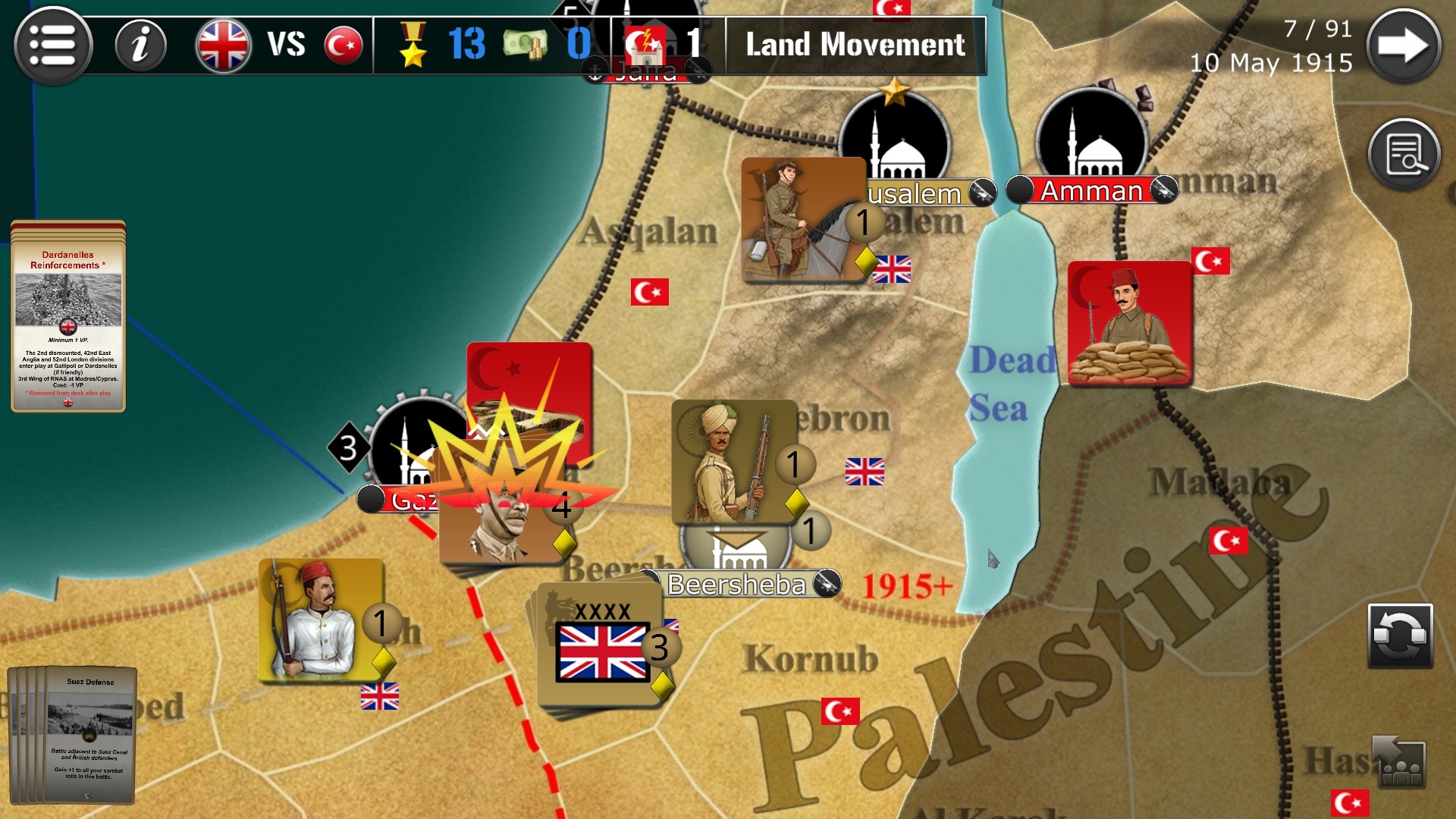
It’s midsummer 1915 and not only are there Tommies and Indians in Gaza, Jerusalem, and Acre, my ANZACs somehow seem to have secured a firm foothold in the Dardanelles. At this rate, even if I oversee a few cock-ups like last turn’s disastrous amphibious assault of Kuwait, or forget just how dangerous desert regions are for regular troops, I’ll be in Constantinople by Christmas at the latest.
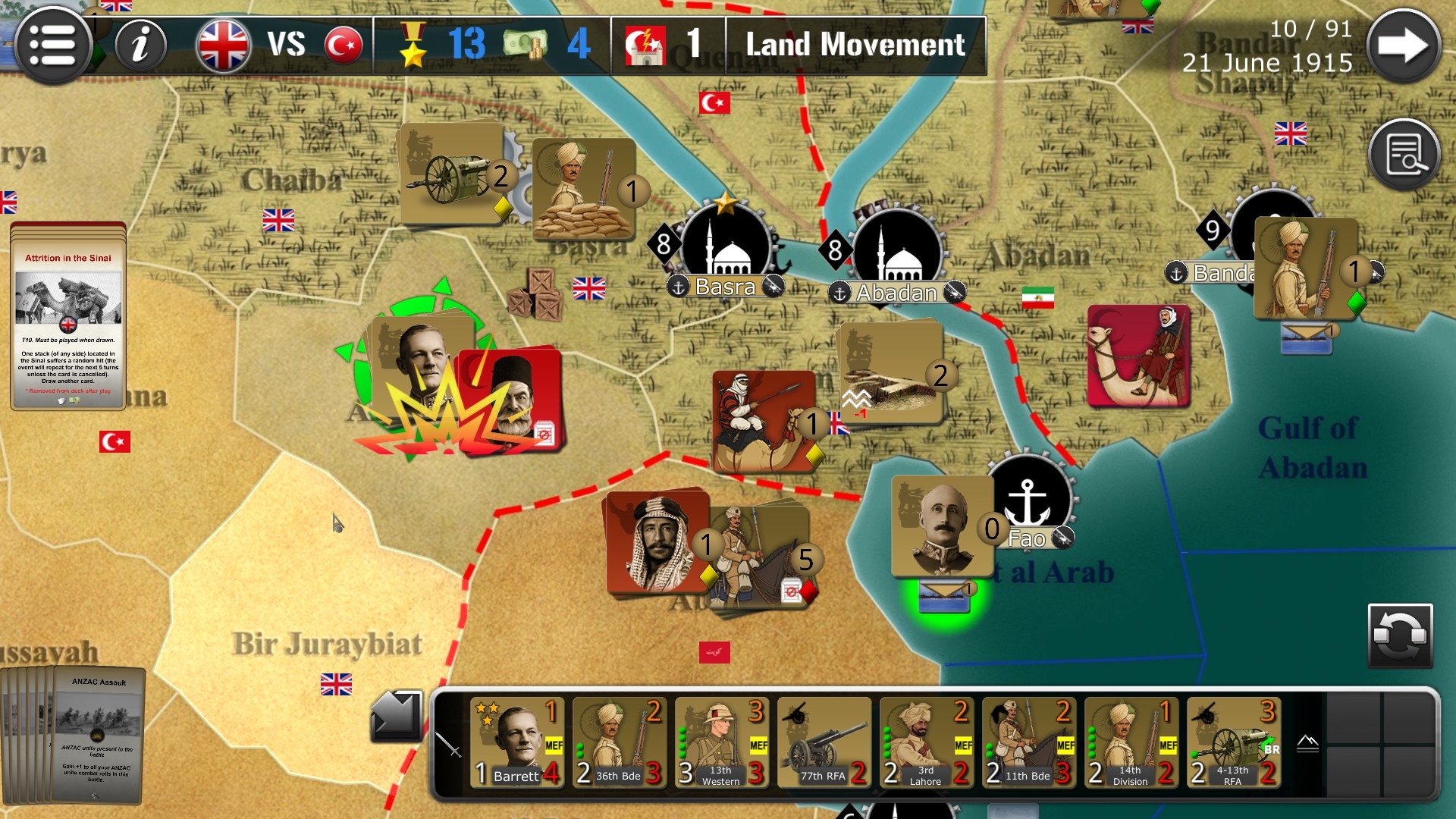
Even if Near East 1915 doesn’t end-up providing much challenge, it will, I’m sure, give me a much clearer understanding of the Great War’s sandier side. I’ll also have moved and admired numerous beautifully illustrated counters during my time in its company. For £7, that seems like a reasonable return.
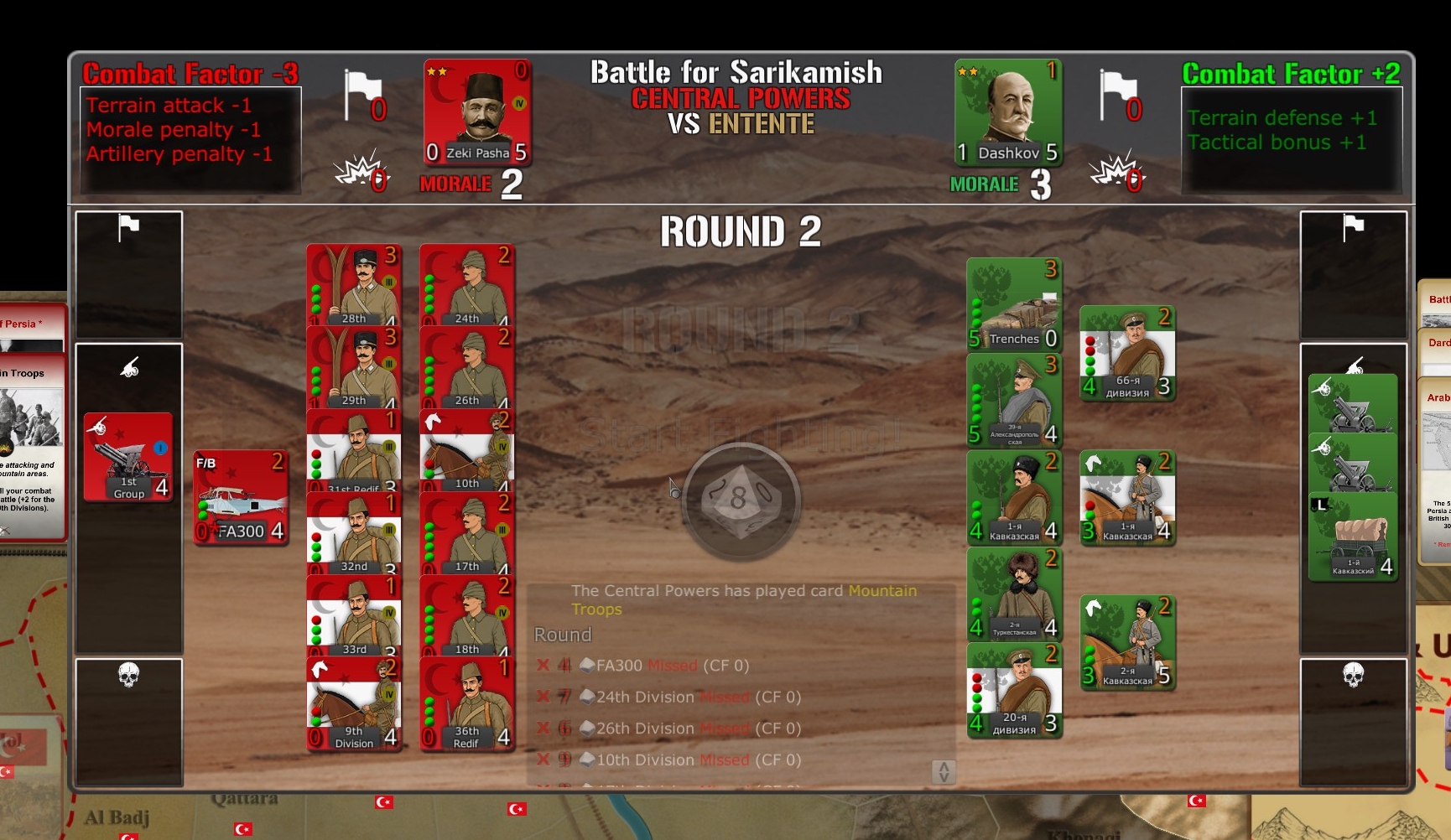
WATW strikes me as one of the wargames that would benefit most from having its AI routines and DLC scenarios inspected by a big-brained machine. Playtesting is one of the more tedious and time-consuming aspects of game development. Surely even the most vehement AI critic would admit that using AI to test and improve wargame AIs is potentially worthwhile.
In a world in which the once leading PC games review site now reviews barely one game a week – despite the vastly increased number of games available – it’s not a surprise AI games are being ignored. All games are being ignored.
Thank you for continuing to preview, review and provide insight on games at a better rate than e.g. a site with 8 editors and authors.
Also the majority of their articles for the past several months have been about a console game.
I don’t envy their predicament of having to generate page views in order to survive, but it gets to a point where the content that should be subsidizing doesn’t even get made anymore.