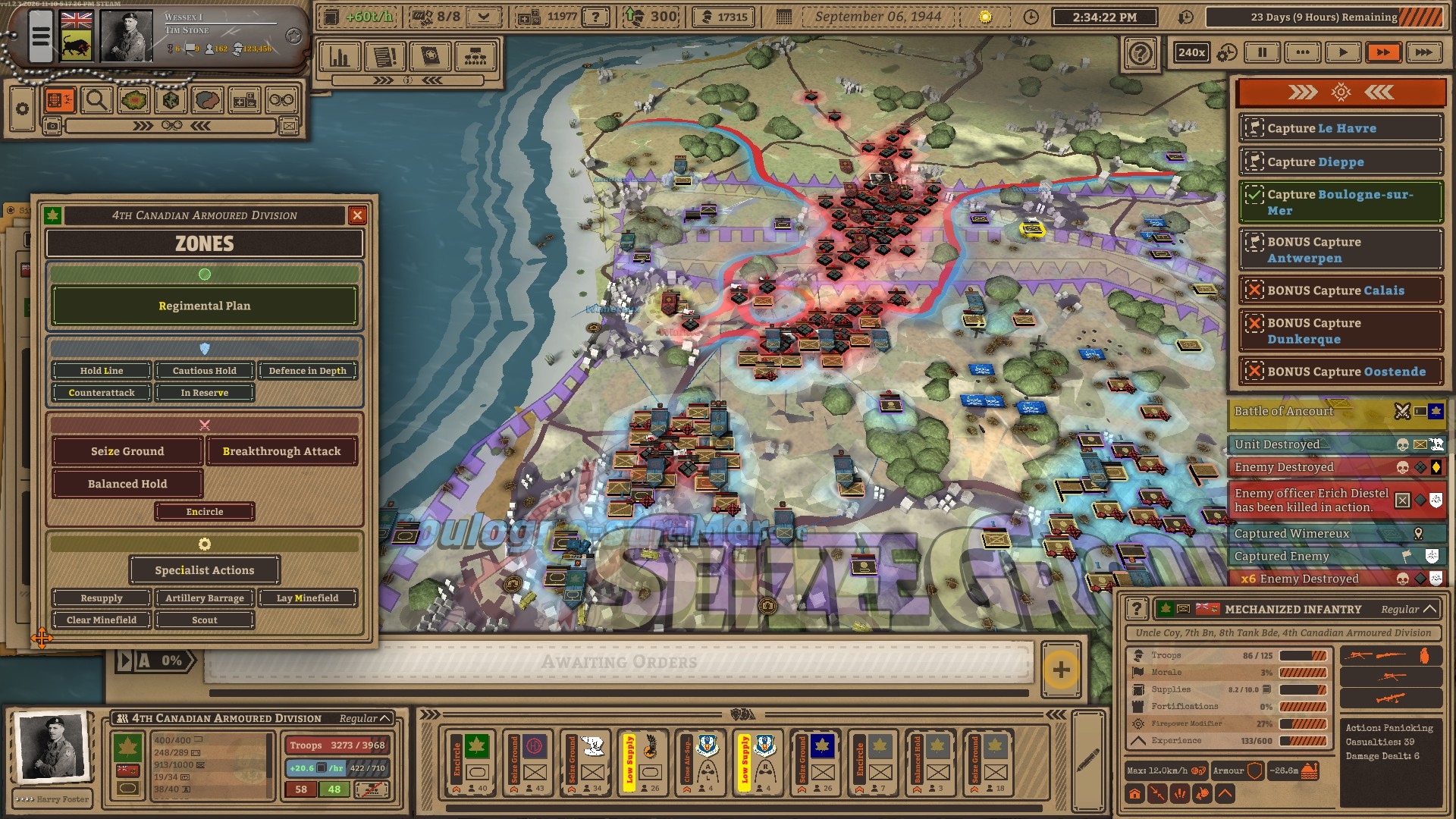
The nearest thing this exceptionally fluid operational offering has to a comrade-in-arms is Command Ops. Units in Panther’s hex and turn shunning delegate-em-up weren’t constrained by arbitrary movement grids, halted at regular intervals by mandatory pauses, or compelled to loaf unless individually tasked, and neither are the ructious rectangles in its colourful 2026 kissing cousin.
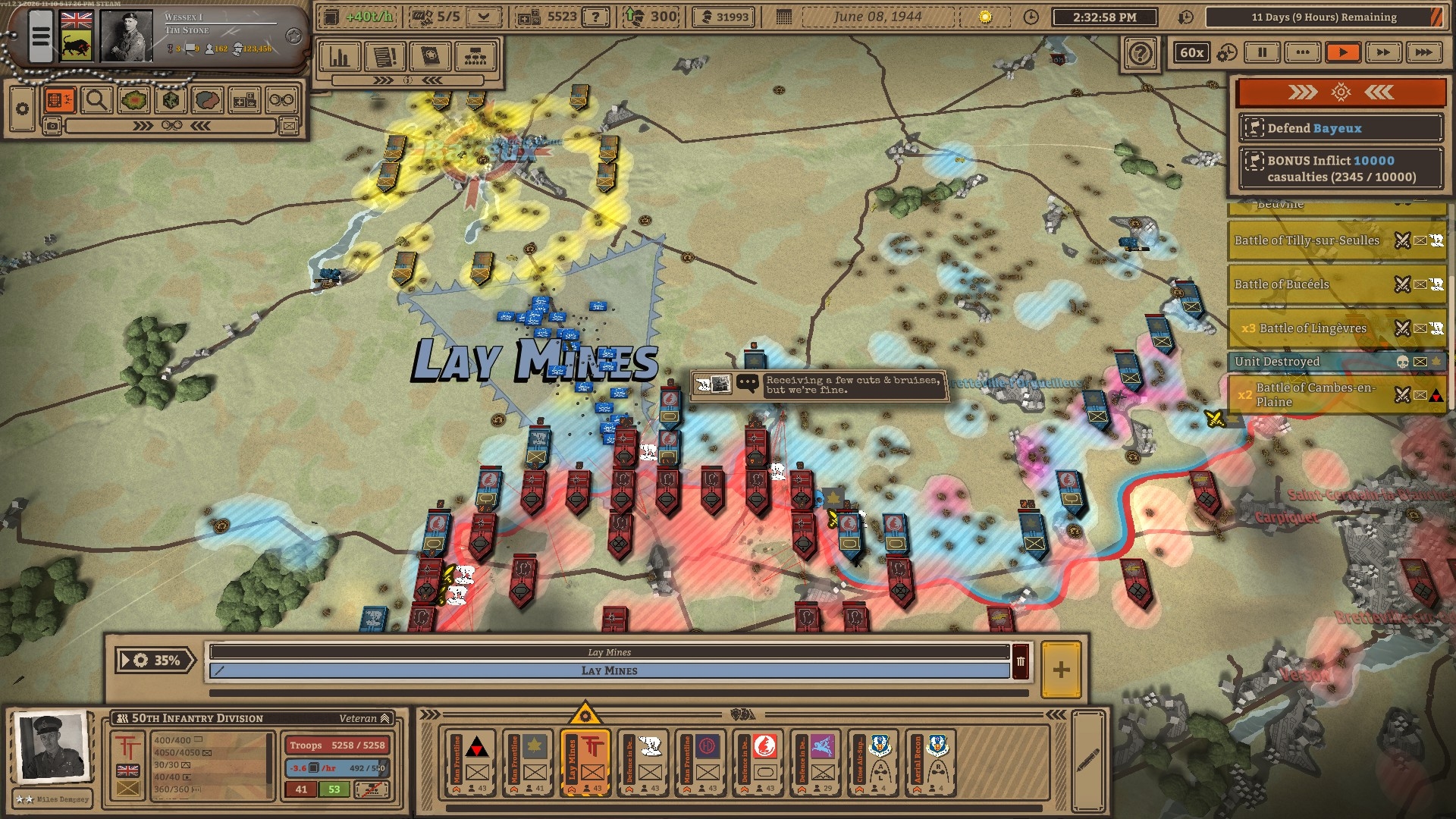
Usually Battleplanners rouse around forty companies’ worth of WW2 warriors every time they mouse-scrawl a line or lumpy circle onto a map. In a less ambitious, less plausible game divisional orders like these would trigger mass stampedes. Here, a sophisticated AI transforms squiggles into complex, militarily coherent plans. Avenues of advance are selected, scouts are dispatched, minefields cleared or sown, supportive artillery bombardments and reserve forces organised, all without the player lifting an additional finger.
As Panther discovered decades ago, there are risks to dramatically reducing workload in this way. Relieving wargamers of many familiar duties left some armchair aggro orchestrators feeling slightly superfluous. Dave O’Connor’s mould-breakers were accused of ‘playing themselves’ by a few naysayers. Fans responded by pointing out that games like Airborne Assault actually worked best when high-level instructions were mingled with lower-level interventions.
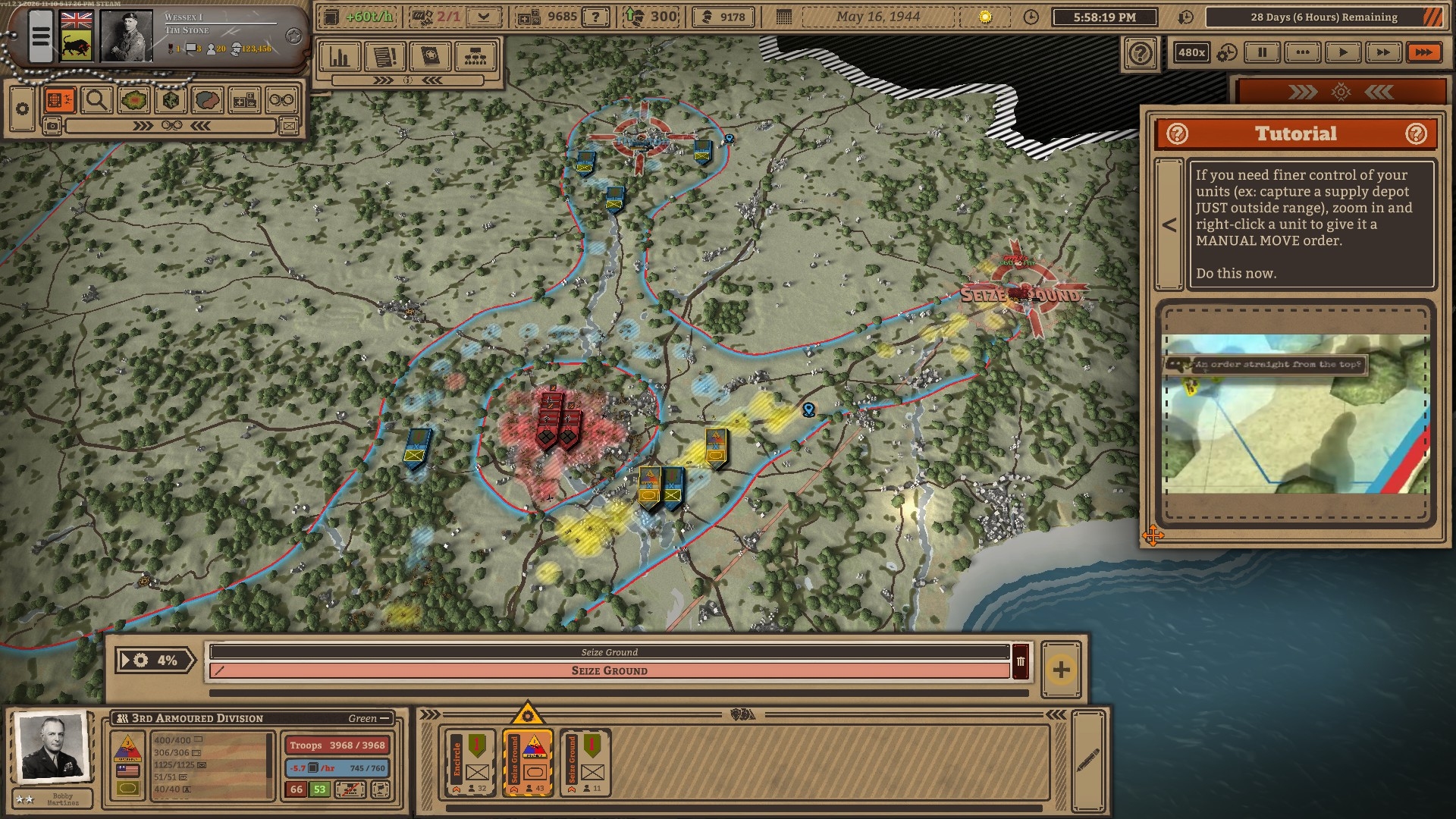
Battleplan is no different. While it’s often possible to engineer victories without micro-managing individual companies or creating ad-hoc formations, commanders who keep the camera high and the clock at maximum speed – who treat ops as straightforward blob-wrangling puzzles – will probably end scenarios with higher losses and lower pleasure levels than those who periodically tweak, scrutinise, and savour.
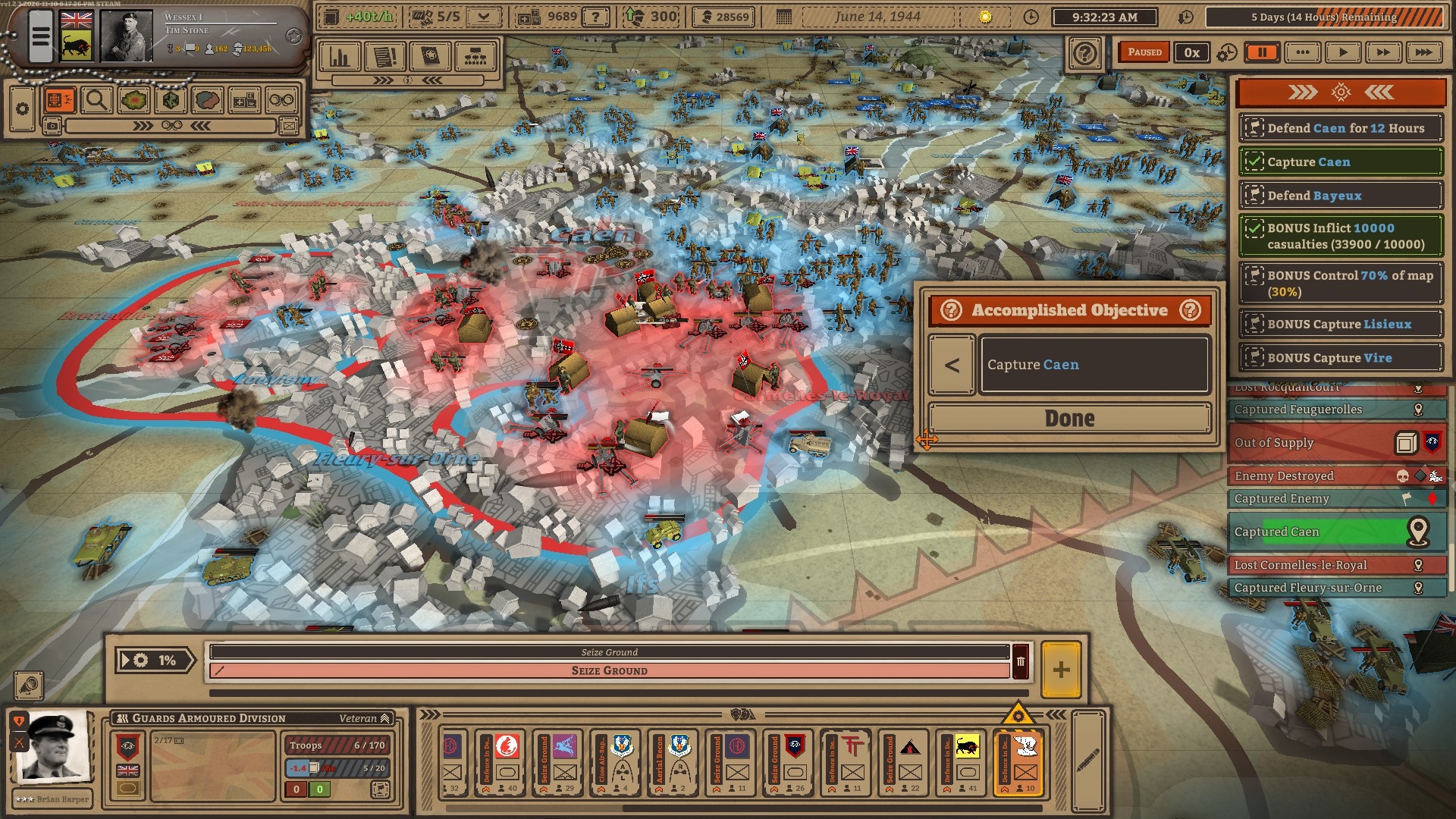
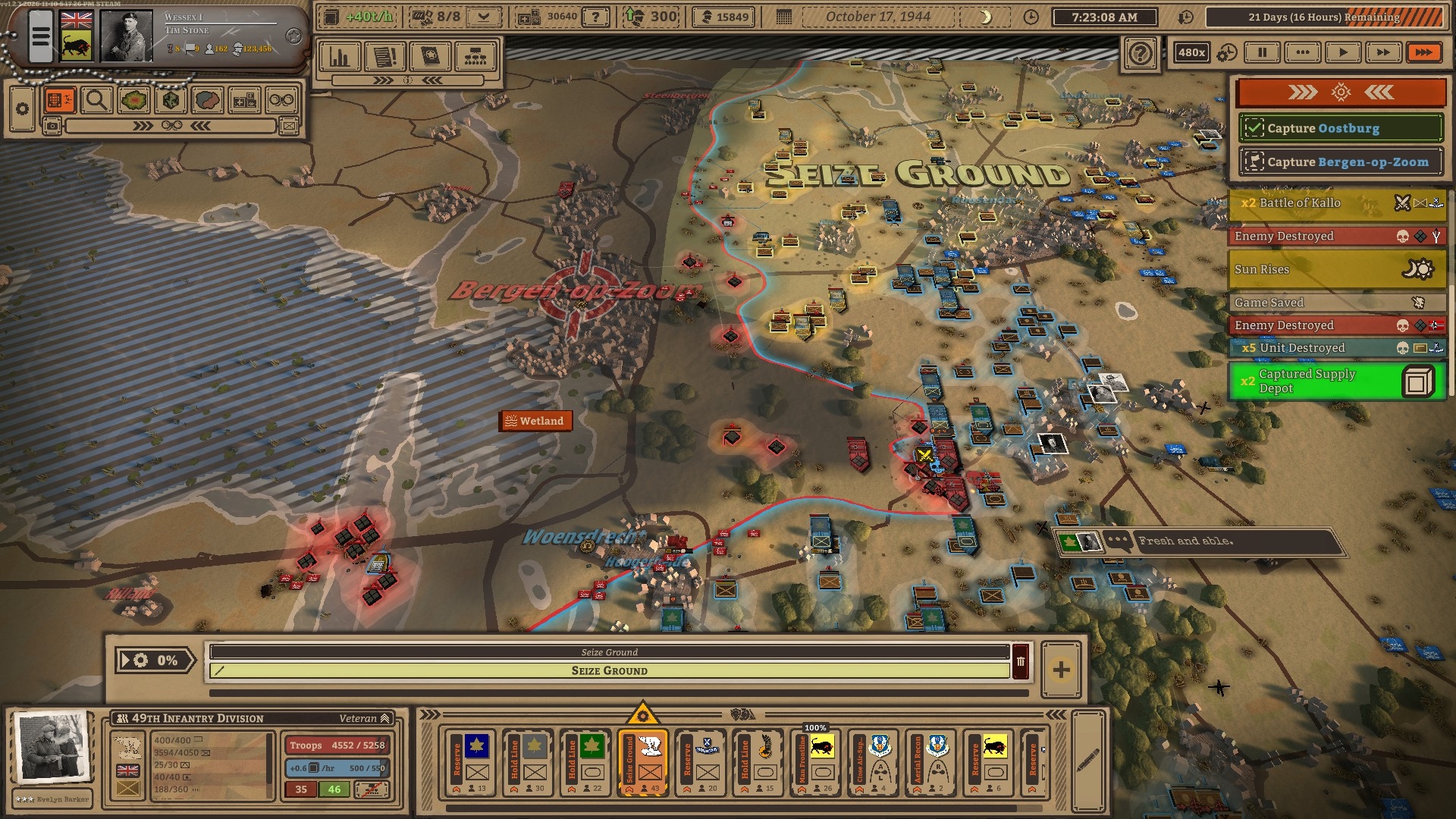
After several days at the front I remain in awe of my silicon subordinates’ ability to turn map graffiti into tactically sound manoeuvres. There’s something faintly miraculous and appropriately amoebic about the way divisions move and fight. Scout-tipped pseudopods probing and engulfing while a vulnerable nucleus of HQs and arty, generally kept well away from danger, coordinates and contributes… it’s mesmerising to watch. Occasionally, a less than ideal unit might find itself on point somewhere, a scout might be a bit too bold, a retreater a tad perverse, but as accounts of similar SNAFUs spangle WW2 memoirs, I find slip-ups like these easy to overlook.
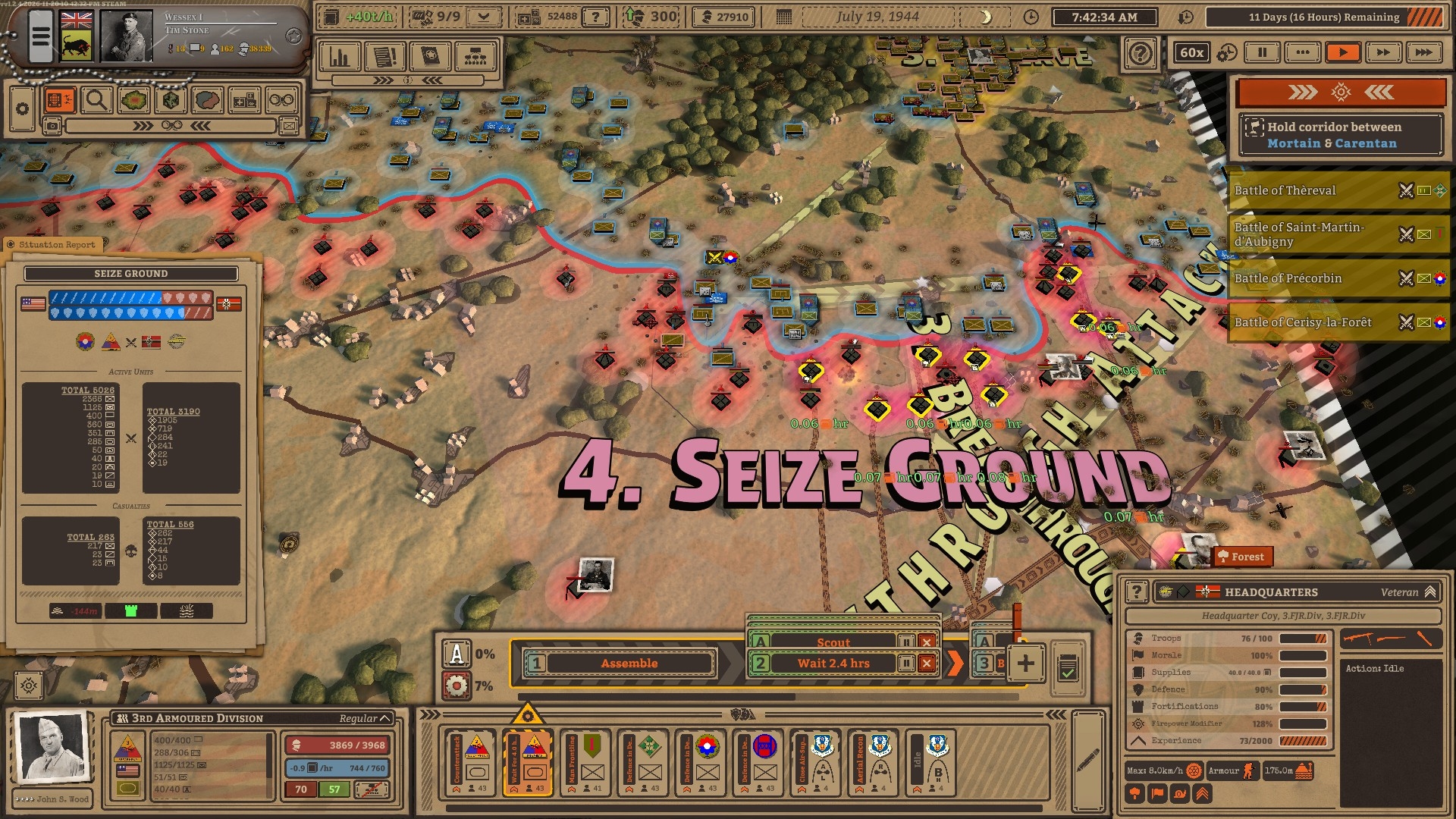
Harder to ignore are the times when scenarios have left me feeling frustrated or overwhelmed. Amongst the game’s eleven post D-Day ops are one or two where the balancing and the history seem poorly aligned. Take the game’s Operation Cobra recreation for example. Even with ‘green’ and ‘recruit’ difficulty levels to fall back on, I’ve not yet managed to emulate Bradley and break out of bocage country.
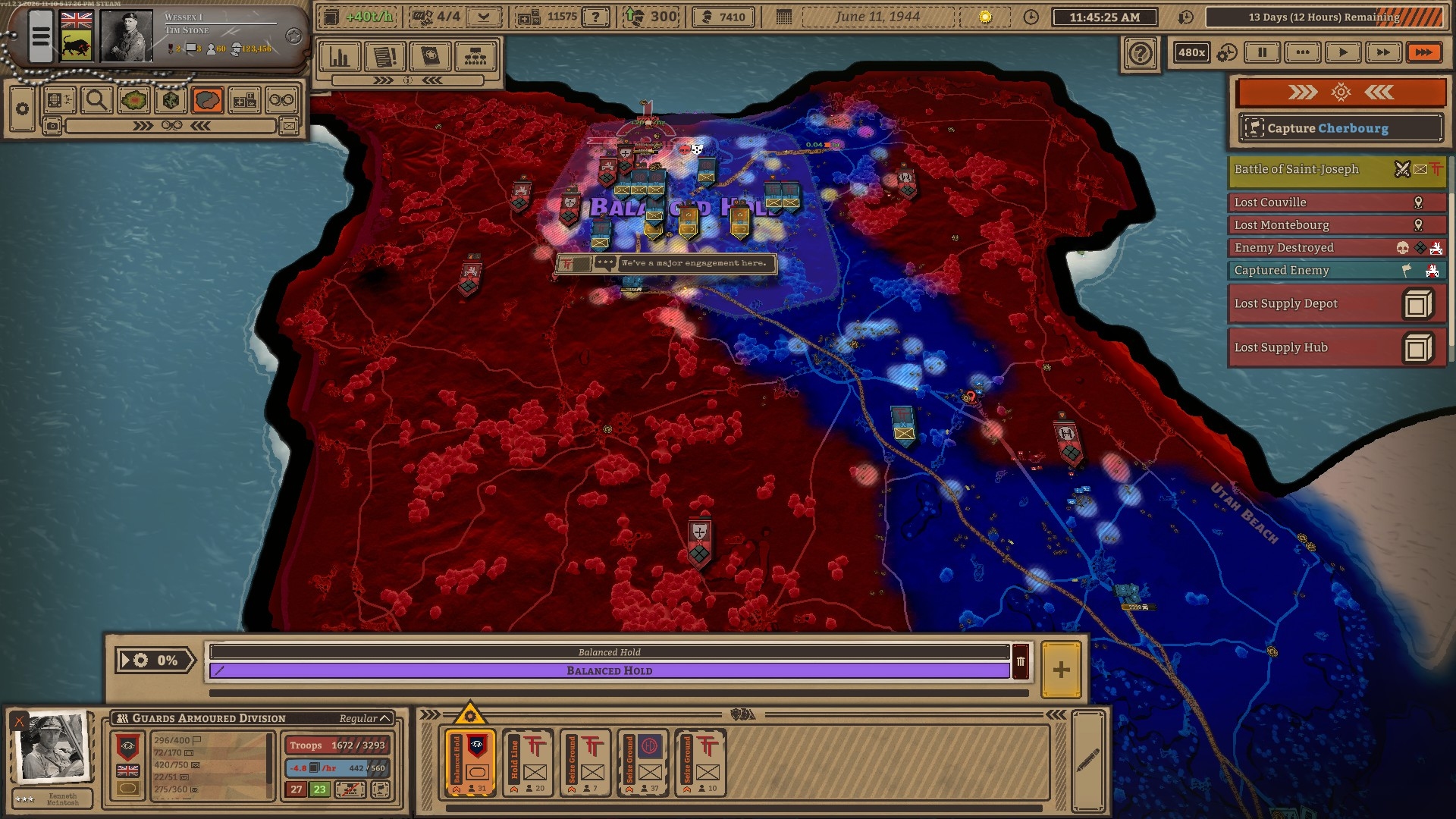
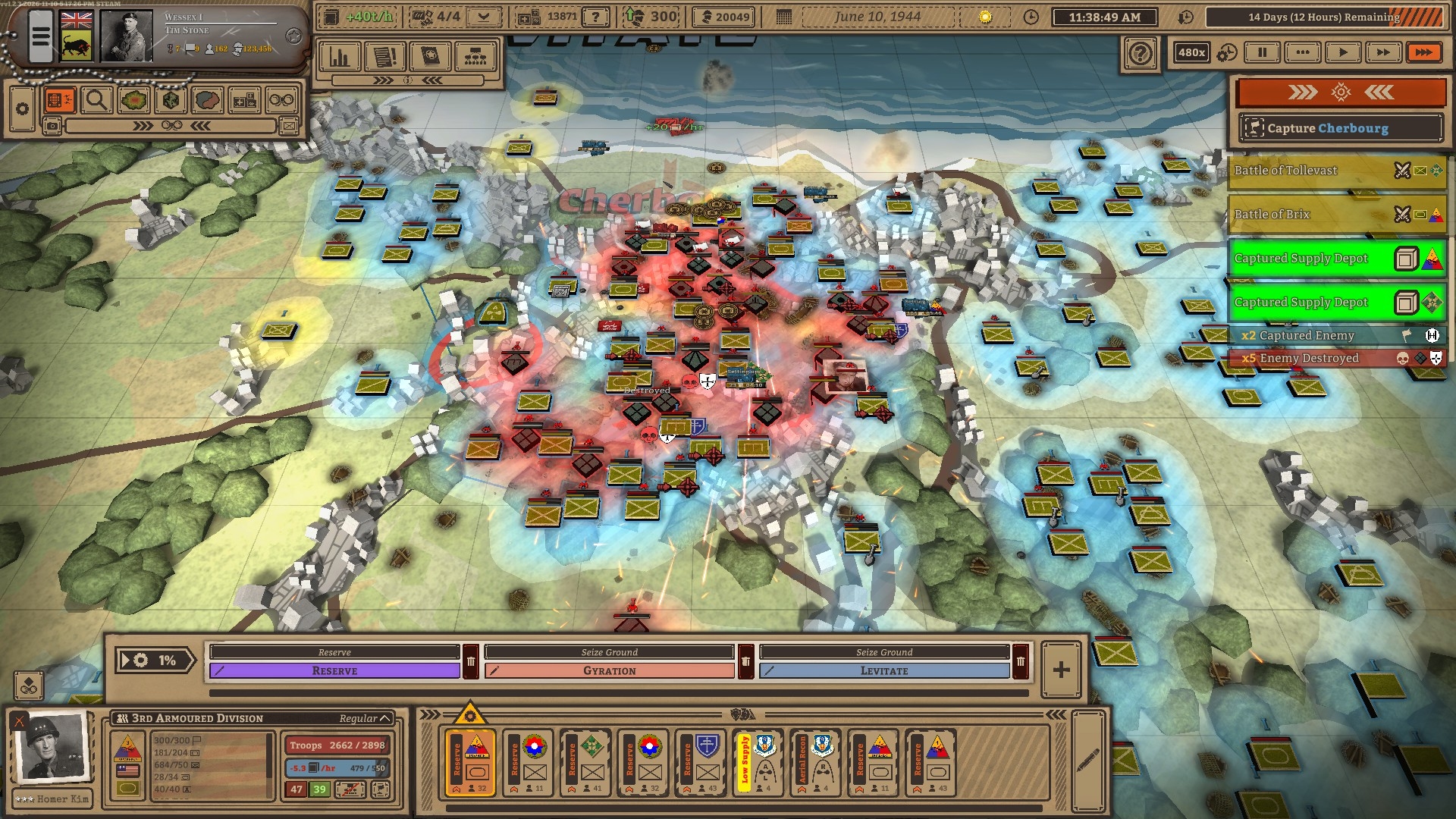
And despite the powerful friendly AI, the scenarios I’m enjoying most at the moment are the smaller ones like Cherbourg. When maps are large and liberally sprinkled with jostling units and overlapping plans, I sometimes find myself recoiling from the seething multi-coloured mayhem filling my screen. When I only have responsibility for a few divisions, the action scrutiny and plan tweaking mentioned earlier is a more practical proposition.
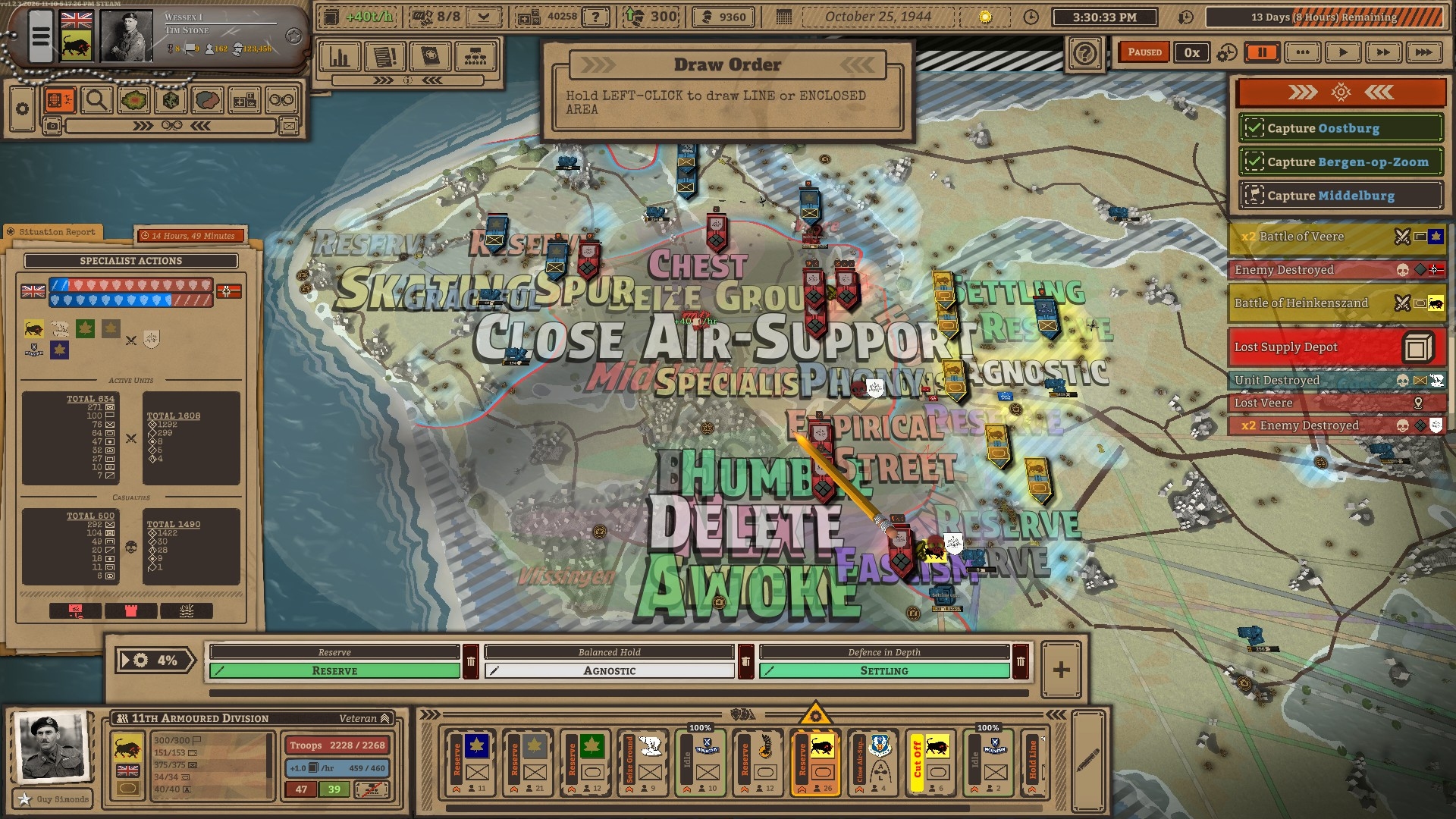
A newish and thankfully optional zonal order system makes the visual busyness more acute by splitting regimental order areas into thirds and assigning a random word to each section. The dictionary file that furnishes said words is modern and unedited, so sometimes your men find themselves battling to secure objectives cursed with terrible codenames like ‘ebook’, ‘proofread’, and ‘awhile’. After being confronted with a few immersion wreckers like these, I reverted to the old zoneless system, and haven’t looked back.
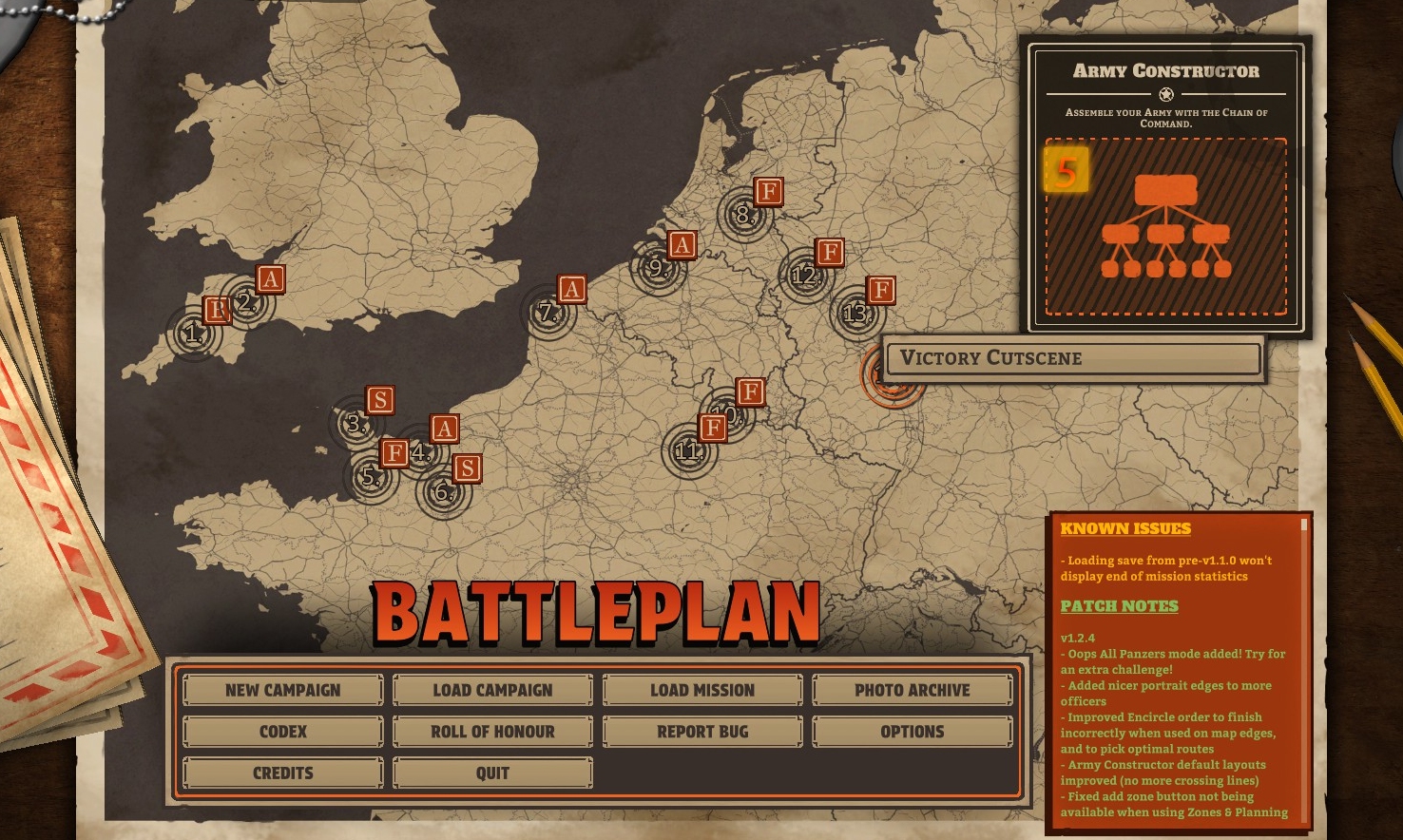
Although the scenario selection screen is a little short of clickable roundels, because the eleven non-tutorial scenarios can be tackled in several modes, are mostly pretty substantial, and don’t instantly lose appeal the moment you beat them, there’s a lot more longevity here than first meets the eye.
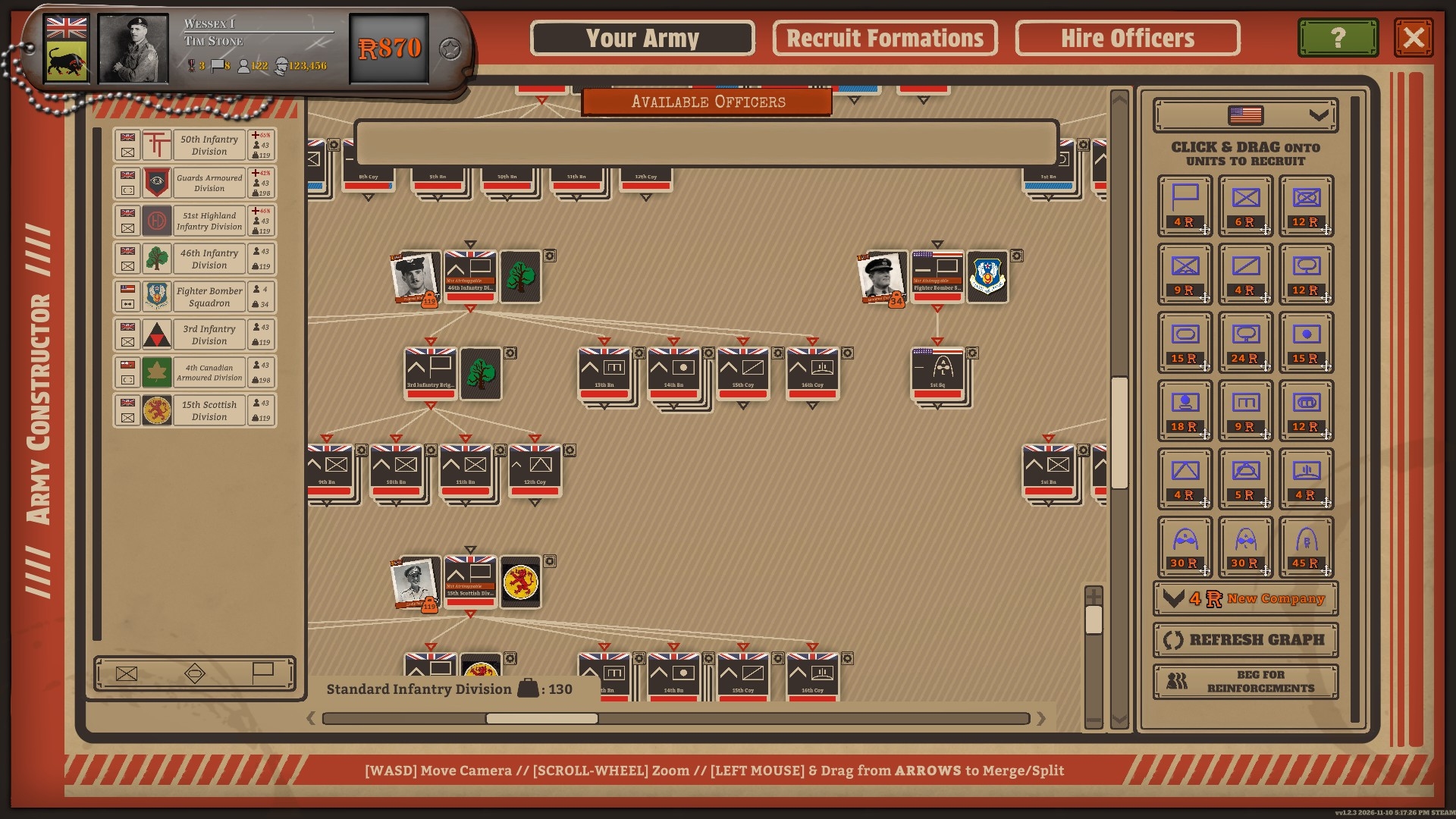
So far I’ve only managed to best around half of the challenges on offer, and all of my triumphs have been achieved in historical mode (OoBs and objectives based on fact). Now I’ve found my feet, I think I’m ready for my first campaign playthrough. That will mean playing the ops sequentially and recruiting leaders and divisions using earned Reputation (an in-game currency) between bloodbaths.
Deterred by a “This mode is experimental and not balanced” pop-up I’ve also not experienced any of the outings from a German perspective yet.
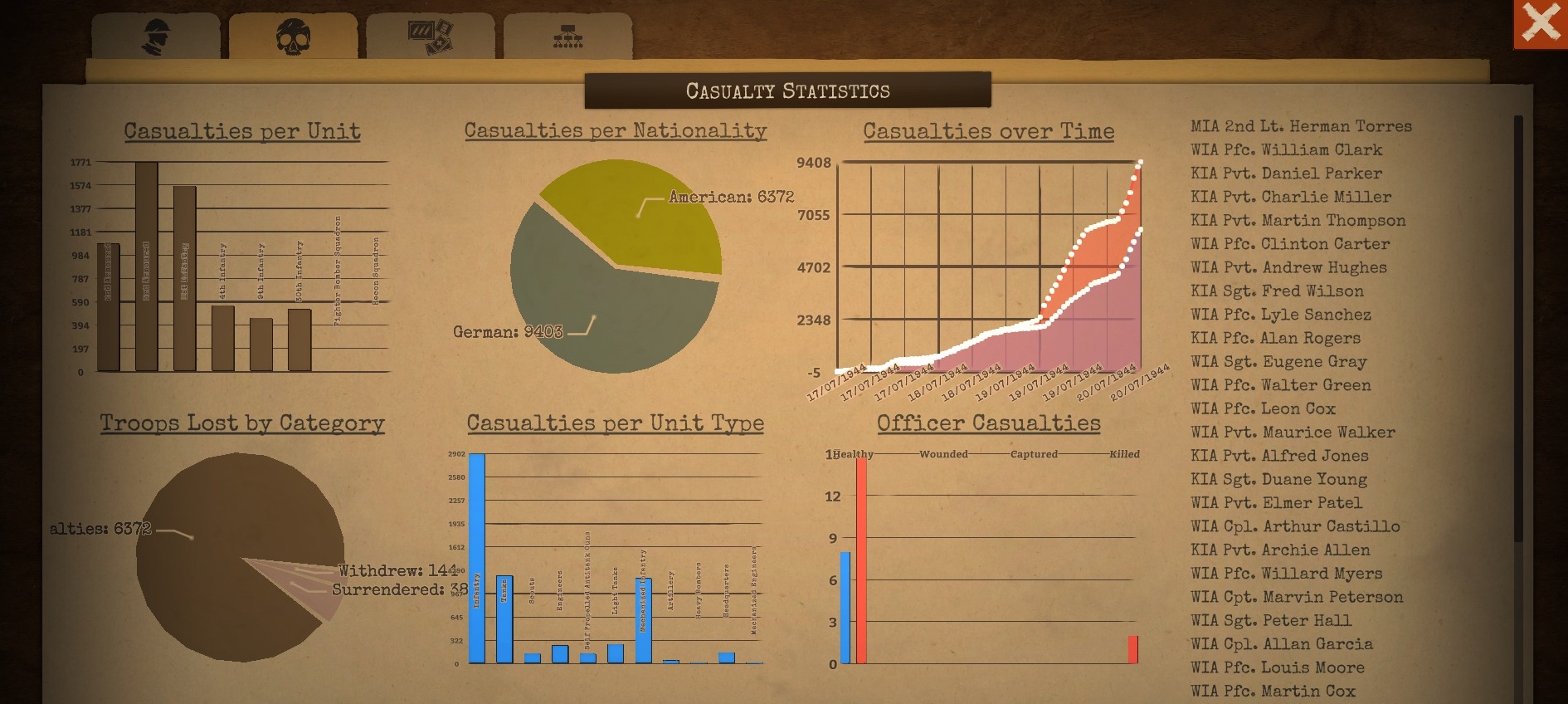
What I have found myself doing is replaying beaten scenarios in the hope of securing less costly victories. Not only does Battleplan count every battle casualty, it names each of the fallen. This simple, thought-provoking act underlines war’s dreadful bottomline more effectively than any load-screen aphorism could ever hope to do.
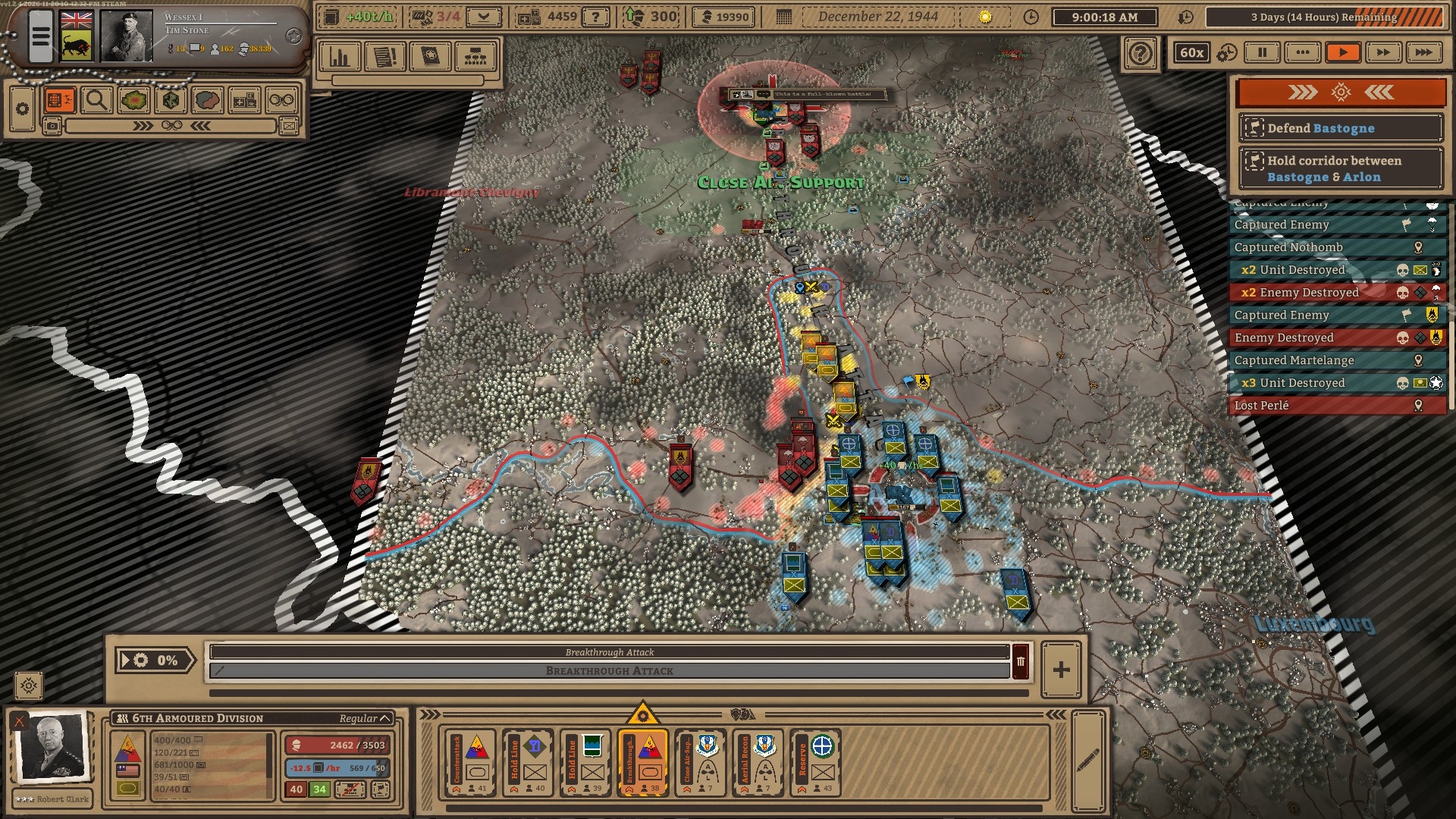
Despise tight time limits in wargames? I’ve both good and bad news. When Market Gardening and attempting to break the siege of Bastogne you do need to get a wiggle on. However, in the vast majority of the ops, assuming you don’t lose key cities to counterattacks (such losses trigger ‘You have twelve hours to retake X’-type ultimatums), there’s usually plenty of time for probing, pocketing, and photo hunting.*
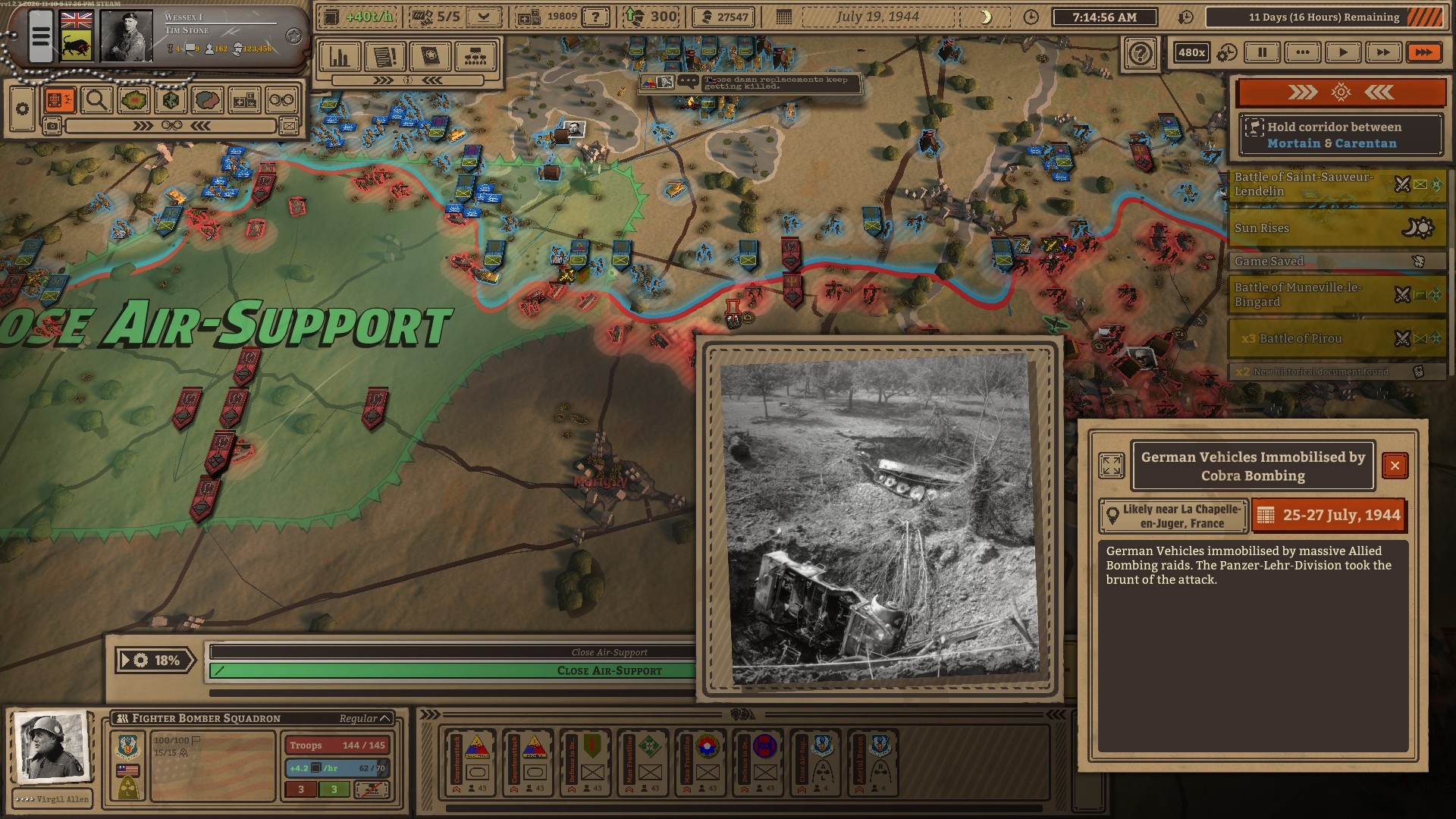
* Another reason to replay scenarios is to find all of the annotated historical photos that are scattered across each map.
It almost goes without saying that Battleplan takes a keen interest in battle influencers such as logistics, morale, terrain, leadership, veterancy, combined arms, and weather.
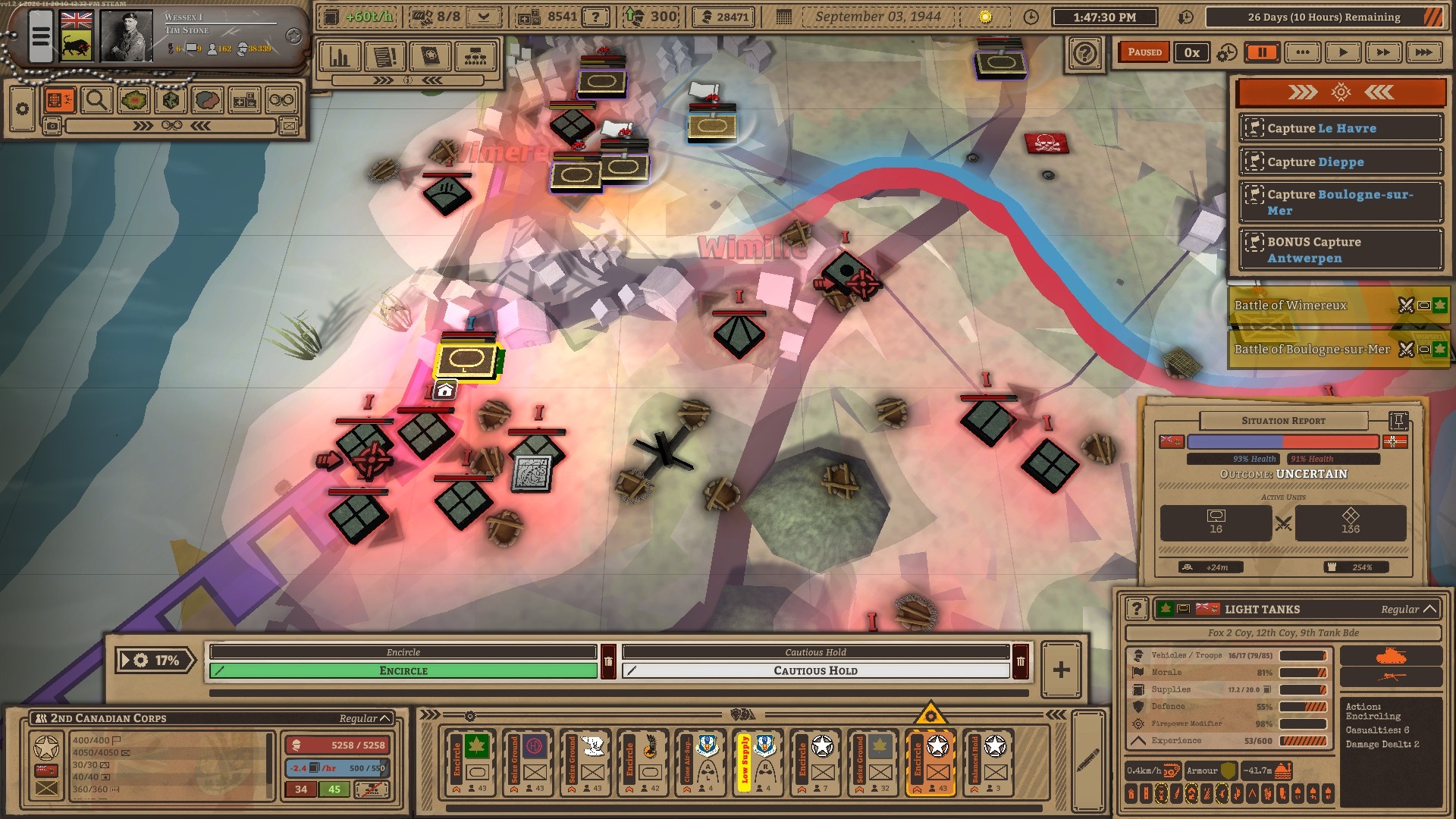
When chits or (if you prefer) figurines collide, the complicated clash calculations that result are kept hidden, but a quick perusal of the unit info panel and the battle outcome predictor usually explains why things are going apple- or pear-shaped. Battleplan’s GUI conveys a considerable quantity of data relatively cleanly. Tooltips are everywhere, buried information rare.
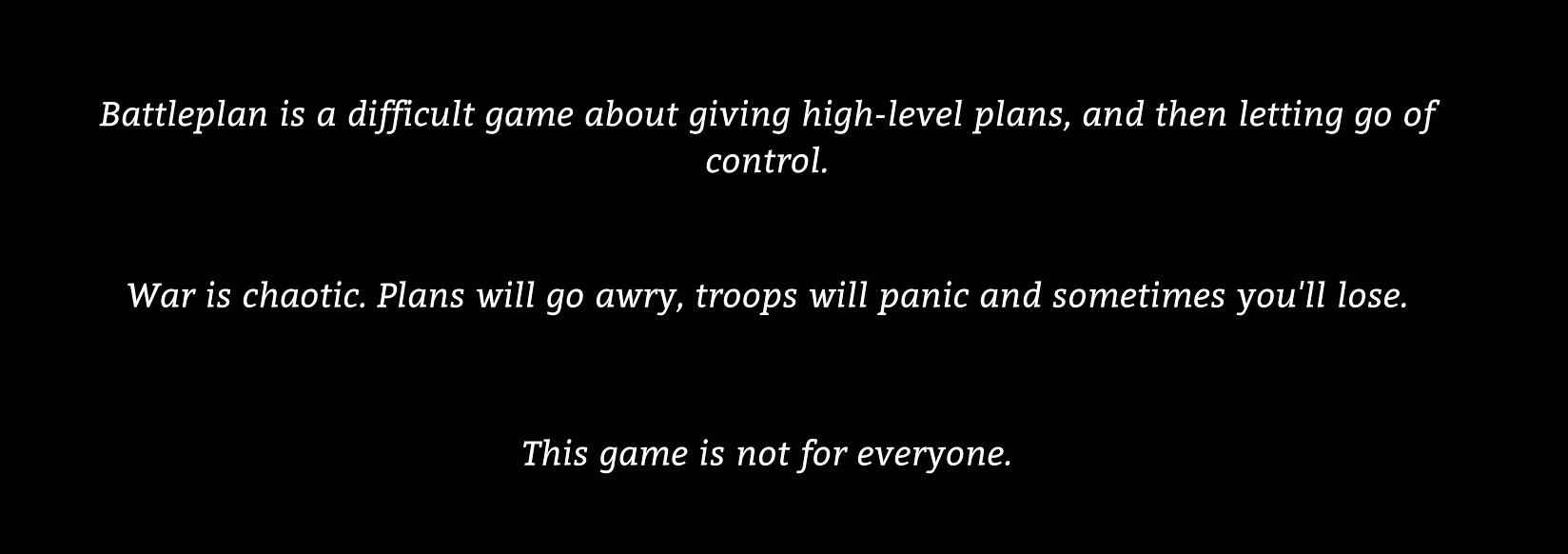
Hopefully Foolish Mortals have another demo planned. Battleplan is one of the most original, exciting, and impressive wargames I’ve played in years, but I can see some grogs accustomed to hexed operational sims struggling with its amorphous aggro and teeming front lines. Airborne Assault and Command Ops appreciators can purchase with considerable confidence. Others might want to wait for a new trial before reaching for the Add to Cart button.