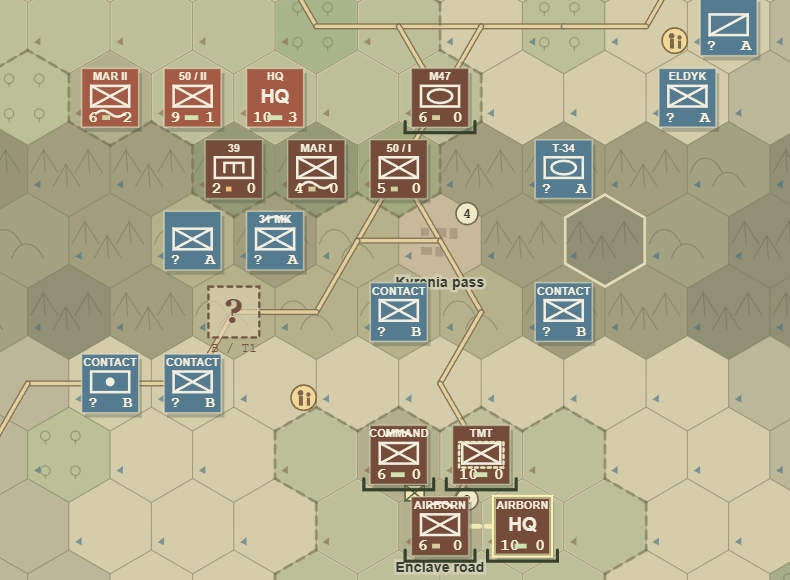
Great news! In the brief window before AI steals all our jobs, overheats the planet, and 3D-prints the armada of virus-carrying drones that destroys us, it’s going to make some corking computer wargames. While Cyprus 1974 isn’t, strictly speaking, ‘corking’, it is an eye-opening example of the kind of conflict sims that machines are already capable of producing.
Last week, as an experiment, Stuart from Berenott Digital gave his favourite AI, ChatGPT-6 Astra, the following prompt:
“Create a html file containing a hex based wargame. This needs to let the player follow a campaign as either Turkey or Greece, and implement the early 70s war in Cyprus. We’re looking for grog level detail in a succinct form with multi-turn scenarios collectively delivering the end-to-end campaign. Implement sufficiently robust AI to challenge the player in both offensive and defensive situations, provide suitable sprites/icons for units, make sure the player has to manage morale, supply lines, etc. Include an element of fog of war, including missed or misleading reports/updates, model the chain of command and put the player in an awkward position where they need to make good choices without good information. Make it credible, make it feel they earned their rewards but don’t make it obnoxious for them to earn those rewards. The Cypriots need to be part of the scenarios, whether it’s civilian complications or guerrilla activities, and the British base areas need to be neutral zones. Including combined arms, allow a scenario to be played over 8-15 turns (unless lost sooner) and use standard hex based wargame tropes to give the player a degree of familiarity in an unusual setting. The game should appeal to classic wargamers and scenarios should be at a granularity appropriate to a 10 scenario campaign for the scale of that conflict. Win condition for Turkey is successful retention of half the island, for Greece it’s removal of the Turks, although avoiding losing more than half the island gives Greece a draw. Look, this is all from when I was a year old so you’ll have to do some research and see how you get on. Add sound, avoid looking like an AI game, keep the UI simple and make every element of it serve a player who knows what they’re doing and wants to get it done, and let me know when the html file is ready to download.”
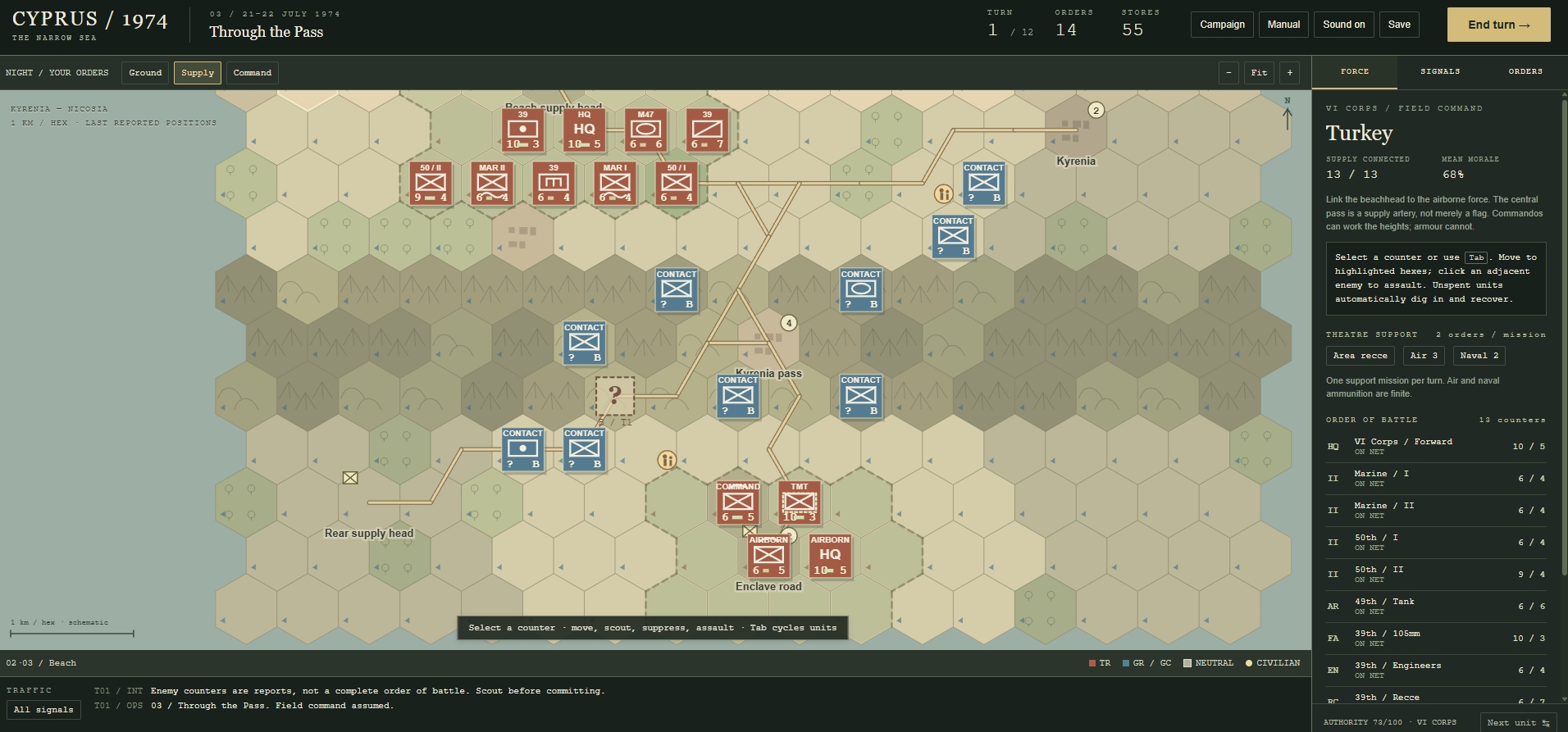
Playable here, the result is, depending on your perspective, either exciting proof that, soon, anyone will be able to create complex, bespoke PC wargames at the drop of a hat, or a worrying sign that the genre is about to be swamped by a tsunami of cheap, machine-made contraptions.
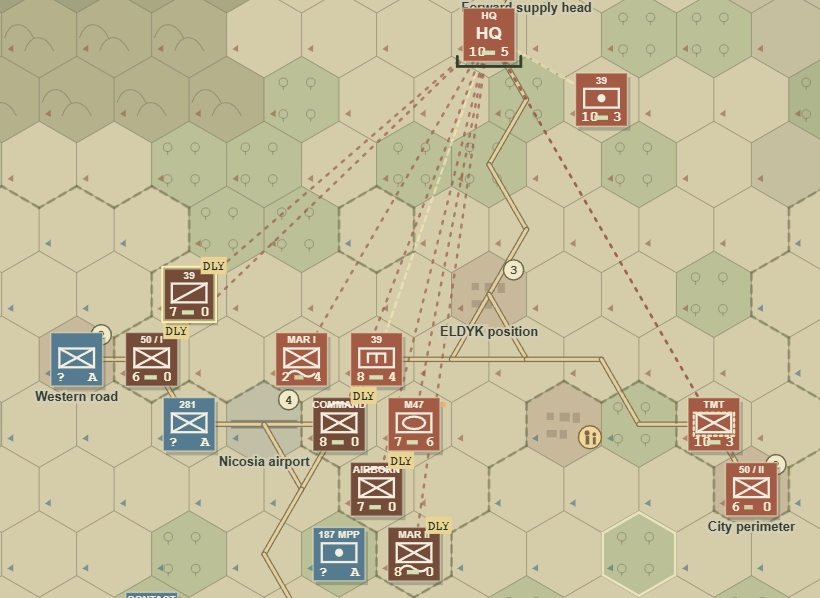
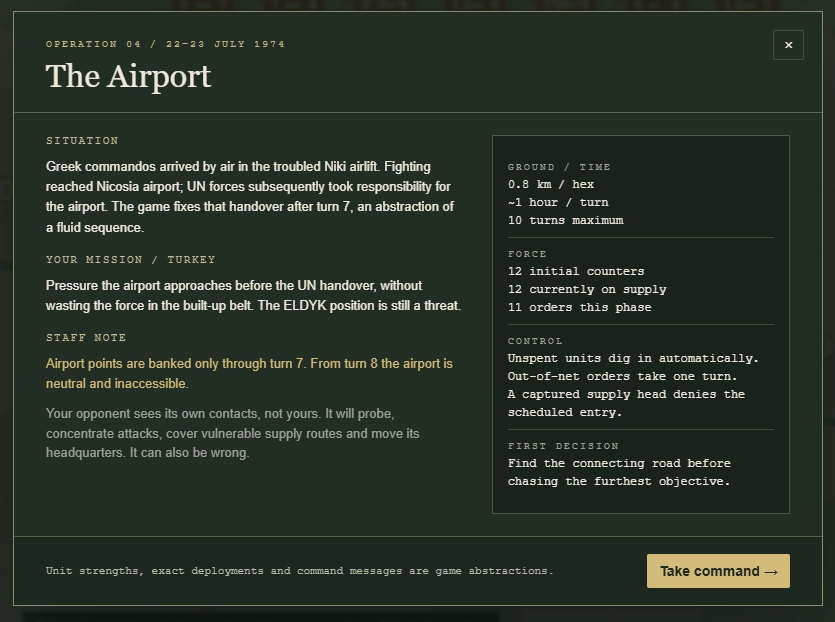
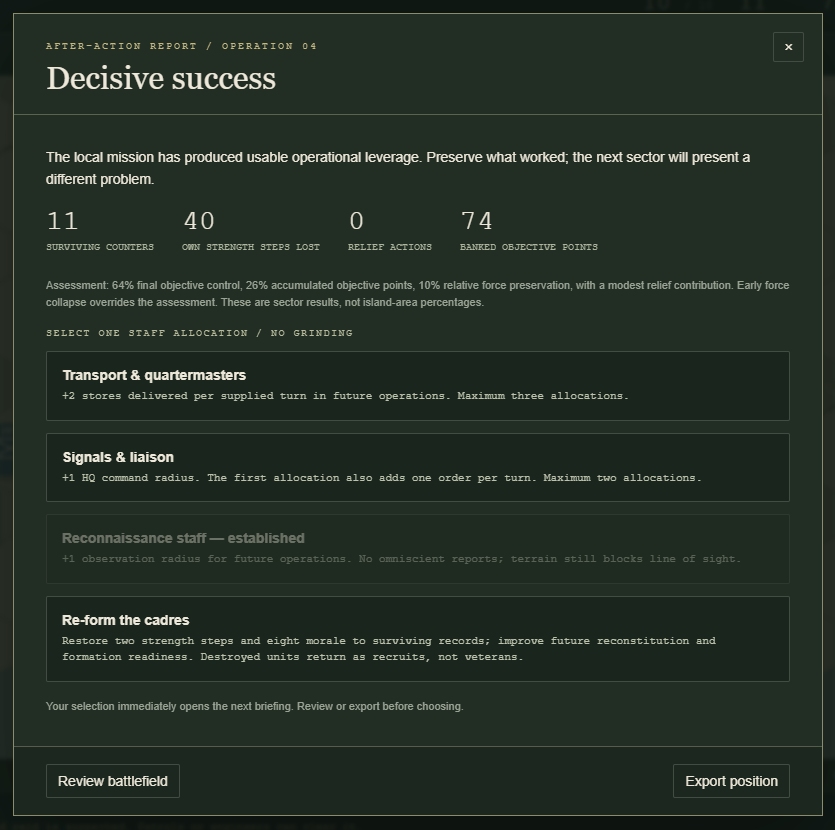
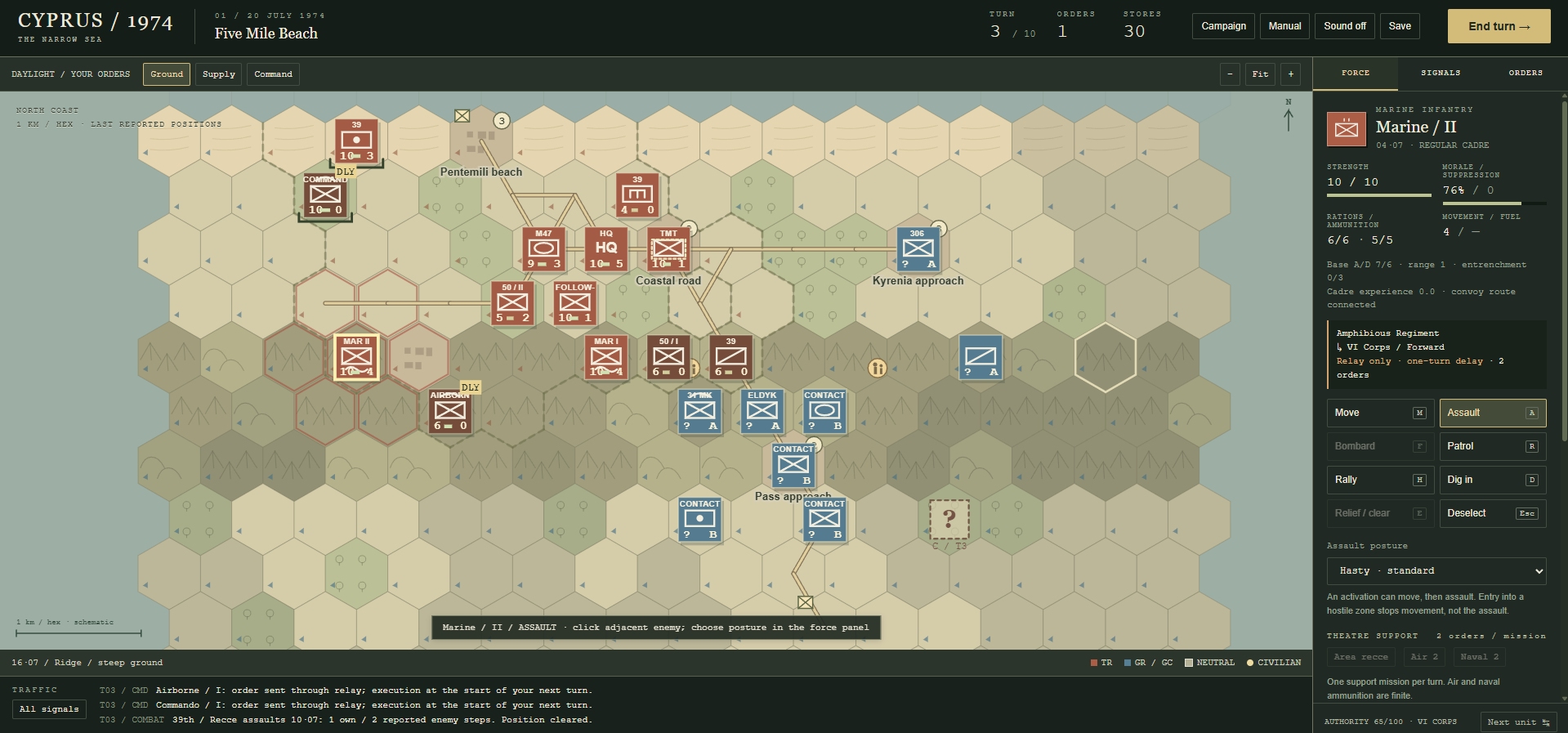
ChatGPT researched Cyprus 1974’s map, order of battle, and ten-scenario campaign. It designed its GUI, wrote its manual, and decided it would be a good idea to include fancy touches such as order rationing, specialised orders (bombard, dig-in, patrol…), order delays, and occasional text-based ‘command decisions’.
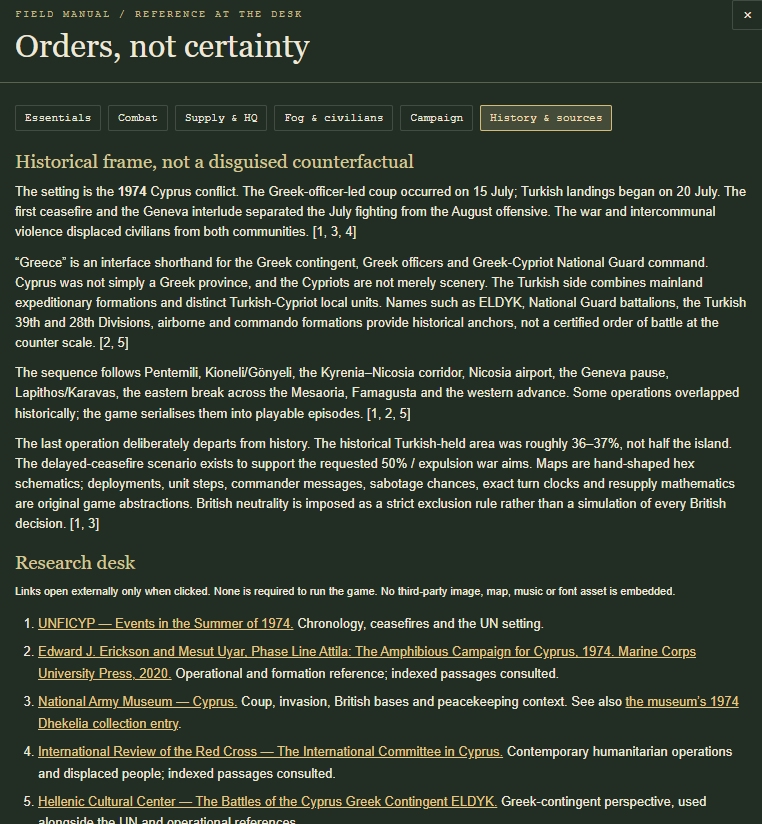
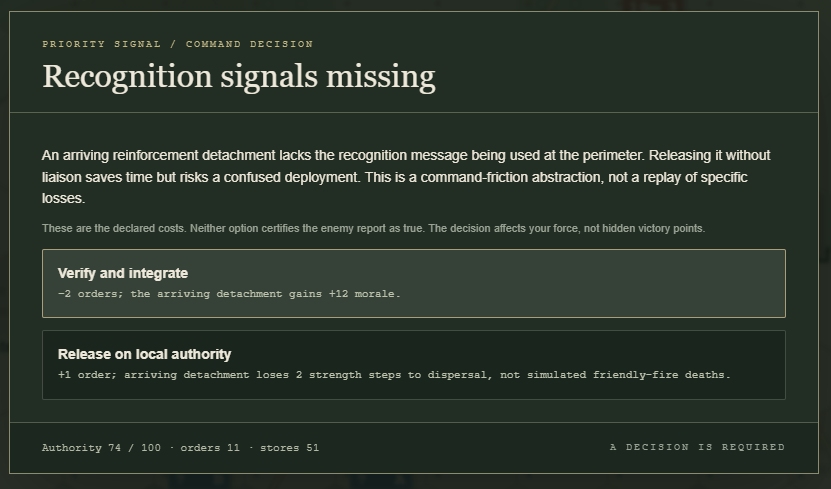
Guided by nothing but that 320-word request, it concocted a game that is simultaneously complex and intuitive… fresh and familiar.
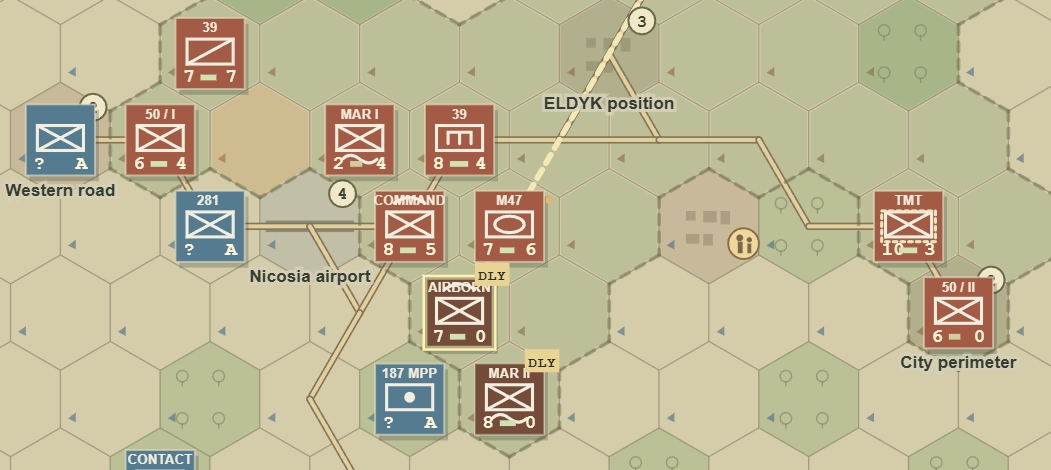
Predictably, there are still areas where silicon John Tillers lack the competence of flesh-and-blood ones. Play a few scenarios and you’re sure to notice flaws such as poor balancing (winning is too easy), fairly bovine AI, opaque combat maths, and absent sounds. Stuart is too busy with other projects to take Cyprus further, but feels these weaknesses could be rectified fairly easily and quickly via additional prompts:
“Overall, is this a commercially viable game? I wouldn’t think so. Could it be made sellable? Yes, it’d take a week or less to get this to the state players would feel they had a game worth their time.”
At the current rate of progress (“Three months ago the AI couldn’t do this with a single prompt. A year ago AI couldn’t do this at all.”) we wargamers probably have less than a year to adopt a position on this transformational tech shift. Are we going to support A) The artisans – the stubborn sons-of-guns who continue to do things the laborious/loving, old-fashioned way, B) The new breed of AI-aided corner-cutters, or C) Both groups?
Devs not planning to board the band-wagon need to devise responses too. Which sub-genres are the AIs likely to over-run last? Which areas are machined wargames likely to be weakest in… Research? AI? Art? Should studios start including ‘development man-hours’ stats in their blurbs? Should they collectively devise a certification scheme so that refuseniks can purchase handmade games with confidence?
Cyprus 1974 leaves me excited and worried at the same time. The idea that one day soon, I’ll be able to put down the military history tome I’m reading, type out a quick game outline, then sit back while my AI of choice turns words into moreish entertainment, is mind-blowing. It’s also alarming, because, as more and more people choose this route, and release ‘their’ creations into the wild, sorting wheat from chaff, and making a living as a dev, is sure to become even more difficult.
A year or two from today, will the cheapness, convenience, and malleability of DIY wargames have sounded the death knell of the professional hex hewer? I hope not.
I’d argue we’re already in the age of AI game creation. Just look at Steam with about 60 new games a day in 2025. That’s not a release schedule, that’s a firehose. But I do think this could be a golden age for human pc reviewers. Somebody has to separate the wheat from the chaff, and there is a LOT of chaff. While AI has also already taken over a fair chunk of review work, actually playing a game and relating it to similar titles, experiences or genres is a lot harder for AI than reviewing music or books. So yeah, the future looks golden, tally-ho!
There were way too many Steam releases every day for the past several years already, way before AI. Nobody can review them all.
The problem with AI is that it’s excellent at doing almost a good product, and very, very bad at polishing and finishing it. No, I do not believe at all that it would be easy to finish and polish this game. It would take much much longer time than working this initial prompt. AI is a bad tool at this. The code is probably difficult to understand and maintain, and the more changes you make to it with AI, the worse it will become.
But it is great for short little projects, that’s true.