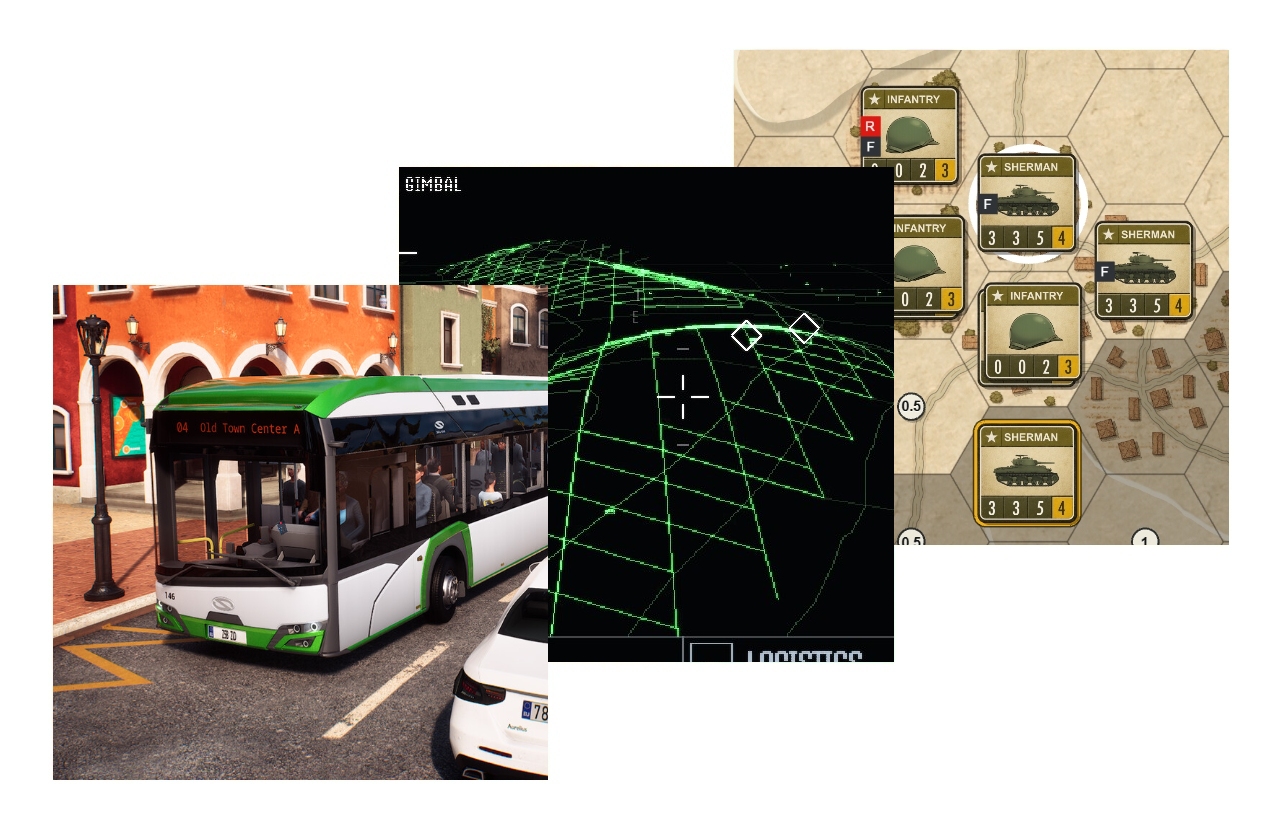
Want to turn a green lane into a brown lane, tow a Gulaschkanone across a snowy field, or roam the Western Desert trashing Axis airfields? Get a 4×4. Want quick introductions to games of interest to realism relishers and old fogies? Read a 3×3. Prior to penning one of these articles I’ll play three tempting titles for at least three hours each. While it would be cavalier to call the reports that result from such brief auditions ‘reviews’, it’s conceivable they might lead to more prolonged playtests, and prompt or prevent the odd purchase.
Broken Front
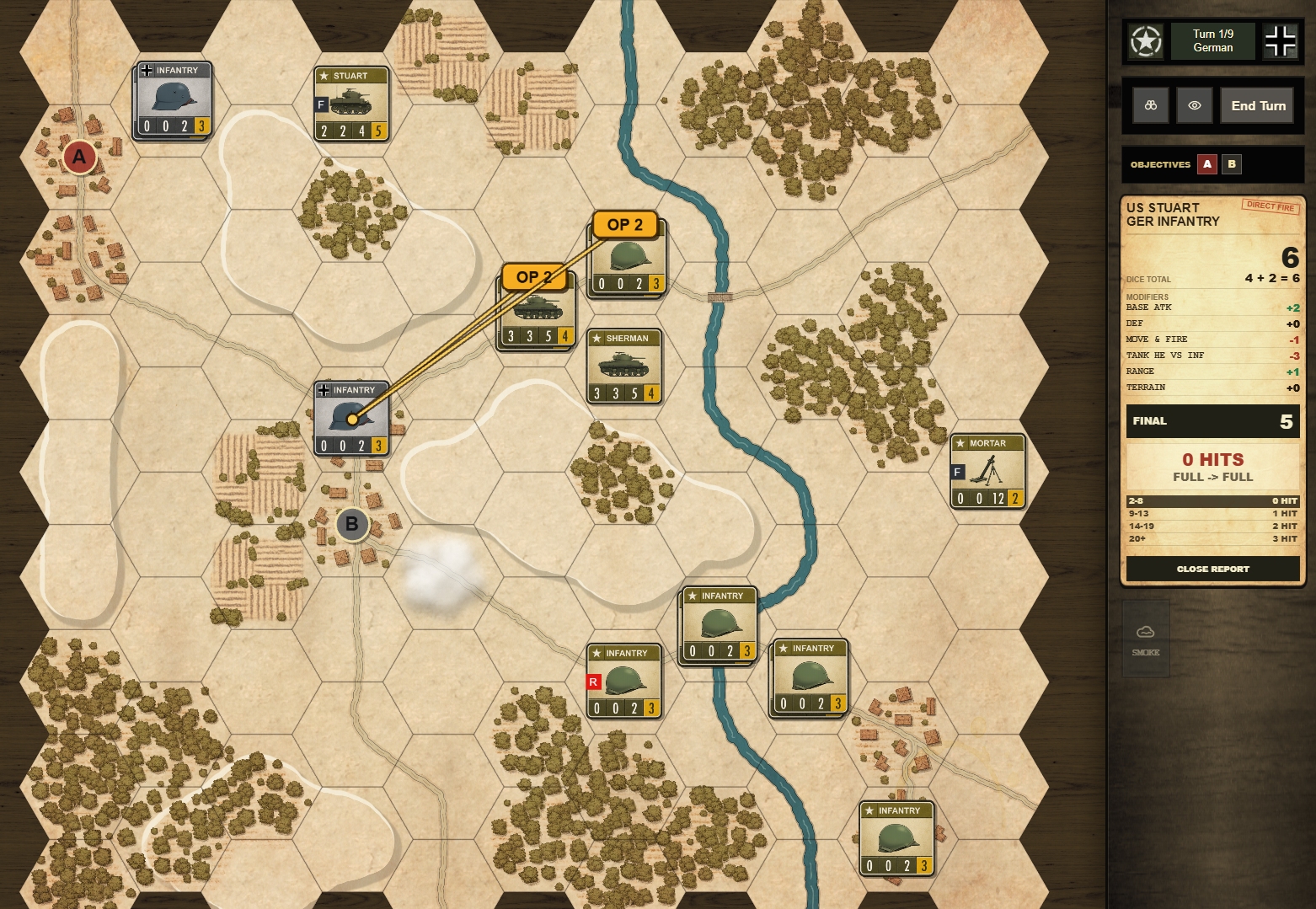
In the three hours I spent with the admirably approachable and affordable Broken Front, I was able to play all of its scenarios, road-test its skirmish mode and scenario editor, and scout its Steam page and forum. As the longest of the game’s seven ready-made scraps only lasts twelve turns, and the largest only places thirteen units under your control, it’s little wonder that the IGOUGO* battles in this little wonder seldom take longer than fifteen minutes to play out.
* Leavened with opportunity fire.
The brief battles makes £3 BF perfect for time-poor wargamers looking to squeeze entire engagements into tea-breaks or other tight spaces. Thanks to simple, sensible, transparent mechanics, and those low unit counts, its also an ideal diversion for folk with no previous experience of the genre.
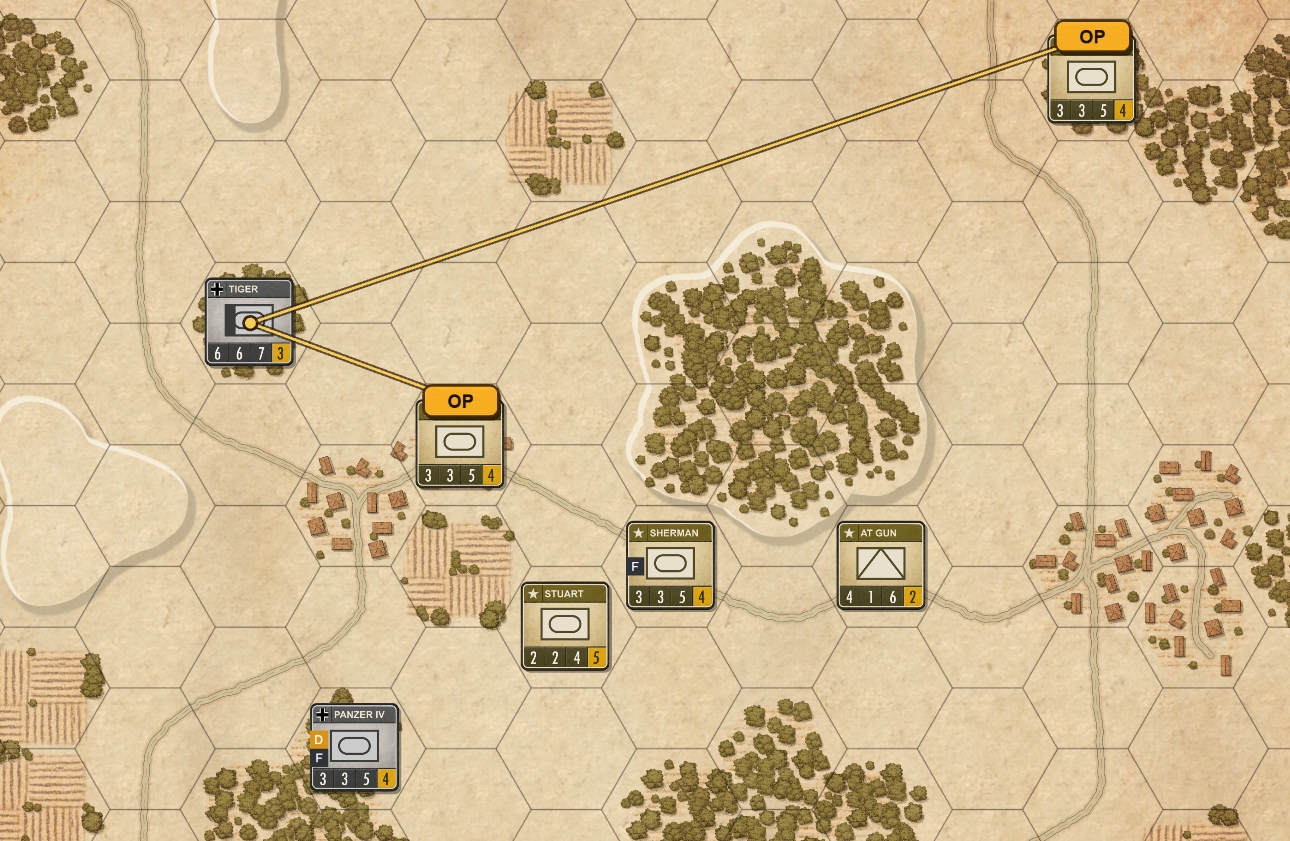
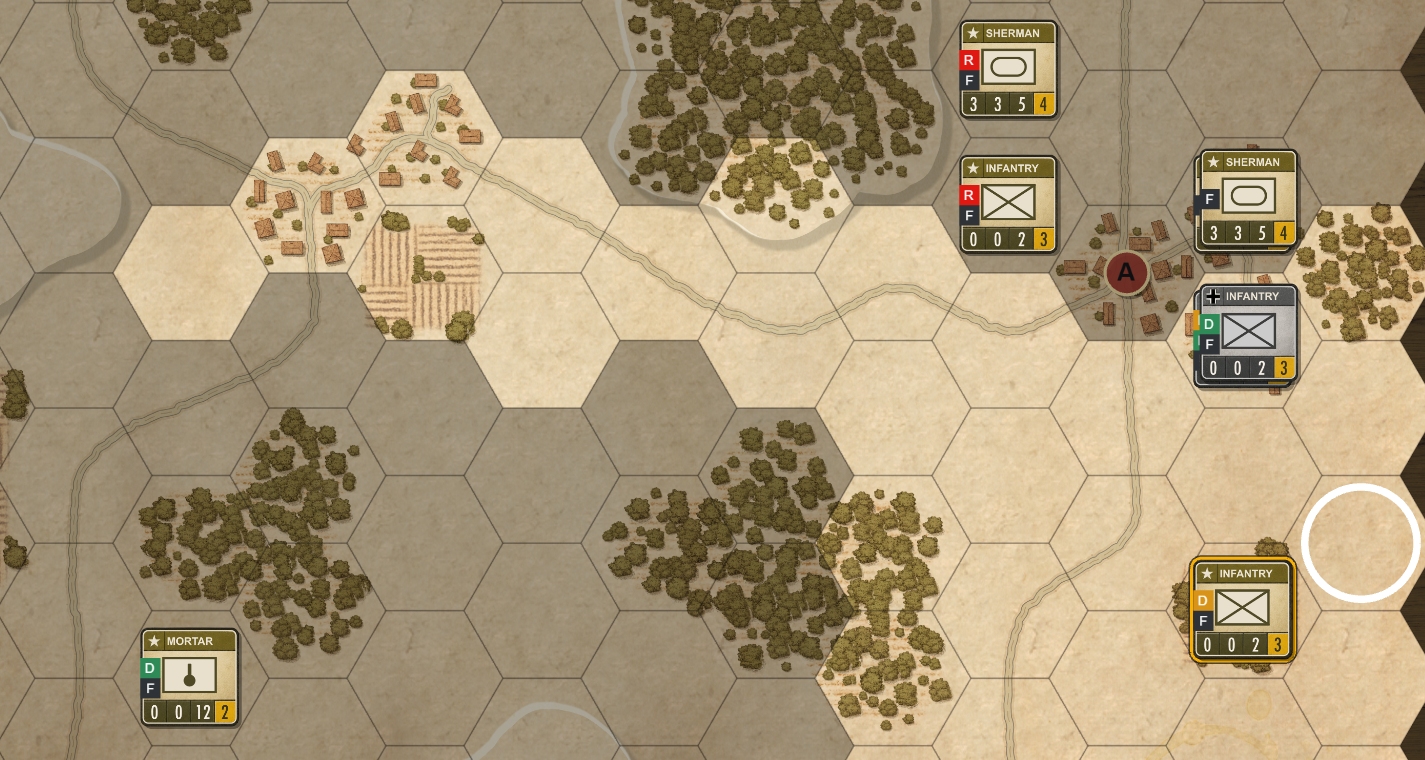
If I ever get round to updating this article BF will feature prominently in the new version. Although KOArtist’s creation doesn’t deliver the variety, intimacy, and tactical texture the evergreen Battle Academy 2 provides, in terms of legibility, excitement, friendliness, and plausibility, it runs Slitherine’s old-timer awfully close. Should isolated tanks in villages be more vulnerable to infantry assaults, and AT guns be slightly less mobile? Probably. However, overlook minor realism quibbles like these, and the action almost always feels kosher.
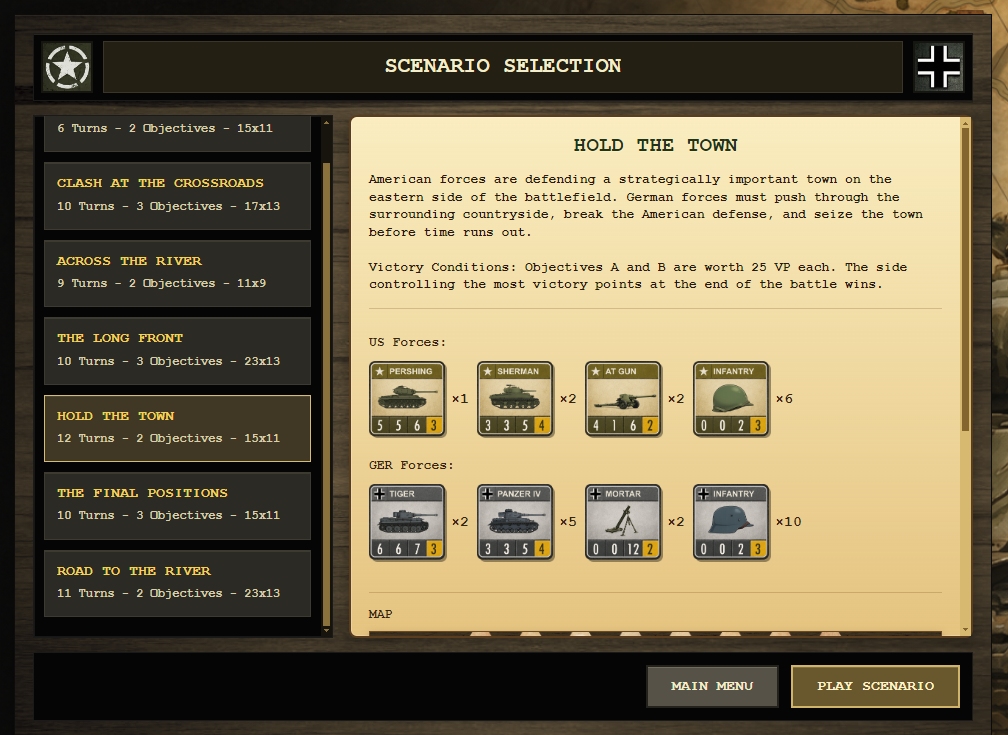
I love the fact that I find myself using Stuarts for scouting in BF, that Tigers are genuinely intimidating, and a thoughtfully positioned, mortar-seeded smokescreen can turn a battle. Very occasionally, a series of unfortunate dice rolls may leave you quietly fuming, but generally smart tactics get rewarded.

Don’t expect to win all seven scenarios at the first attempt. A competent AI and the odd tricky objective meant I tasted defeat several times during the audition. A switched-on commander could probably win what passes for the game’s campaign in a single three-hour play session, but thanks to the skirmish mode, the scenario editor, a recently added map editor, and a nascent mod scene…
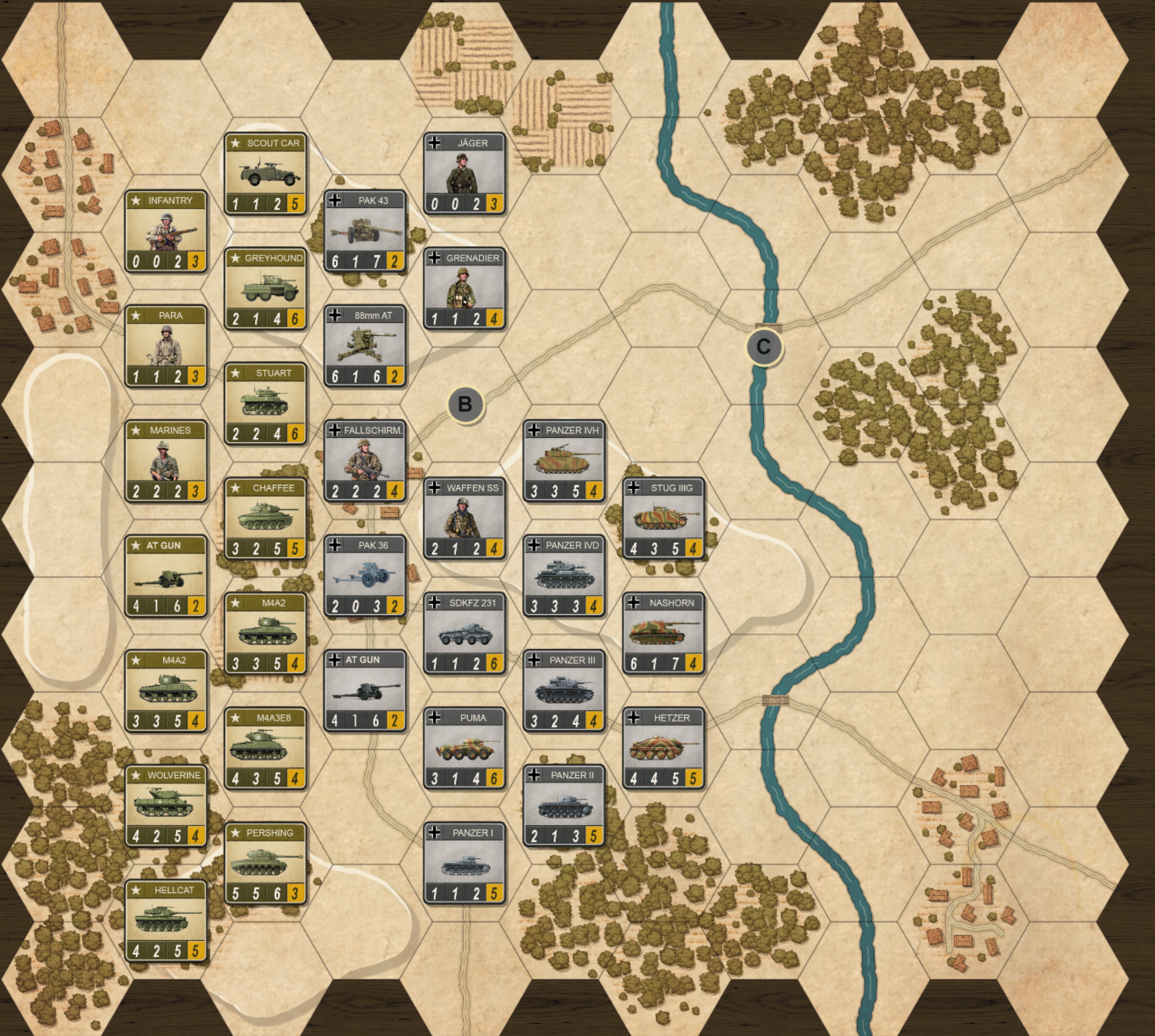
…that doesn’t mean the fun is over.

In six months’ time I wouldn’t be surprised if owners of this likeable little’un, were testing their mettle in Stalingrad, Iwo Jima, Italy, and North Africa. In a year’s time, who knows, Broken Front’s fronts could well include the Korean War, the Six-Day War, and the current conflict in Ukraine.
Talking of which…
Oktofyber
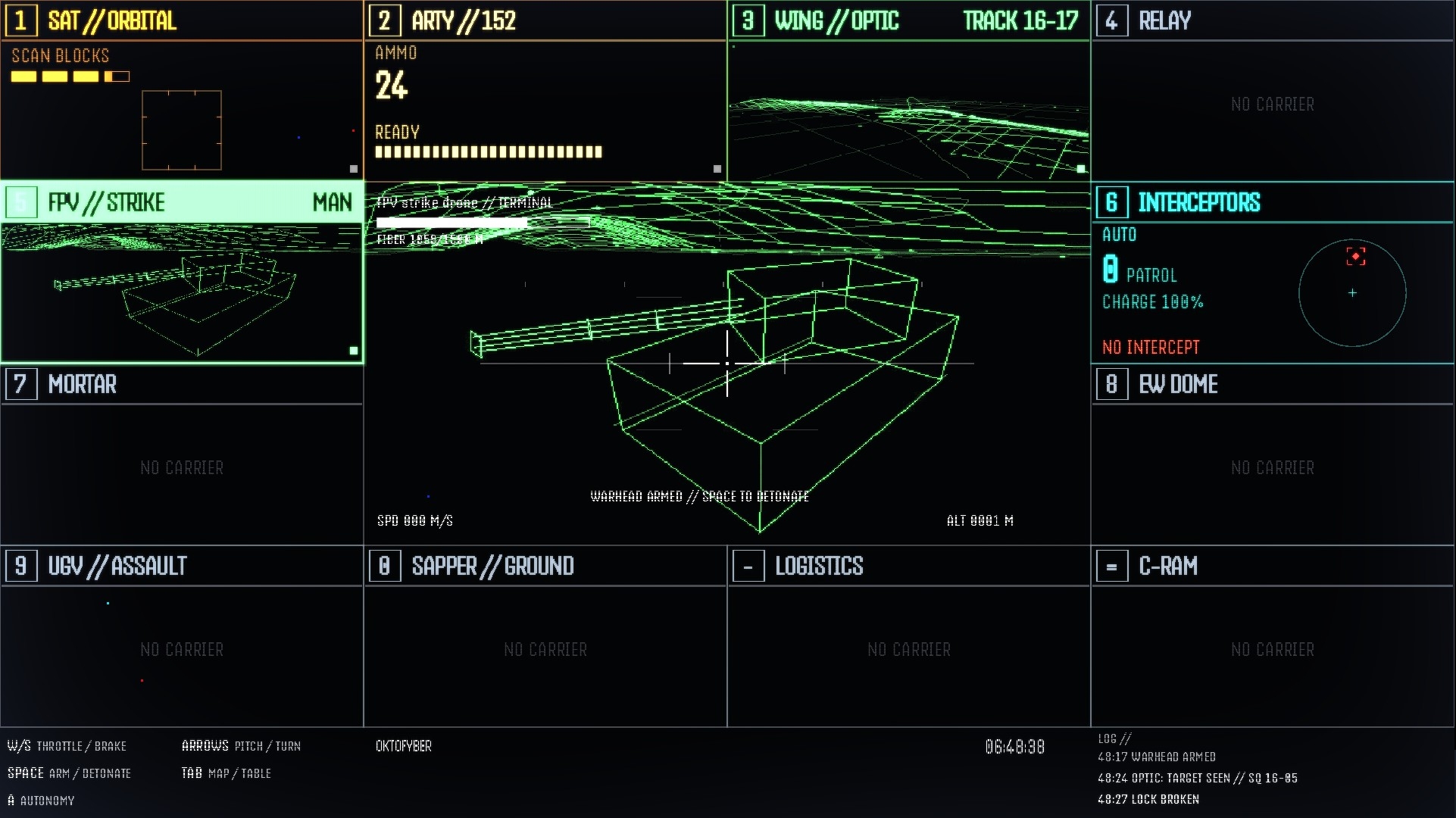
Any review of Oktofyber that didn’t include words like ‘opaque’,‘frustrating’, and ‘difficult’ would be remiss. So too would any analysis that failed to point out that Iaroslav Motailov has, by hybridising Harpoon, Carrier Command, and the modern Ukrainian battlefield produced something guaranteed to intrigue desktop generals of a certain age.
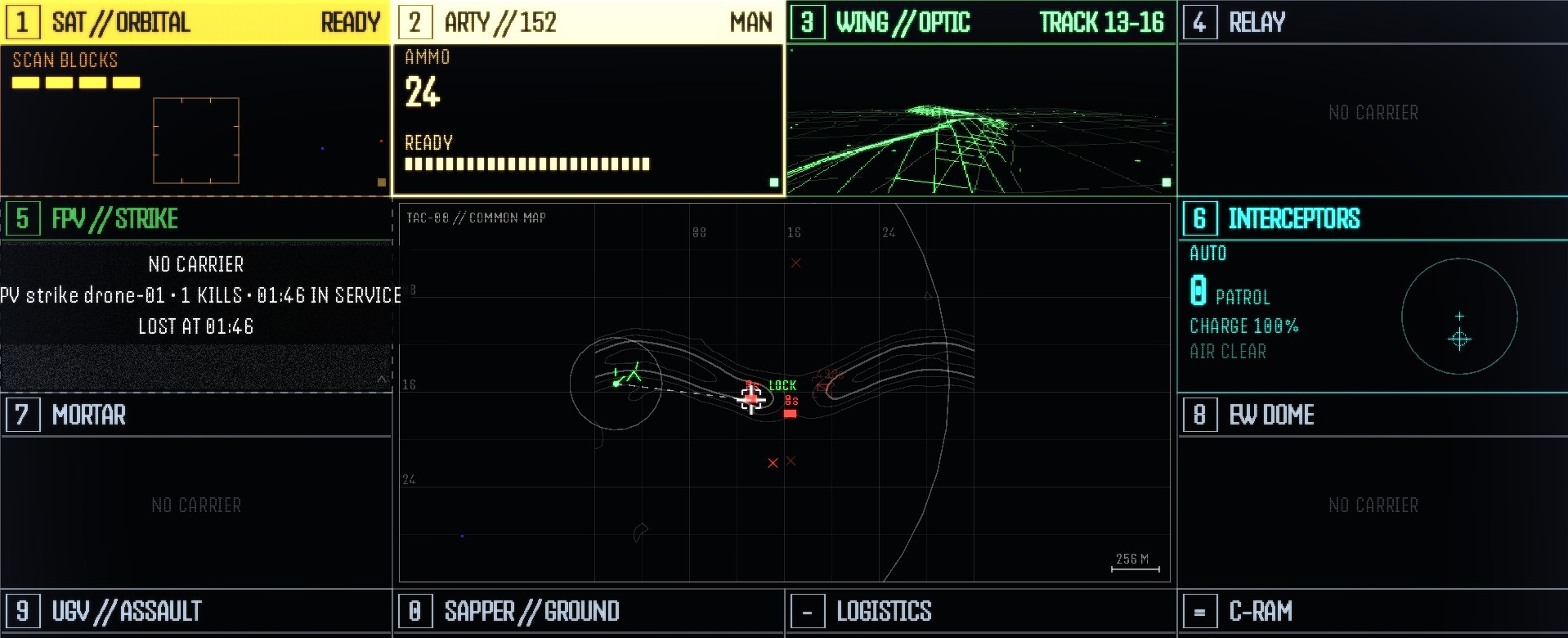
After being reeled in by the glitchy Battlezone aesthetic and this arresting elevator pitch…
“You are not a soldier. You are not a general. You are the operator — one human at the console of a robotic army, routing 13 branches of unmanned forces through kill chains where every link matters and no branch wins alone.
A satellite pass births a contact. Artillery suppresses it. A fiber-optic FPV slips under the jamming dome and finishes the job. Assault UGVs take the ground, a logistics mule hauls shells under fire, a tethered relay keeps the whole web breathing. Recon wings, interceptors, mortars, C-RAM, EW dome, minesweeper, heavy bomber — thirteen branches, one operator. And orders only travel where a link physically exists: radio horizon, jamming and terrain are not scenery — they are the network.
There is no all-seeing eye. The map draws knowledge, not reality: optics claim a silhouette, thermal claims a signature, direction-finding claims only a bearing. Contacts age and go stale. Fire at old coordinates and the teletype answers: COORDINATES EXPIRED. Switch your radar on and it sees everything — and everything sees it. Emission is a decision…”
…I quickly discovered that this £13 one-off doesn’t go in for hand-holding or lengthy explanations.
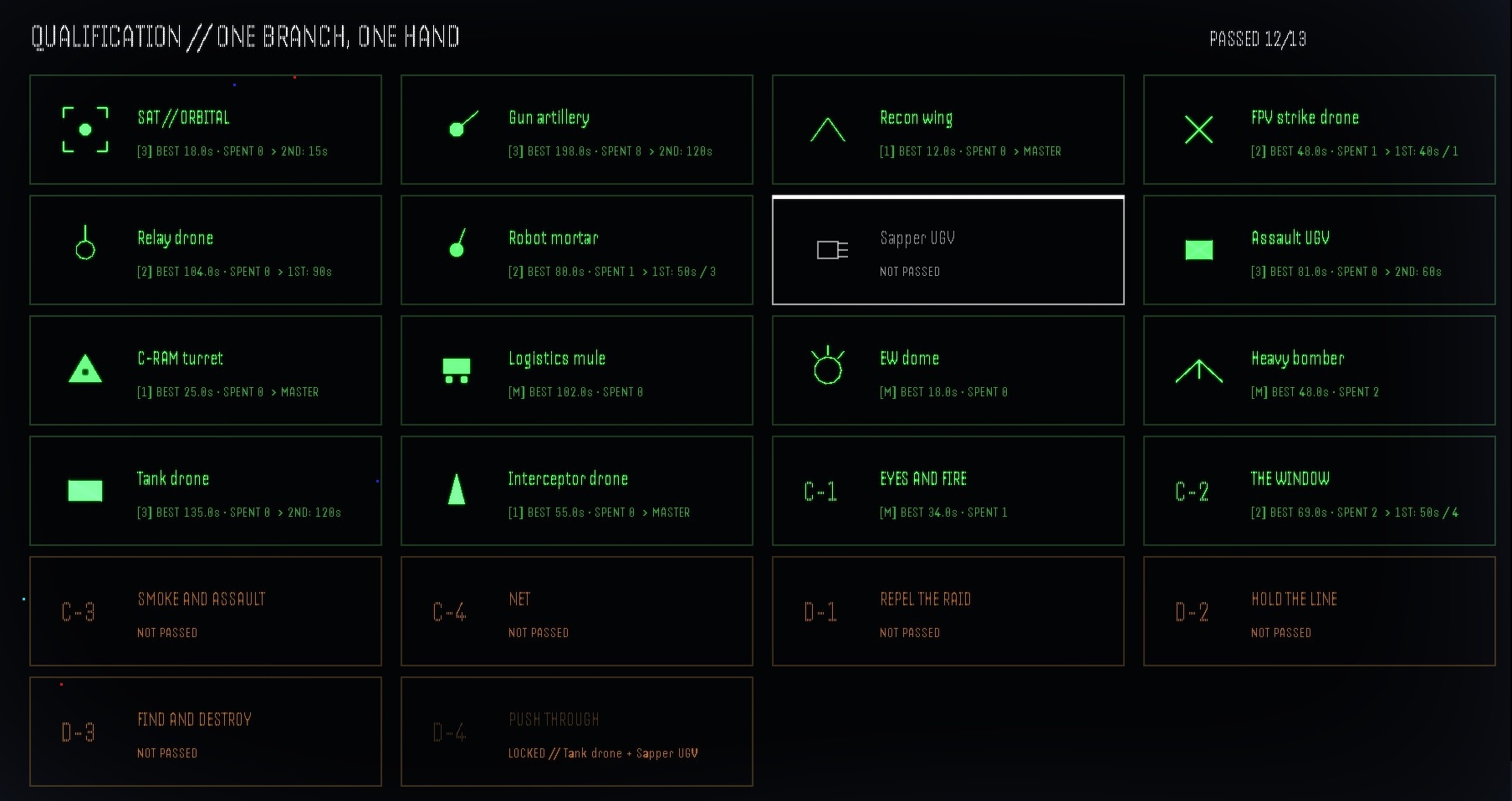
The twenty-two ‘qualification’ missions – short challenges designed to introduce ‘branches’ (unit types) – come with instructions as brief as they are baffling.
“A COLUMN BEHIND THE CREST, OFF THE NET. PARK WHERE – AND HIGH ENOUGH – THE WHOLE NET BREATHES: FIFTEEN SECONDS.”
“ENEMY RADIO SINGS ON THE BEARING – STARS ON THE MAP. THE BEAM IS IN YOUR HAND. HOLD A DRONE IN THE SECTOR – BLINDED, IT STALLS AND DROPS.”
“TWO CONTACTS, UNCLASSIFIED. THE MACHINE WILL NOT FIRE – RULES, LAY THE TURRET, SPACE TO FIRE; GREY COORDINATES GO ON RECORD.”
It’s hard to tell whether the unhelpful poetry in the briefings is intentional or simply a consequence of Motailov’s limited English. Whatever the cause, it makes learning the ropes much harder than it needs to be.
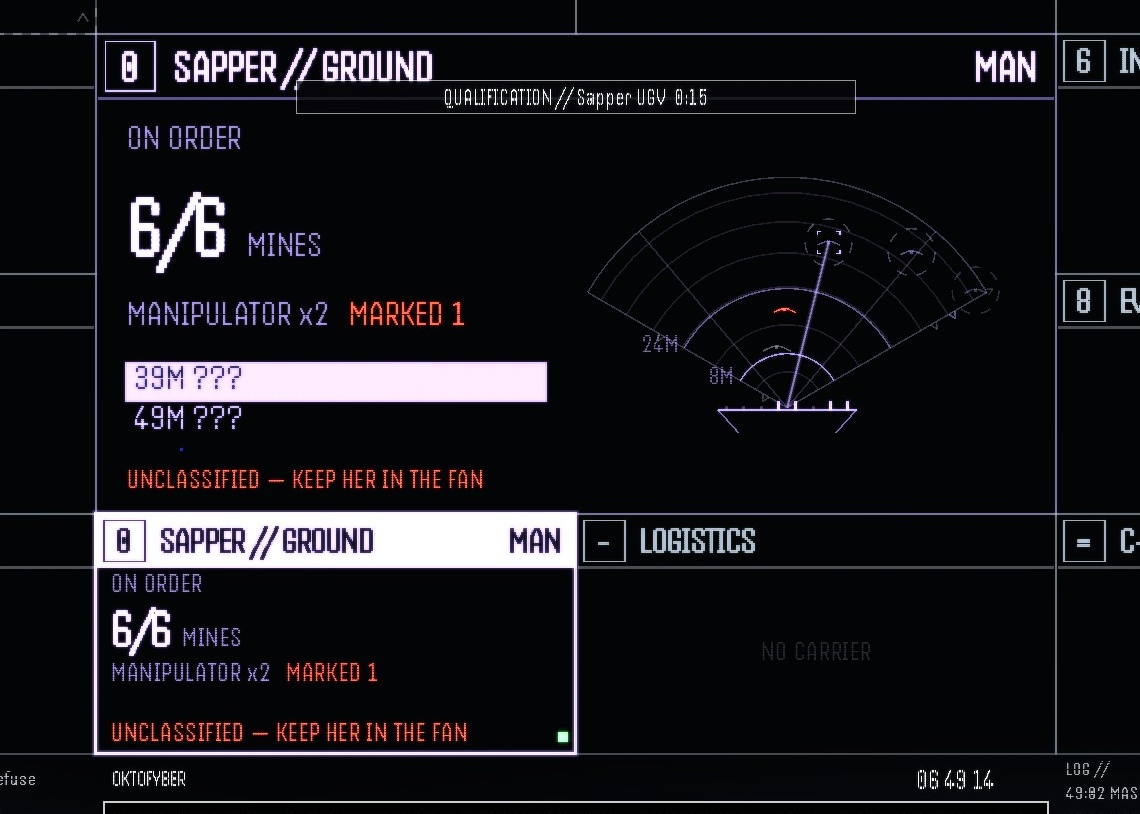
Using intuition and dogged trial-and-error I eventually managed to pass enough of the challenges to unlock the campaign. I also glimpsed sufficient subtlety and truth to keep me keen. Octofyber’s 2D real-time tactics seemed really interesting, and manually guiding drones and tanks across rolling wireframe landscapes in first-person 3D was undeniably fun.

Unfortunately, a morale-sapping kidney punch was just around the corner. In the first mission of the linear campaign you’re given a recon and strike drone, two Sting-style drone interceptors, and the game’s equivalent of an SPG, and are asked to blunt an attack spearheaded by three robot tanks. Despite playing this scenario at least fifteen times, I’ve yet to find a winning strategy. I can neutralise the enemy’s darting quadcopters without difficulty, but I can’t seem to KO their trio of tanks before I’m over-run.

Am I missing something obvious? Perhaps. Is my understanding of Oktofyber’s crucial detection mechanics flawed? Maybe. Am I about to walk away from a fascinating plaything after a mere four hours because it refuses to offer me a helping hand? Yes, sadly I think I am.
Bus Simulator 27
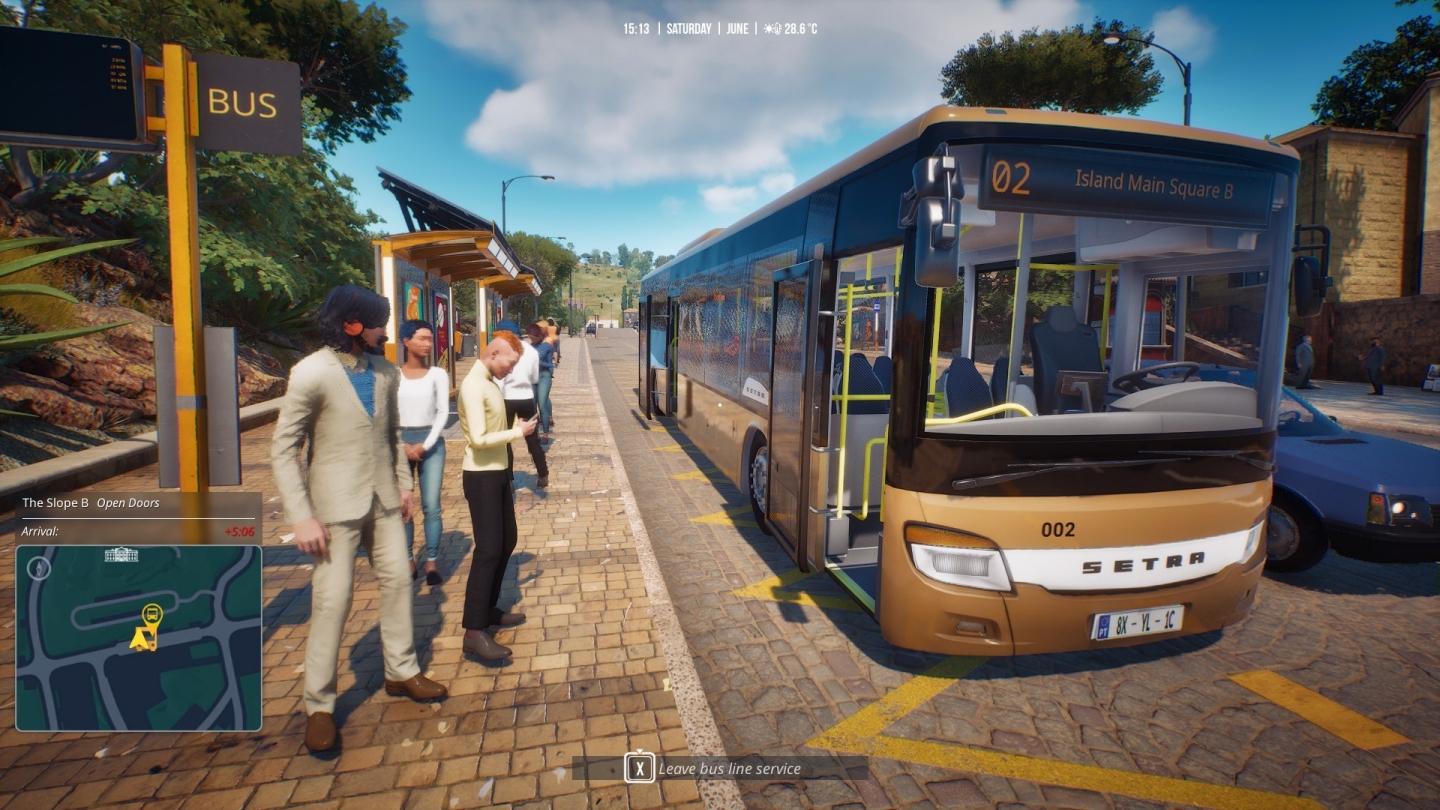
I have a suspicion this £25 newcomer is going to end up filed next to Bus Bound, City Transport Simulator, and Bus Driver Simulator on my ‘Entertaining but no substitute for OMSI’ shelf.
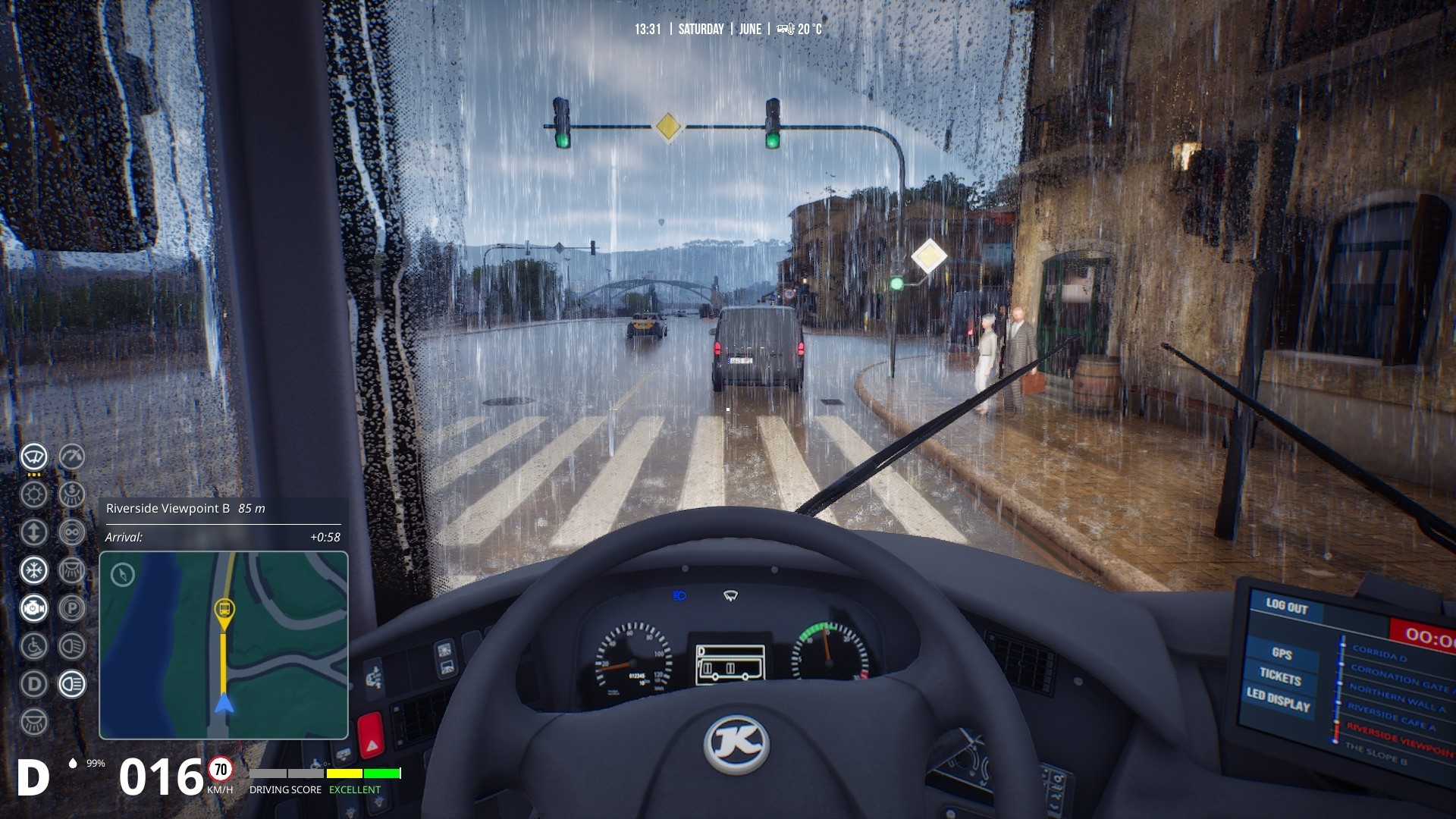
The large Iberia-inspired map, generous ride selection, and unusually holistic portrayal of bus driving, endow BS27 with novelty and allure, but somewhat predictably, Simteract’s physics and audio are serviceable rather than stellar, and their traffic AI and controller support needs work.
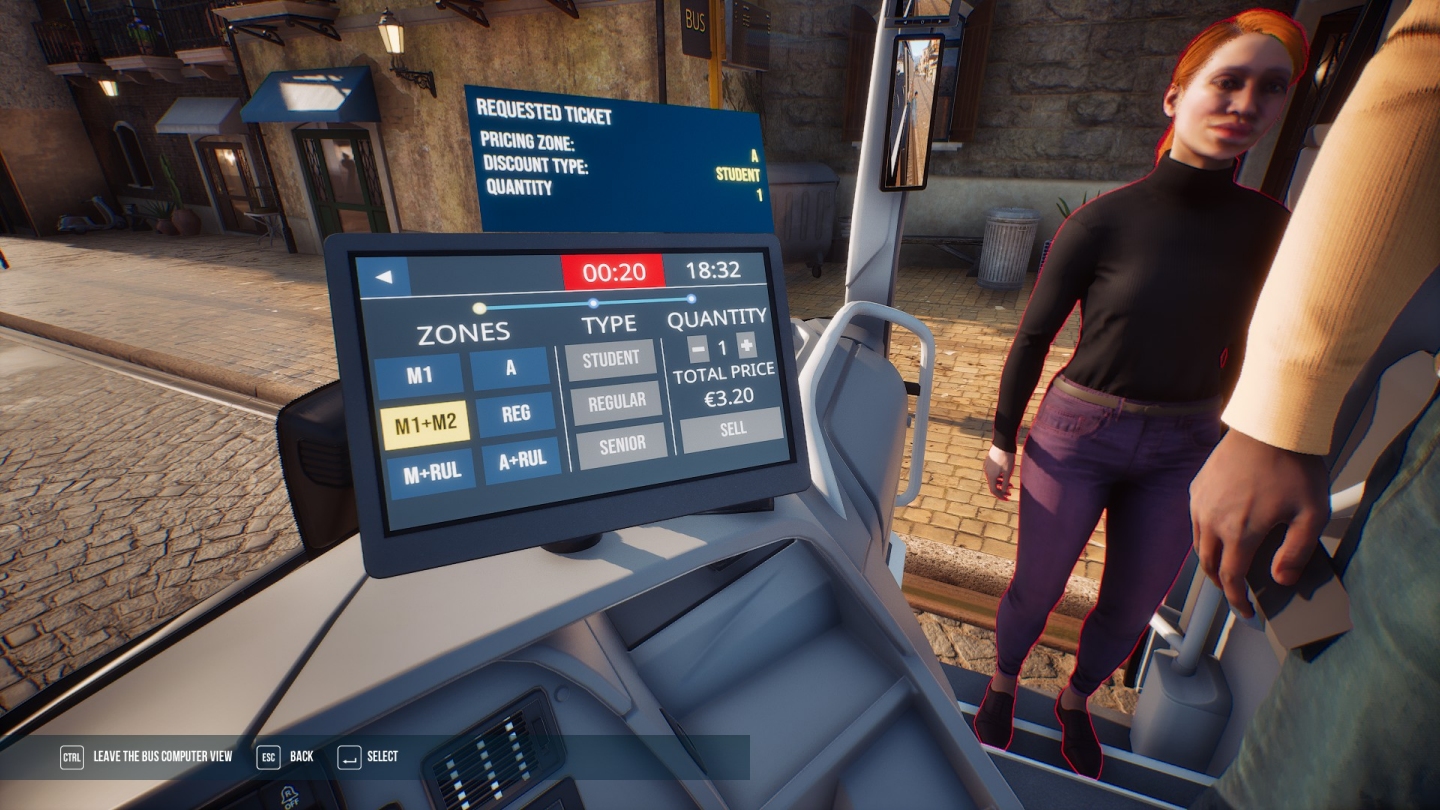
Refreshingly, your interaction with customers isn’t limited to ticket selling, door opening, ramp deploying, and knee bruising. Assuming you’re playing with the relevant sliders shoved to starboard, you’re expected to wake dozing passengers, hush noisy ones, challenge fare dodgers and eject troublemakers. Most of these duties can be handled swiftly via the passenger mirror view when waiting at stops or traffic lights, so they’re not major distractions. They are, however, a welcome reminder that bus driving isn’t simply a matter of good timekeeping and skillful manoeuvring.

Felicia Bay compares favourably to venues in rival sims. Mequina, the seaside city in the north-west of the map is, on its own, about the size of Bus Bound’s Emberville. Connecting it to Alcaztelar, a slightly smaller settlement in the SE, is a branched highway that winds through mountains in the centre of the map. Set up an intercity line and choose something like a Mercedes-Benz Tourismo as your conveyance, and BS27 can do a passable impersonation of a coach sim.

Varied road layouts, numerous attractive landmarks, and plenty of building models, mean driving within the two burgs is seldom dull. Just about the only things likely to injure the illusion on the other side of your windscreen are occasional elevated pedestrians and vanishing cars. Sometimes BS27 decides the only way to fix a troublesome snarl-up is by erasing a few sedans.

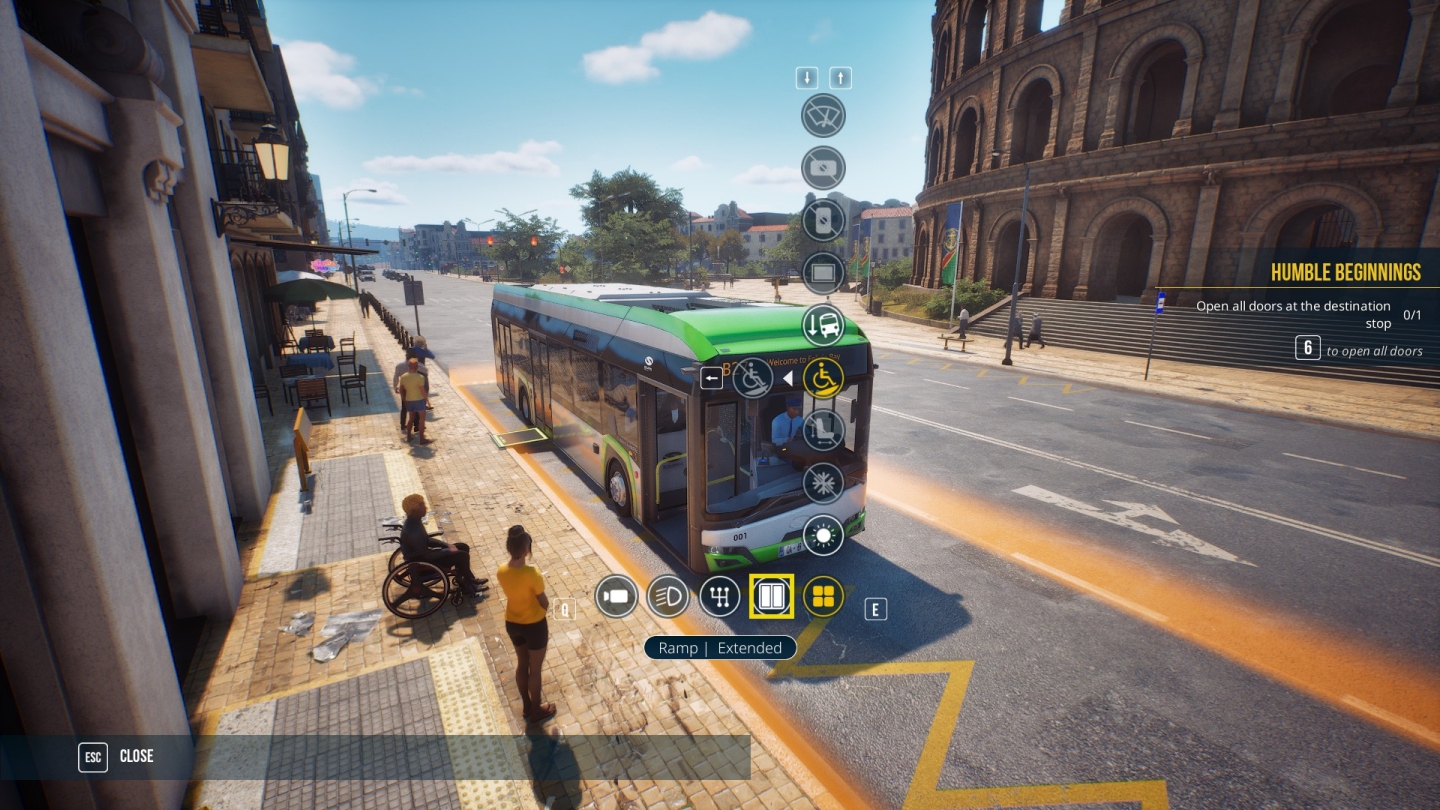
I wasted maybe ten percent of the audition trying to get mouse steering working satisfactorily. Despite fiddling with dead-zone and sensitivity settings I was unable to achieve the sort of twitch-free smoothness I was after. Like Stillalive Studios, Simteract don’t seem to realise how important good mouse support is in a driving sim.
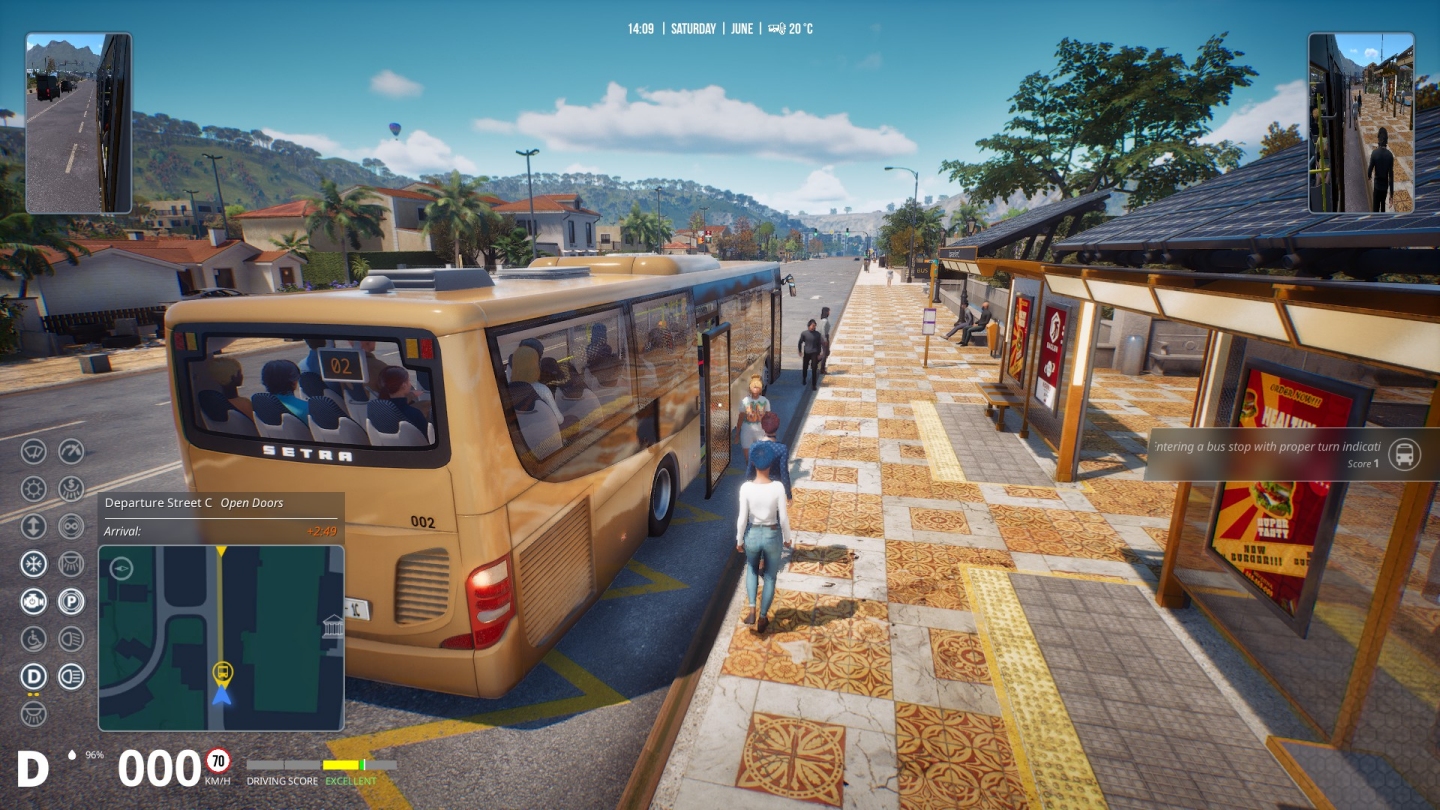
I’d love to be able say BS27 is clearly superior/inferior to alternatives such as Bus Bound and CTS26, but it’s hard to make sweeping statements in a genre where all the major offerings have likeable qualities, and similar strengths and flaws. It sounds glib but ‘Purchase Bus Bound if you fancy driving buses in a North American setting, BS27 if you’d prefer to passenger carry in Iberia, and CTS if Central European urban scenery and trams appeal’ probably isn’t bad advice to give an OMSI aficionado after something new in late 2026.