
A few telling moments from my fourteen-hours-and-counting BULT odyssey. Moment #1. It’s roughly three hours since I first set foot on the sim’s soggy Yakutian map. Yet to slay a single duck, I chance upon a promising pond in the midst of a pine wood. Surely there’s a target or two lurking here. Stealing closer to the rippled mirror, a boot-snapped branch blows my cover. There’s a kerfuffle beyond the reeds and suddenly the cruciform silhouettes of two spooked fowls flash across the patch of darkening sky overhead. Instinctively I raise and pan my 12-gauge. Tracking the shrinking shapes, I squeeze the trigger and – blimey – finally down my first duck!
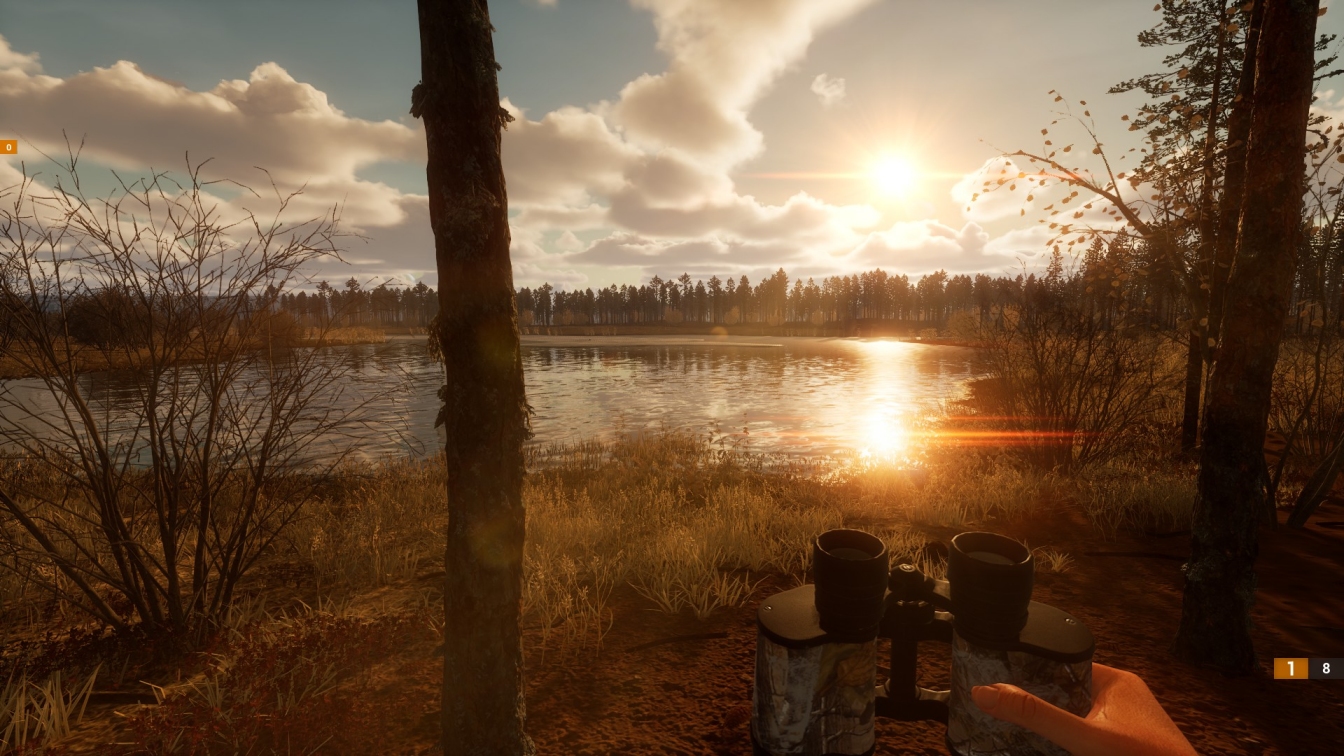
The elation is intoxicating but short-lived. Lowering my weapon, I realise the ex-quacker has fallen to earth heaven-knows-where. In failing light I begin searching for my prize amongst likely patches of undergrowth. Five minutes of scouring becomes ten. After fifteen fruitless minutes, exasperated and disheartened I reach for the escape key.
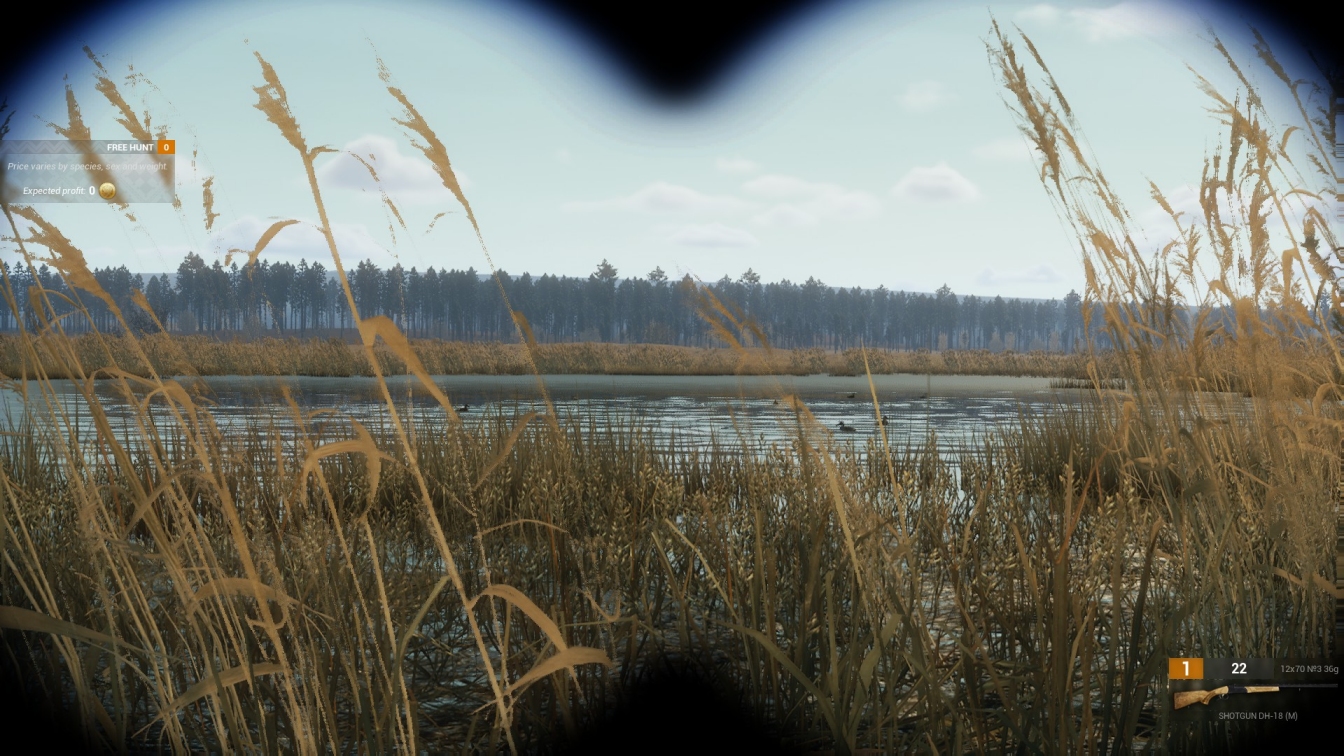
Moment #2. Fast-forward an hour. A new hunt. Still duckless, I’m sneaking along the edge of a large water body, doing my best not to soak my footwear or rustle any sedge clumps. Suddenly, a gap appears in the screen of golden reeds to my right. Framed in the gap, about fifteen metres from the shore is a web-footed weed chomper too busy feeding to notice an excited hunter readying a shot. Slaying a sitting bird feels a tad unsporting. However, at this point, I’m so keen to get on the score sheet, I’d probably hurl hand grenades if I had them.
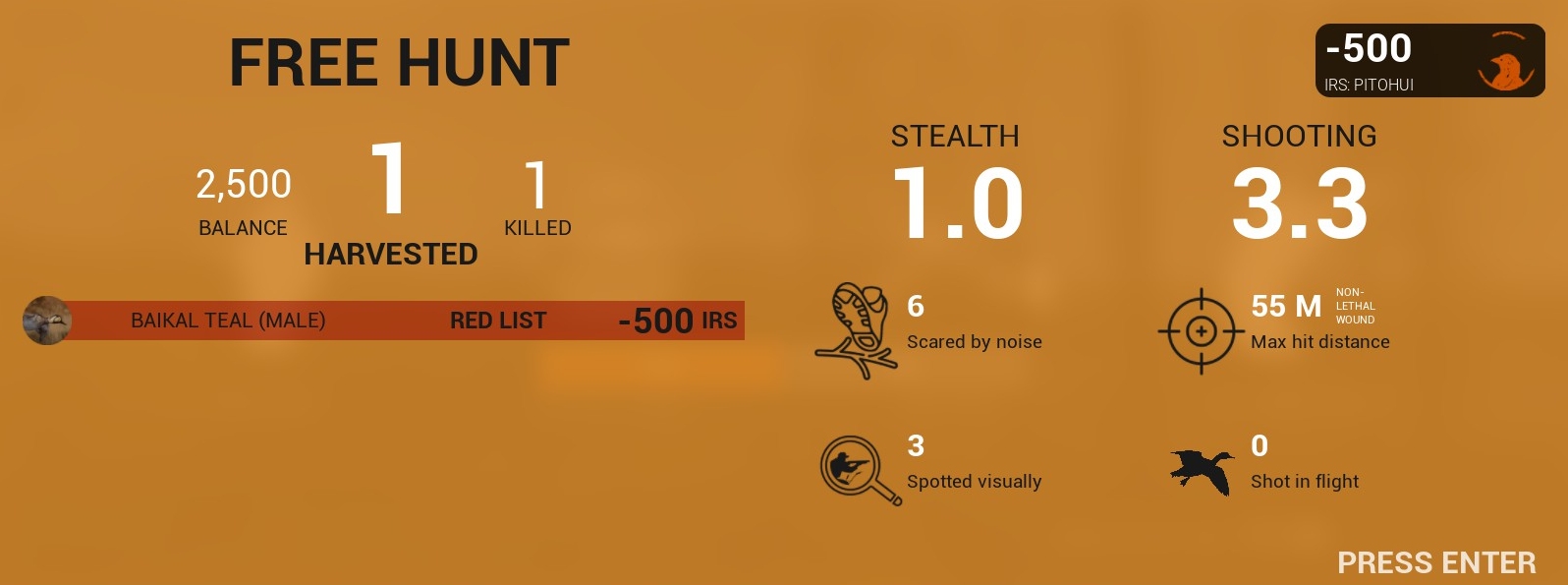
The flock of pellets flung by my bottom-of-the-range 12-bore froths water and plucks feathers. When the smoke clears, I see a floating corpse and – sheesh – an on-screen message castigating me for carelessness. Apparently I’ve just topped a protected Baikal Teal. Massively unimpressed, the game’s algorithmic Chris Packham slashes my ‘IRS’ reputation score by 500 points. My hunt earnings remain at zero.

Moment #3. Surely my luck has to change soon. Approaching the six-hour mark and still without a legitimate bagged kill, I’ve taken to the water after realising canoes are free findables not – like almost everything else in the game – items purchased with hunt earnings. Shortly after pushing off from a rustic jetty, I notice a billed bandit lifting from the water on my ten o’clock. Swapping paddle for shotgun and swivelling to port to engage, I let fly when the target is directly abeam. This, it turns out, is a terrible idea. The violent recoil from the shot instantly rolls the canoe, hurling me backwards into icy water. Another hunt ends with absolutely nothing in the ‘harvested’ column.
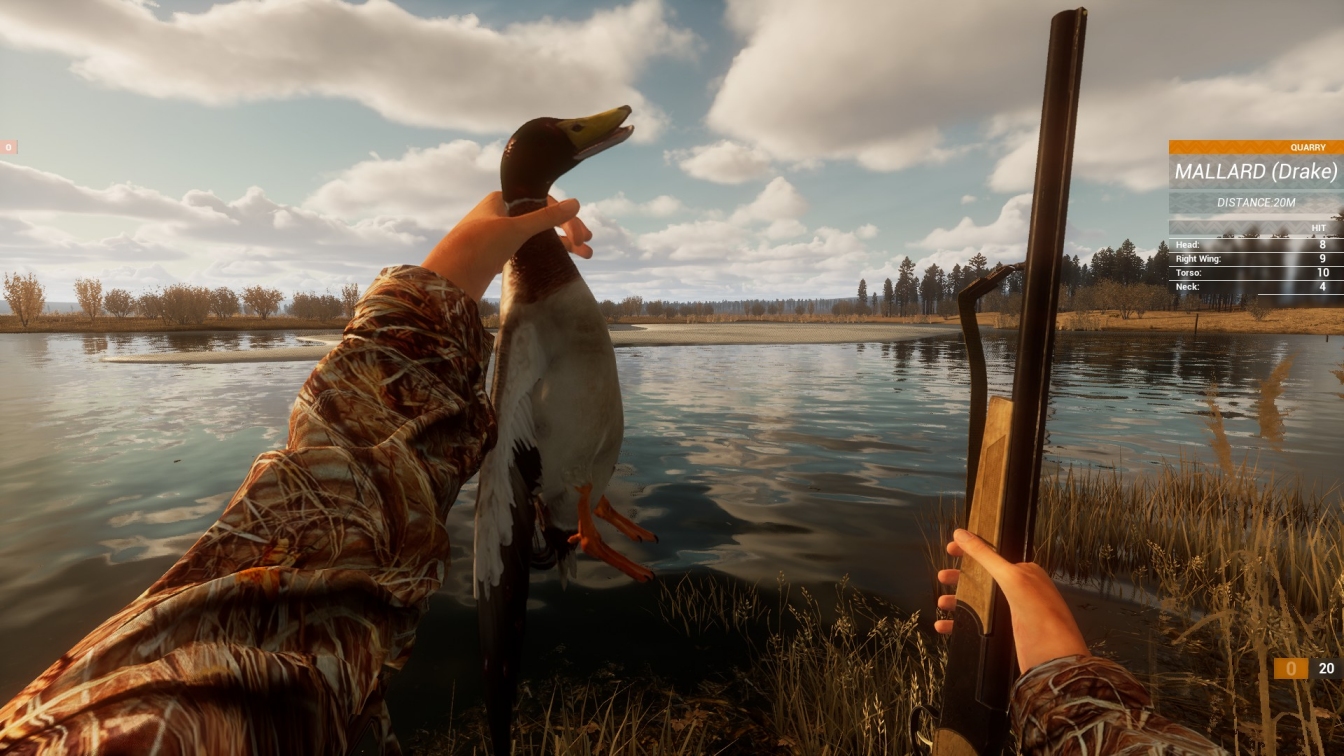
Early Access BULT is the most unforgiving hunting sim I’ve ever played, but it’s also one of the best.
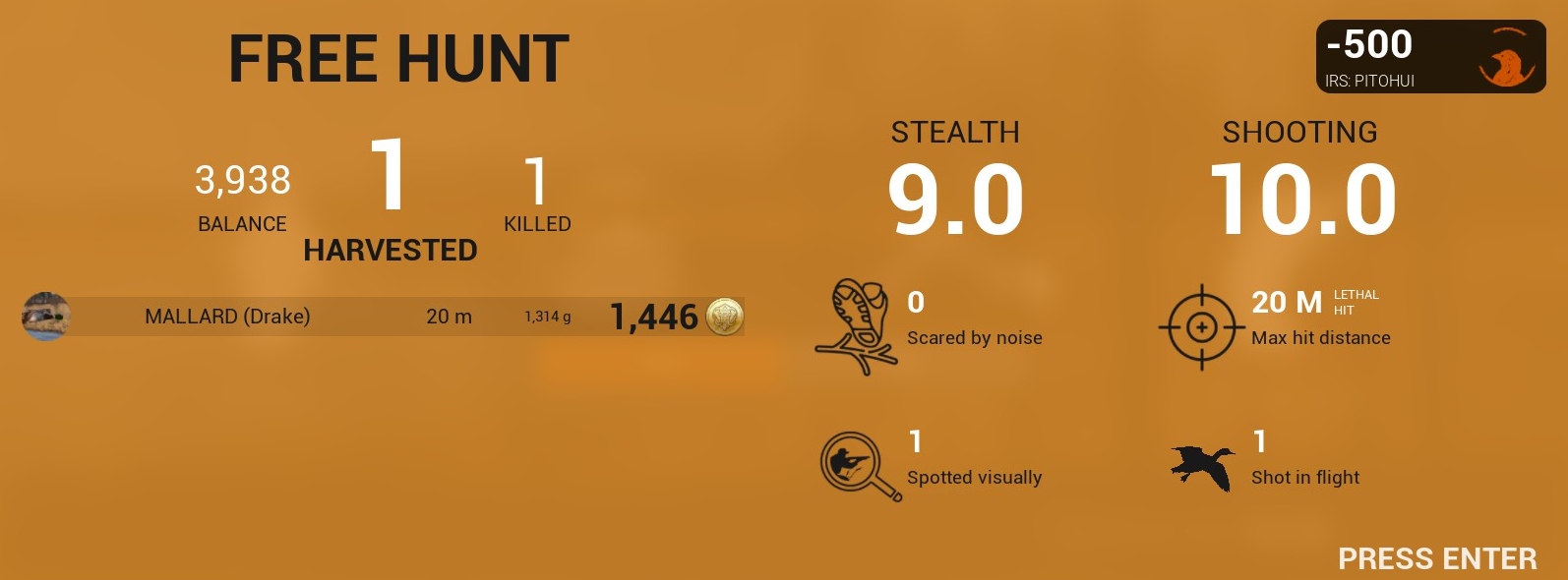
I finally broke my duck duck after about seven hours of tramping, creeping, paddling and peering, and, partly because the kill followed so much effort and frustration, it was astonishingly sweet when it came.
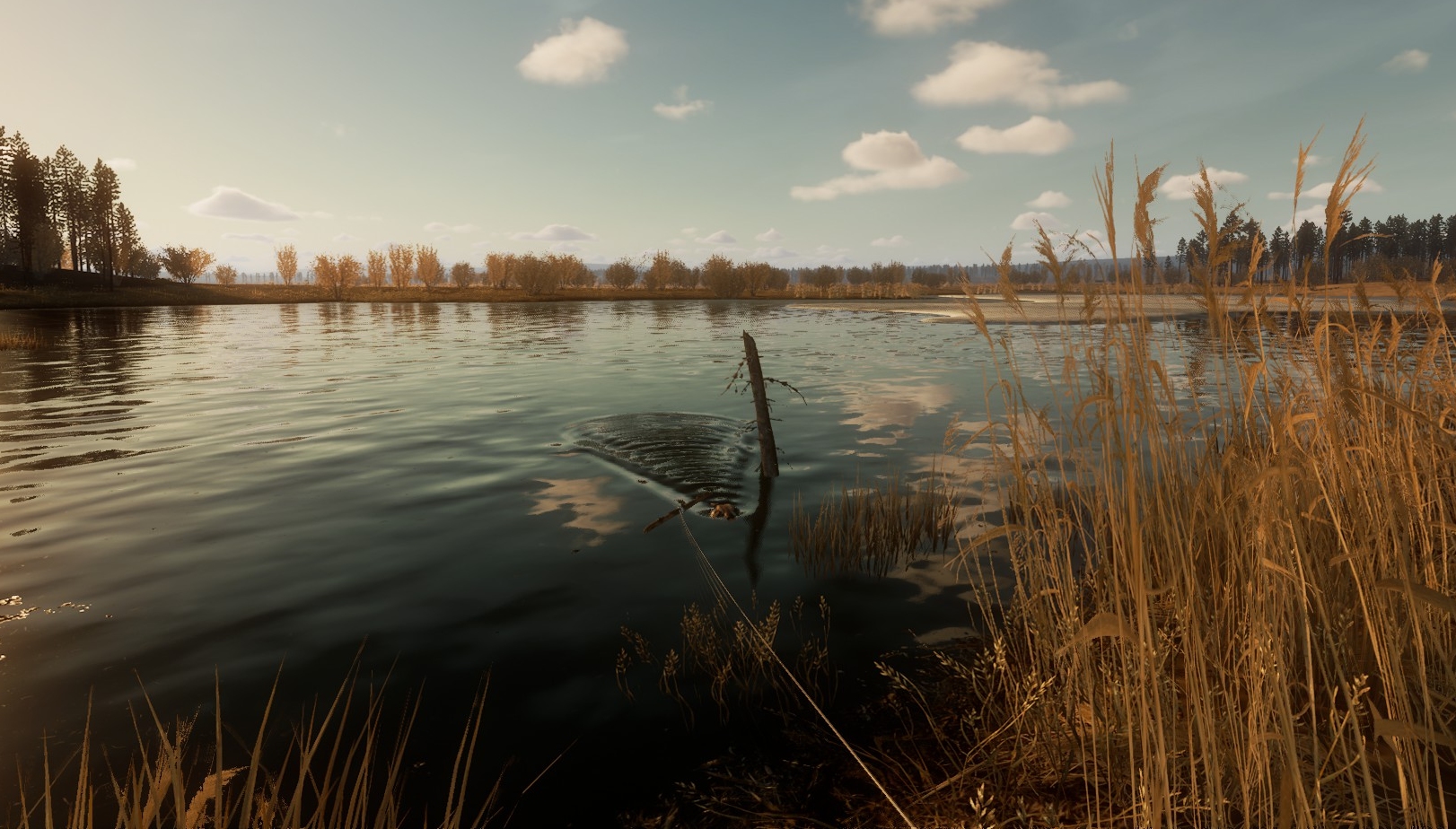
If I close my eyes, I can still see the V of mallards crossing right to left, the unlucky shot-stopper tumbling out of formation to land with a satisfying splash at the lake edge a dozen or so paces from where I was crouching. Once you realise such moments are not actually impossible, it’s awfully hard to turn your back on this remarkable work-in-progress.
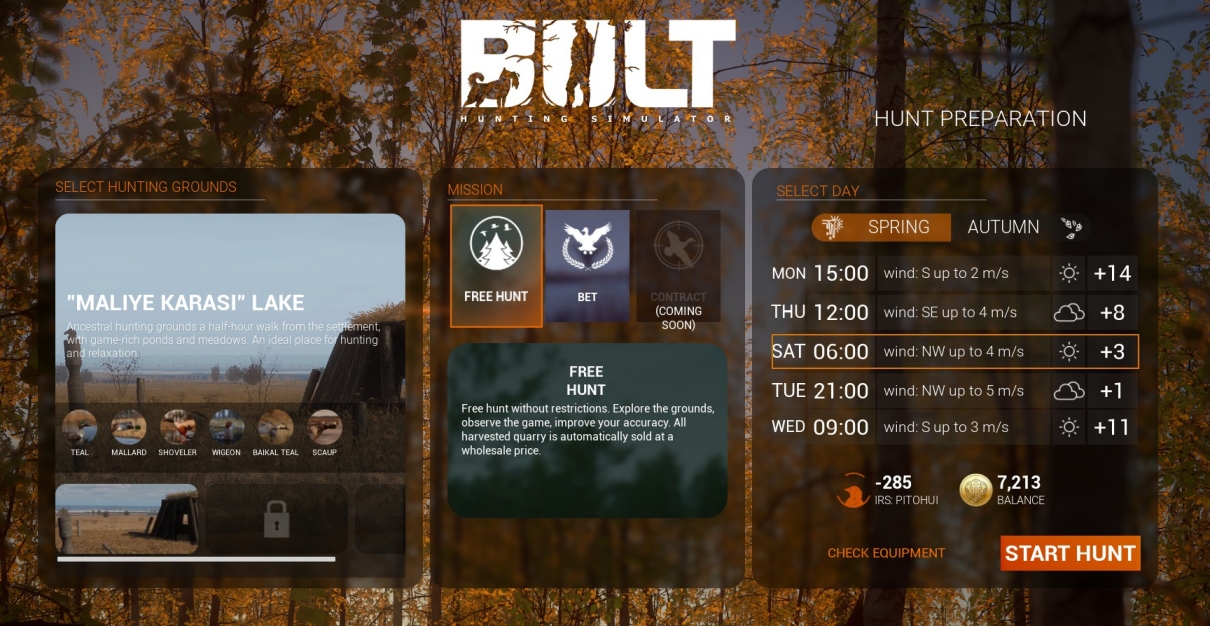
While a little bit of me wants to take Nordrise to task for for making their feathered stars so skittish and elusive, for not providing a practise range with clay pigeon traps*, and a few difficulty settings and GUI aids for beginners, the urge to pat them forcefully on the back for refusing to compromise on realism is more powerful.
* Judging from the main menu, we may eventually get a range.
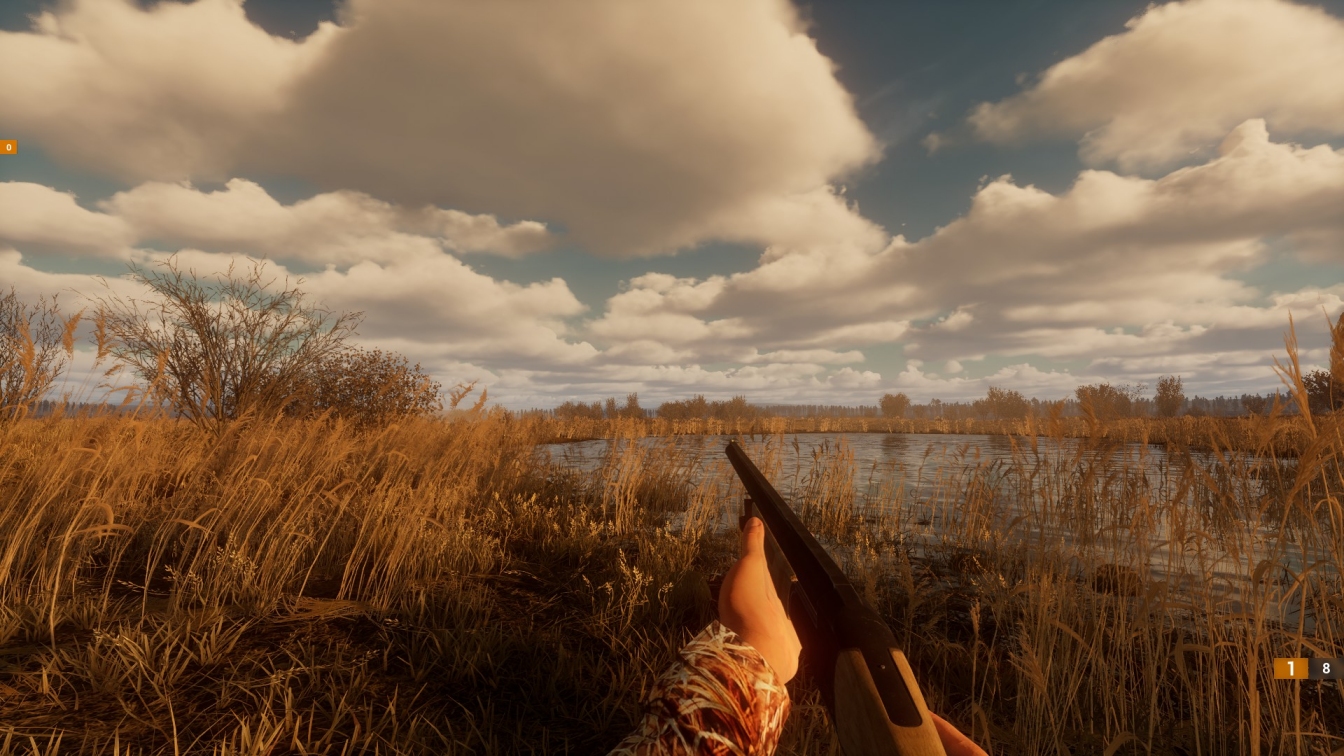
Faced with the core dilemma that faces all crafters of hunting and angling recreations – how often should players encounter quarry and how hard should it be to kill/catch said quarry – they’ve veered towards “Let’s use our real-life hunting experiences as guides”. The result is an offering that pedestals patience, vigilance, and stealth. A serious hunting simulacrum that is 98% anticipation and 2% action.
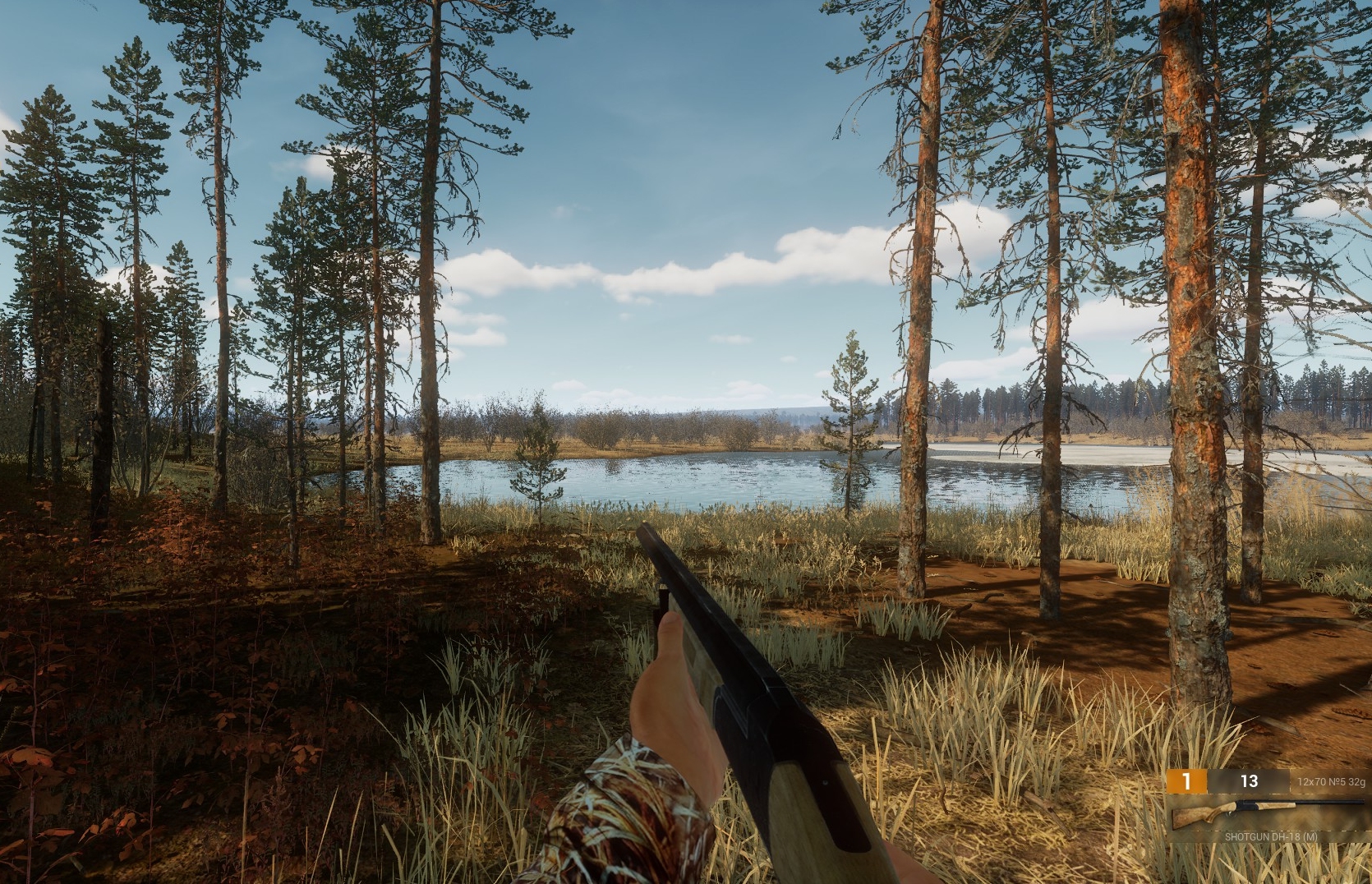
Because you spend so much time walking, waiting, watching, and paddling, there’s plenty of opportunity to appreciate the TLC that has gone into the game’s tract of Siberian wilderness. Modest in size, never obscured by glowing spoor indicators or other GUI clutter (small tooltips do appear when something can be manipulated or collected) and currently available in spring and autumn incarnations only, the game world is light on landmarks and, somewhat perversely, must be navigated without the aid of a portable map.
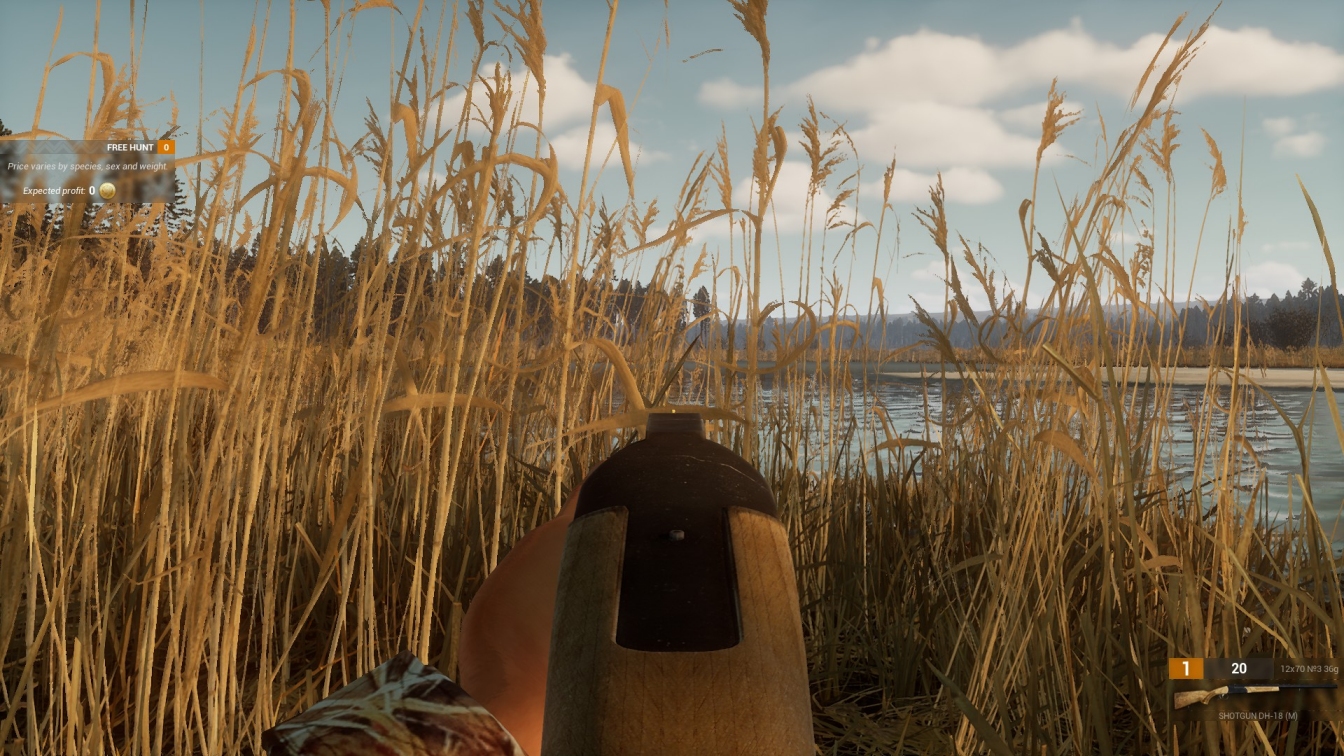
As well as being home to the seven or so quarry species, it supports a diverse population of incidental avians, all with their own calls and flight characteristics. When sneaking around reedbeds, the improvised soundtrack produced by the likes of raucous gulls and alarmed lapwings, contributes just as much to immersion as the wind-wafted flora, the generally pleasing lighting effects, and the restless mosquitoes that feast on your avatar given half a chance.
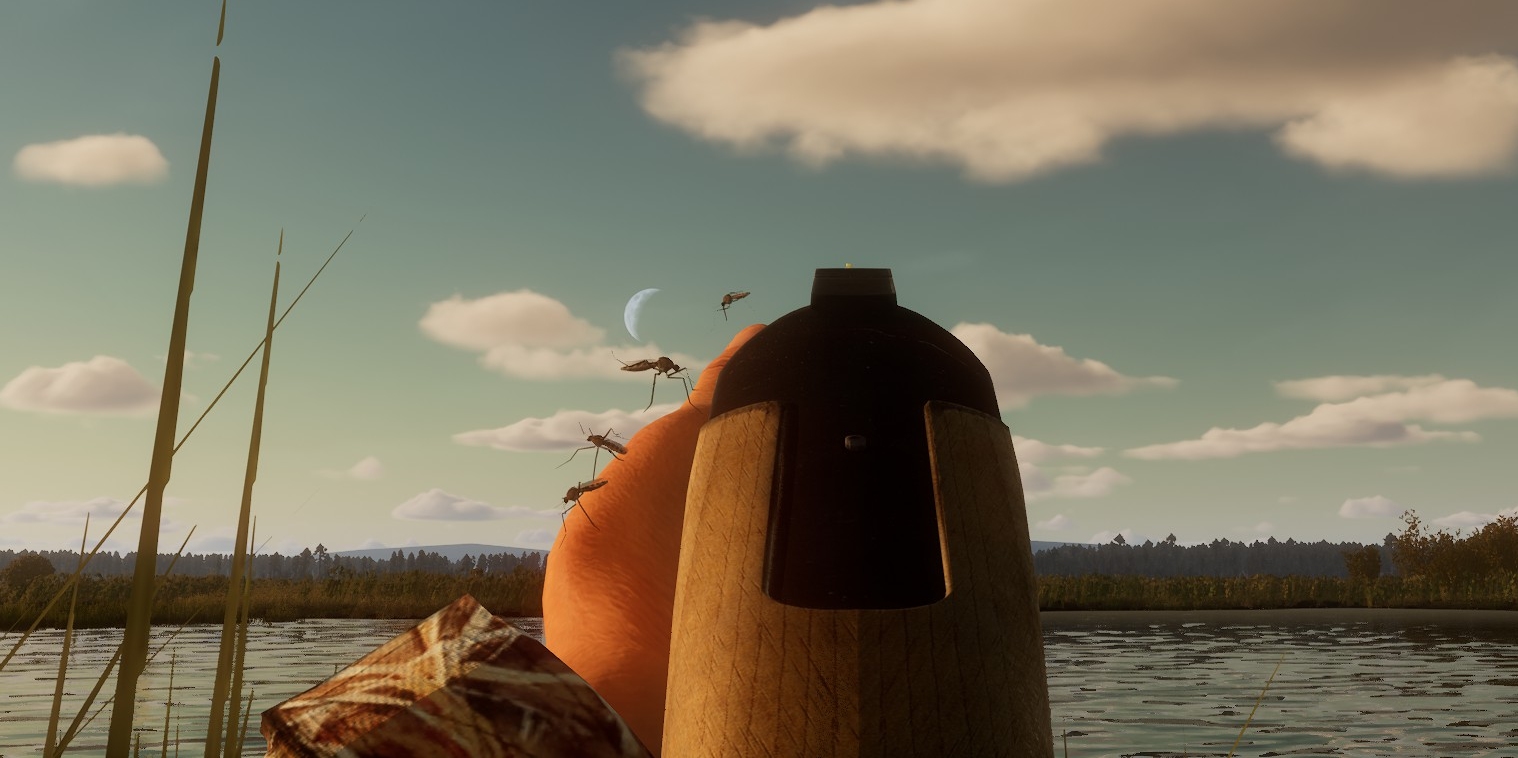
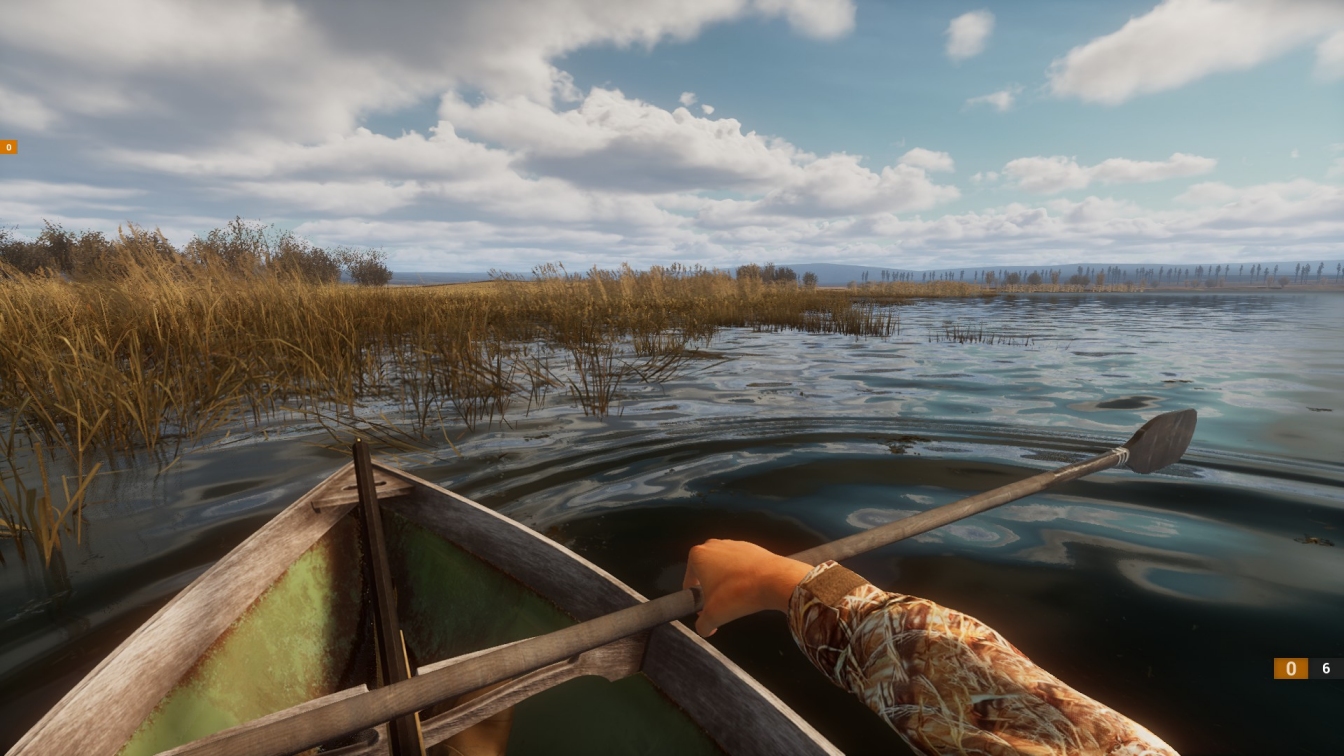
Even if you’ve zero interest in virtual hunting, £9 Unreal Engine-powered BULT is still well worth considering. Exploring the patchwork of ponds and tangle of reed-choked waterways connecting them, in the canoe is one of the most relaxing things I’ve done in Simulatia for ages.
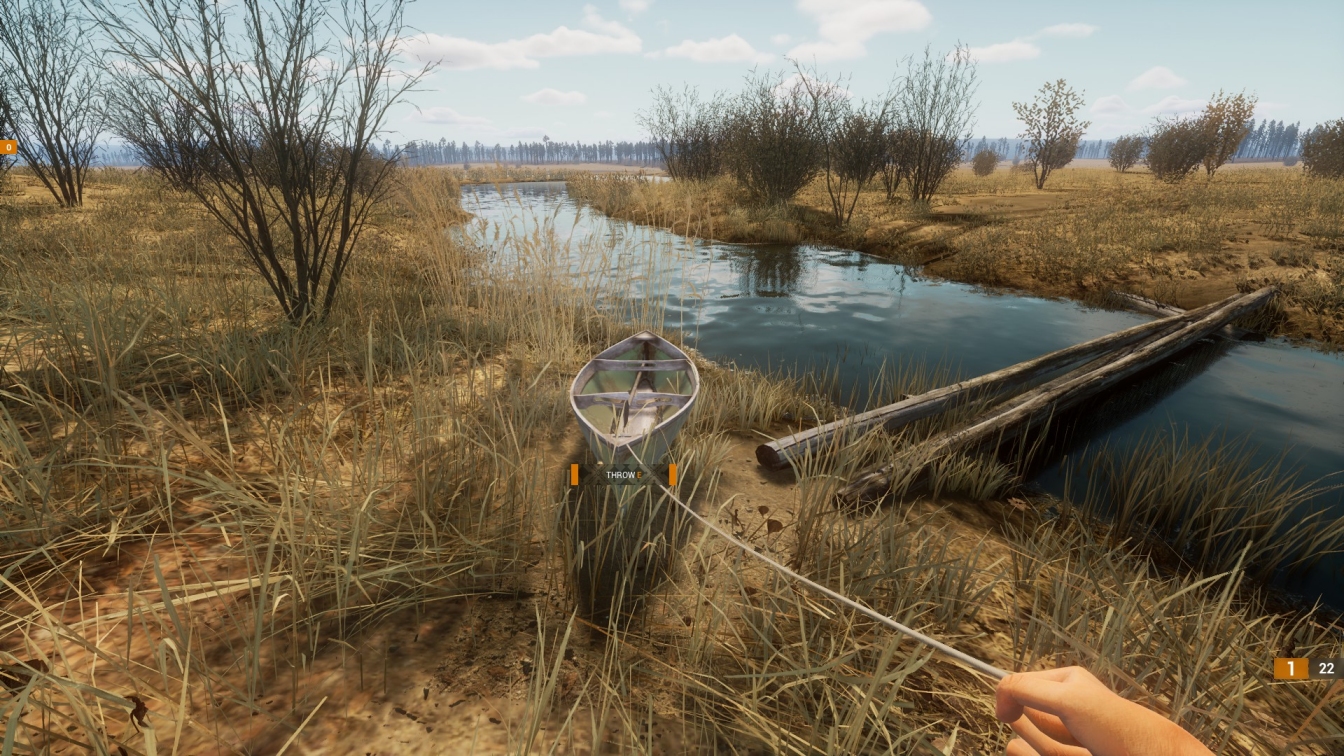
The rhythmic plash of the paddle, the mesmerising ripples, the occasional portages around bridges and across spits… all potent pulse slowers. At times the sound of nearby quacking is almost unwelcome.
Players more interested in fowling than chilling will be pleased to hear that Nordrise’s commitment to realism extends to ballistics and duck AI. While claims such as “Every shot is calculated using real-world physics: pellet mass, muzzle velocity, air resistance, and shot spread all affect the result.” are hard to test without access to a firing range and tank sim-style ballistic arrows, the fact that I seem to be enjoying more success now I’ve switched to higher quality shells suggests consistent shot weight and shape does produce more regular shot patterns.
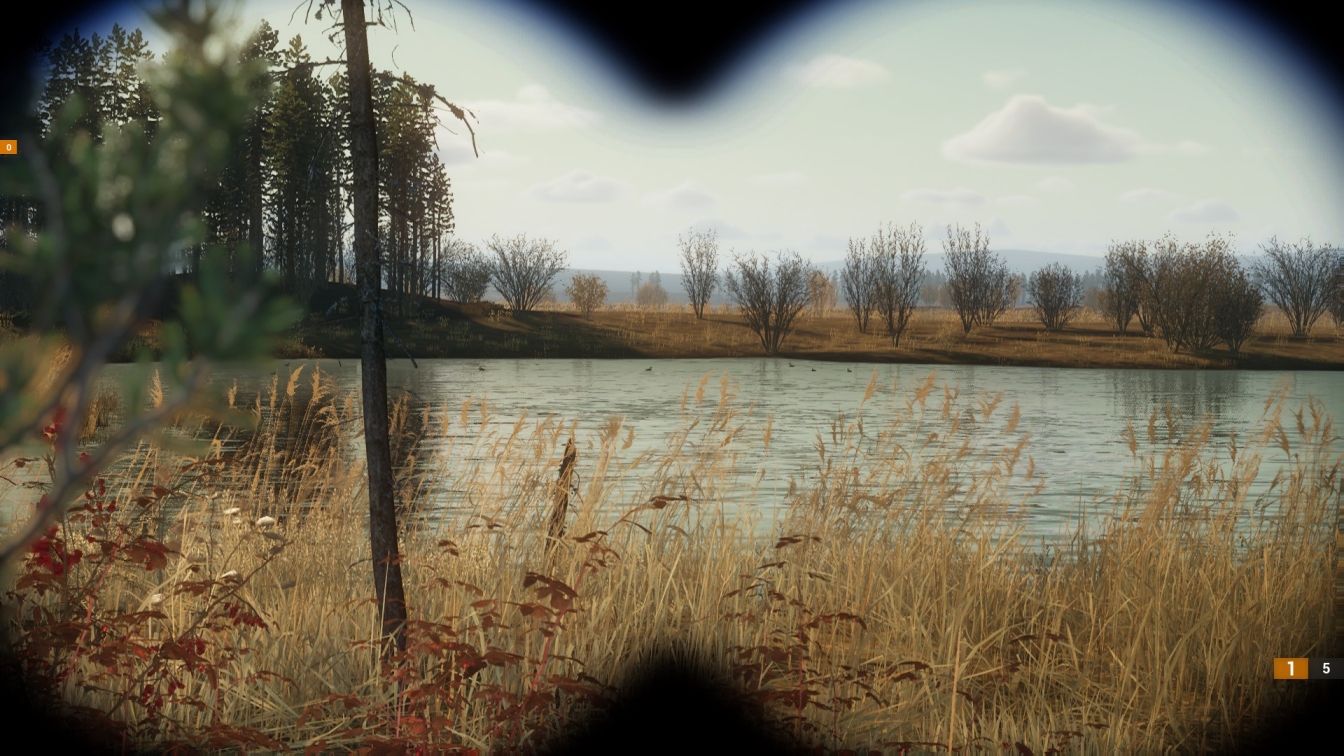
Easier to appreciate are the game’s unscripted duck behaviours. Influenced by factors such as wind direction, light and noise levels, player position and species type, ‘Bayanay AI’ usually causes startled sitting birds to take wing en masse (occasionally a quacker will dive or seek cover in reeds). However, distracted or slightly separated birds sometimes take a moment or two to react, meaning there can be second chances if you fail to score a hit during the initial exodus.

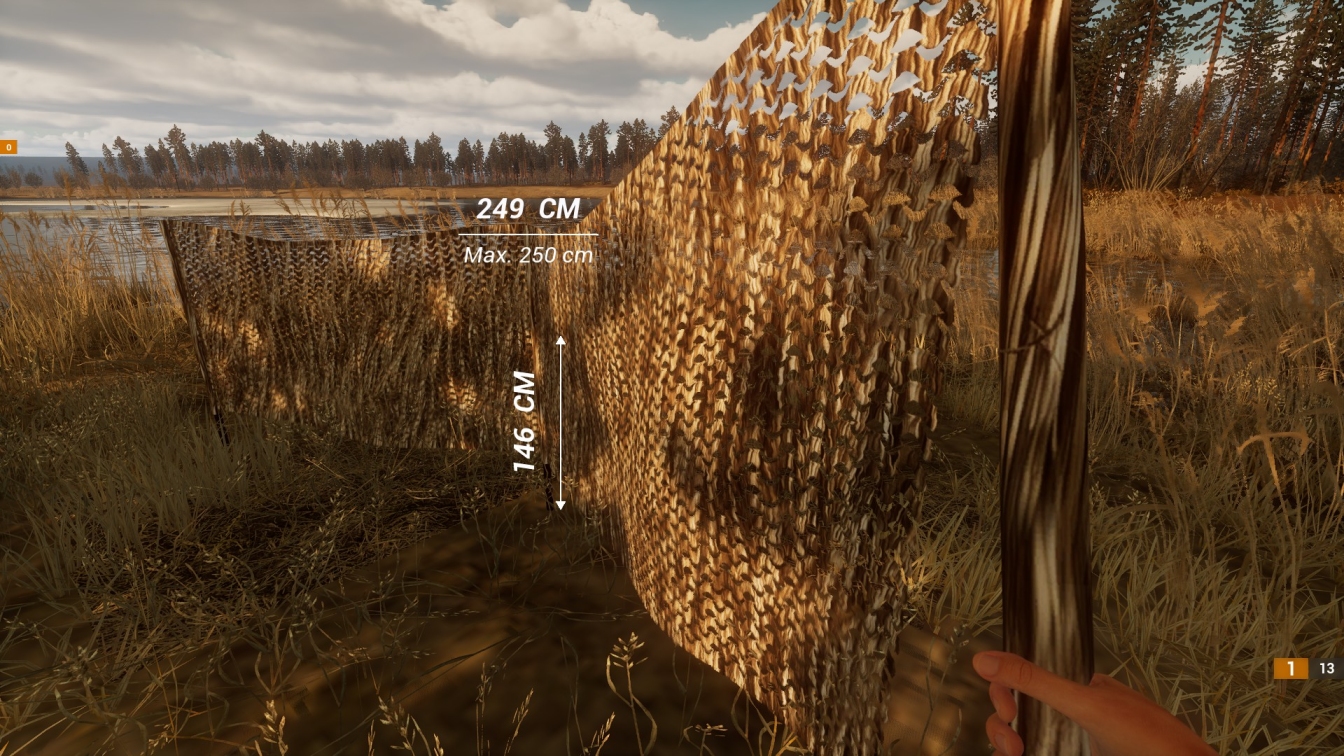
I’m expecting my kill rate to rise dramatically once I acquire a double-barrelled fowling piece and am in a position to purchase duck calls. At game start you’re furnished with a basic single-barrelled shotgun along with some vital kit such as a head-torch, retrieval stick (used for collecting dead ducks from ponds) and length of camo netting for blind construction. Having to reload after every shot is one of the reasons it took me seven hours to bag my first flier. A scared duck can travel a long way in the time it takes to break a shotgun, eject a hot case, and insert a shell.
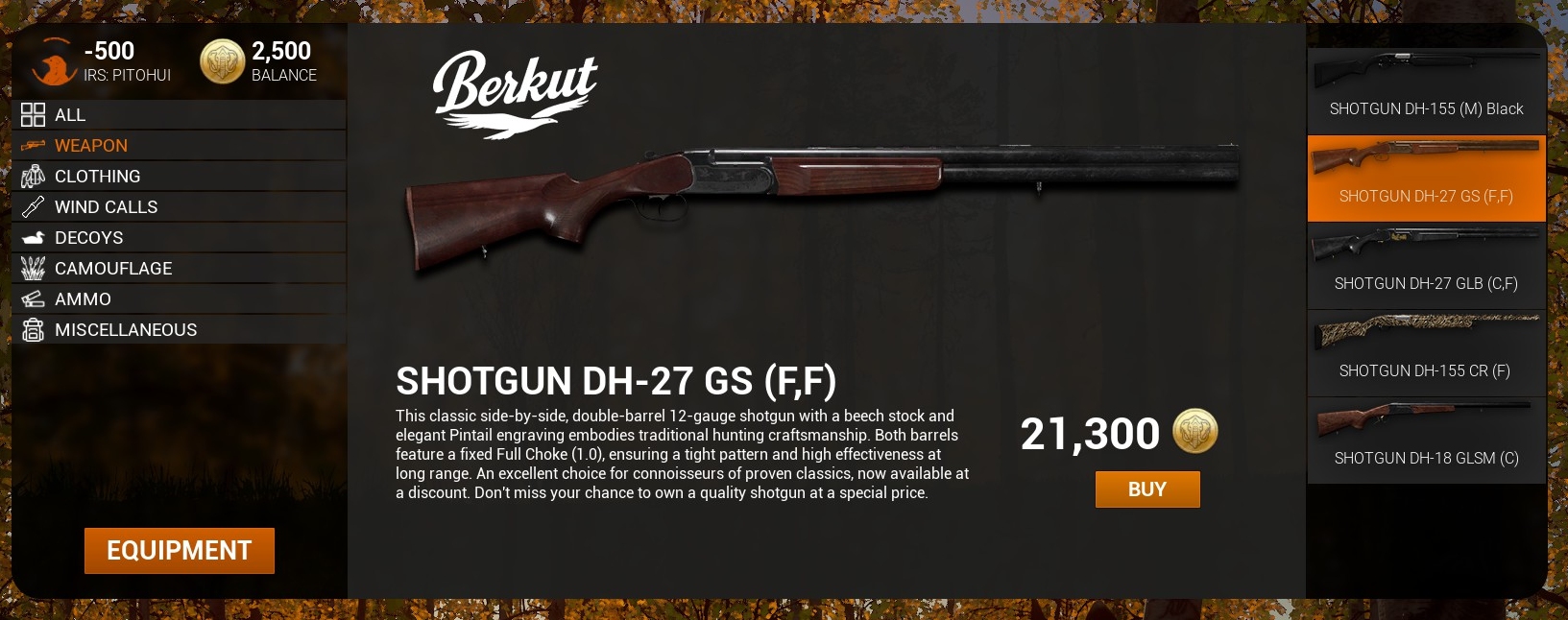
As the cheapest double-barrel firearm in the store is 21,300 coins, and I seem to be earning around 1000 for every duck I slay and harvest, it could be a week or two before I’m in a position to swap Auntie Anya for something snazzier. Fortunately, BULT instils patience as well as hunting skills. After a week in its splendid company, I’m in no hurry.
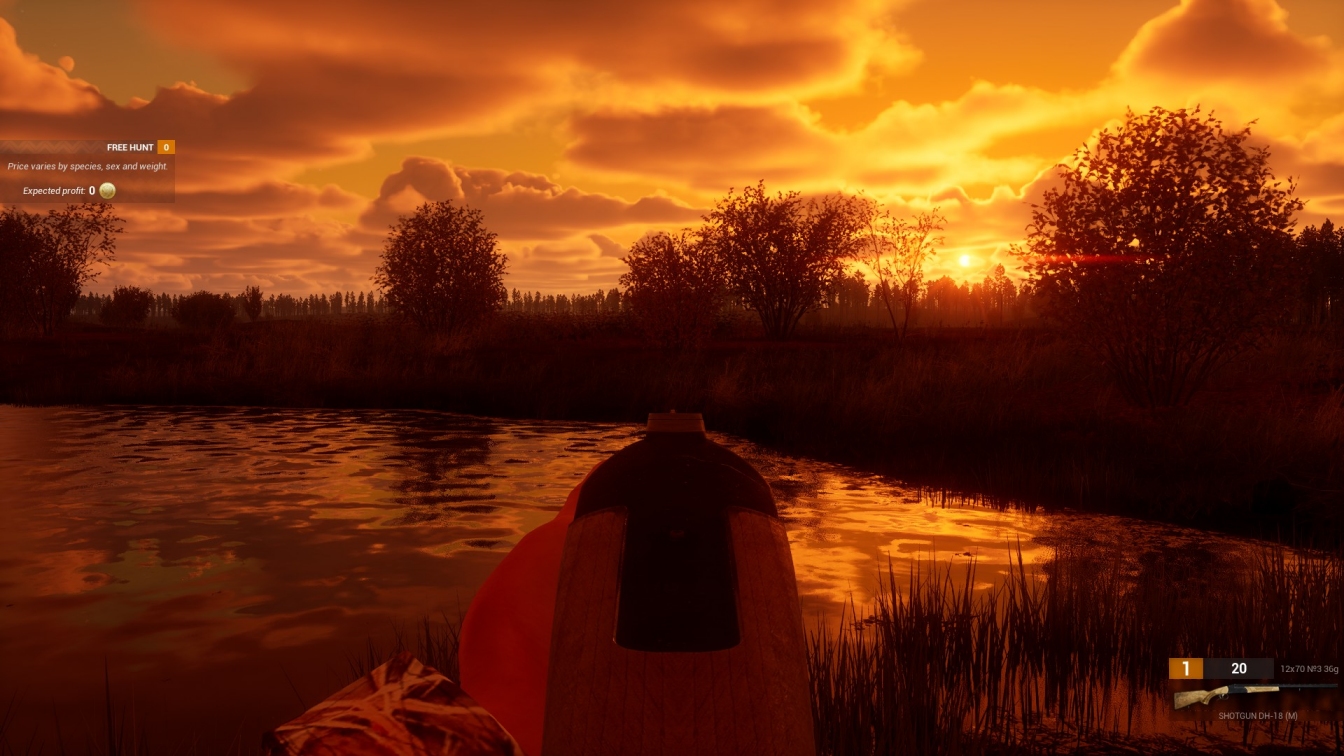
You don’t binge BULT because you’re keen to level up, complete missions, or amass equipment. You’re drawn back by the thought of leisurely canoeing trips, sublime sunsets, and the eerie electronica of the peewits… resonant rambles interrupted, now and again, by bursts of unusually exacting and exciting gunplay.
Does it support the NES Zapper ?
“glowing spore indicators”
I suspect you’re harkening back to Mushroom Hunter, or whatever it was, Tim. Should be ‘spoor’?
https://youtu.be/BHBbJAIcnBI?si=pi5MZw_IfRsSzZGT&t=53
Good spot. Thanks.