
Ask an AI about the risks of developing games with AI assistance, and it will probably mention ethical, PR, and legal issues, quality control implications, and the possibility of producing a plaything that’s short on character or fun. What it may not mention are the following hazards.
Dependency and Distance
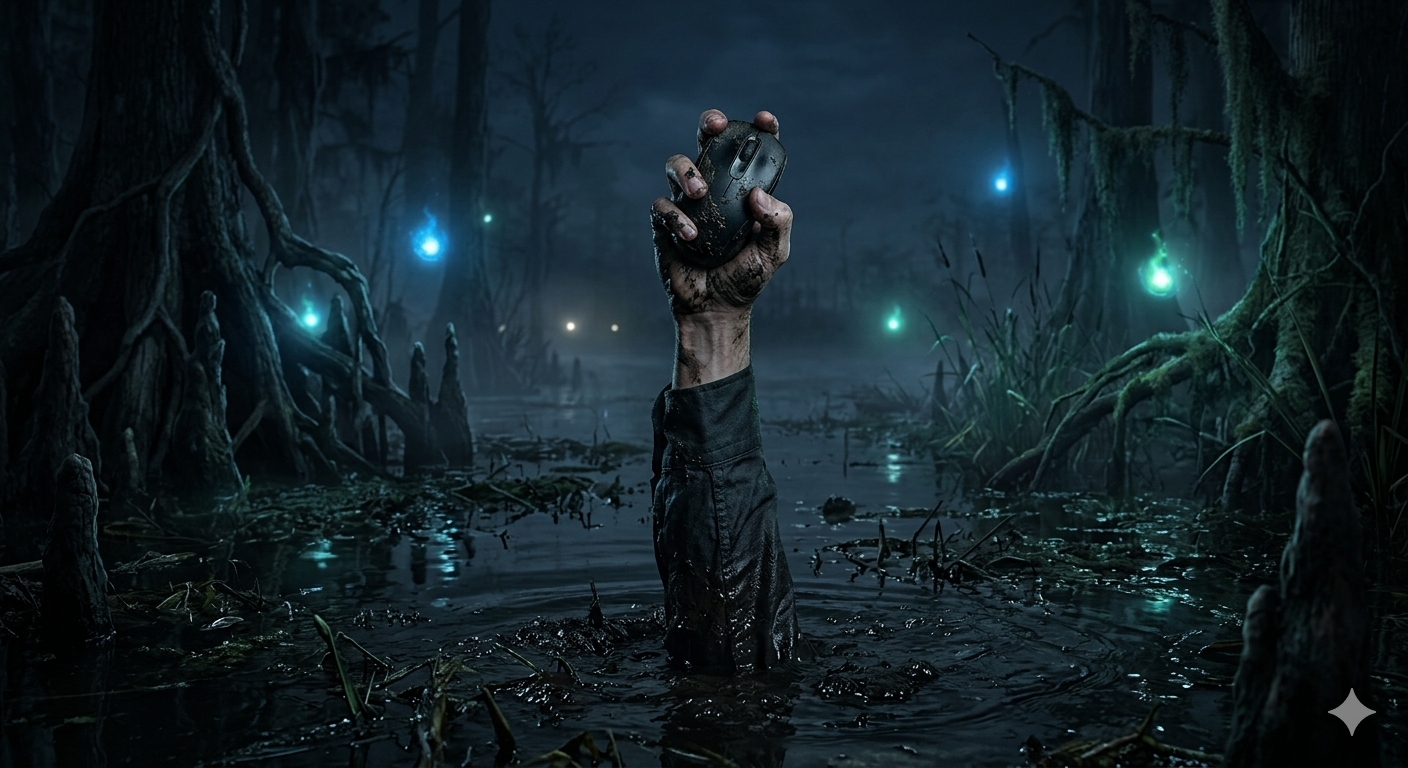
While AI has helped me out of numerous quagmires during the past few months (I’m currently taking time out to write rather than write about games), there have been times when silicon coding gurus/lackeys have unwittingly acted as will-o’-the-wisps.
If your coding skills are as rough-edged and rudimentary as mine, it can be very tempting to start relying on the likes of Claude and Gemini for almost everything. One day you’re asking your preferred AI assistant to streamline or error-check a chunk of artisinal code. A week later, there you are shamelessly asking said coworker to write significant portions of a project from scratch.
Where’s the harm in that? If you’re not careful, you can very easily end up contemplating a mountain of code you don’t fully understand. Modifying your work-in-progress without guidance becomes difficult, and, as a result, confusion and alienation can quickly set in. Although most AIs go to great lengths to explain their output, there’s really no substitute for crafting core components yourself.
Heavy reliance on AI can lead to less experimentation too. Solving problems with convenient, off-the-peg AI solutions means there’s less chance your game will end up with features derived from happy accidents.
Unnecessary complexity
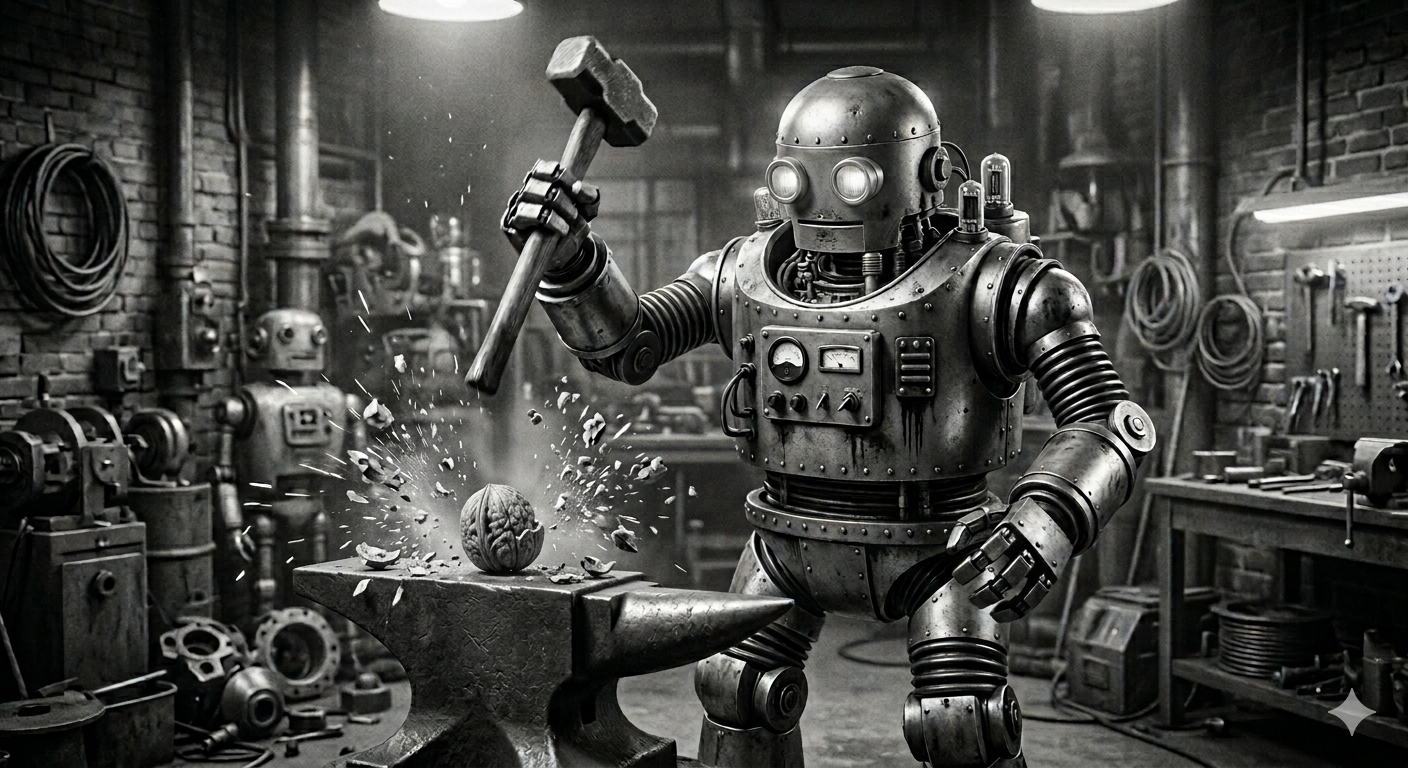
I’m glad AI wasn’t around when I first started fiddling with GML. Because I’ve quite a few years of forum-guided trial-and-error behind me, I can usually sense when an AI consultant is barking up the wrong tree or recommending a sledgehammer instead of a pair of nutcrackers. More often than not, the most popular AIs handle GML enquiries with aplomb, but sometimes their lack of imagination can lead to unnecessarily invasive and heavyweight suggestions, or even repeated failure. On at least one occasion during the past month, exasperated by a string of duff AI ‘solutions’, I’ve fled the Promised Land and solved a seemingly intractable problem fairly swiftly with a dash of lateral thinking and a snippet of simple code.
Hijacking

Not content with answering questions, some AIs like to suggest next steps and offer further services. Unless you have a firm plan or strong vision, resisting these tempting offers can be difficult, and, in no time at all, your project can end up encrusted with a host of generic features it doesn’t really need.
None of the above drawbacks mean I’m planning to turn my back on AI coding assistants any time soon. For all their imperfections, LLMs are, I reckon, a godsend for amateur devs with ambitions that outstrip their abilities.
Totally agree with the firm plan and strong vision, and your finding that prior experience is important reflects my own assessment.
It’s not whether amateur devs can create something, having that experience and vision means you can rapidly assess, redirect or reject the LLM’s output and suggestions, and get far more value from it.
Keeping a game tight, focussed and player centric instead of allowing AI to just keep adding features is one massive differentiator between AI Slop and a great player experience. The AI is a tool, the output is a happy player; you as the visionary, designer and curator are where the value comes from.
I’m certainly thinking of using it when I retire and stop making games ‘properly’ as I’m a Creative Director that used to code back in the late 90’s and early 00’s.
I’m also going to use evil AI art etc and then make a game and switch it out if the game ever made any money, i’t more about making a new game cheaply and quickly and then replacing stuff later.
Prompted by this and Gobser’s long, long, long argument…
Long!
… that Wargame Design Studio need to redesign their engine from the ground up, I’m moderately curious what a straw poll of devs would answer to:
a) have you or are you thinking of trademarking / copyrighting some aspect of your game mechanics?
b) what searches of prior art do you do before embarking on a new game?
I’m reckoning there’s a non-zero risk of a “Hidden Cats”* situation if a bad actor claims as their own some common term/ function.
*A subcategory of Hidden Objects Games. A newer entrant to the market managed to get the US Patent & Trademark Office to grant them a trademark on the phrase “Hidden Cats” meaning that games that were already on Steam _before_ the studio released its’ first had to change their titles / descriptions or face delisting.
The studio and their lawyers may be wholly in the wrong, but it’s not something that’s gonna get resolved quickly.
I don’t think you can copyright, trademark or any other IP protect game mechanics.
I’ll do a search for existing uses of a game name, partly to avoid infringing on trademarks but mainly for SEO purposes.
At the same time, while I recognise the vast supply of hidden feline games on Steam (partly because a friend appears to have played every single one), recreating someone else’s game isn’t really my thing. “Inspired by” and recreating known and loved game mechanics, sure, but if I want to sell a game I’ll always try and do something different, add to a genre, look for a niche. One of my ‘halfway through’ projects is mostly unique, two more I’m planning will be ‘not seen on Steam before’ games.
Maybe that’s because there’s no market for them, so I’m also making sure I have fun creating them. But I can’t afford to defend an IP infringement claim so yes, always check to make sure I’m not inviting one.
(I don’t always succeed).