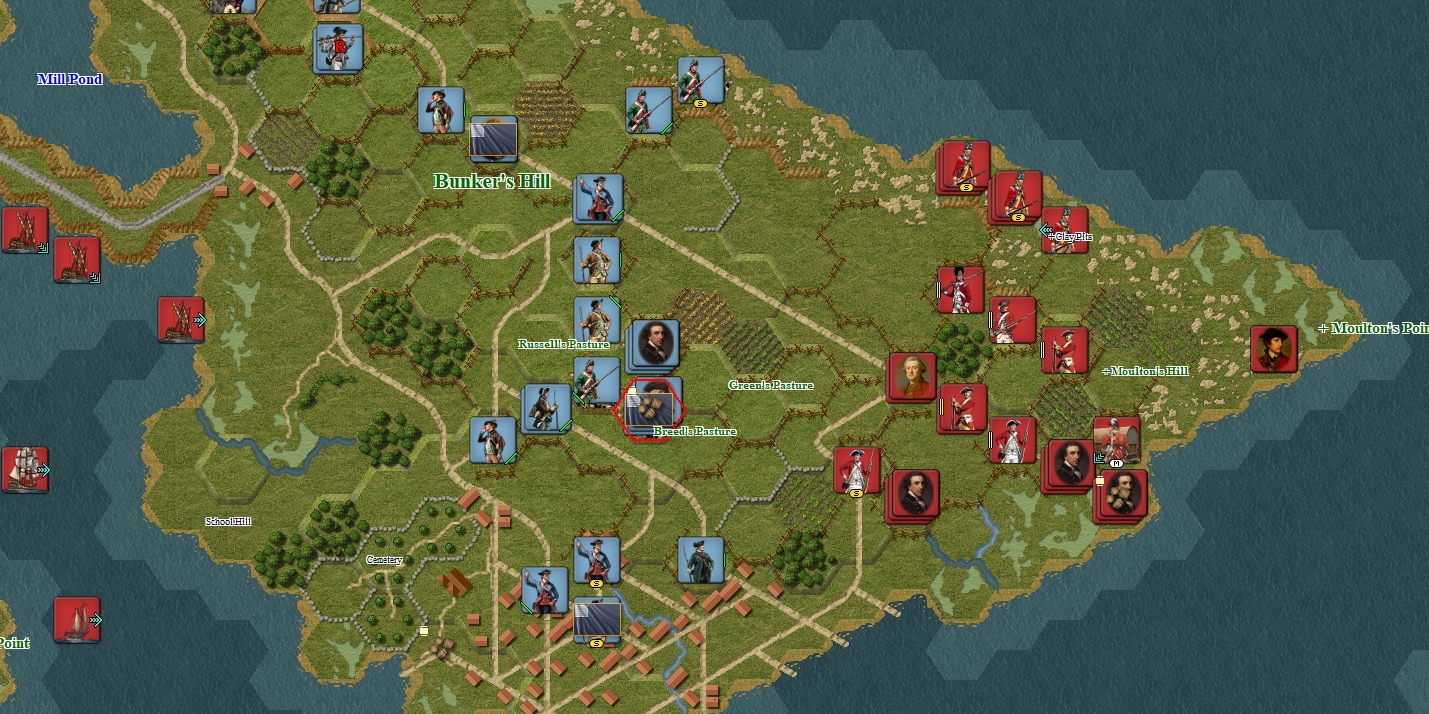
A is for American Revolutionary War released. The bibliography for the game I’m working on, currently consists of four tomes. I’ll need to pull my socks up if I wish to out-swank ARW’s ‘recommended reading’ list. Mike Cox, the lead designer of Wargame Design Studio’s latest offering, name-checks over 150 books in his extensive design notes!
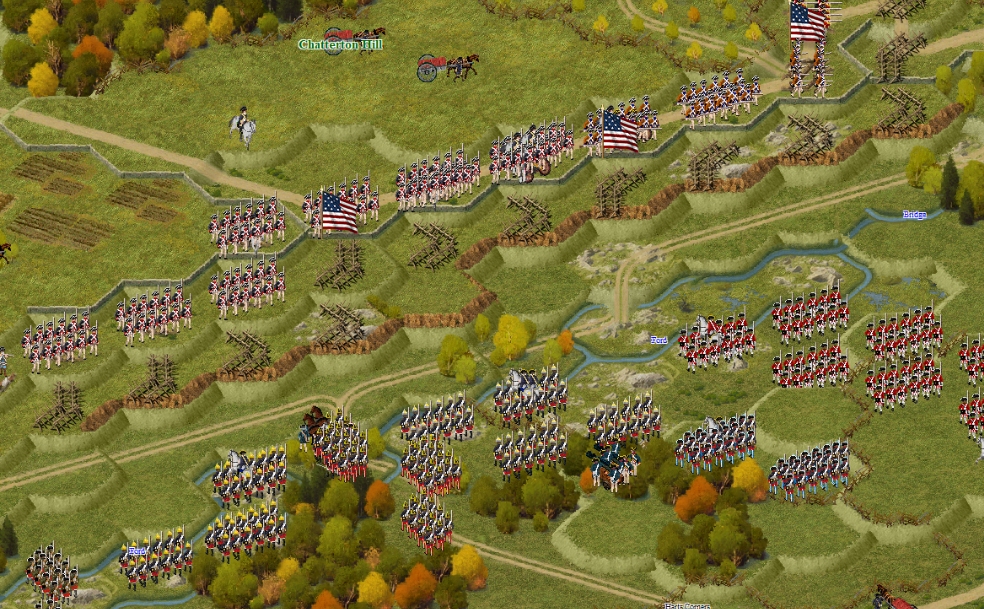
WDS believe ARW to be “the defining work on this topic” – a claim unlikely to cheer Jean Marciniak, the developer of work-in-progress The Glorious Cause.
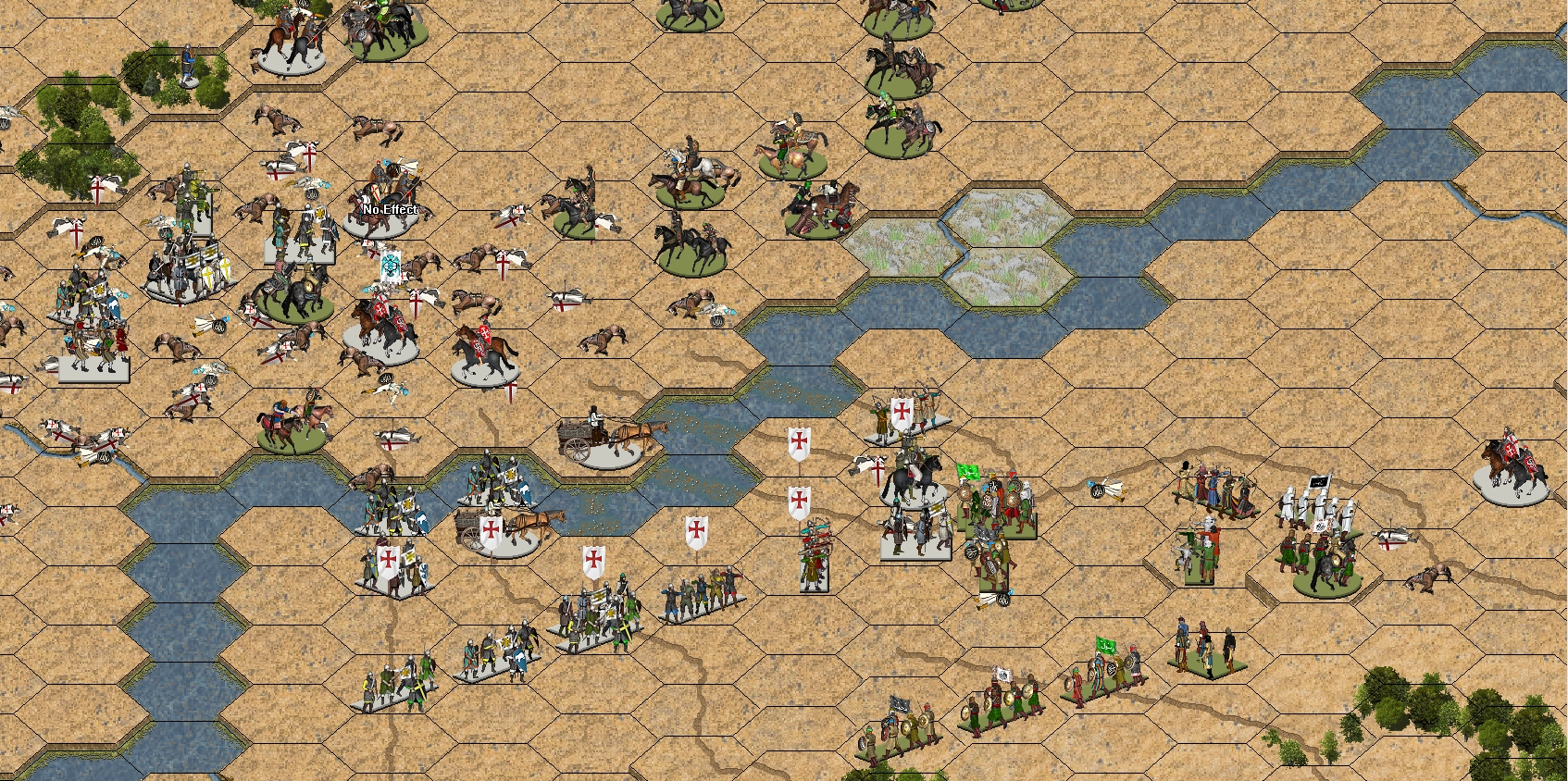
I imagine there’s a fair bit of nervous excitement in the WDS camp right now. In a few hours’ time, the studio wades across a retail Rubicon it has avoided for years. Wisely, the inheritors and enhancers of John Tiller’s oeuvre have chosen one of their most colourful recent hex-em-ups, Sword and Siege Crusades: Book I, as their initial Steam release.
B is for Bugged boots
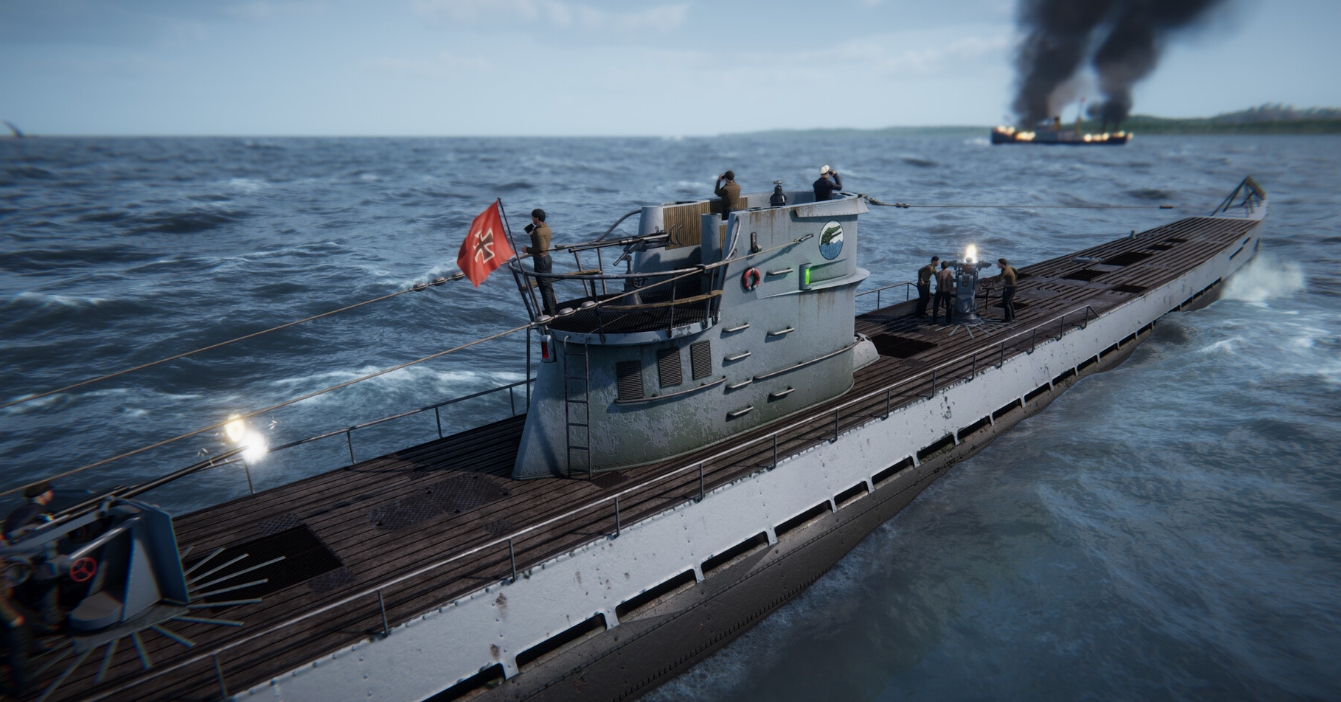
The arrival of capable Type IX subs should have been a cause for celebration in the UBOAT community. Instead, messageboards have been dominated by dismay and dissatisfaction since the DLC dropped on Friday. Although incompatible mods seem to be the cause of many apparent bugs, perusing the febrile Steam forum over breakfast, it seems a vanilla install is no guarantee of problem-free patrols.
C is for Cederic creates
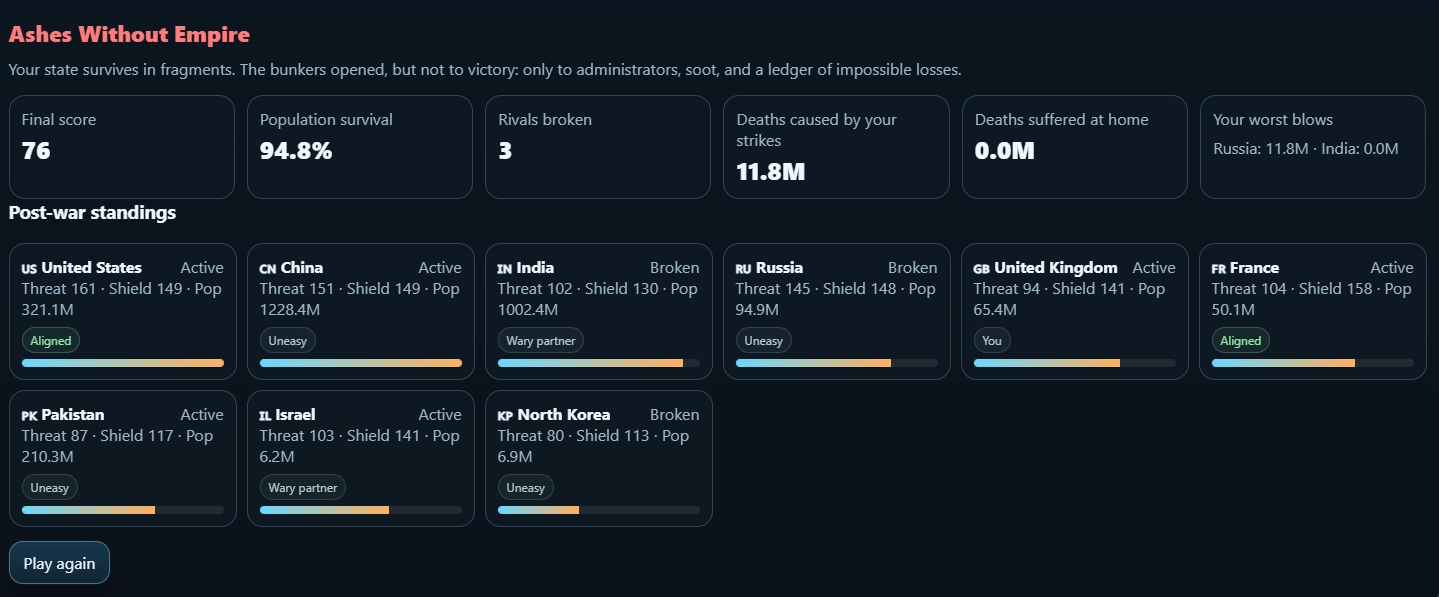
I’m not the only Cornerite who’s been having a bash at game design of late. THC reader and self-confessed ‘vibe coder’ Cederic has, with prodigious help from AI, produced a startlingly diverse range of game prototypes over the last few months.
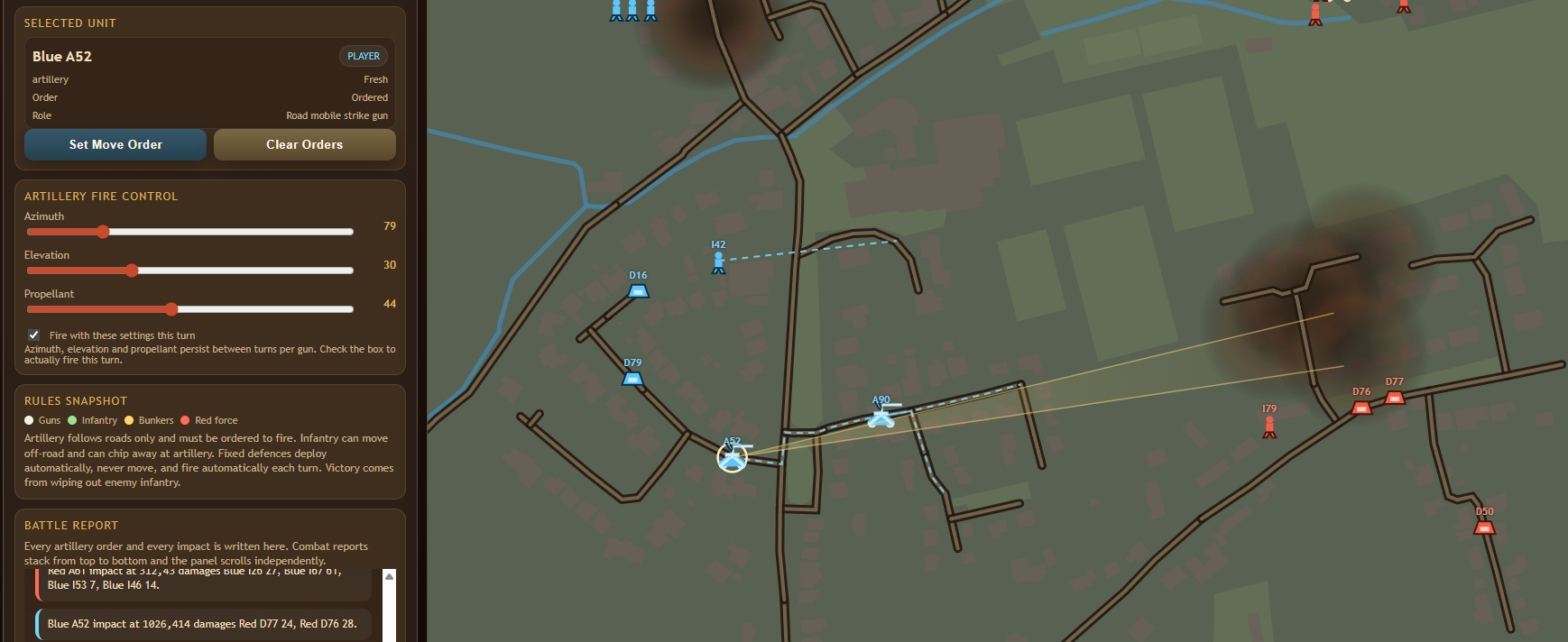
His playable experiments include Last Light Deluxe, an eight-turn end-of-the-world TBS, Street Guns, a “grimy turn-based artillery duel on a live street map”, and Bobsleigh Blitz, a faux-3D bobsleigh sim (“We were well overdue a bobsleigh game so I asked the AI to write one, expecting a quick arcade blast. It started researching the International Bobsleigh & Skeleton Federation rules and building a gravity and friction engine, factoring in centrifugal momentum. The result is an actual sim which my sim-racing friend beats me on.”).
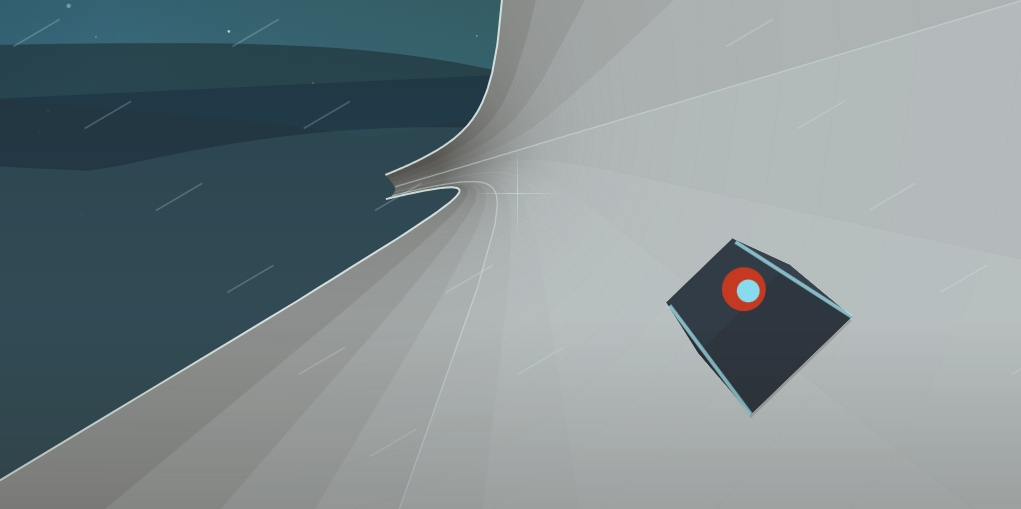
Soon purchasable on Steam, PhotoBricks, the project Cederic is most proud of and has put the most work into, is a moreish Pong-like that can turn pictures on your PC into bricked-up arcade challenges.
You know, while I really want to love WDS’s admirable attempts at pre-WWI warfare, new and old…
I feel like they have more problems to them than redeeming qualities. And I kind of suspect that they mostly condense to the fact that this venerable studio keeps trying to milk a game engine that is way past its retirement age. Even with all the attempts at making it look pretty and bells and whistles they’ve taped to it recently.
I mean, no, I love them dearly, I really-really do and I am thankful for all the effort to refurbish the library and for the new battlefields to explore, but there are some points that I can’t really look past (excluding any advanced or custom rules from the scope of criticism. They are optional and I will only mention them regarding their effectiveness to fix the base games’ issues):
1) The engine works best for battalion-level tactics in WWII and Cold War titles. Granted. Only slight issues and quirks there. The only real nitpick I have is that it feels very-very weird that (even with advanced rules options) continuous artillery barrages scale little with the density of targets in a given hex (1km across and we are talking multiple battalions of infantry +- vehicles bunched up in this area and (this one is weirder) that you have to choose which particular unit in a given hex you want to target with your bombardment. Even if you have no intel on the identity of any of these units. Ah, and, of course, the fact that bombarding a hex with no known (visible) enemy unit in it is a special, optional rule and it makes your artillery even less effective than you’d imagine is the cherry on top. I’d say, the real life situation is the reverse of that (I know, I know, 1km zone is huge, but we are talking about hundreds of guns pummeling it for 3 hours straight): area fire or even area denial by fire is the norm (especially at this scale) and if the arty is so lucky to be in contact with some unit that can provide definite target coordinates, it becomes a beastly effective destructive tool rather than a very effective constant pressure tool it is with just the general idea of the target actual positions.
2) When we get to black powder line and maneuver warfare (17.5-19.5 centuries), this starts to fall apart and considerably so. What the hell is “opportunity fire” (or defensive fire, as it called in the game, I think) in the context of volley fire standard drills? I can get behind skirmishers/light infantry dishing out some fire on the advancing enemy in a sporadic fashion, sure. But line regiments? I would be cautiously okay, if you could order your regiments to fire at will on a unit by unit basis (because this was a highly uncommon practice, as far as I know and would have confused most regular soldiers who were not drilled for that). Unit movement speeds (and turn duration in minutes, declared in the manuals) do not match the amount of volleys you receive from a single unit when moving within its range.
The advanced rules option separates movement+fire and and melee assaults into distinct phases, two for each opponent. Why your fire is married to your movement? Should you be able to try and deliver a volley after your movement? Sure. Should your opponent have not only better effectiveness at shooting your regiment as it stops, realigns itself, takes aim and all that, but also the first go? Absolutely (or, at least, there should be a probability of that happening). Should it happen in a ingle phase? Does not feel true.
Here is your opportunity to deliver a volley on your advancing foe – a fire phase. Okay, it would make PBEM even more busy, but if nothing else, it could be married with the melee assault phase rather than movement. Especially, since “fire and charge”, “stand and fire as much as you can” and “charge immediately” are the very real decisions that the regimental commanders or their leaders had to make. And it made way more difference than what is represented in these games.
Black powder artillery (at least with the ball ammunition) has very little killing effect (understandable), even when enfilading (huh) or shooting at tightly packed columns (there is a rule option there, but, yet again, it does not change as much as one would hope). And I don’t think I ever saw any unit seriously demoralized even by continuous artillery fire. Enfilading muskets don’t nearly as much damage to their targets, both in kills and morale, as you’d expect. From 7 Years War onwards a shooting match would end in about 3-5 volley exchanges (too lazy to provide sources, sorry). Here? Even with the customization option to make fire results more consistent, a pair of approximately regular, mediocre units in an open field can trade for twice as long.
Ah, since we are talking about open fields, good luck forming your desired battle order with the facing system attached to the hexagonal maps in these titles. It takes a while to adjust to it; but the feeling that whatever your army formation is – it will remain at odds with how the terrain looks and with what you wanted to achieve forever. It is akin to looking on your own battle plan through the glasses that skew and slightly dilate the image. Planning complex maneuvers that are timely and shape up the way you want them to (even with no opposition) when you are afflicted by this distortion is a neat excercise. Well, Jan Žižka won a good portion of his battles fully blind, didn’t he? Enjoy the cavalry charge mini-game, where you have to make it face the right way and make it travel
And now, the thing that breaks my heart and ruins all the potential that is there in the games of this period and earlier. The bloody MELEE (or assault, as they call it) resolution. Imagine: after a spirited exchange of volleys between two infantry regiments, one seems to buckle, if just a little. So, the officer that is in command of their foes orders a bayonet charge. The line of soldiers becomes a roaring wave as it crushes over the line of their enemies. The fighting is bloody, hard and the defenders turn out to be way more resilient than anticipated. The struggle continues for 5-10 minutes (turn time is about 15 minutes), but the attackers fail to chase off the defenders. So, what could realistically happen (even though most melees were resolved way faster than that during this period of warfare)?
Option A: The attackers might loose heart and rout, when met with such mettle and steel. At this point there is no command and control to the people, they can’t perform as a unit, because communicating and following orders while fighting for your life is not a real thing and the defenders are way more likely to have preserved their formation if they did not countercharge.
Option B: The clash continues for as long as it has to go, because real life does not come in 15 minutes chunks (I mean, it does, but that’s more of a choice on our part). If the attackers are not repelled by now (Option A), both formations are likely to have collapsed into chaos, mixing combatants from both sides into a bloody mess and this will continue until one or both sides rout, become combat ineffective or some such.
What happens in WDS games melee assaults, where neither side routs? The assaulting unit returns to the hex from which it initiated the charge and forms a new line facing their opponents, likely “disordered”. “Disordered” in these games means something along the lines of “not that effective at doing most of the stuff, including melee and shooting”, not “it’s a bunch of disorganized groups of soldiers that would require hours to reform”.
I repeat. Not routing an enemy unit in assault is not an automatic rout for the attackers. When “the time is up” they just go back to their original position a little further and a form a new, sadder (but still combat-capable) line. WHAT IS THAT. How often does this happen? It is on par with routs in most situations that are not completely overwhelming, even with the special option of averaging the melee outcomes making them less random.
And no, they are not even glued to their opponents in any way. Should you choose to do so, you have an option to just casually walk the regiment away from these unreasonable foes that refused to flee (advanced options allow for morale checks for movement in threat range in any direction, but it is more about firepower vulnerability. It can still cause a rout, but I hope that you can still see why I am flabbergasted by this).
So, there are no units mixed in combat or, at least, locked in melee the way one’d see in Field of Glory.
But would that be possible using this tired engine? Maybe. But I bet that it is very very difficult at this point. And I don’t really think that WDS would suddenly change the rule sets they adhered to for an era, much less apply them retroactively.
3) Pike and Shot era games.
Well, most of the stuff from the line warfare era games still apply. It is less psychotic in the units on hexes facing department, but only marginally so – the benefit of the games being centered around pike and shot blocks which care little for direction while in combat and the column movement serves the purpose fine enough not to worry about such stuff. Early “line” salvo musketeer units, where they make their appearances, are just as annoying to orient correctly. Good thing that they are rarely the core unit of the overall formation.
But the MELEE insanity from the linear warfare is still here. Sure, two disciplined pike blocks are a lot more likely to slowly disengage from each other without it turning into a disordered rout. It is however, quite rare historically, that two units were equally done with fighting at around the same time and slowly disengaged rather than one unit pressing the advantage when their foes hesitated. But, if any era saw the most cases like this, it’s this one (the historical tradition of two lines of underdrilled fighters armed with shields and simple spears ineffectually pushing against each other, poking their sharp implements at unsupervised limbs while trying to supervise their own is, of course and the era of warfare revolving around this approach has a lot more examples of mutual disengagements and general lack of drive to pursue any decisive action, but WDS is yet to make a game where this era and type of fighting is the core focus).
Outside of that… Only singular quirks. Infantry (and cavalry) can capture and man the enemy’s mobile field artillery, but even the infantry cannot move it from the place they found it at, just leaving it behind (potentially recoverable by the enemy). This is weird, since infantry can and does move along with their own regimental guns with no issues. But, and returning to my original point, maybe making this simple act of not leaving one of the most valuable battlefield assets behind was really-really difficult to achieve with the elderly engine. And the concept of manning the abandoned guns was implemented when the engine was still young and its creator with us and very much kicking (I think).
4) Renaissance
You see where I am going with this by now, I hope.
Renaissance – Less decisive fire, a lot more confusing, but very polite melee combat where the repelled attackers reform AND are not locked in combat if it turned out indecisive. Formations are a lot weirder here. Even though this is the age of the decisive transition to ranged weapons becoming the primary battlefield tools, melee is still central and prevalent. Melee weapons don’t matter that much, in any match-up (unless it’s the halberds or the pikes, but these matter more because of their ability to form blocks). Imagine, with all this weirdness about melee combat, this game, centered around the period where melee units were often very much central to the battle, the clash between the melee units is decided not by the combination of their quality and weapons (as one could expect, since the different weapons’ parameters are a thing in most games in this engine and define a lot, depending on the particular game), but by a parameter Melee Value that is slapped on top of everything (or nothing, depending on how you look at it). Sure, Melee Value and Armor Value were there in most games I described above, starting with the linear warfare. But they felt like an acceptable abstraction of some of the units having more experience, being specifically drilled for melee capabilities or being generally better at close combat than the unit of the same quality, because, up until now, most of the units (with rare exceptions) were uniform. A line regiment in 7 years war has muskets, bayonets and uniforms that are functionally the same as what the similar regiment on the other side is equipped with. Otherwise, it comes to troop quality. A grenadier unit is likely to be handpicked to consist of the most athletically gifted soldiers, but otherwise their gear is the same. Sure, I see how an abstract value that makes them strong in melee works in this case. Cuirassiers must have a tangible edge over the lighter cavalry in terms of punch and survivability. They all fight with sabers and pistols anyway, but ok.
But here? If you think that the fact that halberdiers are clashing with pikemen matters – you are wrong. What matters is their “Melee Value” and “Armor Value”. What about a crossbow infantry unit in cohesion that has no melee weapon specified (I am assuming light hand weapons) and a big melee bonus receiving a frontal charge from light lancer cavalry? Whatever happens will not account for the equipment in play.
Sure, it always has been about unit formations and which formations are effective with each given weapon. True. Failing that, it was about training and morale. But I find that the way this completely ignores the matter of ever-evolving weaponry of the era and sticks it under the binary system of bonuses that don’t have to account for context IN ADDITION to how melee combat is “non-binding” and often results in brain-melting draws – completely disqualify this game from being regarded as proper period accurate wargame. With all the love, all the effort and all the research invested in it – whatever this product of the inbred dynasty of games is, it does not reflect history and it is strangled by its own structure.
Ah, and a thing that is common for most games of this scale, regardless of era, but one that made me question all the systems within this particular title in the first place – terrain does not mean that much, at least out of contact. Imagine, if you please, a cavalcade of late Renaissance mounted gendarmes, plate armour, heavy horses, all their men-at-arms outfitted just as heavily, prancing their merry way across a 5 kilometers-wide patch of bloody swamp. No road, no tracks, just kinghts demonstrating their valor by traversing marshes while mounted at a pace that makes yours truly wonder if his scouts mixed up the concepts of swamps and autobahns. Sure, the knights suffer from being disorganized by their daring maneuver, but they don’t get mired, don’t loose men and horses, they advance as if it was not much more of a feat than navigating some narrow town streets on a horse in a moderate hurry. And, since the knights were the units of “high quality” in game’s terms, when they have traversed their obstacle, they took 1-2 turns to return their ranks to full fighting order. And as I started to address this surprise delivery of interesting times, I saw that there is a huge portion of enemy infantry following their gallant pathfinders on foot.
What was I playing again?
5) Age of Longbow and Crusades
Age of Longbow HAS added melee weapon-specific stats (praise the Lord!). I guess, this would be way too incoherent otherwise. But, it is important to add, the weapon types differ in how their original unit’s stats are modified on offense and on defense + some really specialized ranged units have received hefty penalties for being equipped in a way inadequate for melee. I am really glad that they did not discard most units with ranged weapons as melee fighters – despite the stereotype, crossbowmen and archers did fight in melee and were very often able to pull their weight (or at least not collapse immediately), depending on how they got to be in an army in the first place and how prepared they were to this development.
Still, the melees are non-binding and often indecisive.
The Book of Crusades does more of the same regarding weapons and melee, but focuses around smaller units and sieges + is a lot more melee-centric in terms of troop compositions and scenarios. With no changes to the actual principles of fighting. I admit, I know less about this title, because it required way more patience than I had recently, so there might be some improvements that I missed. What I did not miss is siege towers and sections of the fortress walls being very limited in how many people they can fit, but the game offers you units larger than this limit and no way to split them, so that they can participate in the sightseeing from an elevated position. That was about the point at which my patience made a loud bang, bursting so hard that I have forgot that I have this game for a good long while.
6) The Squad Leader series. Together.
The Squad Leader series is as uneven in quality and actual gameplay+realism that it boggles my mind. Some titles concern the wars that are less known, have very interesting, authentic feel to them and the gameplay is unique and conveys the spirit of a given conflict wonderfully. But then, some of them are just bland. No specific features that make the battles memorable, no real “grip” to make me stick to them as a player. And then some of the games in the series depict wars that were overflowing with juicy features that the games either abstract or wave completely (looking at you, Modern War). And that just does not cut it, when you “promise” squad simulation up to individual rifle.
Let me give you some examples: a) Unit leaders cannot be suppressed or pinned. They are ever heroic and capable of at least trying to lead their troops. This is not a thing even in the more “cinema” wargame Lock and Load Tactical, and it is based on a boardgame! You might say that this makes gameplay a little smoother and prevents one side from locking the opposition fully in one successful turn (there is an argument about simulation vs gaming experience here somewhere, but I will not go there today). But, since the game allows for some versatile interactions, your unpinnable, dauntless leader can grab an LMG, sit on a hill on a flank and suppress a couple platoons worth of enemies. The basic system also assumes that officers are really-really difficult to hit with any kind of fire, since fire is resolved as volume of fire vs target density in a hex (there is an option to make small teams more prone to casualties, but it does not affect leaders). Playing solo you can just consciously decide not to do stuff like this. You can reach an agreement with your opponent for a PBEM too. By why this is a thing at all?
A lot of the scenarios contain armored vehicles. Are they represented well? They are not. Armor works wrong (T-34-76 shooting the frontal armor of a Tiger I that is moving at decent speed in uneven terrain has a decent chance not only to hit, but to kill the cat. Imagine the confusion of both players in a PBEM skirmish, when we saw this happen more than once and could not write it off as a representation of some lucky accident). Vehicles have no morale. They can’t be shaken, routed or forced to retreat by swarming infantry or any volume of firepower. There is no Button Up vs Crew Exposed states to them – tanks always have perfect visibility, no less than that of an infantry squad, at no risk. There is no Hull Down positioning. There are no accumulative bonuses for firing ordnance-type weapons (as opposed to small arms and MGs) against a static target repeatedly (again, all featured in LnLT, which is a port of a cinematic mid-core board game). I don’t want to start about ATGMs and other, more modern stuff. The list, actually, goes on and on.
But, you’d say, it is a game about small infantry units tactics, AFVs are not that relevant! Well, I’d agree with you, but the AFVs are everywhere in SL series (from WW2 onwards, of course). There are whole scenarios that explicitly FOCUS on armored engagements, where infantry is only semi-relevant as support. And this is only exacerbated by the official scenarios’ tendency towards bigger scenarios.
There is no log to refer to, to understand the fight calculation in play. You don’t see the rolls in any way shape or form. Would that be unrealistic? Somewhat. But, on the other hand, a real squad leader present on the battlefield and giving orders would be able to assess the effectiveness of the chosen line of fire and discern between an unfortunate attempt at a good and effective idea vs a fool’s errand. Sure, most of the rules are in the manuals, but, I think, they did not see revision for at least 15 years and some concepts are not even there. To the point of veteran players on WDS formus not knowing answers to some basic questions. Like, I can choose to shoot my squad’s rifles, the BAR and the marksman rifle all together and separately. There are two similar squads in one hex and I can order them to open up at the same time. Is it more likely to suppress the enemy if I give a single order or order two squads one after another? Or is the suppression checks are calculated per weapon anyway and it does not matter? But two activations would provoke two chances to receive return fire! And nobody knows definitively how it works.
You can split your squad’s weapon fire between targets, if you want. Your rifles can attack one squad and the BAR can suppress another one. Each would get 3 opportunities to shoot. The catch? If you fire them together at a single squad – the enemy gets 3 chances to react. If you fire your rifles in one direction and you BAR in another – you perform 6 actions, so the enemies get 6 chances to fire back. Why? A squad can only fire 3 times if it did not move. Each “volley” reduces movement points by 1/3. It is not that difficult to make the reaction fire system to check if the unit has already provoke the retribution the maximum amount of times.
Stuff like this feels gamey and unserious. You can lose a battle because of rusty teeth of the decrepit cogs that power this game. It does not happen because of some deep idea, that the BARs individual activity makes its squad more “illuminated for the enemy”. All the above problems have the causes as why UI always allows you to choose ammunition types for your ordnance, that are not available for the particular scenario. The engine, that used to be one of the greatest, is too rigid to even approach real expectations from such a game. And some of the weirder design decisions made by a legendary wargame designer back when I was “but a wee lad” are baked into it.
Hey, at least close assaults feel more believable here.
To spice up my overly detailed rant above, I have to add that all these games suffer from ambitions that require either moderation or, again, ground-up rebuilding of the actual game systems.
WDS loves big scenarios. Sometimes really grand ones. Depending on the game, it might be difficult to find a compact scenario to play. It is not a bad thing by itself, no. But, since it is the classic turn-based IGOUGO* type of deal for each of their titles, where you control every single unit that can do something yourself – it is very regularly just too much. Especially, if you have to play in short bursts or often don’t get a chance to have the next gaming session for a while.
And the GUI options do not help at all. They did get better, WDS is trying and it is somewhat commendable. It is, however, a game engine, in which, by its very nature, there is not a single title where you can understand the situation at a glance; it does not matter which of the graphical options or icons or even highlighting options you will choose. You can figure out the most high-level stuff, occasionally, if you are lucky. But, no mater which options you toggle as your view mode. You will have to click through every unit to get full info. And in some games and scenarios it might be hundreds of entities. But even 50 units and a large map + the opponent you have to be aware of is a lot. Actually, this is handled in a way that makes 10 units a headache to keep track of.
You can assess the units overall state at a glance on its counter (unless it is buried under too many other units). You can’t, however, identify its name, its losses, (depending on the title) the weapons the unit has, its place in the OOB (sometimes you can, but in a very limited manner), how many movement points or attacks it has left, you can’t determine if it is in command range of its CO/HQ, you can’t learn the depth of your line formations, you can’t see the “effectiveness” parameter of the unit (in SL), you can’t see the units’ fatigue and its level, you can’t see AFVs’ armor, you will see no predictions on how precise or effective any ranged attack is going to be, you are very unlikely to even identify a unit’s type, if its counter is buried under another counter or two, you can’t assess cover rating of the hexes or their movement costs (much less those of any obstacles), unless you learn them (but beware, the values change from title to title!).
You see, part of this information is available, if you click the unit on the map. The second part requires you to hold the mouse button to see additional details. If the icon is not clear enough (which is often the case), this includes the weapons that the regiment uses. So you need to find it, click it, then hold the mouse button, and then, if, for example, you want to learn the actual capabilities of the weapon you just identified, you have to go to the top bar, open the Help tab, choose Parameters Data option and witness a new window, that looks like a plain text file, open. There is no search function here, obviously. Here, in plain, rudimentarily structured text, you have to scroll past the numbers for all potential weather effects, national modifiers to every combat and movement mechanic in the game, and in the very-very end of the document there is a list of weapons and their capabilities expressed as number values. Of something. The manual is so cryptic about the formulas in the game that you can use this numbers for nothing more than divining the impact of these numbers against those of some other weapons and your experience of playing the game. In SL games it is a little less insane, but is insane nonetheless.
If you want to see the units that you finished moving, you can click one of the miniscule buttons of the interface or learn the hotkey (The hotkeys are NOT a thing in some of the older titles that were not “modernized” and many options, however clunky, are not available there). Bam, you have all the units that have been moved this turn highlighted. Not the ones that are out of movement points, though. Or not the ones that are out of the movement points, because they used them for something other than movement. You don’t get to know the remainder of the MP on a unit by highlighting it. Also, have fun guessing which particular counters in a stack are highlighted.
But wait, there is a button to see which unit fired this turn! If we highlight the ones that moved and the ones that fired – it would filter out most of the units that require no further attention, right? Correct. The issue is, you get to use only ONE highlight filter at a time. Yep. If you want to highlight the units that are unable to move because of the scenario conditions (like, not yet warned of the danger etc), you will lose your “already moved” highlight. You can highlight the units that are spotted by the enemy, but you will have to either click through them one by one, or switch modes 10 times to match the ones that can move out of the harm’s way. Isolated units? Disorganized? Running low on ammo? Highlight the OOB? Highlight the subordinates? You can only choose one. Why would a player need to several of those at the same time? Why make the units’ counters that have no possible actions or moves this turn change color or be marked in any way?
There is also a shading option. You can see either the LoS from the currently selected hex, the hexes it can reach with its current MP (the only option to see it) or the command range of a selected leader. I am sure you will never need to know LoS and movement range or command radius and movement range at the same time.
And you have to click every units’ move path hex by hex, one at a time. Yes, for every single one of them. I mean, you have an option to tell it to go to a distant hex, but you will not get a preview of the route. It just goes there along the path that had the least cost in MP, ending up facing wherever and taking the paths that might lead the unit into danger and potentially disordering other units along its way. Multiturn orders and waypoints? Utter sci-fi.
You have some cryptic options to move columns along the roads; one of the options includes “possibility of some unintended unselected units joining the column”, quoting their official manual.
You can even try and advance multiple units in a battle formation. Maybe even two hexes at a time, if you are brave enough!
Tl;dr I absolutely love WDS and they are my absolute favorites, despite EVERYTHING I said here. They love what they do and they care. They offer games that have no real equivalents too. But, whoever you are, when you get impressed by their research and start falling in love with their catalogue of every field of battle you could ever dream of as a wargamer – remember these games are made on compromises, despite the resistance from their own decomposing DNA and they have a painful tendency to melt your brain with a new common sense corruption beyond a wargamer’s comprehension at every turn. They are still great. Sometimes. They are not for everyone.
PLAY THE DEMOS, OR SUFFER THE CONSEQUENCES!
*IGOUGO is the format of turn structure that is, in my humble opinion, out of place in modern wargaming by now; with multitudes of better options, including the ones allowing for asynch multiplayer, being already invented and showcased. IGOUGO is the simplest crutch ever invented and it’s okay for many turn-based games, but wargaming just loses too much adhering to it. This “simplicity” makes so many compromises and weird stop-gaps necessary and/or inevitable (depending on the game), that it feels like it single-handedly holds turn-based wargaming hostage.
Yikes. That’s an in-depth response if ever I saw one. I didn’t know THC supported comments that long.
Some interesting thoughts too, but I’m not sufficiently familiar with the WDS oeuvre to comment.
I am though intrigued by your passing reference to halbadiers vs pikemen. Perhaps naively I assumed ‘long pointy sticks’ were mostly interchangeable but even after allowing for their different reach, there’s no obvious superior option. So I’m not sure how a game would sensibly model variance without going into detail around phases of engagement and unit/individual interactivities on a sub-metre level.
Sorry, I seem to have had a solid fuel jet engine all this time – did not know that WDS would ignite it either, tbh.
Concerning Halberds vs Pikes – it strongly depends on the period and the nations at play; some countries were on the forefront of pike warfare innovations, other lagged considerably. An obvious idea, but the pike formations themselves changed very rapidly, including actual troop composition, formation principles, movement drills and assault drills evolved quickly, ranged capabilities integration started quite early as well…
But, addressing your question directly:
1) early pike formations actually included halberdiers as well at generous proportion. Even after the pikes stopped being seen as a mobile cavalry deterrent, they still included some heavy-weapons specialists (like armoured dudes with two-handed swords) that could attempt to break or at least disrupt the enemy formations or plug the gaps in their own ranks. The pikemen themselves also had sidearms, obviously, because a long-long spear is only good when your opponent is far-far away; not a thing one should rely on. Eventually, some mercenary groups (and later standing army units) added nimble swordsmen/guys with short weapons whose job was to duck or crawl under the cover of their own pikes to pounce at the enemies entangled in the pikes or, later, when pike on pike became the new norm, to go further, under the enemy pikes as well, to try and kill as many men focused on pike on pike dueling part of the situation as they can, before escaping back into the “woods”
2) a pike block of the era was very likely to consist of layers upon layers of staggered pikes that only seem clumsy, but can strike with surprising power (think of their mass and the impulse concentrated on the tip) when at range. They were also massive enough to be non-trivial to swat aside; much less so if you have 5-6 separate ones pointing at you, wobbling in your face and trying to poke you. And, I remind you, that if you used your halberd as leverage to push these ones aside, you get to meet 5 next ones every 1.5-2 meters into this murder-hedge. You have to cover quite a distance in this manner and you remain all but weaponless all this while, unless you drop your halberd in favor of your side-arm of course. And while you are making you way there, you get progressively more restrained by the sheer density of shafts around you. Not only a prime target for a crossbow bolt, an arquebus or a pistol, but also an easier target for each consequent layer of pikes that wait for a chance to stab you. Every couple of paces. Oh, and your halberd is mostly reduced to a short overweight spear, because you are not swinging this thing with the pikes all around you, even if you did not have to use it as lever to parry blows and redirect tips to trudge on forth.
3) Halberd was a fine and versatile weapon for the era, but none of its primary functional advantages were meaningful against a pike block. So, you have trouble, your enemies, on the other hand, are not at any sort of disadvantage.
DRAMATISATION:
Sure, pikes might not be as deadly and nimble as regular polearms, or, let’s say, a good battleaxe or a mace in trained hands. They might not even be your primary concern, as a halberdier. The thing that is your problem is that, when you reach their ranks, exhausted from overcoming this stiff resistance while decently heavily armored and armed, you will draw your sword and so will the pikeman. But guess who was standing here all fresh-like, save for the toil of thrusting with this bestial length of wood? Worse yet, you arrived alone or with a small group, your ranks utterly disordered as the men were trying to break through the same way you did – the pikemen stand shoulder to shoulder, the way the were before the clash started. So, now, when you finally reached the bastards, you are gassed, lack your primary weapon, outnumbered, unsupported, not so confident that help arrives through this utter shite and actually quite confident that you are losing the clash even if there are not so many casualties to speak of – how the hell are you supposed to build any sort of mass or momentum to break through these guys, if whatever consolidated push your fellows can muster will quickly get defused by the toil of even approaching the enemy ranks?
And you’d love to hope that if your unit breaks enough pikes orif you hold your ground long enough (against multiple pikemen that dropped their pikes and became temporary swordsmen just for your sake), more furious brothers in arms will arrive to back you up and start grinding the bastards down… in truth, you know that for every broken pike there are dozens if not more behind them. Both fresh weapons and fresh troops. And the worst part is, as your disrupted formation’s enthusiasm starts to slowly subside, you see that the pikemen starts walking forward, still shoulder to shoulder. Their pace slower that that of a snail, almost infuriatingly so. But what are you supposed to do? Sure, most of your men have not yet committed themselves to the fight yet, there are ranks upon ranks equally fresh halberdiers meeting the wobbly points of the pikes. But they saw how the first ranks drowned in these waves of wood. There is no way forward. Should they stand their ground? What and allow the enemy to slowly poke them all to death? Should they rush forth in a desperate attempt to do what the first rank failed to achieve or die trying? Or are your brothers already making their first anxious steps, backpedalling in the face of the pikes? Isn’t it very likely that they are slowly giving the enemy their ground uncontested, avoiding the deliberate, procedural, but still deadly grind of rows upon rows of steel points probing for their flesh?
Which begs the question: at which point of this busy, but highly ineffective clash an actual halberdier would have decided to retreat towards the portion of his unit that is still in a formation and stay with it (most likely retreating as a unit)? Or, depending on the details, does it seem likely, that even a professional soldier that is facing a foe he has no real way to fight against (or, rather, win a fight against) would run, hoping that the pikemen will retain their formation rather than risk losing all their combat efficiency to pursue and kill some random foor soldiers? I bet I’d run straight to the baggage train – trying to save my property, previous loot, money, caravan followers etc before the rest of the army breaks and the enemy rushes to pillage the baggage train and/or the camp.
PS: All the described pains of fighting with a halberd against pikemen, all other things being equal, assume that it happens before the Swiss figured out that it is possible to drill the pikemen well enough for them to advance on the enemy rapidly and decisively without breaking formation. Not a charge in the common understanding of the word, but a unified, concentrated action that is just swift, confident and INTENSE enough to force the opponent to make his decisions regarding his options in the immediate future very quickly. The most common decision was to get the hell out of dodge, of course. Especially as the fame of the new way of fighting grew.
PPS: The dramatization above also assumes a relatively well-drilled unit, but pikes could not function otherwise. I specifically did not include heavy melee weapons support, skirmishers with an assortment of ranged weapons, that could be present to pop out for a potshot, no auxiliary fighters pouncing on enemies away from the front ranks of the block, no mention of armor for the pikemen, no mention of any special skills or weapon mastery. The rawest representation I could provide.
Well-drilled pikemen were only ever contested by overwhelming firepower, be it from small arms or artillery, and other pikemen. So they merged the three together, until the firearms evolution and the bayonet made the slow, tightly packed groups of melee-only combatants a waste of soldiers.
The pikes did not earn this place, just because the long stick made cavalry charges go away (to the pistol shot distance, at least). They earned their place, because there was not way to deal with them effectively other than by mirroring what they were doing. It was a military problem you could not solve by cut, stab, bash, thrust etc and the first one that could break your infantry core all the same and utterly ignore your heavy chargers.
Sure, outnumbered, encircled and exhausted a pike block might eventually lose to an overwhelming force of halberdiers. Otherwise – no contest. Well, except for the cases of undertrained pike units, the ones that were formed out civilians levied into short service, the units that were instructed and led by the officers that had very little understanding of what they are trying to achieve or any other sort of misshapen early attempts to mimic the idea that was not fully understood, but left an impression of effectiveness.
As you said: the mere fact that one of the soldiers has a longer stick does not win 1v1 vs a halberd. The pike is useless in 1v1. But the point is that it is never even remotely a 1v1
Thanks for all the insights and analysis, Gobser. I’d love to hear WDS’s take on the issues you raise.
I just wish I could edit this now – I am appalled by the amount of mistakes and disconnections in reasoning and grammar I’ve left in my feverish deployment of ESL 🙂
On my review of my challenges to WDS games and their particular mechanics, I must admit that some of them are not fully fair. Some passages make the flaws seem worse than they are, by omitting to mention their context or by never representing the positive experiences and impressive functionality; this makes it look that some systems are broken or dysfunctional entirely, while in reality they are often only somewhat flawed.
I also feel that some examples of the gameplay mechanics were equally unfairly represented = I held back some details of what was happening on screen, thus obfuscating the rich mechanics that DID work; from my text alone it might look like some important systems are not there at all!
Additionally, there are a couple of points where I am actually not that confident about that I am entirely correct about how the particular mechanics work. This could serve as an argument for game mechanics transparency then.
I am also curious what the studio thinks about most of these issues! They were nothing but friendly, helpful and constructive in my experience, so I feel a little bad for throwing such a shade on their products.
But the point stands – playing the demos is non-negotiable, if you are not familiar with their library or even the particular family of games within it. Maybe, I should lead with this next time.