Thanks to Claude and his ilk, itch.io’s selection of military titles has grown like Topsy over the past month. Many of the recent arrivals are of questionable quality, but the four games spotlighted below are far from sloppy.
Bomb Alley
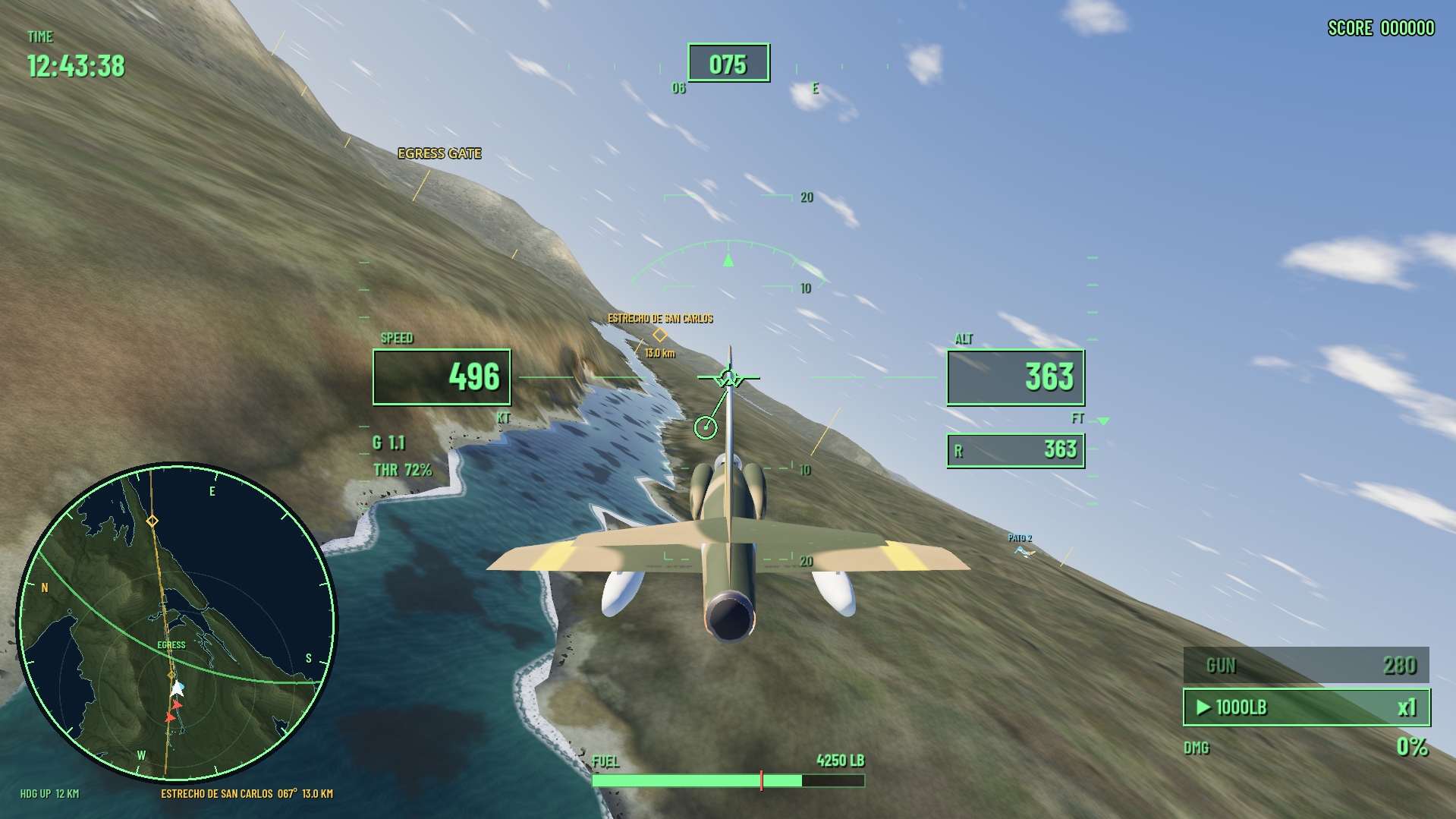
If you only have time to try one of today’s quartet, try this one. Very much at the cade end of ‘simcade’, Bomb Alley winds the clock back to May 21, 1982 then pops players into the cockpits of various bomb-laden Fuerza Aérea Argentina warbirds bound for the Falkland Islands.
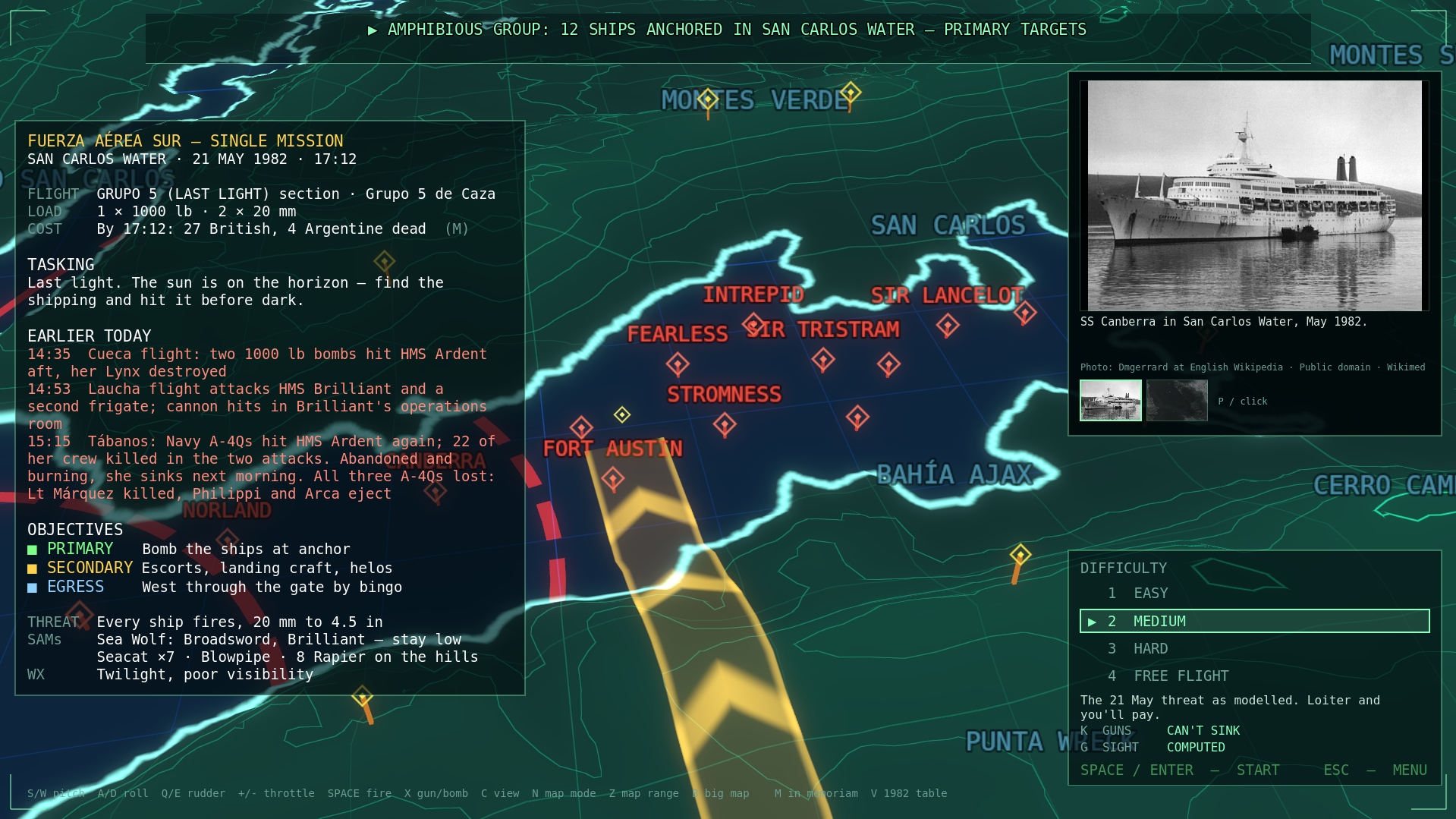
San Carlos Water is crowded with Royal Navy warships and more vulnerable task force tubs such as the RFA Sir Galahad and SS Canberra. It’s up to you to brave the flak, surface-to-air missiles, and Sea Harriers, and scupper as many British vessels as possible.
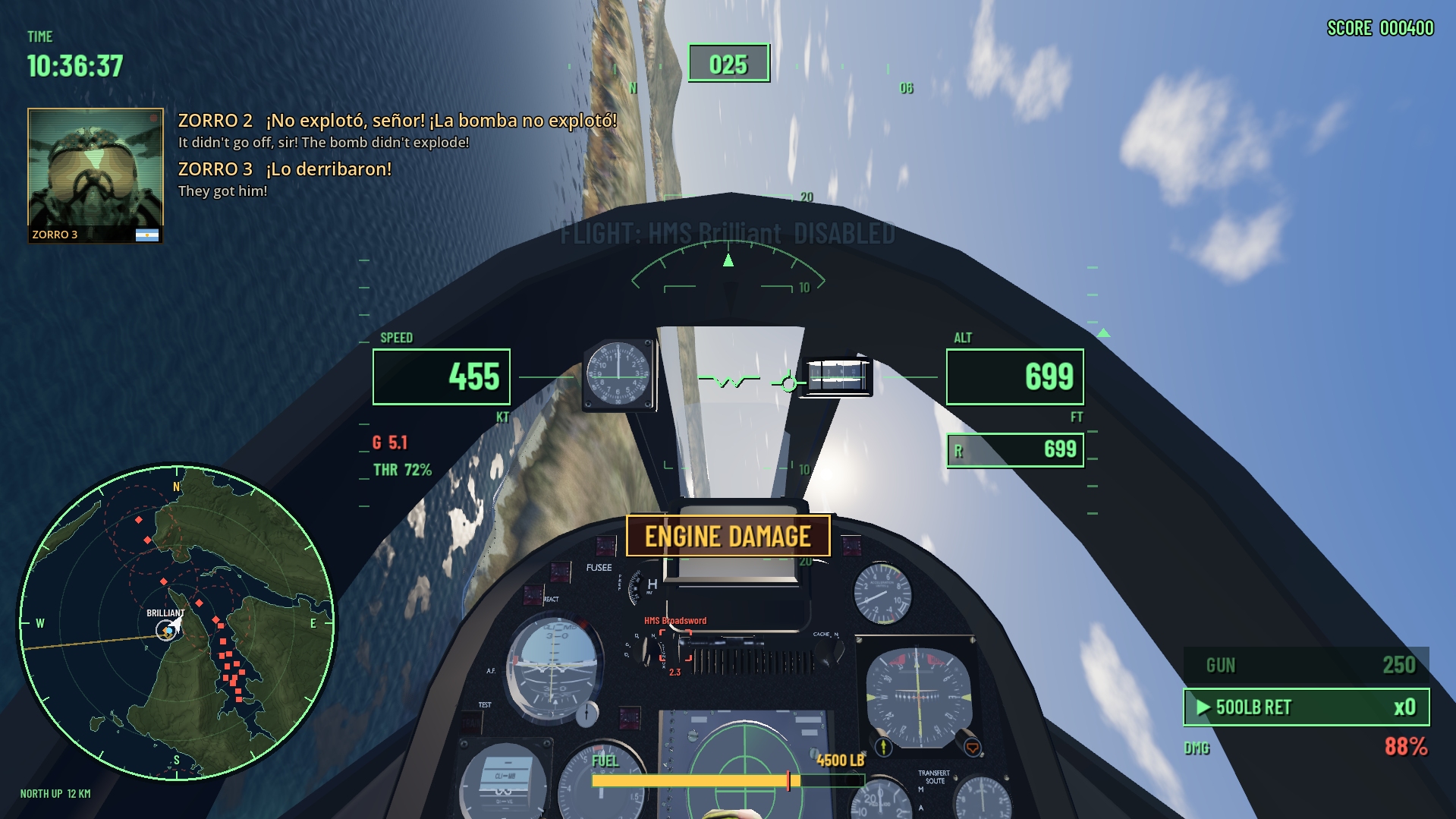
Invariably this means thrilling nap-of-the-earth ingresses… alarming close encounters with heathery hilltops and sun-spangled brine. Go too low and it’s all-too-easy to buy the sheep farm, or hole hulls with bombs that have had insufficient time to arm.
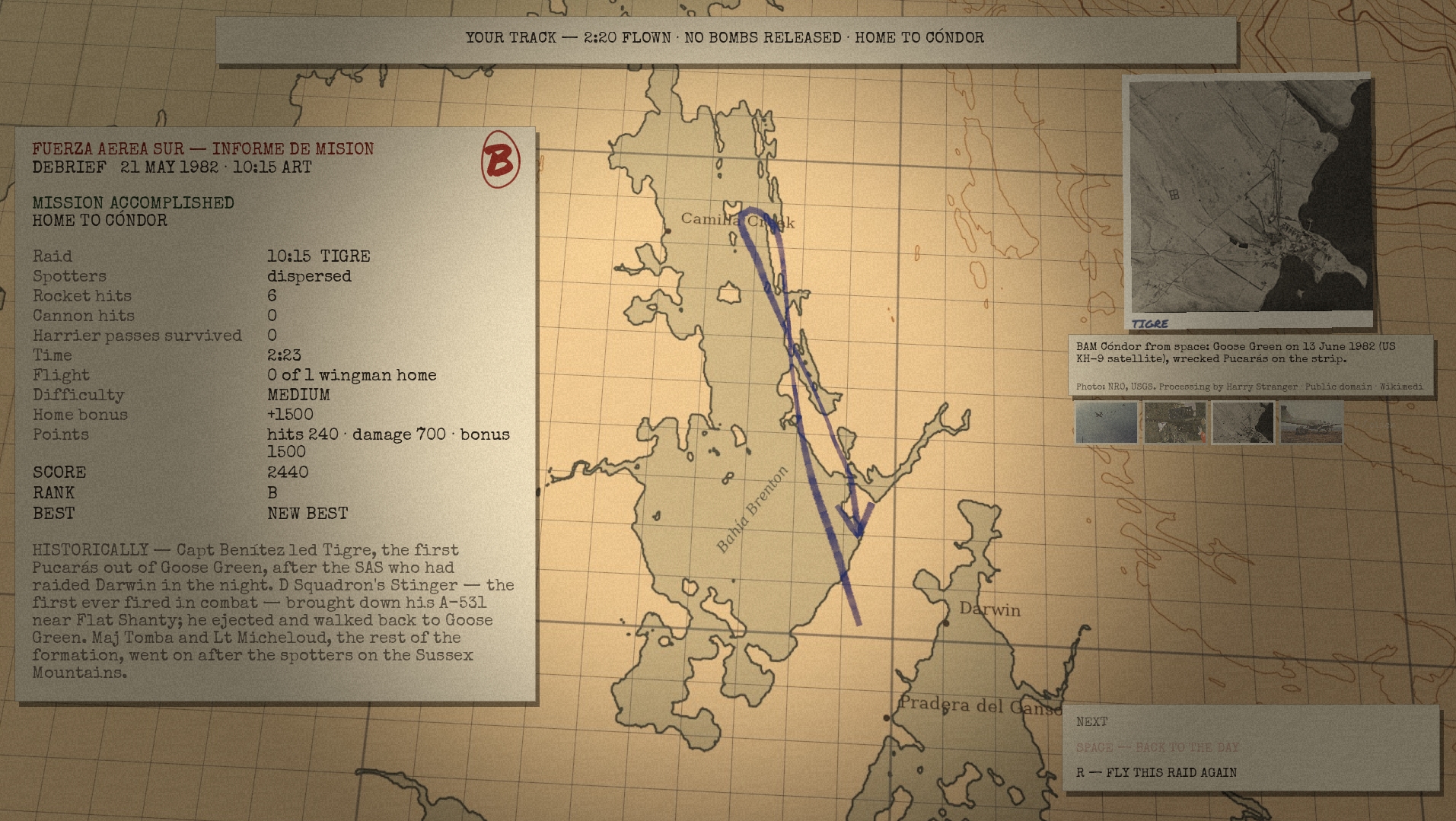
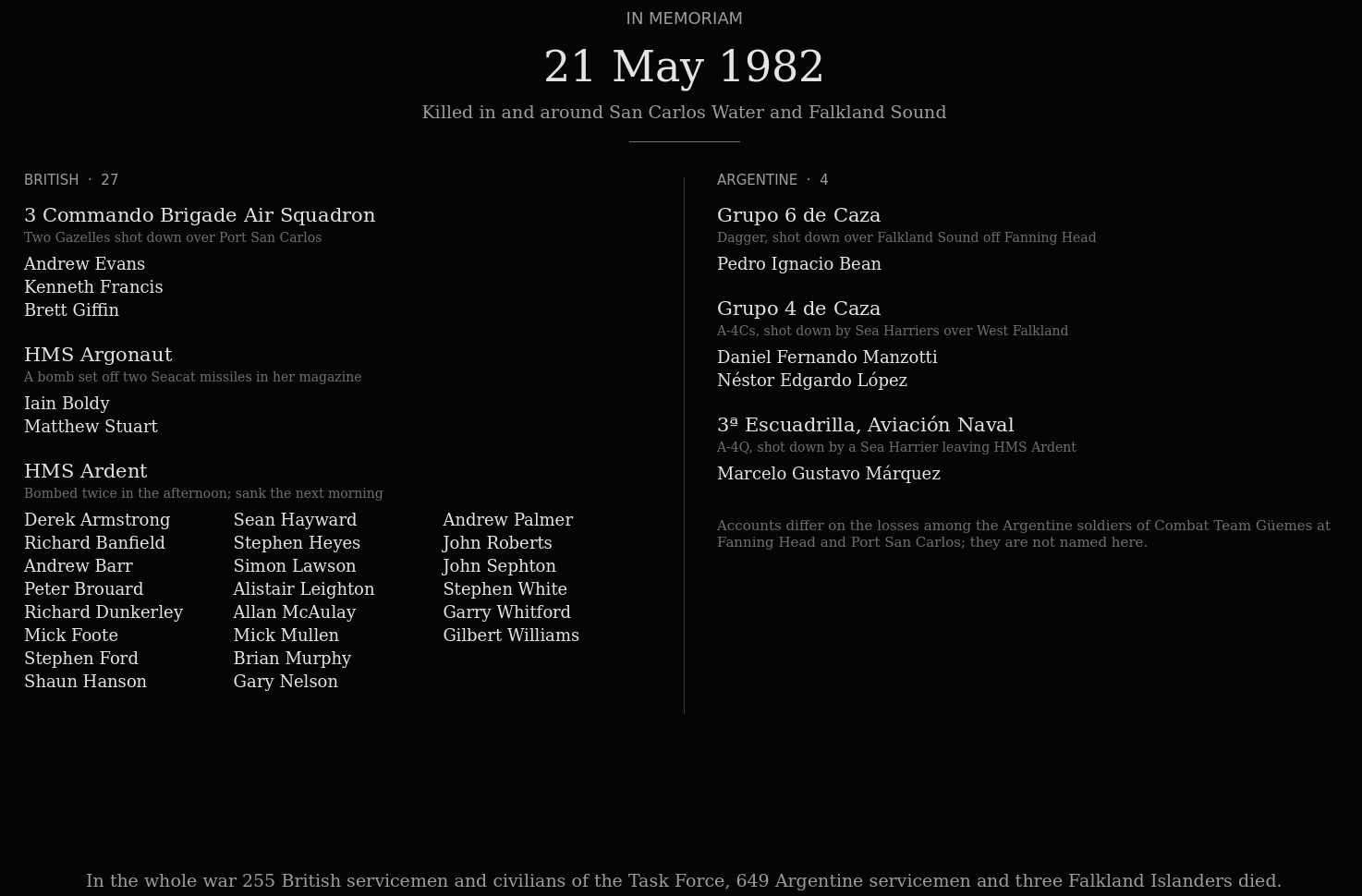
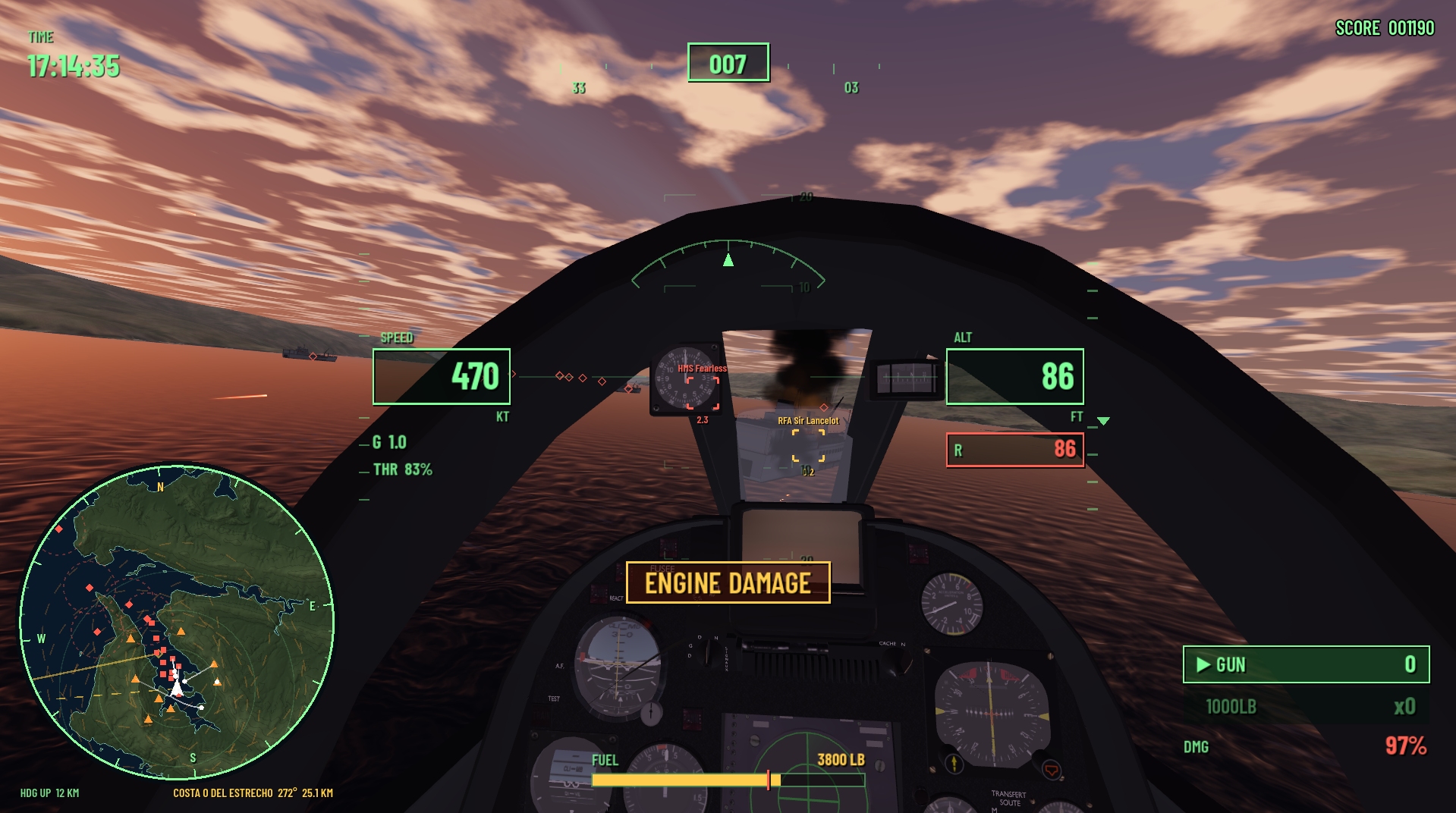
Because sorties, targets, and vessel positions are all drawn from history, and the eye-catching briefing and debriefing screens are littered with facts, maps, and period photos, Bomb Alley ends up as educational and effecting as it is exhilarating. More battle sims should include memoriam pages like this one.
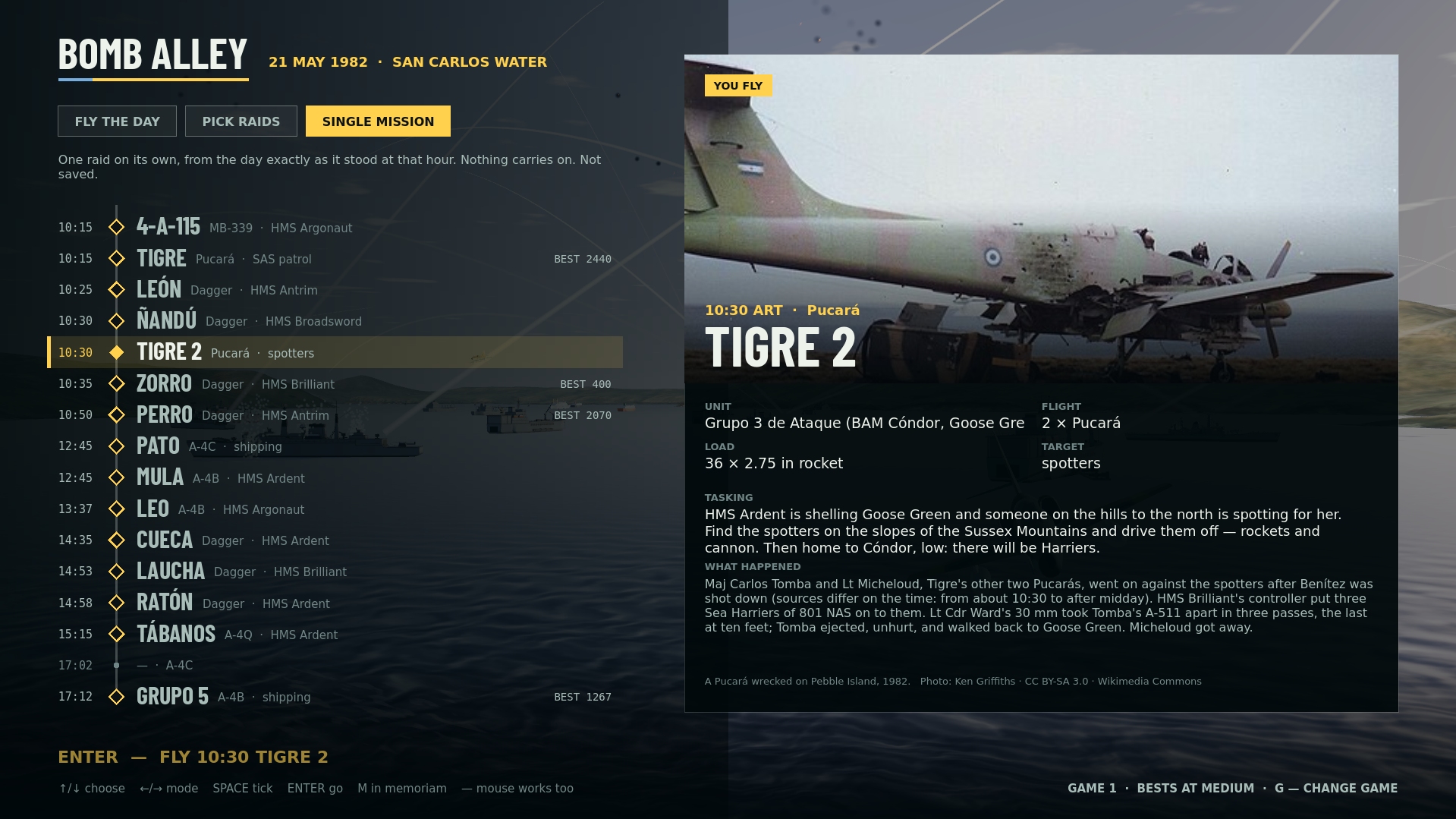
The game’s fifteen missions are all relatively brief (they all start and end over the Islands) and involve four FAA types – six if you count Skyhawk variants.
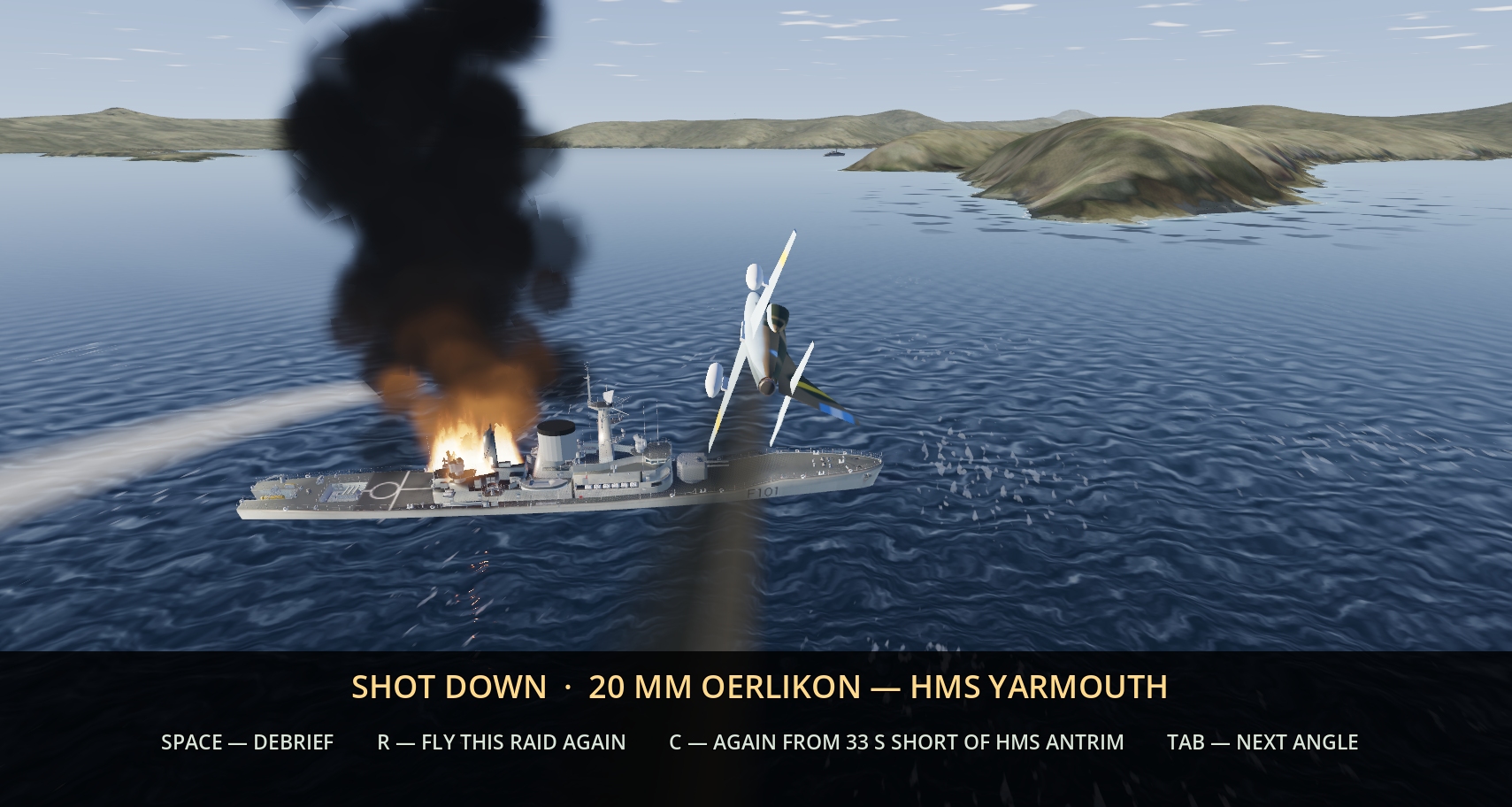
Opt to fly them in chronological order in campaign mode, and mauled targets will carry their wounds from one sortie to the next.
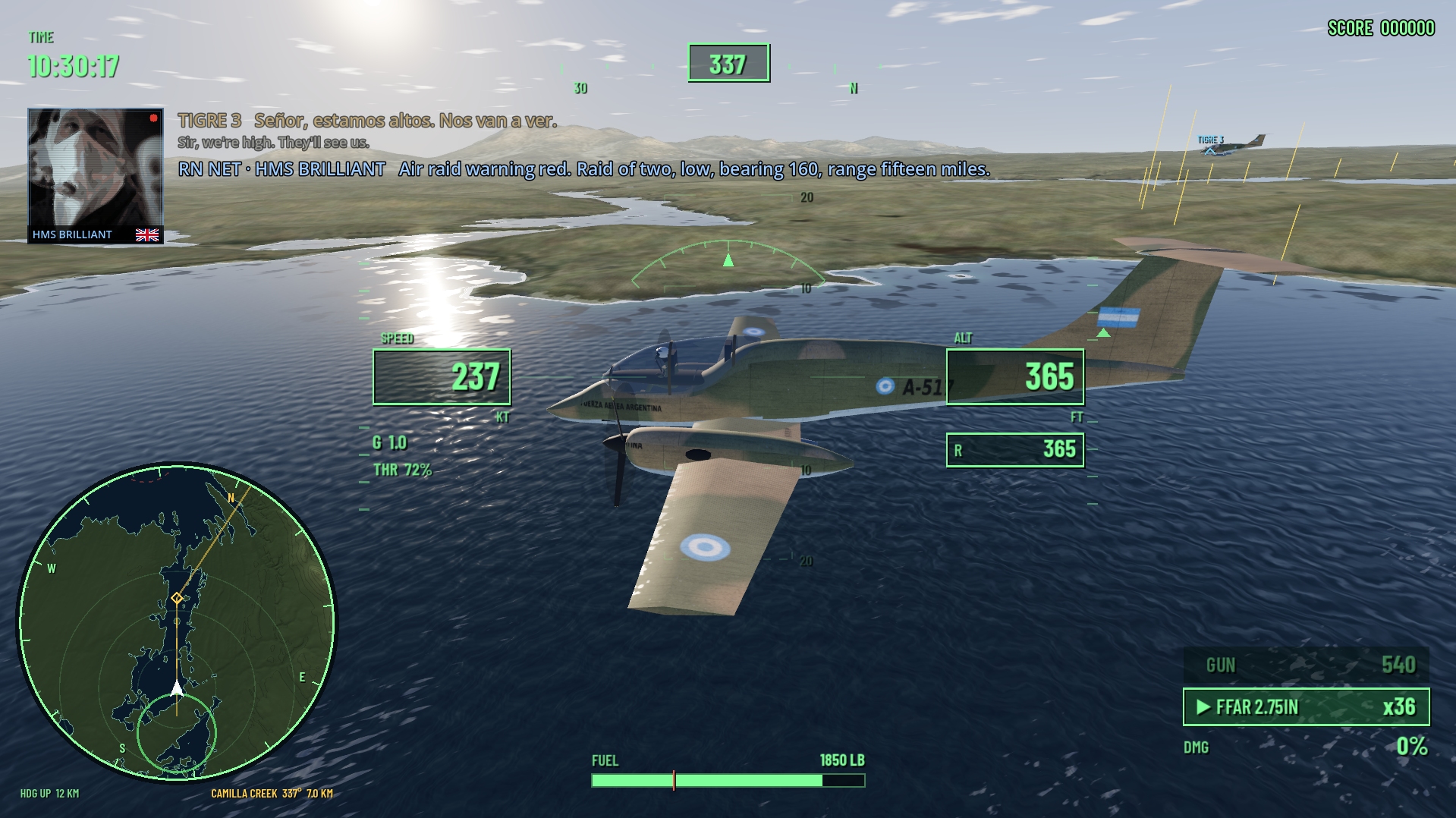
The radio chatter is HMS Brilliant. It’s in key areas such as aircraft graphics, cockpit functionality, and flight models where Bomb Alley has the most room to improve.
Reserved Intent
As I’ve no issue with Reserved Intent’s prompted code I guess I’ve no right to grumble about the game’s suspiciously synthetic itch.io page blurb. The clipped sentences and general lack of quirk all point to a robot scribe. Personally I’d rather read poor English or rambling, typo-strewn text than soulless AI newspeak.
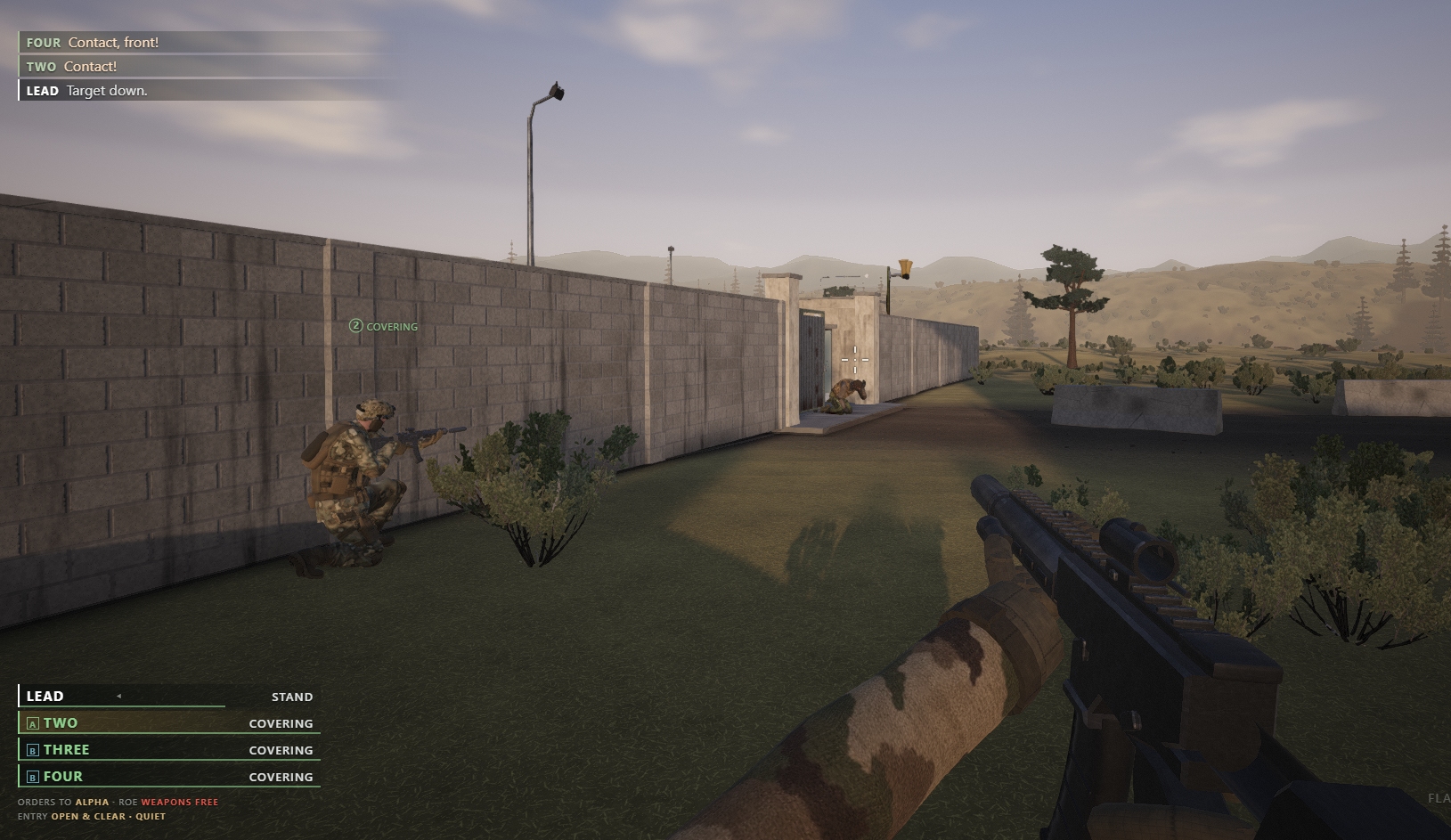
But the dead-eyed description doesn’t alter the fact that this single-level love-letter to Ghost Recon is great fun, and surprisingly polished and sophisticated.
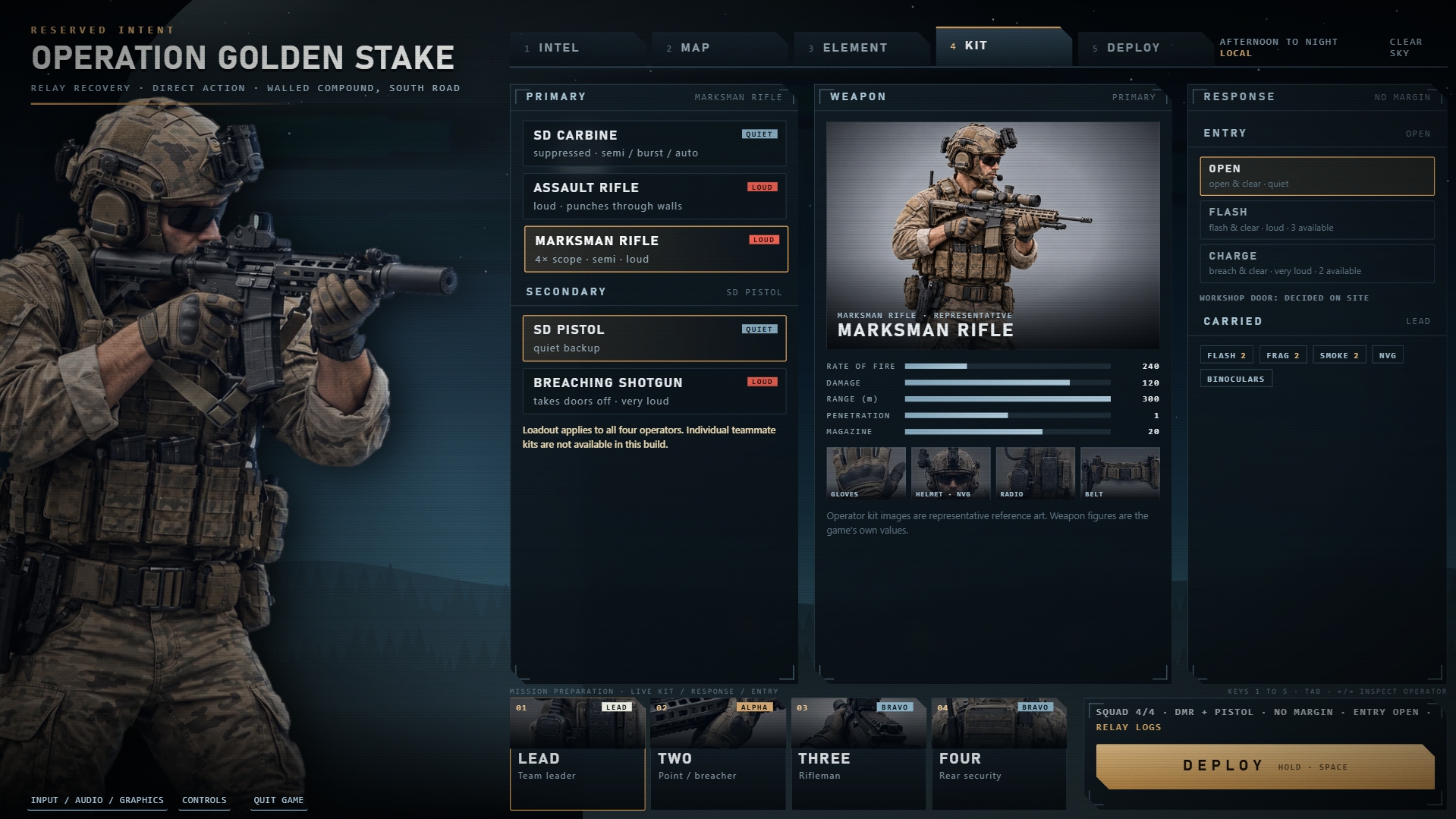
Things start promisingly with a kit selection phase that betrays the game’s interest in stealth and ballistics. Currently, any equipment changes apply to the whole team which obviously isn’t ideal. Future builds should address this shortcoming.
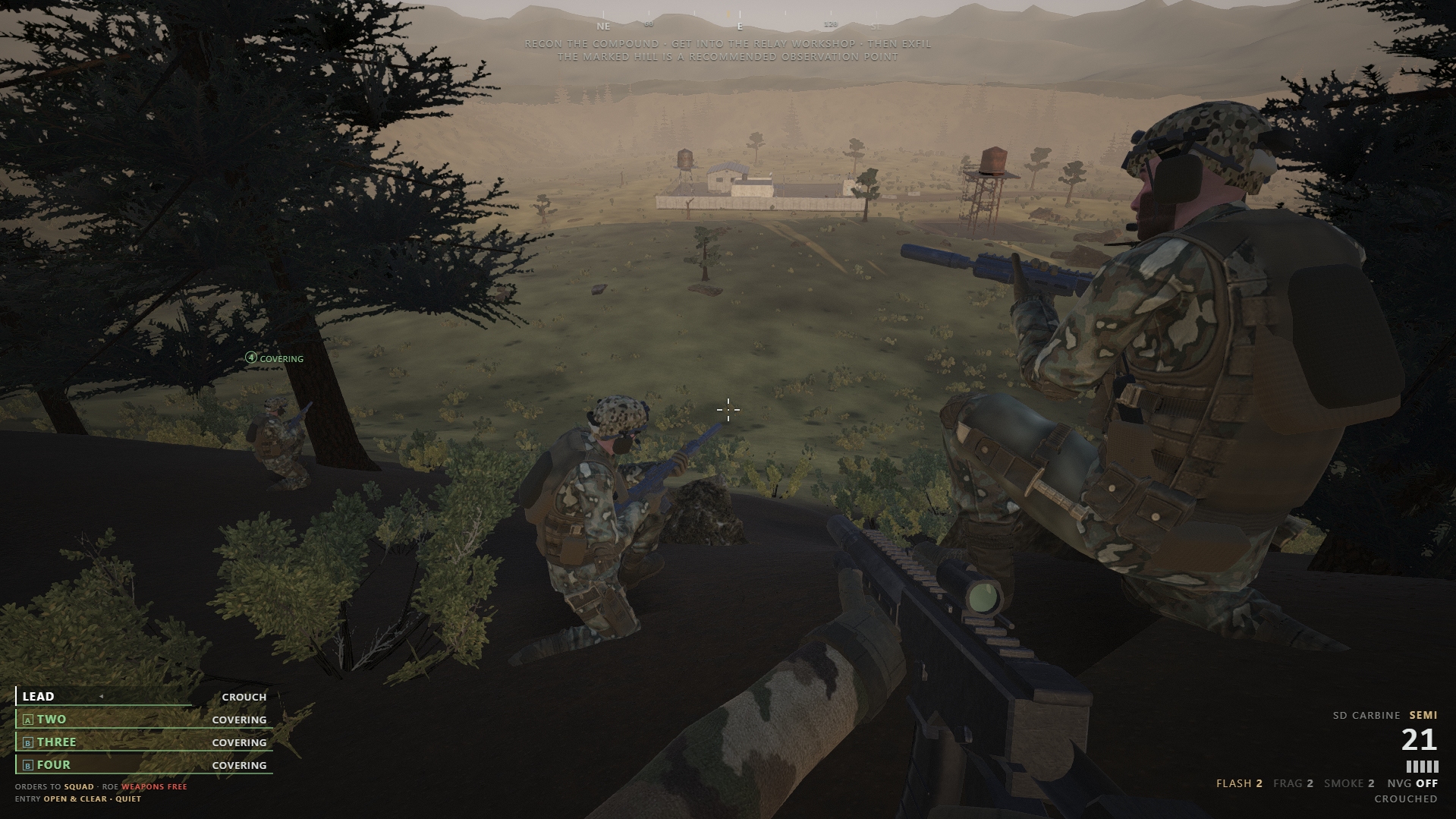
Once deployed it’s worth spending a minute or two experimenting with the elegant order issuing system. Using number keys 1 to 4 and your crosshairs, your three comrades can be sent to any visible location, instructed to hold, follow, and cover particular areas. Want to adjust someone’s position slightly? Dab the O key until you’re viewing the world through their eyes, then WASD your way to the desired spot.
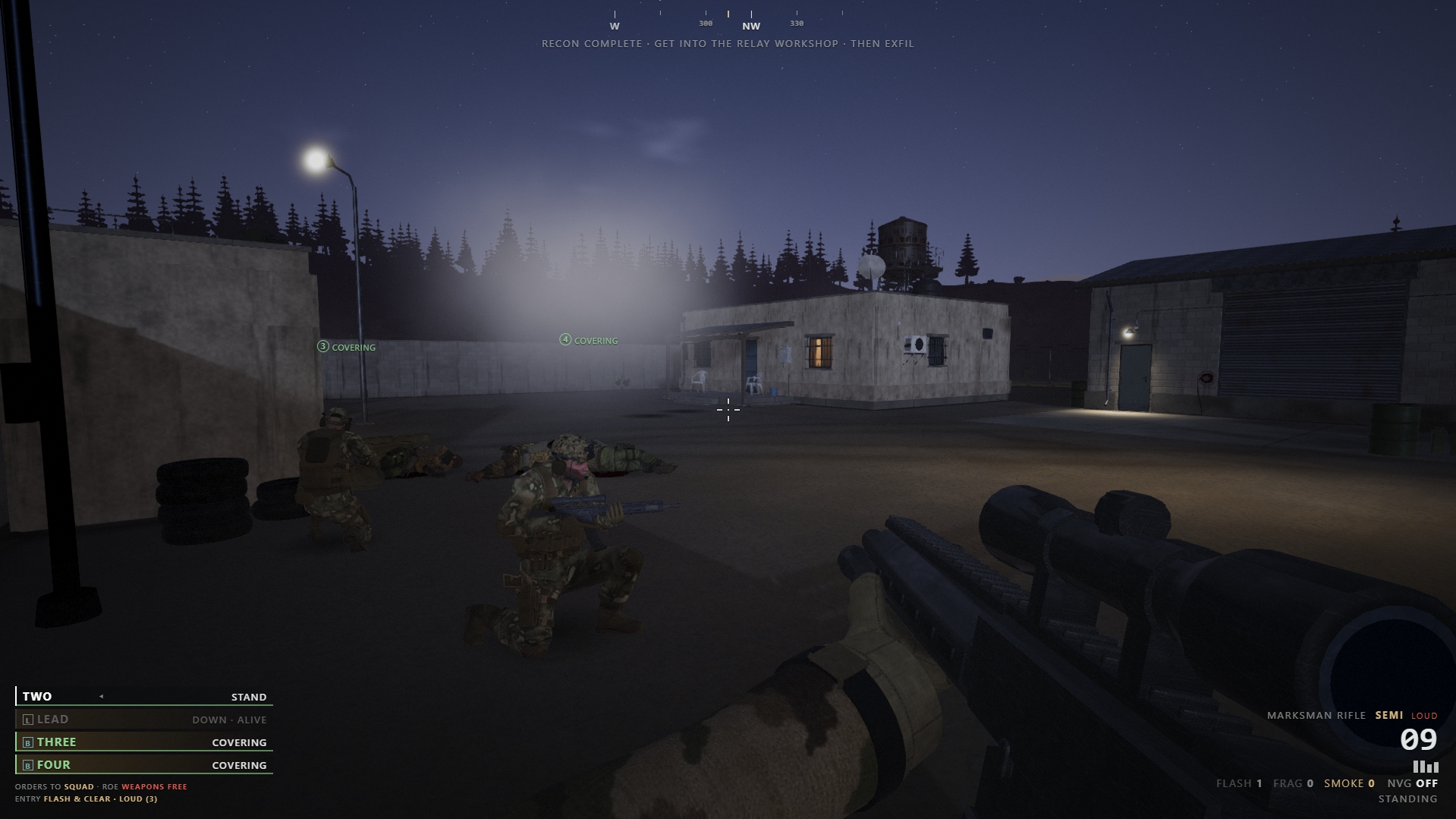
To see RI’s squad AI at its smartest you’ll need to penetrate the enemy’s compact compound. Press F while facing a closed door and your men will stack up sensibly beside it in readiness for a slick synchronised entry.
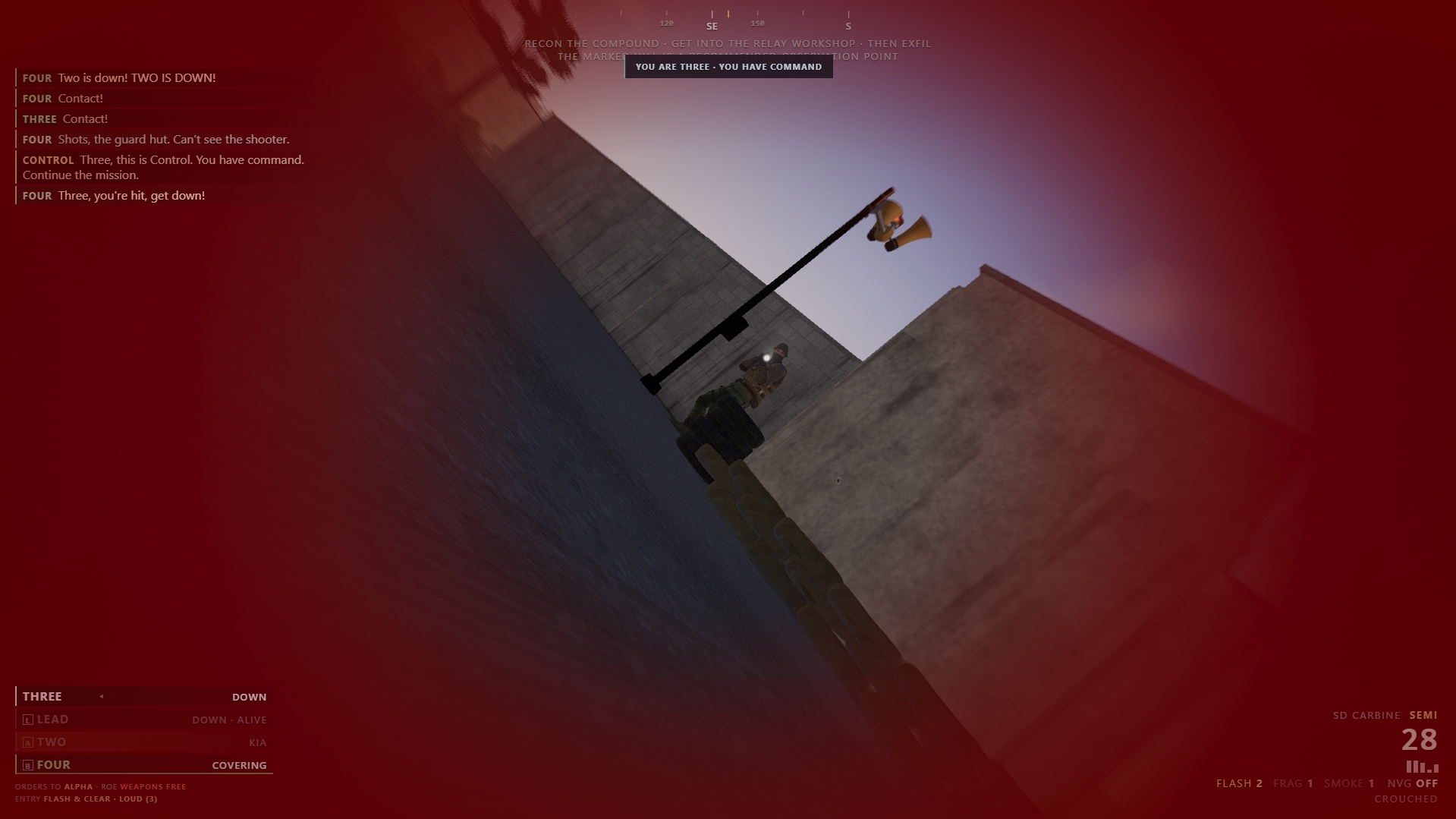
Foes are far from foolish too. While they don’t seem to use grenades, if the excellent audio is to be trusted, their curiosity is piqued if far-flung sentries fail to respond to regular radio checks. Once alerted, they’re also cagey around corners and doorways.
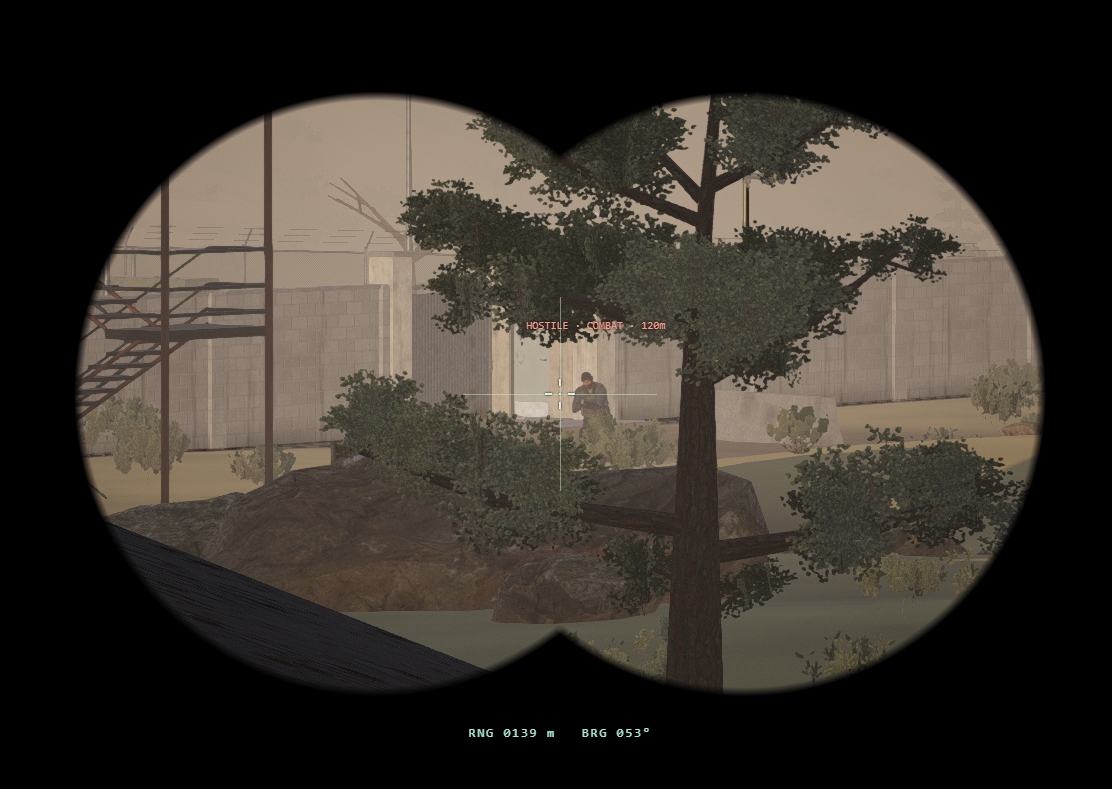
If the dev decides to add more maps, missions, and weapons, and deal with demo imperfections such as dead operatives that occasionally refuse to lay down, Reserved Intent could mature into something pretty special. An engine offering this much realism, tactical freedom, and excitement deserves to be nurtured.
Batteria 75/27
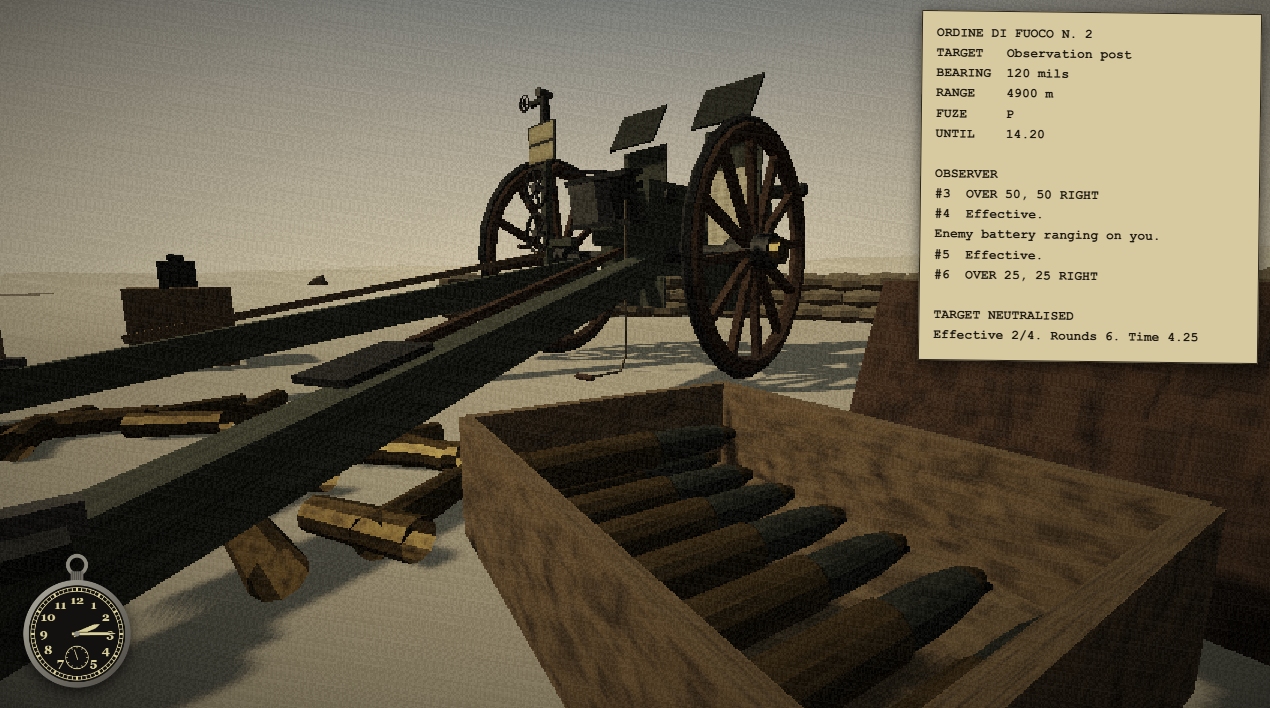
Shell-spitters cocooned in steel and mounted on engined chassis don’t have a problem getting attention from sim devs. It’s the artillery pieces without these mod cons that never seem to get games to themselves. The slightly gawky Batteria 75/27 provides a glimpse of what we’ve been missing all these years.
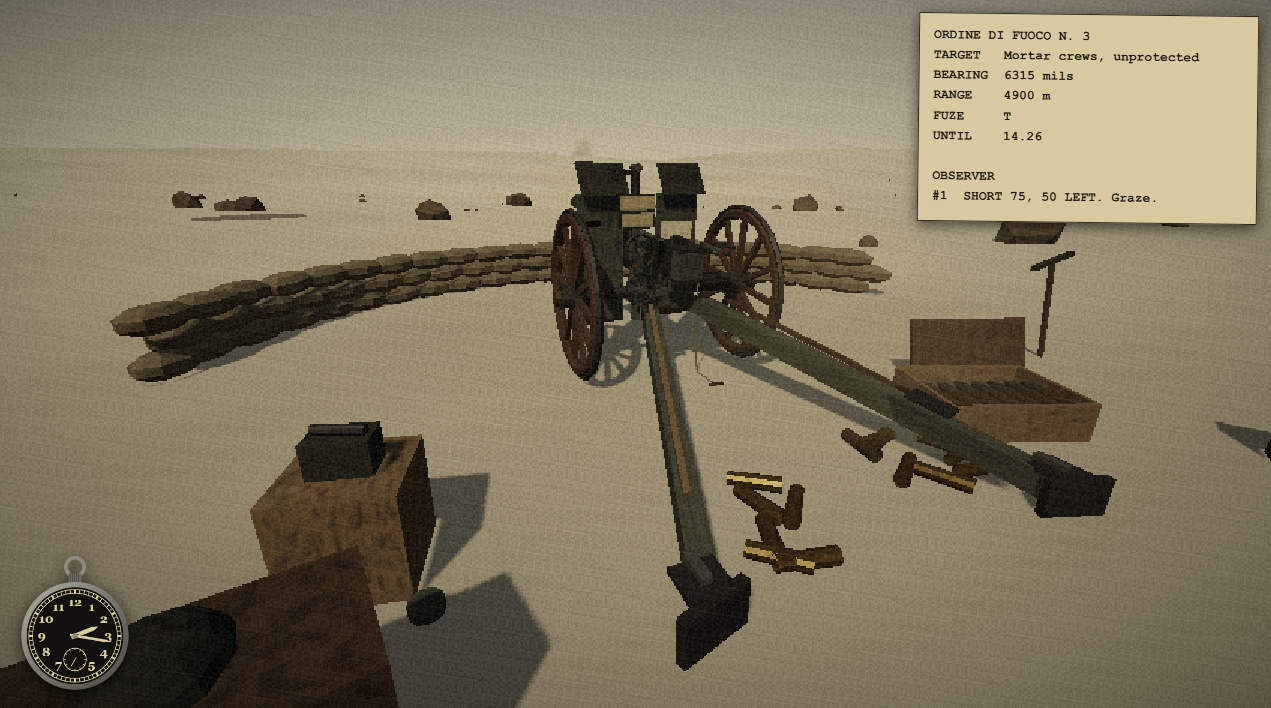
The browser-based prototype is set in North Africa in the early years of WW2. You spawn behind a single mouse-operated recreation of an Italian Cannone da 75/27 modello 11 field gun. Nearby a field telephone rings insistently. The caller is keen to share the position of a randomly generated, out-of-LoS target. It’s up to you to neutralise that target with indirect fire before enemy batteries get their eye in. Fail and it’s gioco finito, succeed and the blower will jangle again.
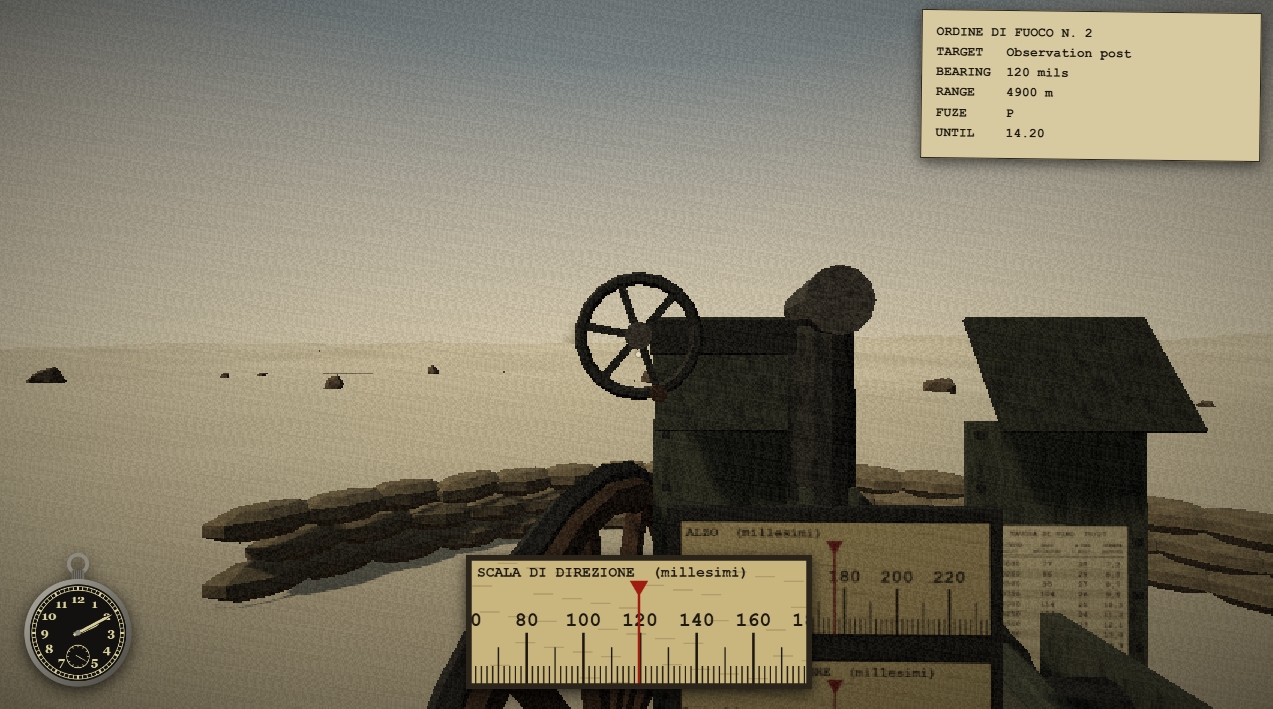
While the initial range and bearing information determines how the gun is laid for the first shot, it probably won’t result in a hit. You’ll need to fire further shells, adjusting your aim with the help of an observer’s instructions, in order to trigger a pulse-quickening ‘FIRE FOR EFFECT!’ command.
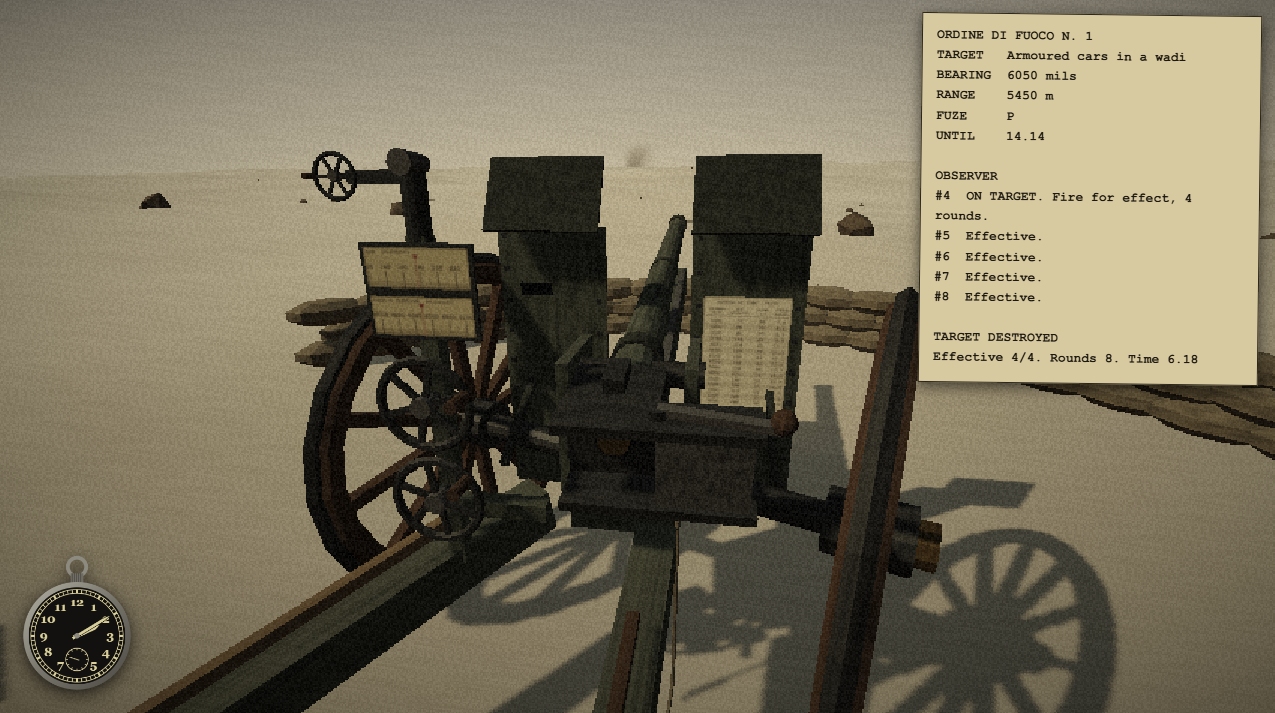
Slightly fiddly hotspots and fussy mouse movement detection makes activities like opening and closing the breech, setting shell fuses, and fine-tuning aiming more difficult than they should be. However, put these irritations to one side and Batteria 75/27 argues the case for artillery sims pretty persuasively. It certainly proves that virtual destruction doesn’t have to be visible to be satisfying.
Homni
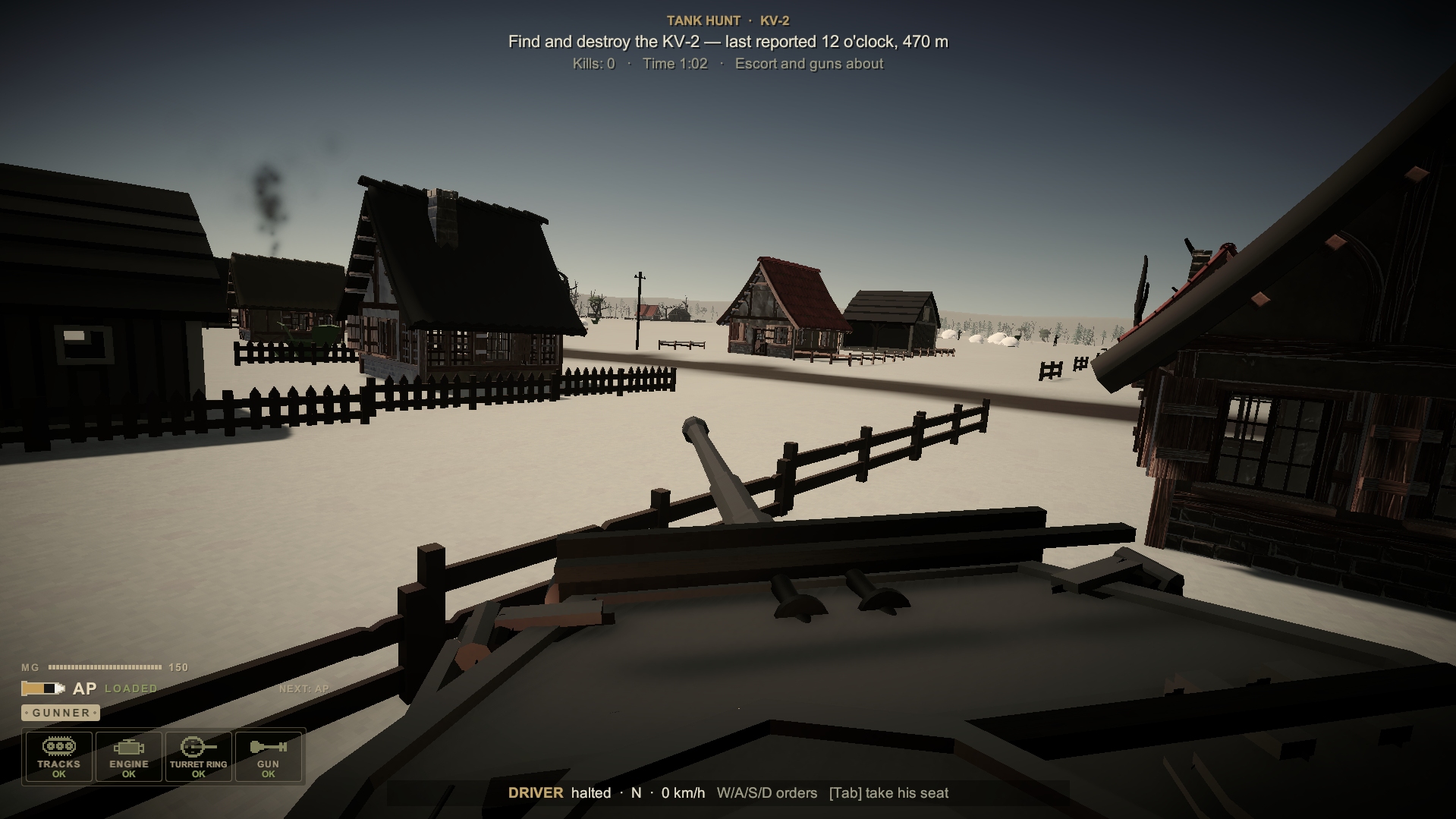
Designed for two-player co-op but perfectly playable solo, this Eastern Front Tiger tank prototype is likely to give traditional sim-smiths pause for thought.
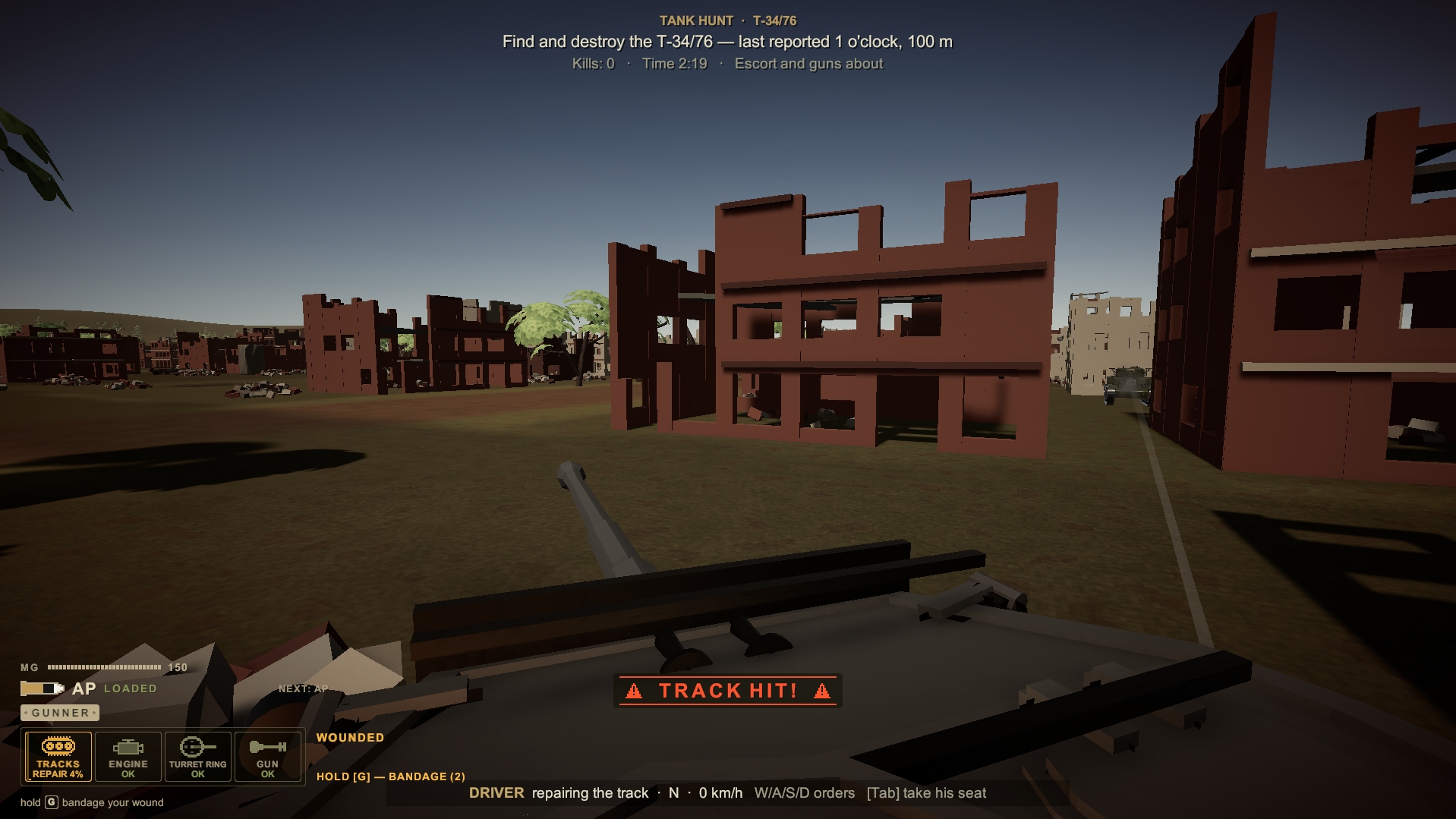
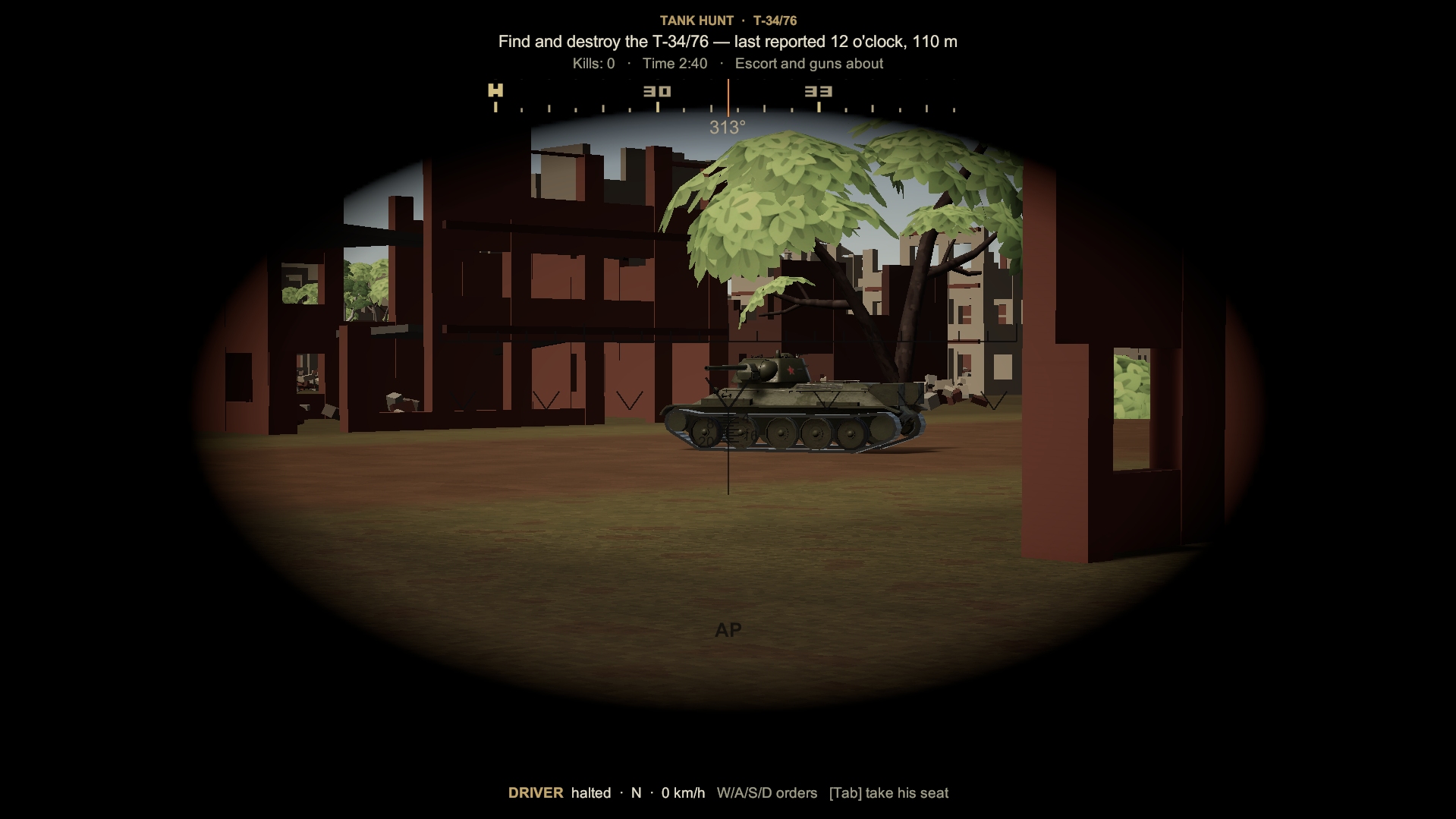
The visuals might be basic, the maps small, and the procedural audio grating, but Homni is proof data centre SHODANs are already capable of producing the vitals of a decent armour sim.
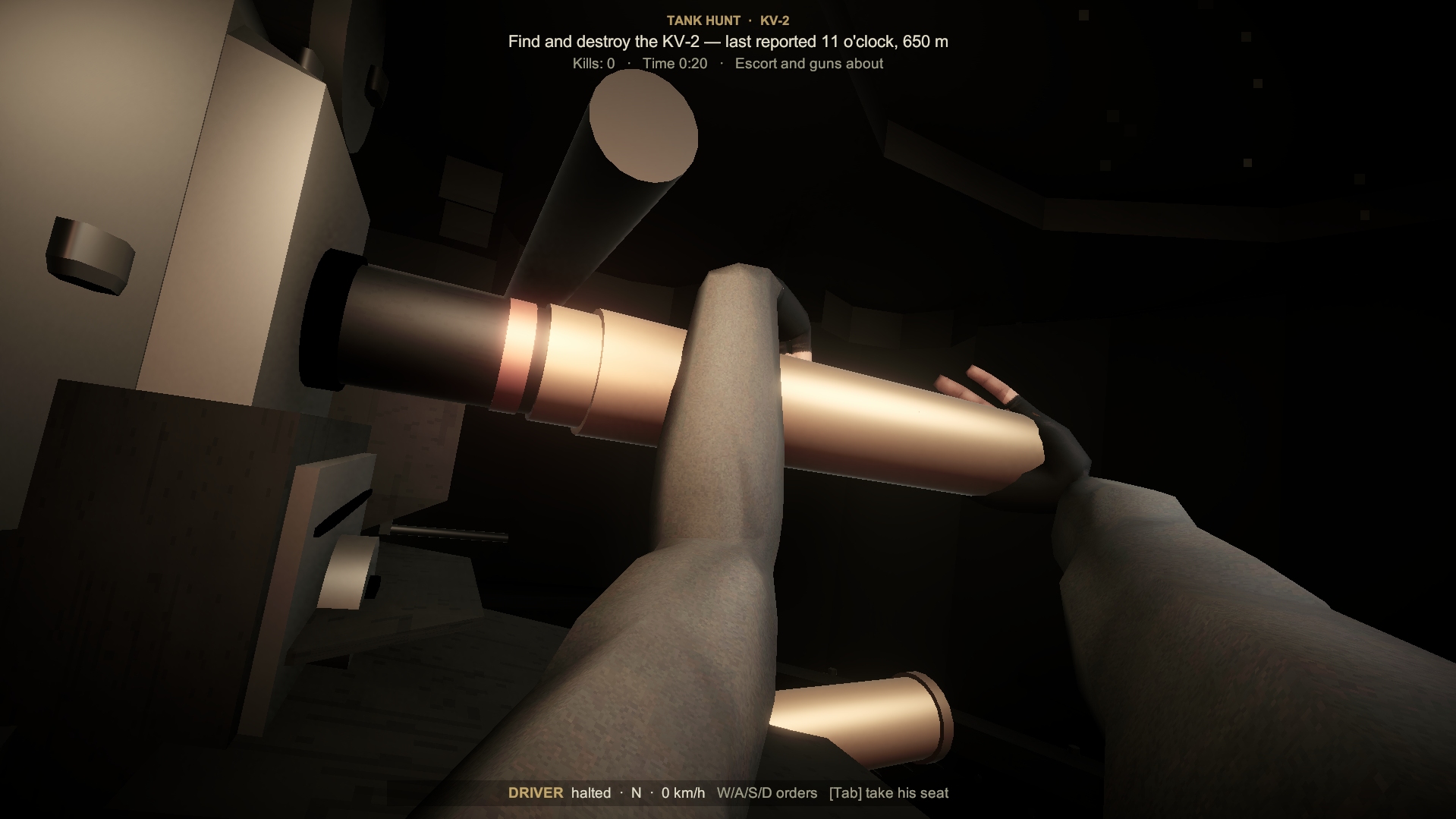
Pleasing subtleties include interior views and animations, modular damage, plausible slope-influenced movement physics, and an AI driver who revs the engine helpfully when power is required for turret traversal (hand-cranking is also modelled). Less welcome are inconveniences like absent field glasses and turret traversal keys.
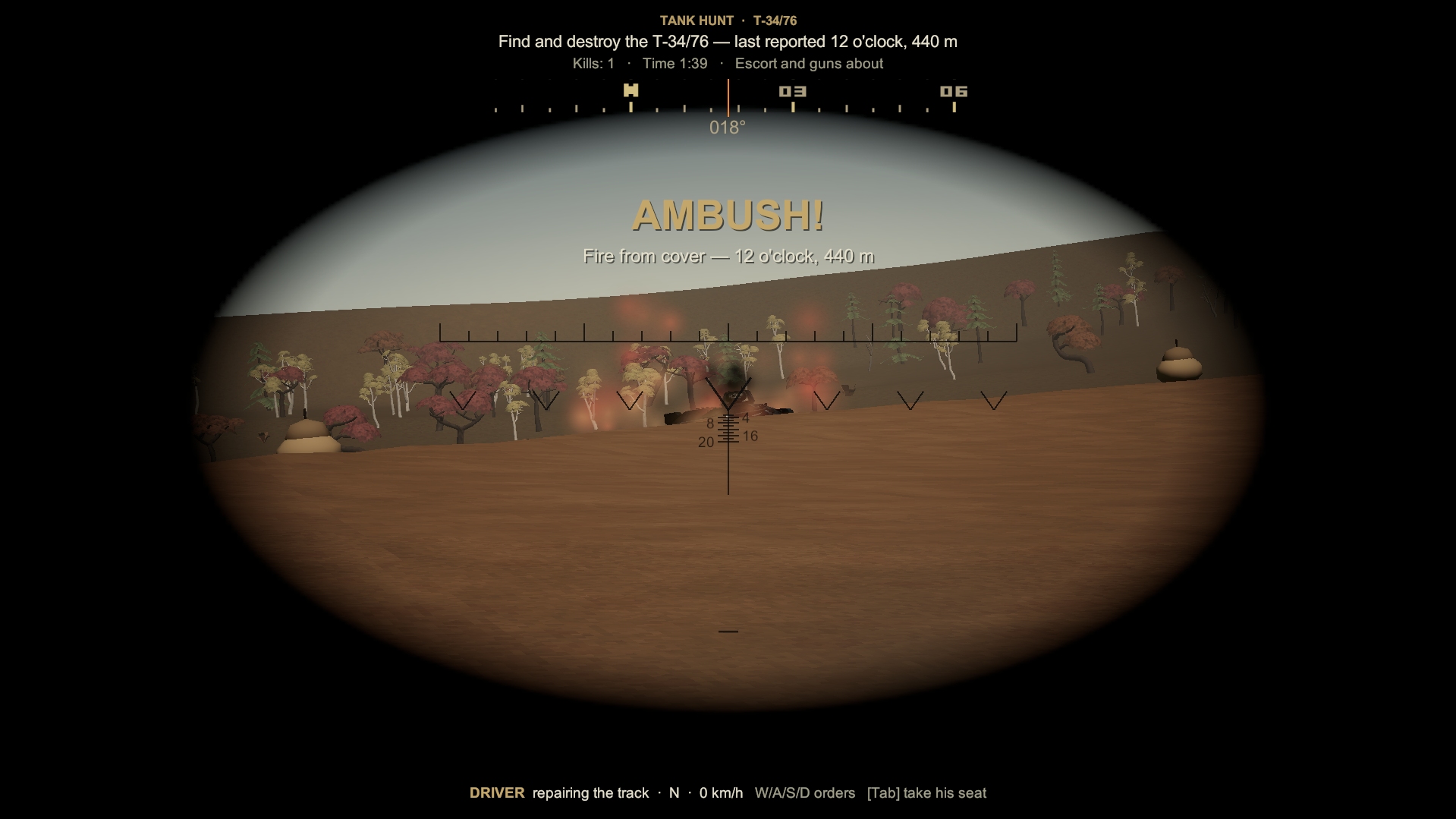
Serviceable ballistics and AI ensure tussles with T-34/85s and KV-2s, are, as they should be, sweatier than duels with T-28s and T-34/76s. Play at the highest difficulty setting – ace – and you’ll face better enemy gunners and more challenging driving. Tackle a steep slope in high gear and your V12 Maybach may cough into silence in protest.
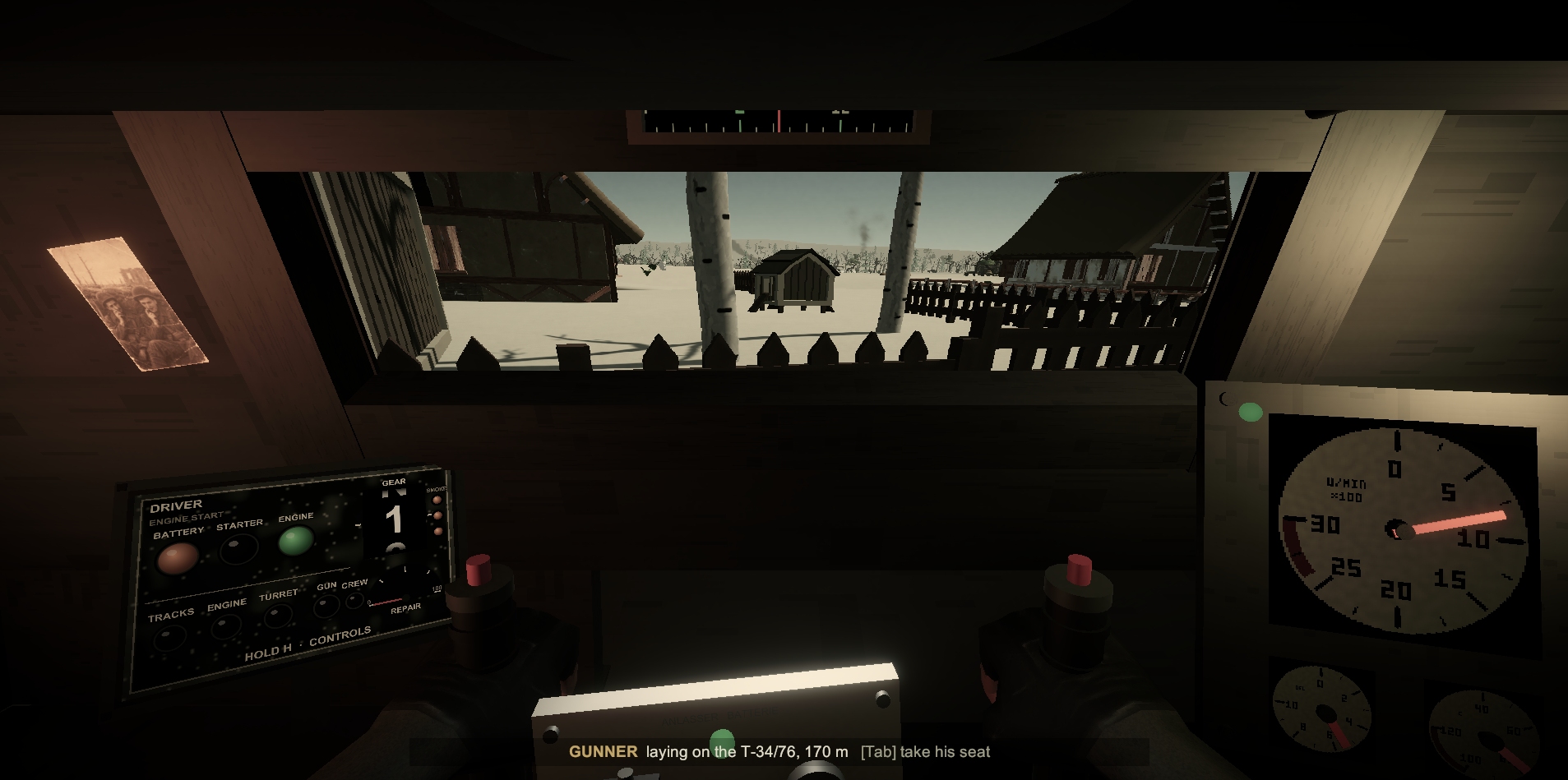
In order to tempt a Tiger lover away from greats like Steel Fury and Panzer Elite SE for any length of time, Homni would need to be sagely and extensively updated. It may not be this AI-aided armour sim that manages to shrink the quality gap between artisanal and agentic offerings to a negligible size, but before long one of Homni’s divisive tribe surely will.
My thought process is behind the times.
If we were twenty years ago, I’d have said there’s money to be made in offering Environmental, social and governance (ESG) audit / accreditation services: certifying how many tokens were used in a games’ production; was it run on a local AI; are the walls of the dev’s workroom lined with compacted sheep’s wool and his/her PC powered by methane from sheep’s droppings?
Presently, on the one hand, AI use can render a game ineligible for award. On the other, the human(?) CEOs of games publishers seem to have no use for Homo sapiens’ accolades: they’ve down-sized so savagely I don’t think they’ll have any employees to collect awards won for games released in 2027.