“Train Sim World, Train Simulator Classic, Diesel Railcar Simulator, Derail Valley, Railroader, SimRail… when it comes to rail sims, my polystyrene Travellers Fare cup already runneth over. Do I really need another one of the blessed things?”. This heretical thought crossed my mind as I waited for the surprisingly compact (2.53 GB) and fairly affordable (£18) Running Train to download. A week on I have my answer: ‘Yes. Indeed I do.’
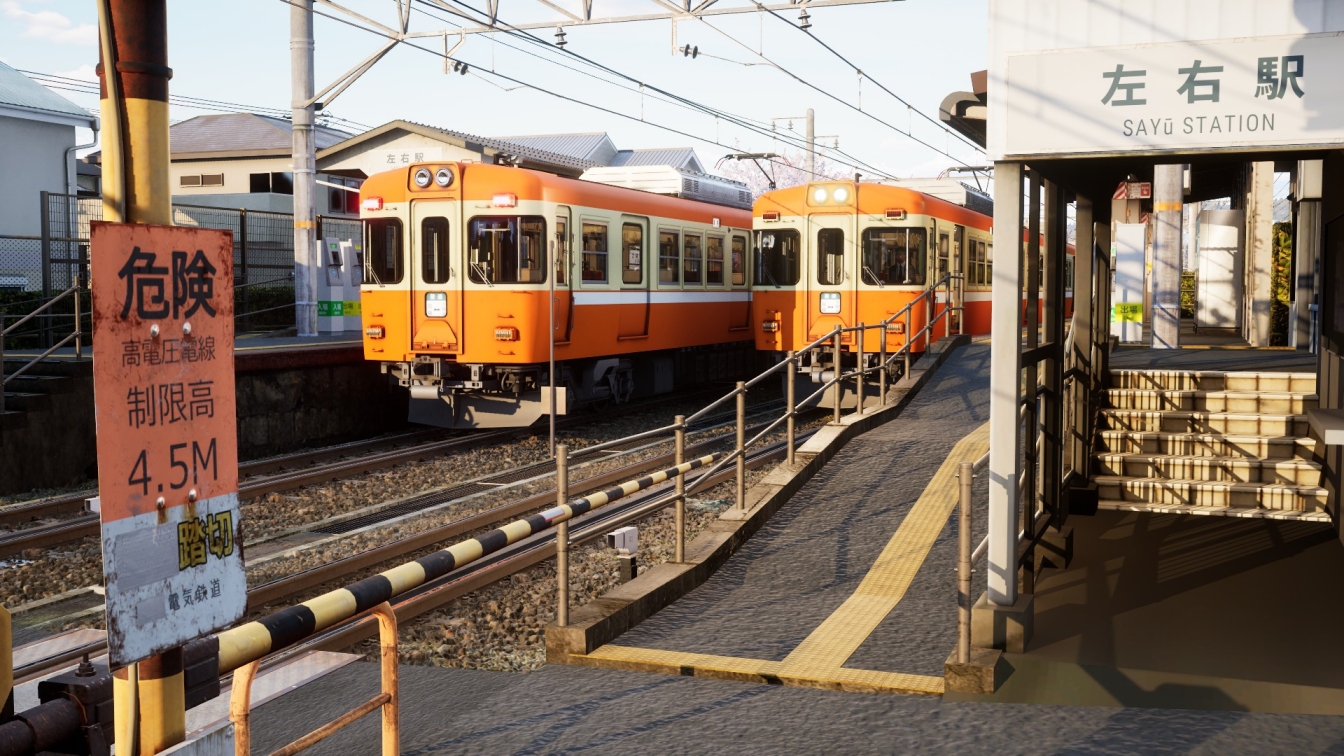
Early Access Running Train confirms something Diesel Railcar Simulator posited: rail sims don’t need passengers and prototypical routes to shine. For the past week, although I’ve been conveying invisible travellers along fictional lines in fictional trains, I’ve felt as close to real railways as I’ve ever felt while gaming.
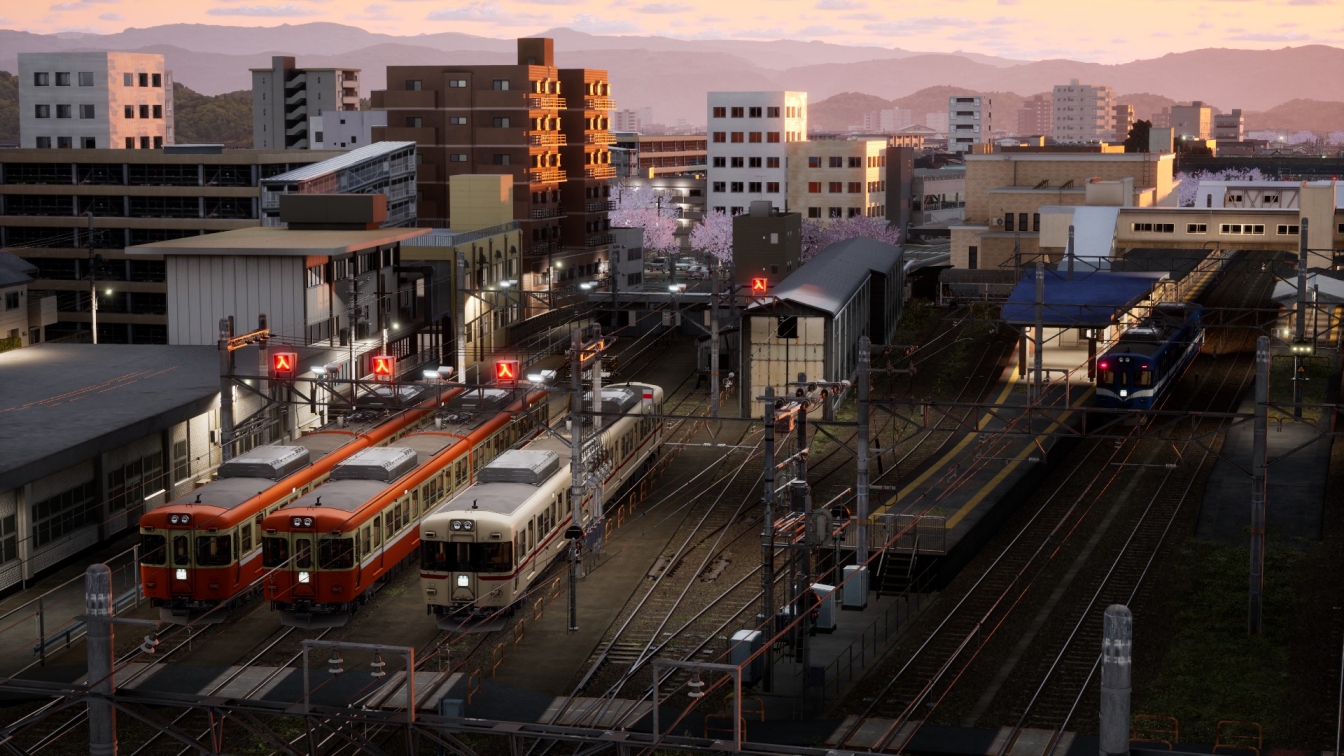
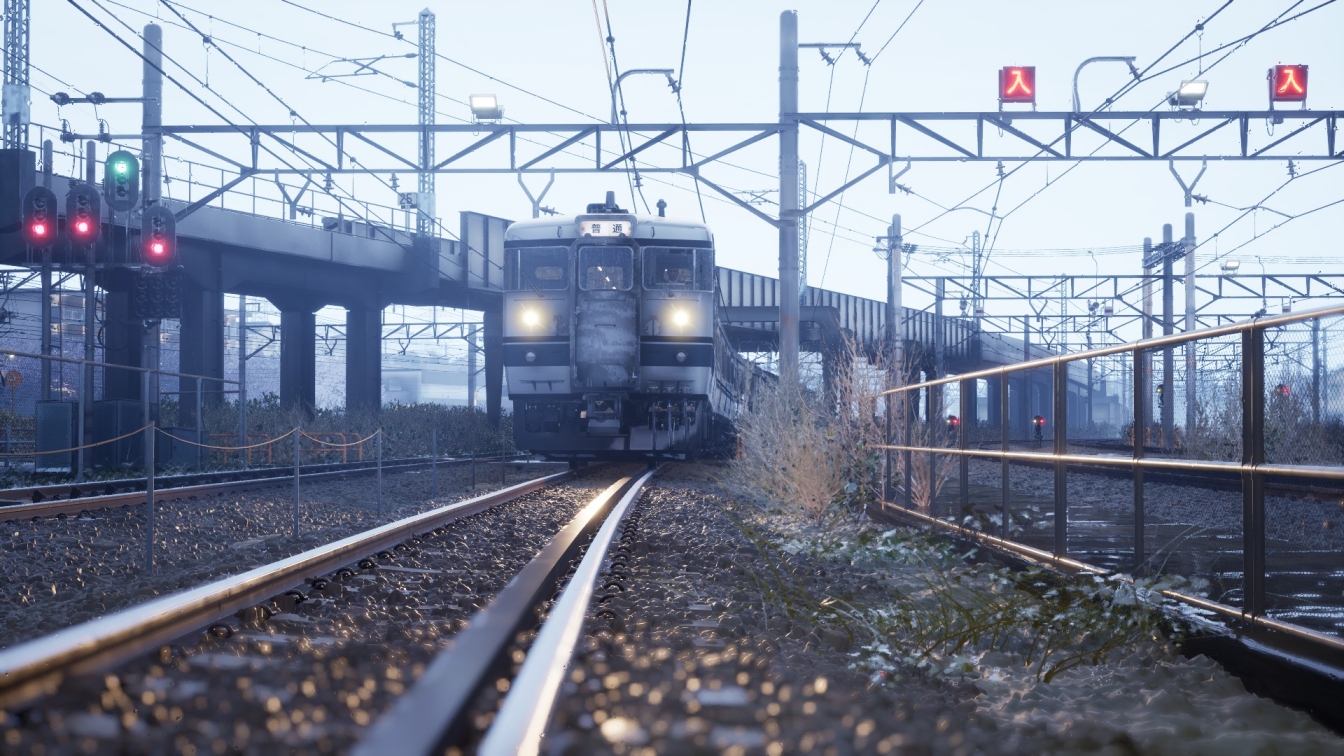
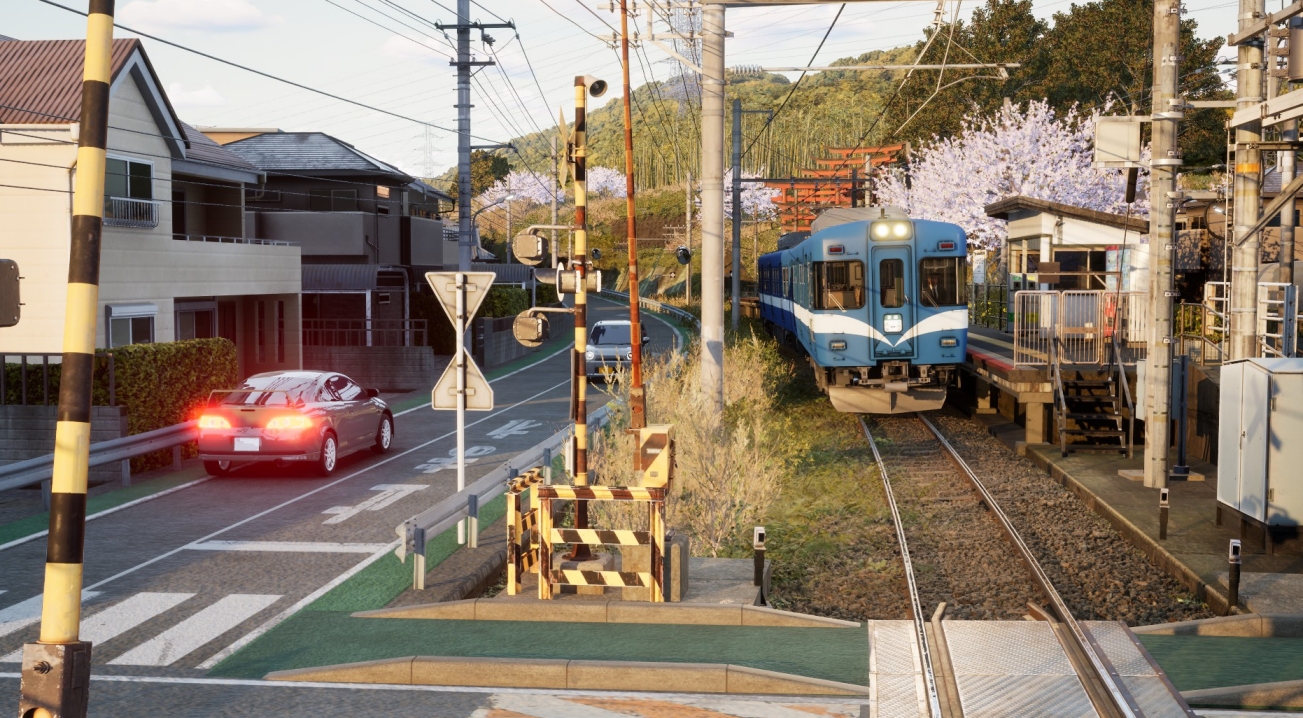
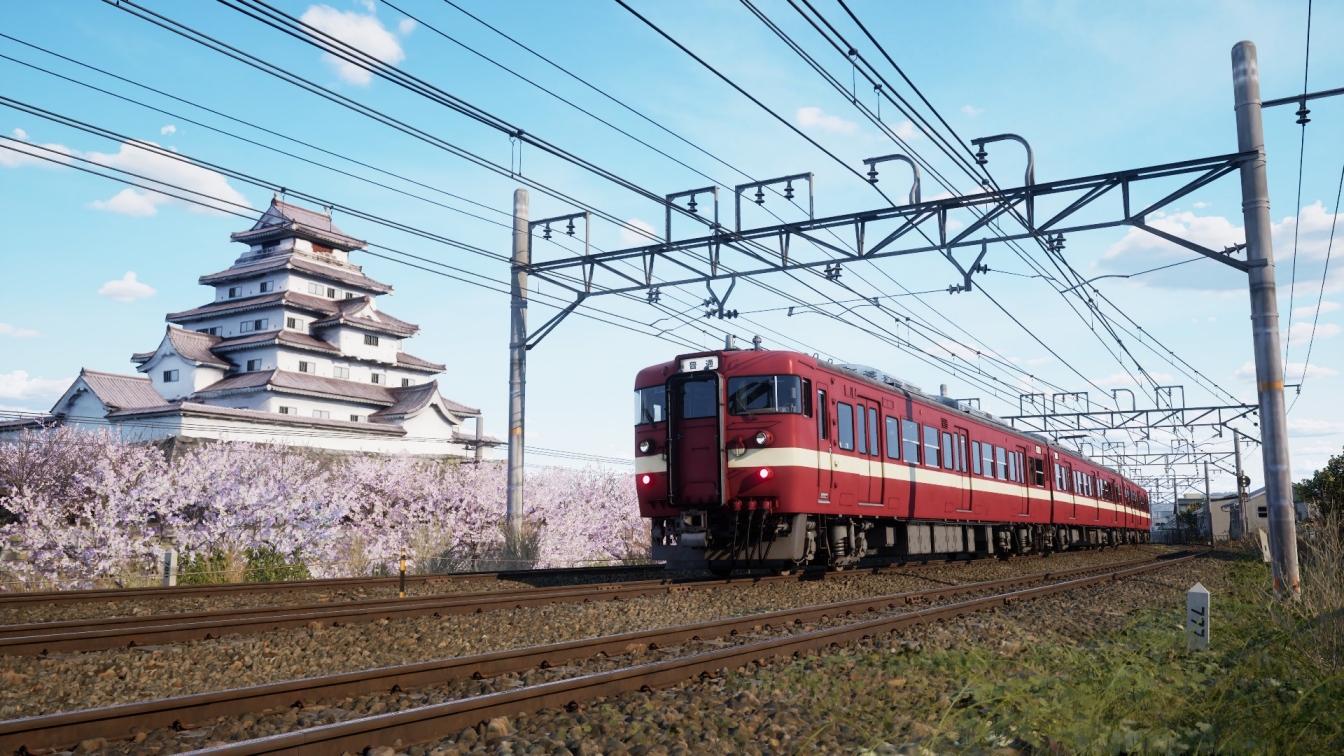
Running Train’s secret is tripartite. For starters the visuals are astonishingly lovely even when notched down a little to accommodate a decade-old video card (I’m running the game on a GTX 980 Ti. To see best-case screenshots check out the images on the Steam page).
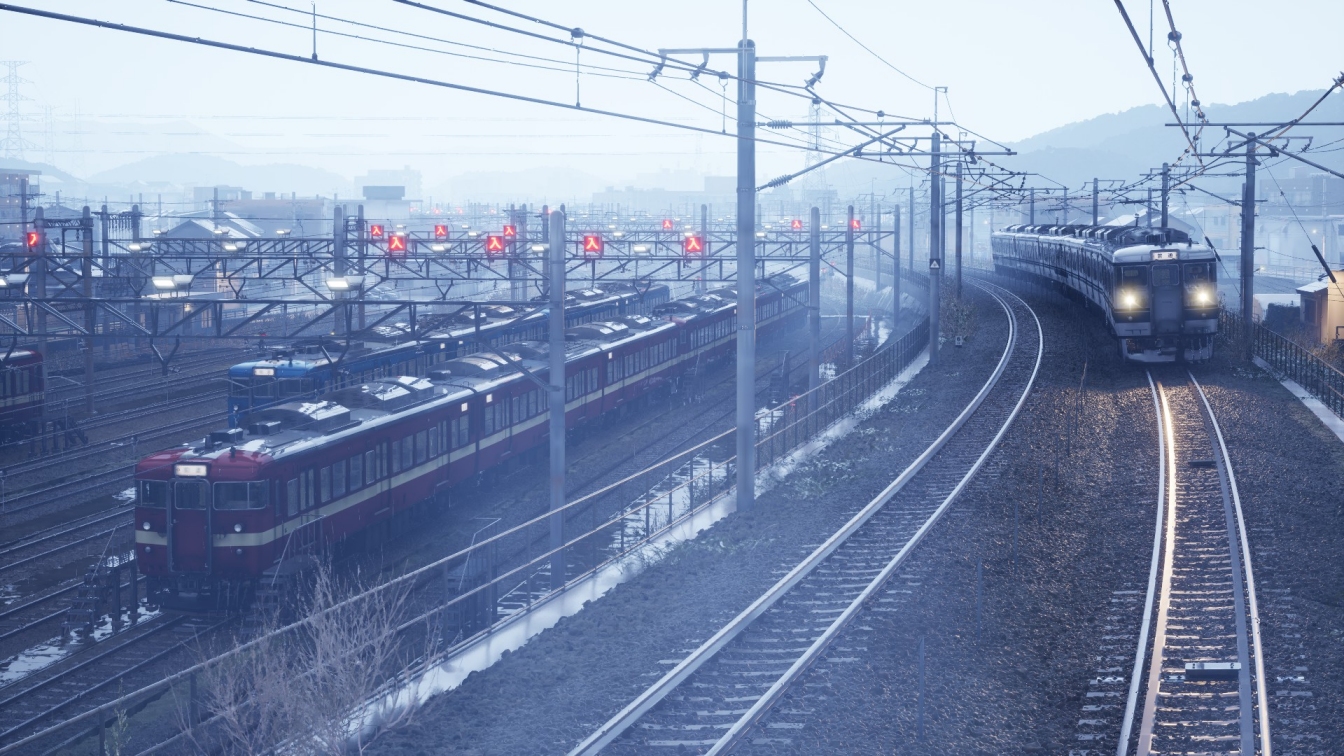
Somehow one-man-band Novatetsu Games has managed to line the two launch routes with lashings of dense, attractive, varied scenery without enfeebling framerates, cluttering HDs, or causing lengthy load times. How much credit for the game’s faintly miraculous performance should go to Rizu Nova and how much to Unreal Engine? Your guess is as good as mine.
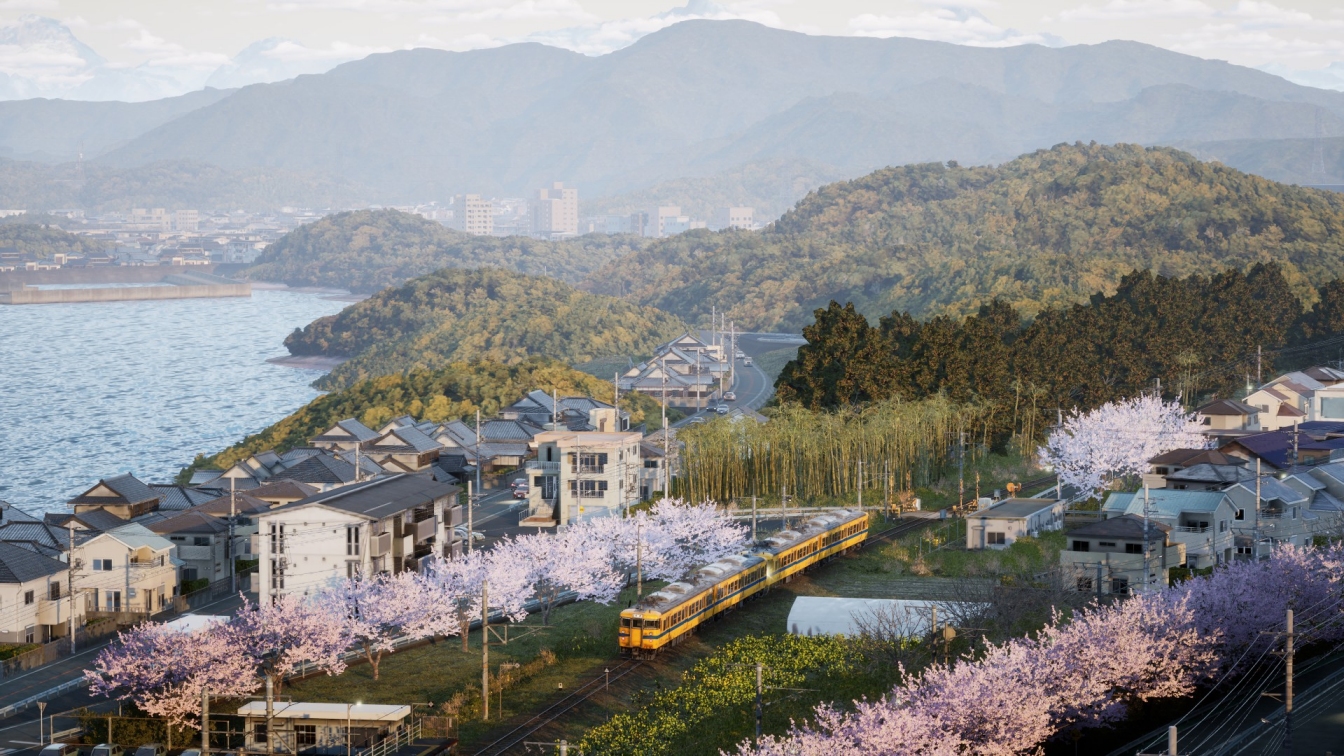
Other iron horse sims can make you feel like you’re beetling down an artfully decorated corridor. In this one, the illusion persists however high you lift the camera.
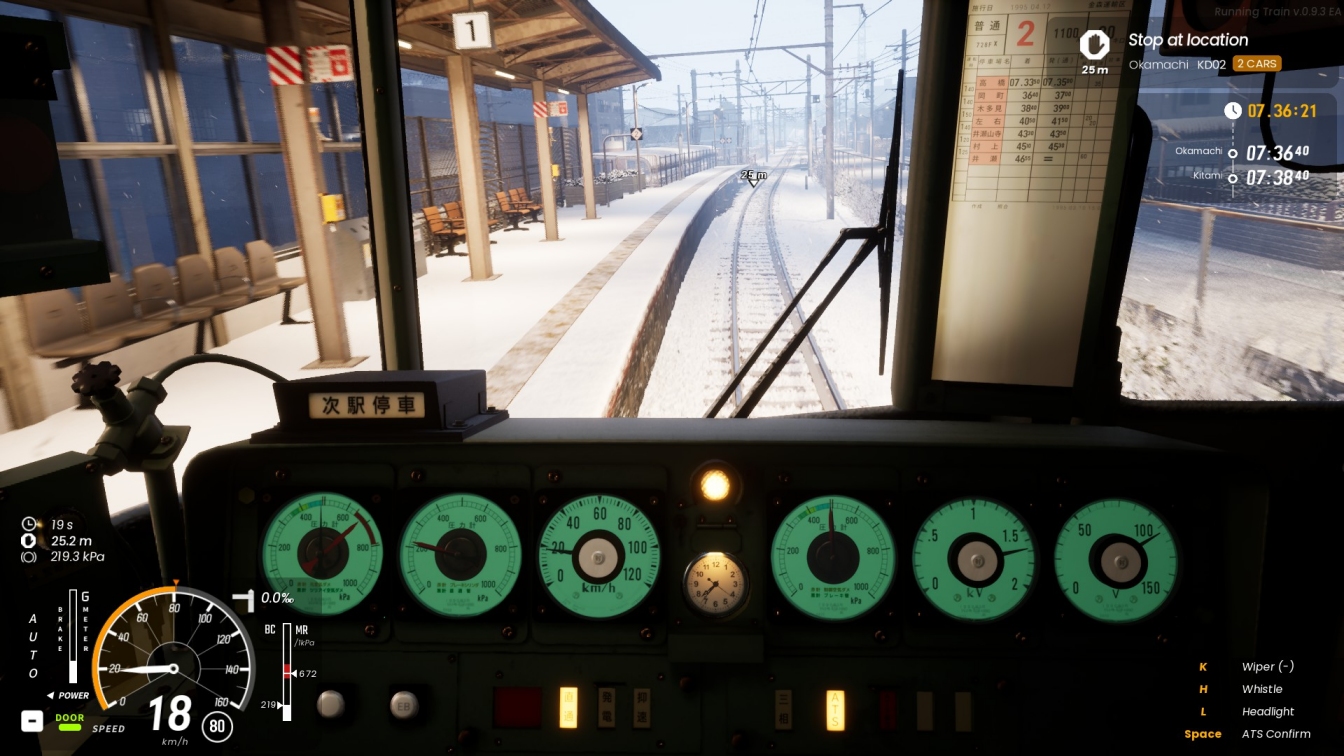
Also, in every other rail sim in my collection, a 45 minute journey along a 34 kilometre line would inevitably include a few dull sections – spells where bland views or repetitive track configuration prompted the odd stifled yawn. Driving the Sankai main line – by far the longest of RT’s two routes – I’ve noticed no such slumps. A striking vista, a change in gradient, a novel bit of trackwork or track furniture… there’s always something beyond the windscreen ready to stimulate or evoke.
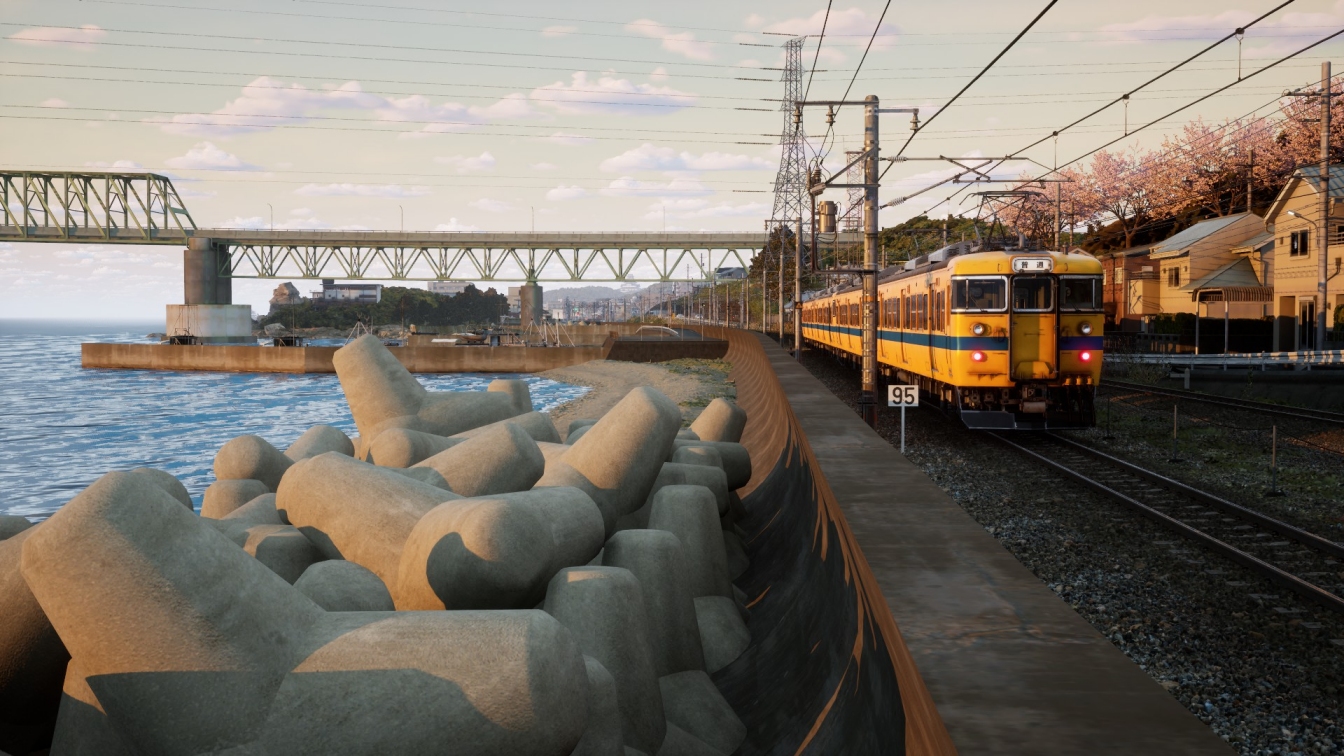
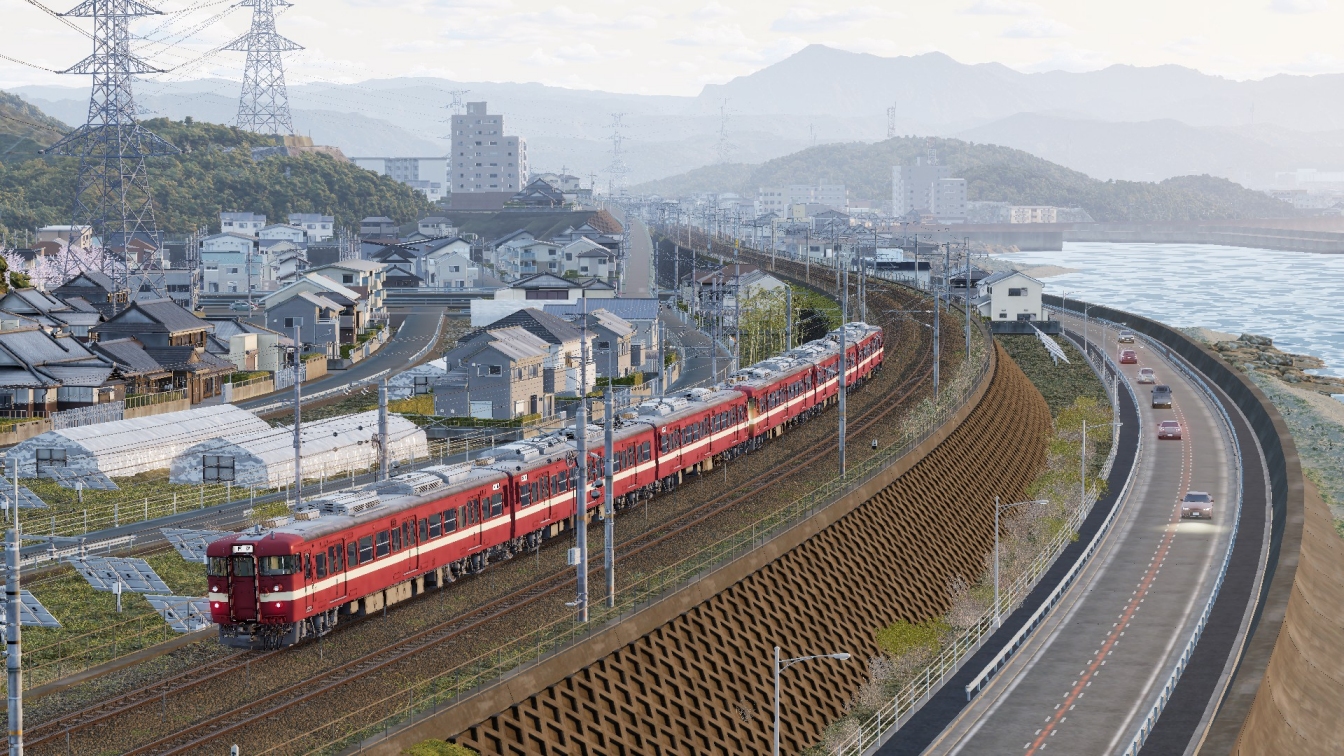
Picking a favourite portion of the high-speed main line, or indeed the intense seven-stop, six kilometre Fukugawa branch, is hard, but the coastal view that greets you when you burst out of the tunnel close to Omishima still takes my breath away.
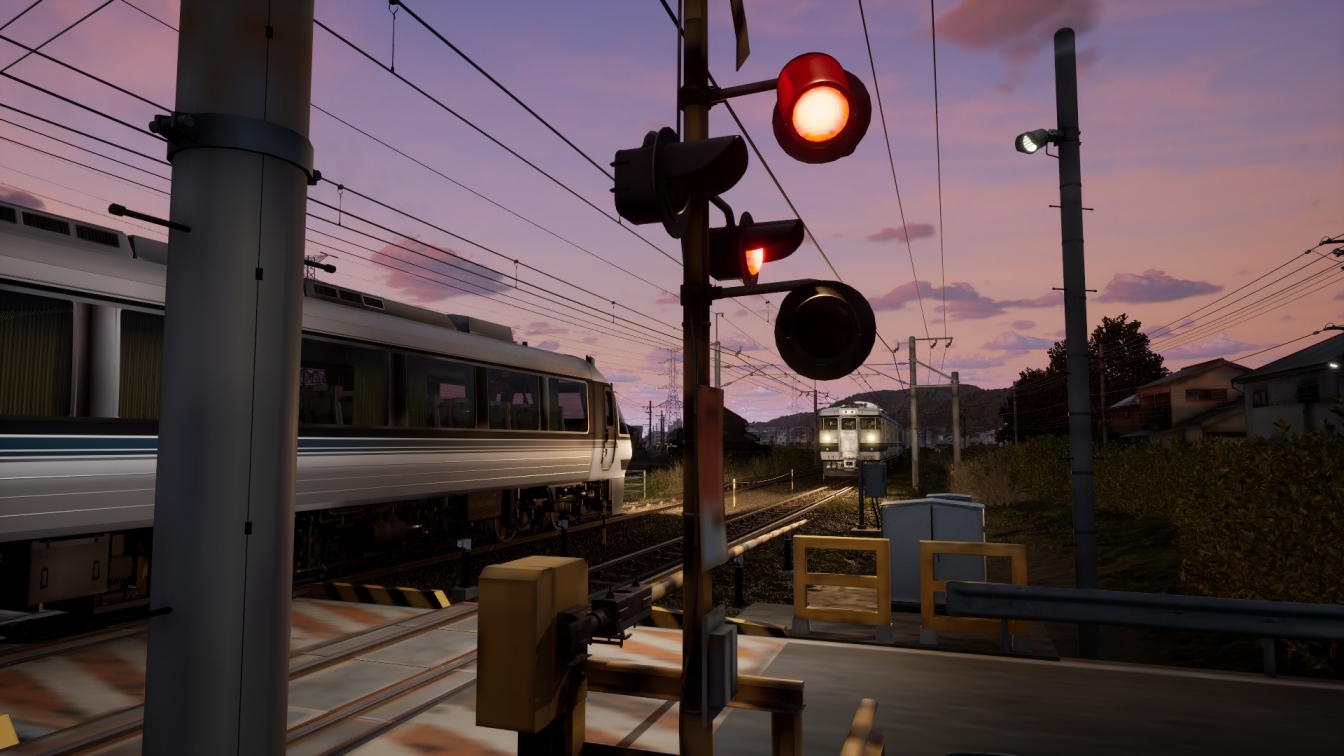
Some of the most atmospheric images in my bulging screenshots folder were taken after dark, or at dusk or dawn. The sim’s empty platforms – empty platforms I’ve come to accept, value even (see on) – certainly feel more plausible at these times.
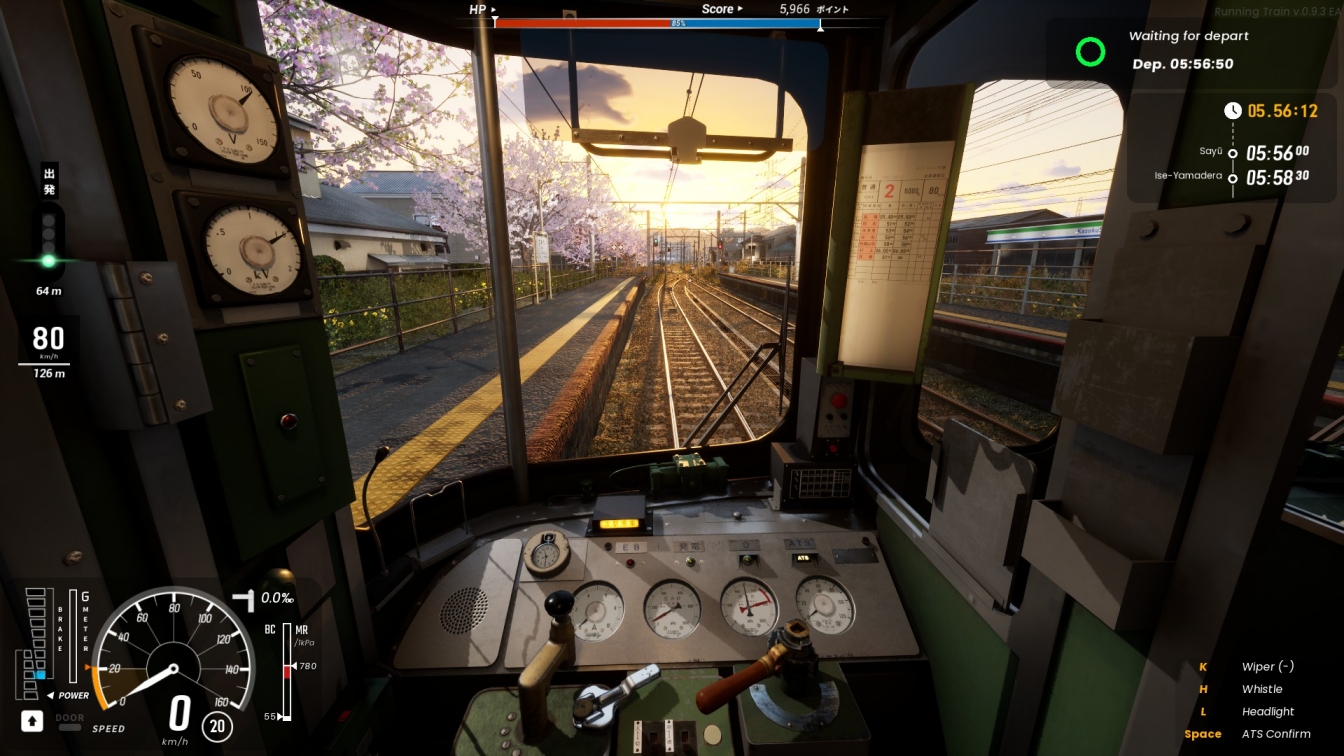
Another important contributor to RT’s potency is its masterly motion maths. Beautifully complemented by an extensive library of excellent sound effects, the equations that govern behaviours like acceleration and braking, tilting and carriage jiggle, give the selectable wet and winter weather conditions real bite, and ensures none of the rolling stock ever feels floaty.
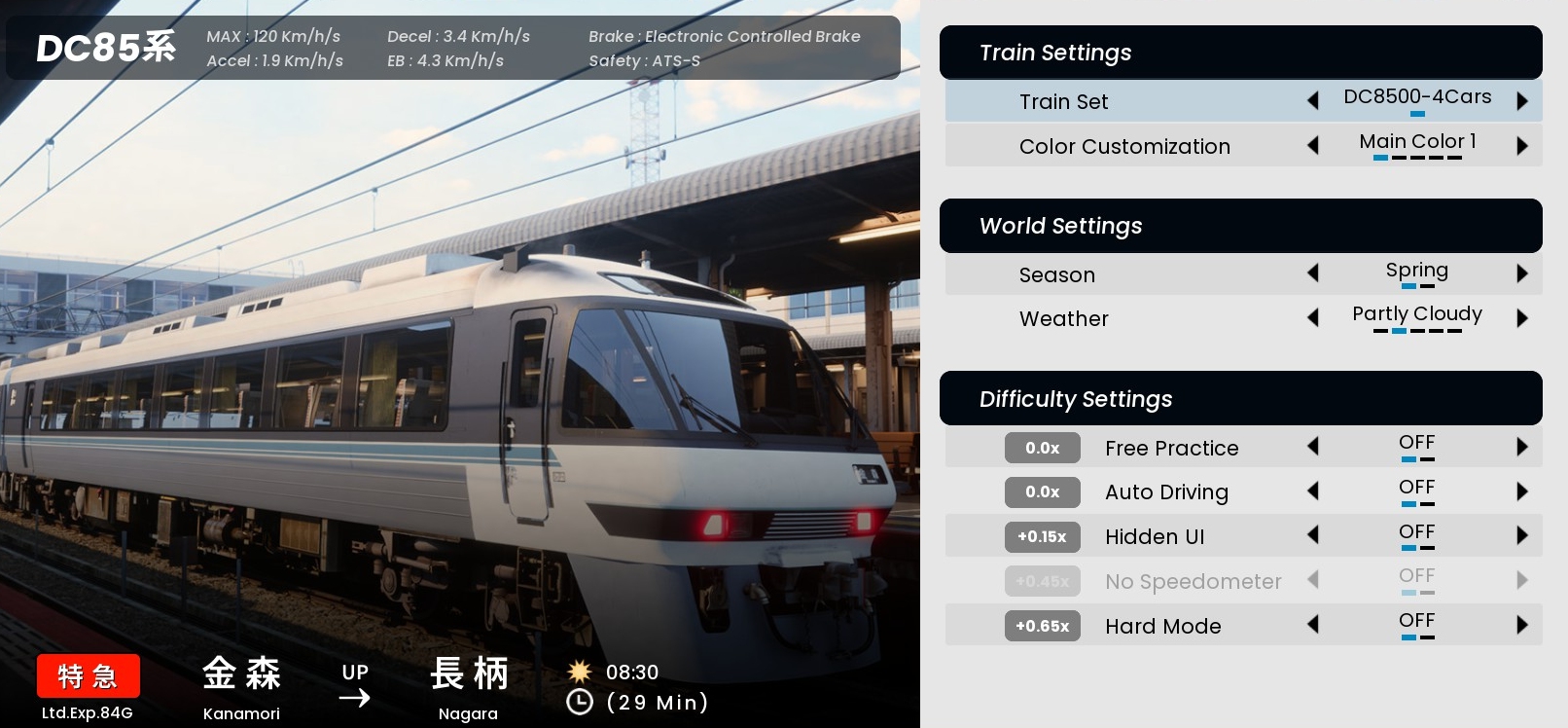
Different power-to-weight ratios, consist options, and brake systems mean the characters of the four train types aren’t dictated exclusively by their handsome exteriors or cabs. For example after a few runs in the sleek-but-turbo-laggy DC85 diesel multiple units, adjusting to the elderly-yet-responsive HR1100 EMUs with their quirky manually lapped brakes, can take a few minutes.
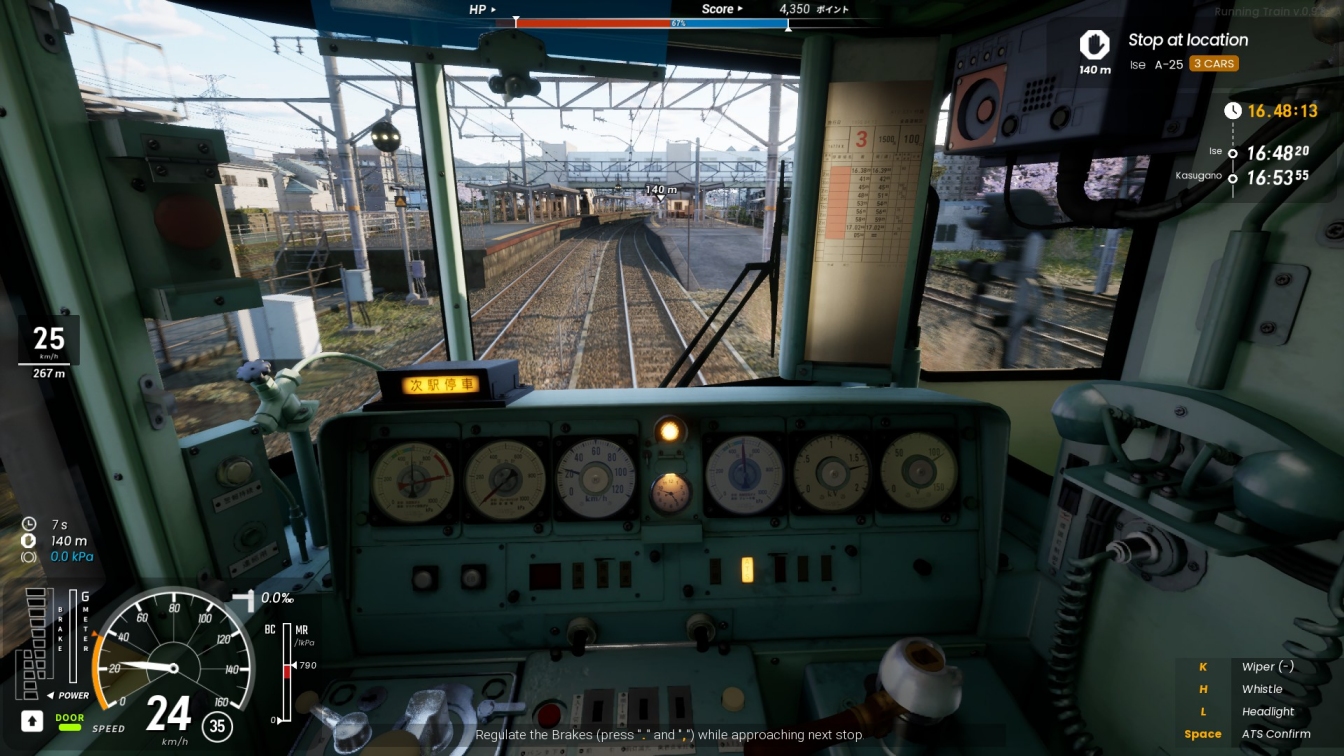
None of the available rides are likely to sow confusion. Because Novatetsu don’t model elaborate safety systems or complicated cold start procedures (most of the time, whatever you are driving, your fingers are hovering over the same four throttle and brake keys) the fact they haven’t got around to making a tutorial yet is of little consequence. The sim’s challenge comes from the optional performance assessments, not from esoteric equipment controlled via a multitude of keystrokes.
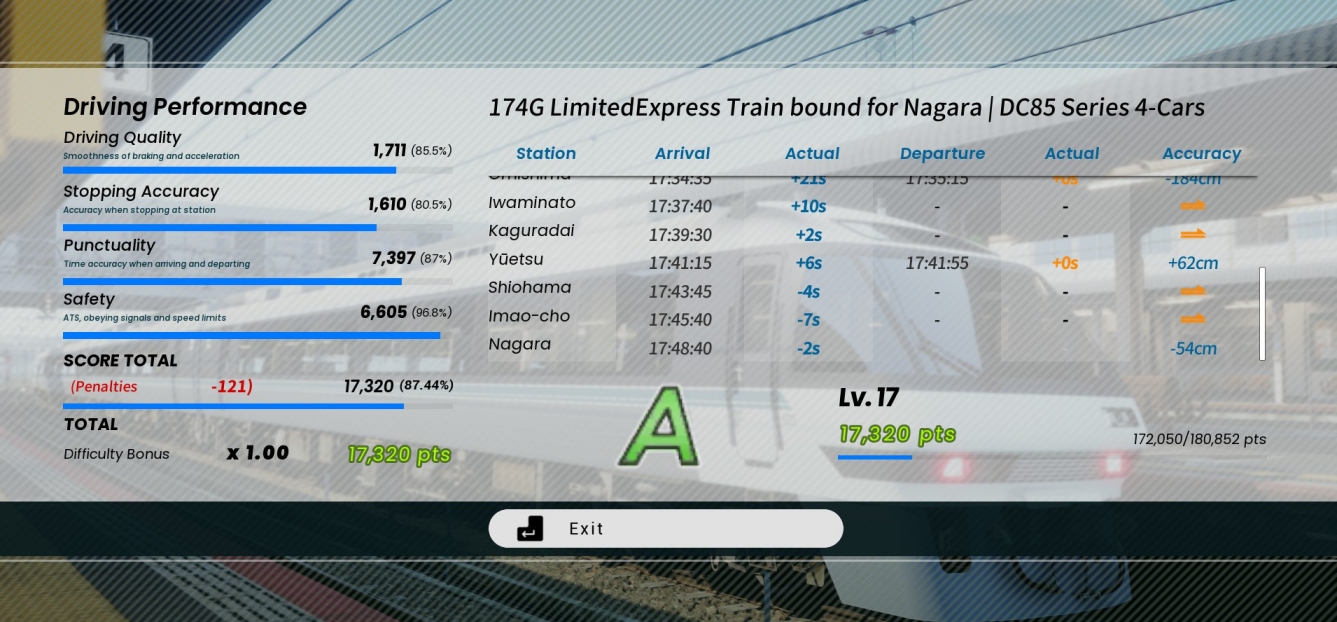
Early on, ‘A’ ratings seem an awfully long way away, but as you get to know the trains and routes and appreciate how important speed limit compliance, gentle braking and accurate stopping positions are to scoring, you’re sure to secure top ratings now and again. Gaining my first ‘A’ grade was a genuinely proud moment.
Driven drivers can ramp up the challenge by dispensing with GUI elements and tampering with penalty thresholds. What they can’t do right now is inject extra difficulty into the 42 scenarios/services by checking a ‘random signals and delays’ checkbox before embarking. Yes, Japanese railways have an enviable reputation for efficiency, but unexpected red and amber aspects can’t be totally unknown, surely.
Although the scoring system fetishises fastidiousness, folk after a relaxing rail experience aren’t compelled to suffer its rebukes. Auto-drive mode goes even further removing all driving responsibilities from the player. You might not be able to park your posterior in a passenger seat and enjoy 45 minutes of passing pagodas, bamboo thickets, rice fields and neat urban sprawl yet (a passenger POV cam is on the roadmap), but, sitting back and savouring scenery from the cab while an AI driver attends to throttle and brake is a good substitute.
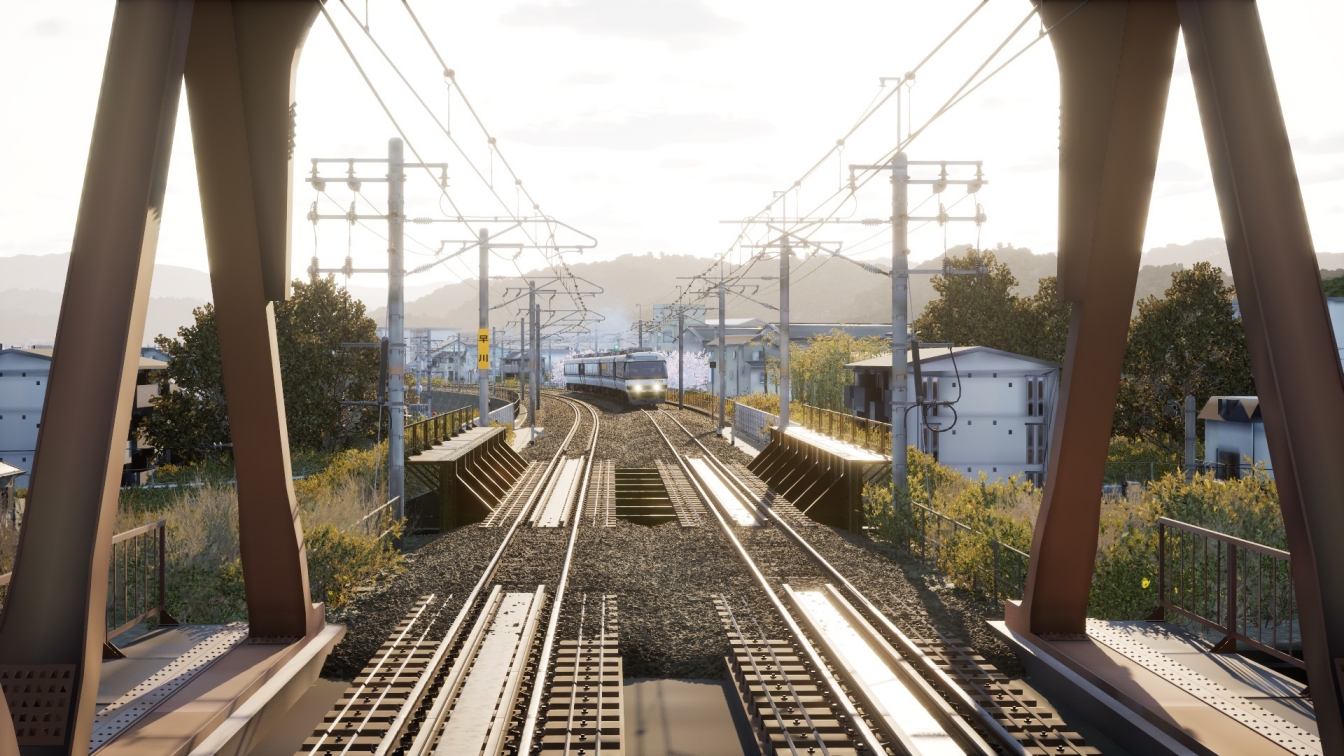
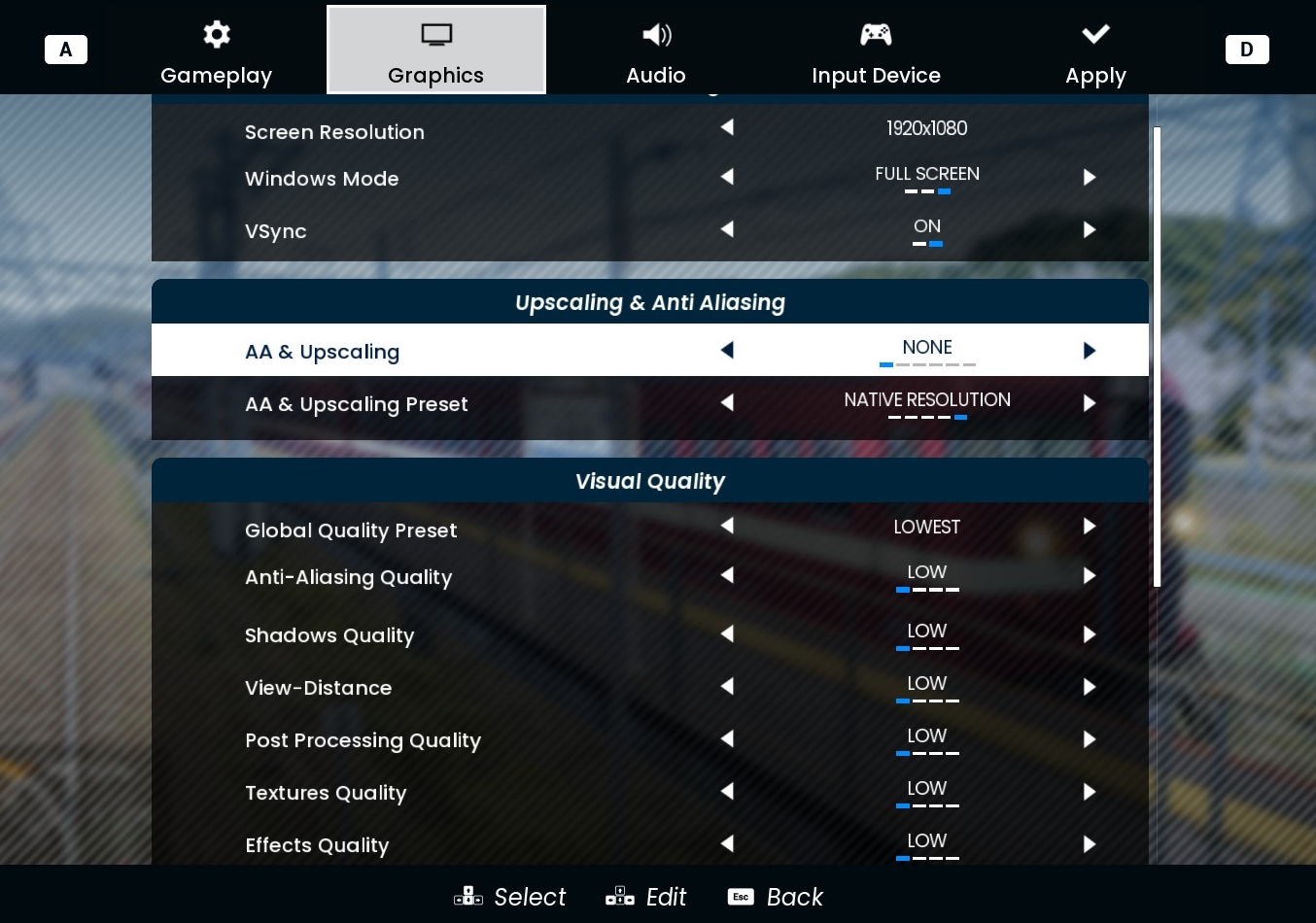
Only those with immense self-control will be able to travel all the way from Kanamori to Nagara in auto-drive mode without indulging in a spot of lineside photography. Those gorgeous graphics combined with boons such as a free camera and a time-of-day changer make RT a screengrabber’s paradise. Even when the graphics settings have been completely floored, apart from some unsightly jaggies, views remain eye-catching…
Novatetsu’ s explanation for the deserted platforms in version 0.9.3 EA…
“Creating 3D passenger models and animations that blend into the environment without breaking immersion is incredibly challenging. Handling both the modeling, animation and implementation myself would have significantly delayed the release. Consequently, I decided to exclude passengers for the initial launch, but I have placed this feature high on our post-launch roadmap.”
…highlights an issue common to all peopled public transport sims.
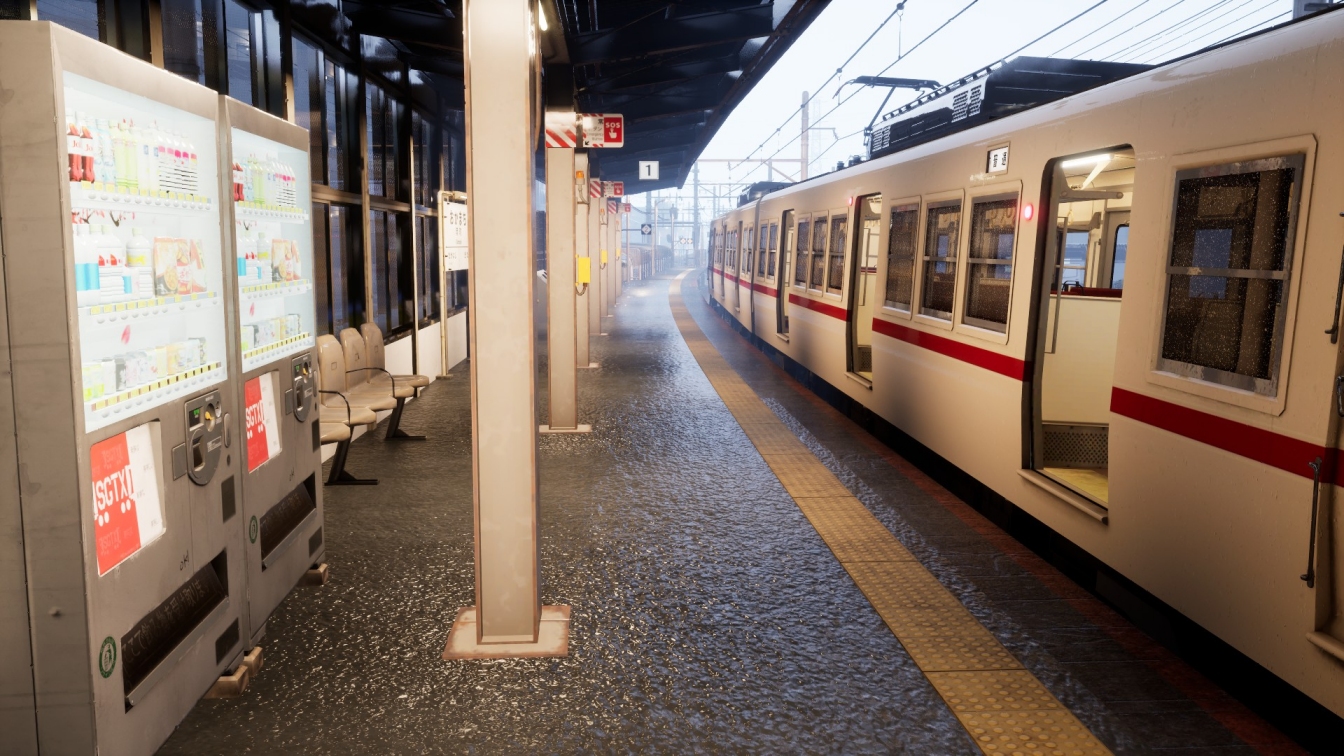
Repetitive models, inappropriate attire, stilted animations, poor pathfinding… because visible passengers inevitably come with these illusion-fracturing fringe detriments and TR presently does such a splendid job of selling its fiction, I may well forego punters when they arrive.
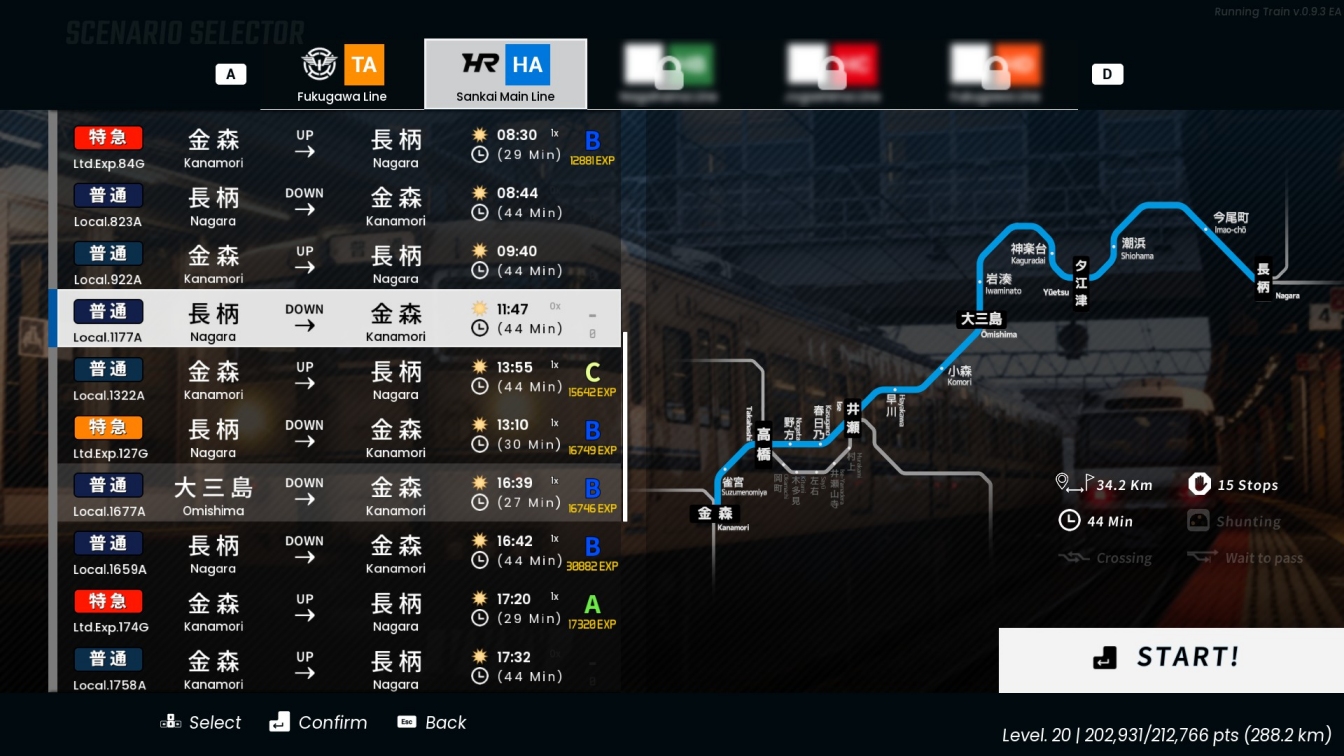
Hopefully work on train users won’t delay the delivery of new routes and route extensions. If the promised 46 km Sankai line and 14 km Fukugawa extensions are of the same quality as the existing routes, we are in for a treat.
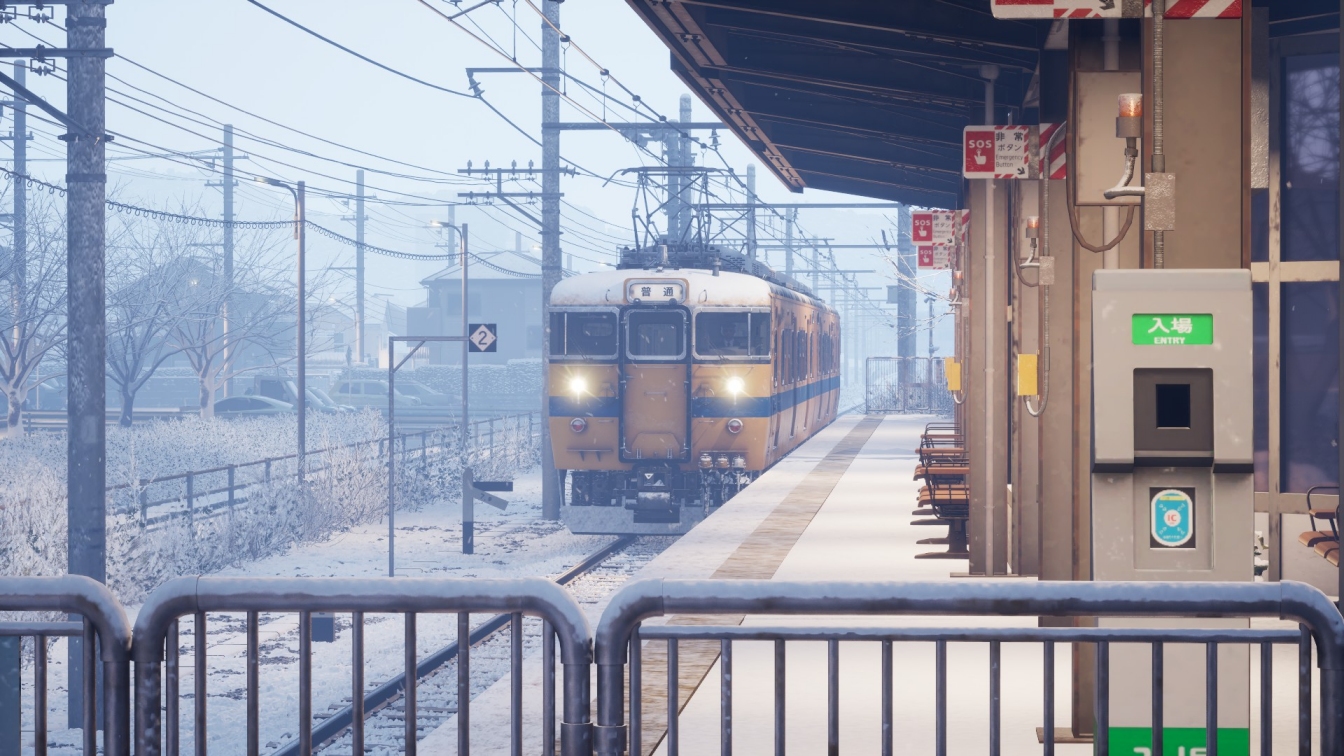
Scenery, graphics, audio… Running Train raises the bar in a number of fundamental areas. It also shows that Early Access doesn’t haven’t to mean ‘riddled with bugs and incomplete features’. Apart from a minor graphics glitch in one spot on the Sankai line, in fourteen hours of rapt rail simming I’ve encountered no issues whatsoever.
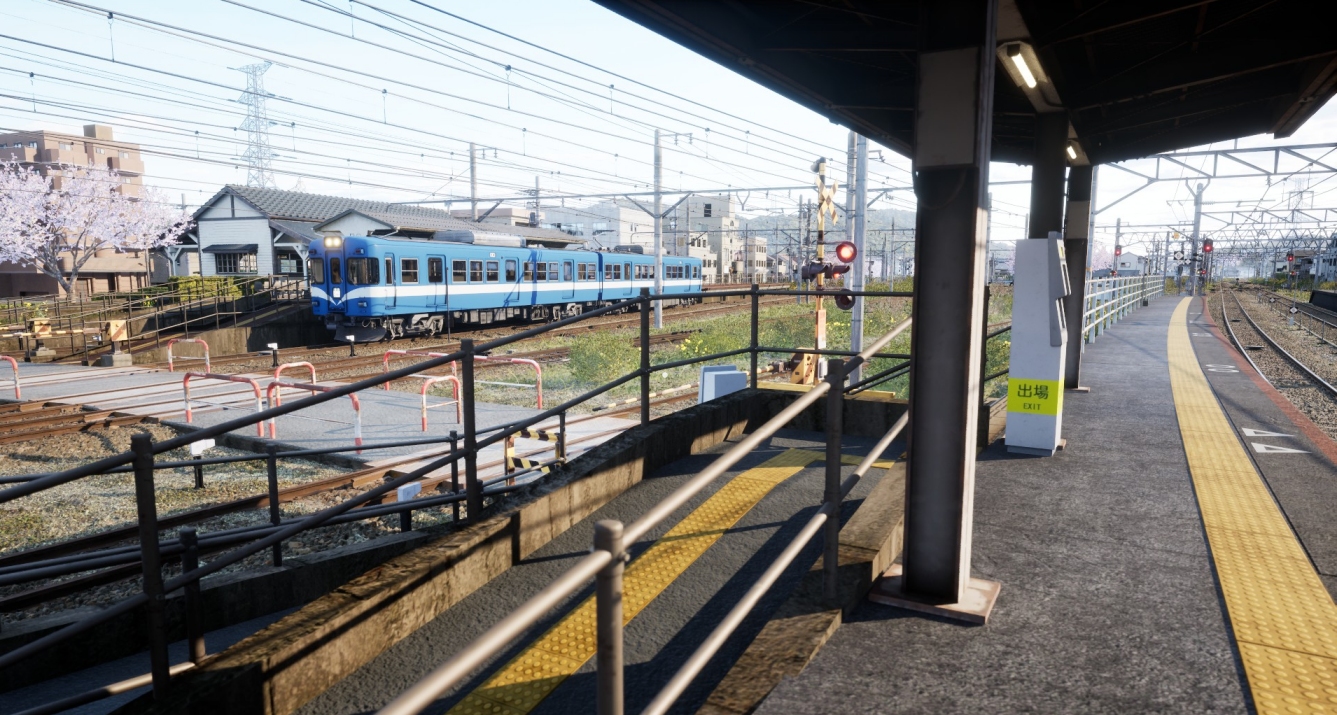
If you’re a rail enthusiast and/or someone who values sims that envelop and enchant, expect the marvelous Running Train to exceed your most sanguine expectations.
I think more games need a ‘photo mode’ with an optional ‘max prettiness’ button. Your graphics card wont be able to do full raytraced 4k splendour at 60fps but even waiting 2-3 seconds for a “That’s the shot, now do it properly” render to complete would give people the full beauty of the game without impacting general runtime performance.
Some recent AAA games, like Cyberpunk and Forza Horizon do this. When you hit the button to “take a picture” it turns on all the ray-traced pretties. Hopefully it’ll trickle down to being a standard feature in widely used game engines (like Unreal in this case)
Just got back from a trip to Japan so I’m very excited about this sim. The last Japanese routes I played were the ones for the original Microsoft Train Simulator.
What delightful way to return from the sabbatical!
Train sims are having the heyday that flight sims got in the ’90s.